

Commentary
Judy Dempsey
{
  "authors": [
    "Judy Dempsey"
  ],
  "type": "commentary",
  "blog": "Strategic Europe",
  "centerAffiliationAll": "",
  "centers": [
    "Carnegie Endowment for International Peace",
    "Carnegie Europe"
  ],
  "collections": [],
  "englishNewsletterAll": "",
  "nonEnglishNewsletterAll": "",
  "primaryCenter": "Carnegie Europe",
  "programAffiliation": "",
  "programs": [],
  "projects": [],
  "regions": [
    "Eastern Europe",
    "Russia",
    "Ukraine"
  ],
  "topics": [
    "Democracy",
    "Foreign Policy",
    "EU",
    "Security",
    "Civil Society"
  ]
}
Source: Getty
Every week a selection of leading experts answer a new question from Judy Dempsey on the foreign and security policy challenges shaping Europe’s role in the world.
Every week a selection of leading experts answer a new question from Judy Dempsey on the foreign and security policy challenges shaping Europe’s role in the world.
Unfortunately, observers are likely to be disappointed in their search for a useful role for Russia in Ukraine. In the past twenty years, Moscow’s leaders have vacillated between painful dependence on the West, on the one hand, and defiant independence, on the other. Each approach presupposes a need for support that is so urgent that it creates a state of conflict with those who could help the most. As a result, Russia often feels isolated and threatened.
Of all the former Soviet states, Ukraine presents the biggest challenge for Moscow. Many Russians still view this “little Russia” as part of their national heritage. Russian speakers in Ukraine are less numerous and less separatist than much of the Western press suggests, but they are more inclined to close ties with Russia than are many other Ukrainians. However, in the end, the battle on Kiev’s Independence Square was not about Russia or even the EU but about anger and bitterness brought about by a corrupt and ineffective government.
Until Russia is comfortable in its own identity, it will be difficult for its leaders to accept that a longtime member of the family such as Ukraine could be drawn into the Western orbit by soft rather than hard power. But that is essentially what happened. Russia needs to wake up—and fast. Otherwise, it will sink rapidly into strategic irrelevance as China and the West define a new world order.
Russia has two problems with the current dynamic in Ukraine. First, it has lost its man in Kiev. Even if former Ukrainian president Viktor Yanukovych was not as pro-Russian as the Kremlin expected, for Moscow it is unclear whom to support now. Second, Russia has no interest in a further destabilization of Ukraine. If the country were to break up, that would be a mess for its next-door neighbor.
That means that Moscow has an interest in supporting Ukraine’s stabilization and backing political forces with whom it can communicate and cooperate. Former prime minister Yulia Tymoshenko is one such force: she always had good contacts in Moscow, and she left Ukraine’s political and economic system unchanged during her time in office—to Russia’s benefit.
At the same time, Russia wants to be a part of the solution in Ukraine. Thanks to Kiev’s economic dependence on Moscow for gas supplies and other trade, Russia will play a key role in Ukraine’s economy for the foreseeable future. That gives the EU an opportunity to involve Russia in Ukraine’s stabilization process. But Brussels must take care to avoid making compromises with Moscow that are in the interests not of the Ukrainian people but of the country’s old elites—like Tymoshenko.
Ukraine is the first foreign policy defeat for Russian President Vladimir Putin in a decade or so. He had become used to huffing and puffing his way around the world, intimidating, bribing, pushing, and shoving others. Washington and Brussels did little to stop him. Then Kiev happened.
Former U.S. national security adviser Zbigniew Brzezinski has proposed Finland as a role model for Ukraine: democracy and a free-market economy, but political and military neutrality. That may sound good, but Putin needs to be kept on board. He wants control of pro-Russian Crimea and its crucial port of Sevastopol and is afraid of a European Kiev.
In the past when cornered, Putin has waited, regrouped, and attacked again. That suggests he is unlikely to accept defeat and agree to negotiate on Ukraine.
Putin should read The White Guard, a novel by Russian author Mikhail Bulgakov set in Kiev in 1918–1919, when czarists, Communists, and Ukrainian nationalists fought for control of the city. It is a bitter tale, and the nationalists’ defeat lasted almost a century. Bulgakov’s dark conclusion: “God was flying on the black, dry sky, refusing to give us any answer.”
The Ukraine crisis will be a turning point in the relationship between Russia and the West. The turmoil provides an opportunity for the EU, the United States, and Russia to work together on a transition to produce a Ukraine that is more democratic but that does not endanger regional stability.
Of the outside players, Russia has the most at stake. As Ukraine’s next-door neighbor, it has the advantages of proximity, and its interest is more intense and direct than the West’s. The United States and the EU are more removed on all counts. Both Russia and the West have to move away from zero-sum thinking in regard to Ukraine’s future and realize that a stable and nonaligned Ukraine is in everyone’s interest.
Russia should take all military options off the table and work closely with the EU’s foreign policy chief, Catherine Ashton, EU foreign ministers, and the U.S. administration to devise a joint rescue package for Ukraine. Things could go very wrong, but the crisis is also a real opportunity to reshape the relationship between Russia and the West.
Russia’s bullying tactics toward Ukraine have evidently failed. Former president Viktor Yanukovych is out, and the political forces emerging from the protest movement want as close a relationship with the EU as possible.
But it is clear that Russia remains a powerful actor in Ukraine. The bonds of culture, language, ethnicity, and economy bind the two states closely, and recent events in Kiev will not fundamentally change that. It is also true that Russia has some legitimate interest in Ukraine—not least because many Ukrainians consider themselves Russian.
As Ukraine gravitates toward the West of its own accord, Russia must be reassured that this is in no way aimed against it or detrimental to its interests. It is important that there is no discrimination of Ukraine’s Russian speakers, and that the future government in Kiev includes a fair representation from the east of the country.
As for the EU, it cannot and should not recognize that Russia has a special stake in Ukraine’s future. Ukraine is an independent country with a vibrant civil society, and it is perfectly capable of determining its future by itself. Russia should recognize that a modern, European Ukraine will provide an element of regional stability and, as such, will benefit Russian interests.

Nonresident Senior Fellow, Carnegie Europe
Judy Dempsey is a nonresident senior fellow at Carnegie Europe
Recent Work
Judy Dempsey
Judy Dempsey
Carnegie does not take institutional positions on public policy issues; the views represented herein are those of the author(s) and do not necessarily reflect the views of Carnegie, its staff, or its trustees.

Trump is distracted and Ukraine wants Europe to step up. The continent’s leaders must find their voice and assert it in talks with Russia.

Alissa de Carbonnel

Mounting economic strain and battlefield losses will not necessarily make the Kremlin less dangerous. They could instead push Moscow toward a more aggressive hybrid campaign designed to test NATO’s Eastern flank, exploit allied hesitation, and fracture European resolve.

Maksym Beznosiuk

Over the past ten years, NATO has held almost as many summits as it did during the entirety of the Cold War. Are they still useful, or is it time to stop holding annual meetings?

Rym Momtaz, ed.
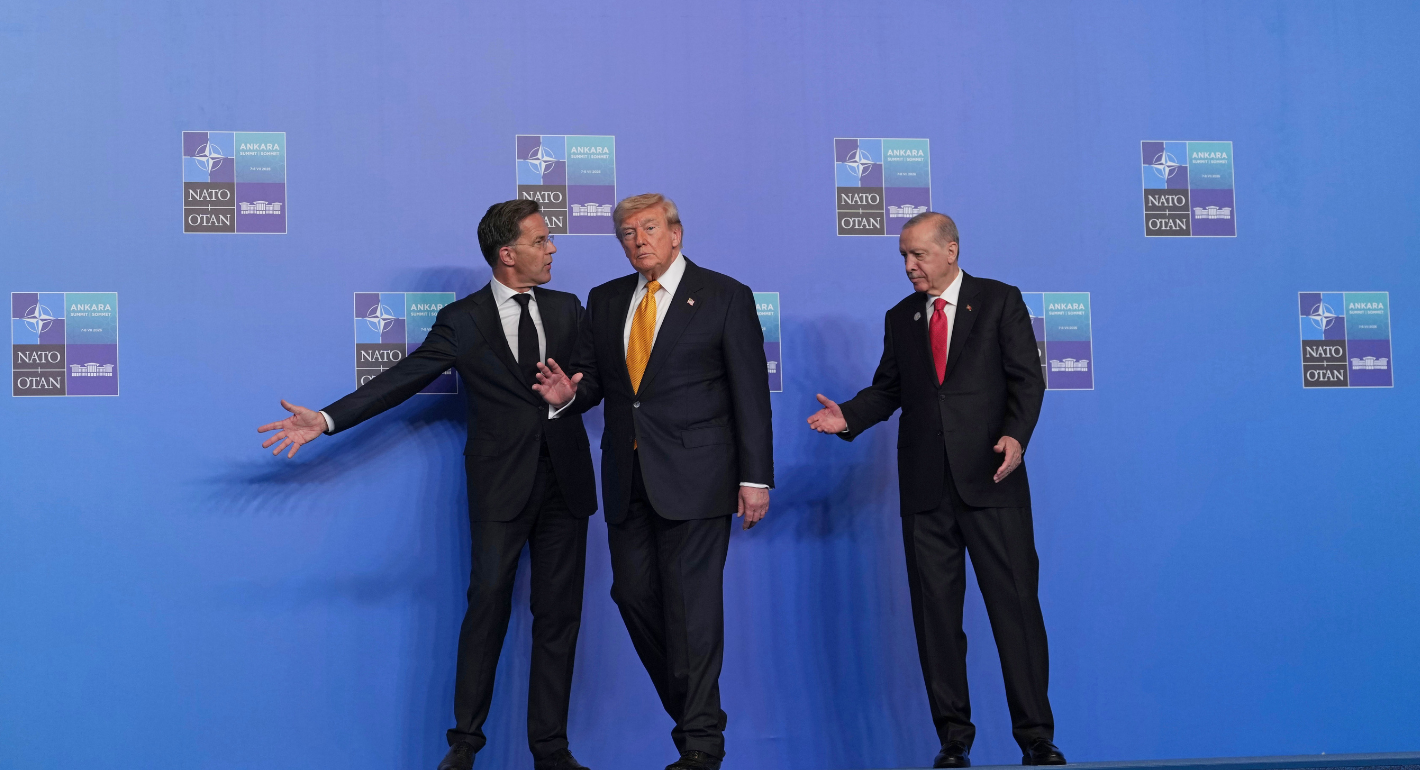
Nearly a year and a half after Europeans leaned into sucking up to Trump, the strategy has produced some benefits when it comes to Ukraine.
Rym Momtaz
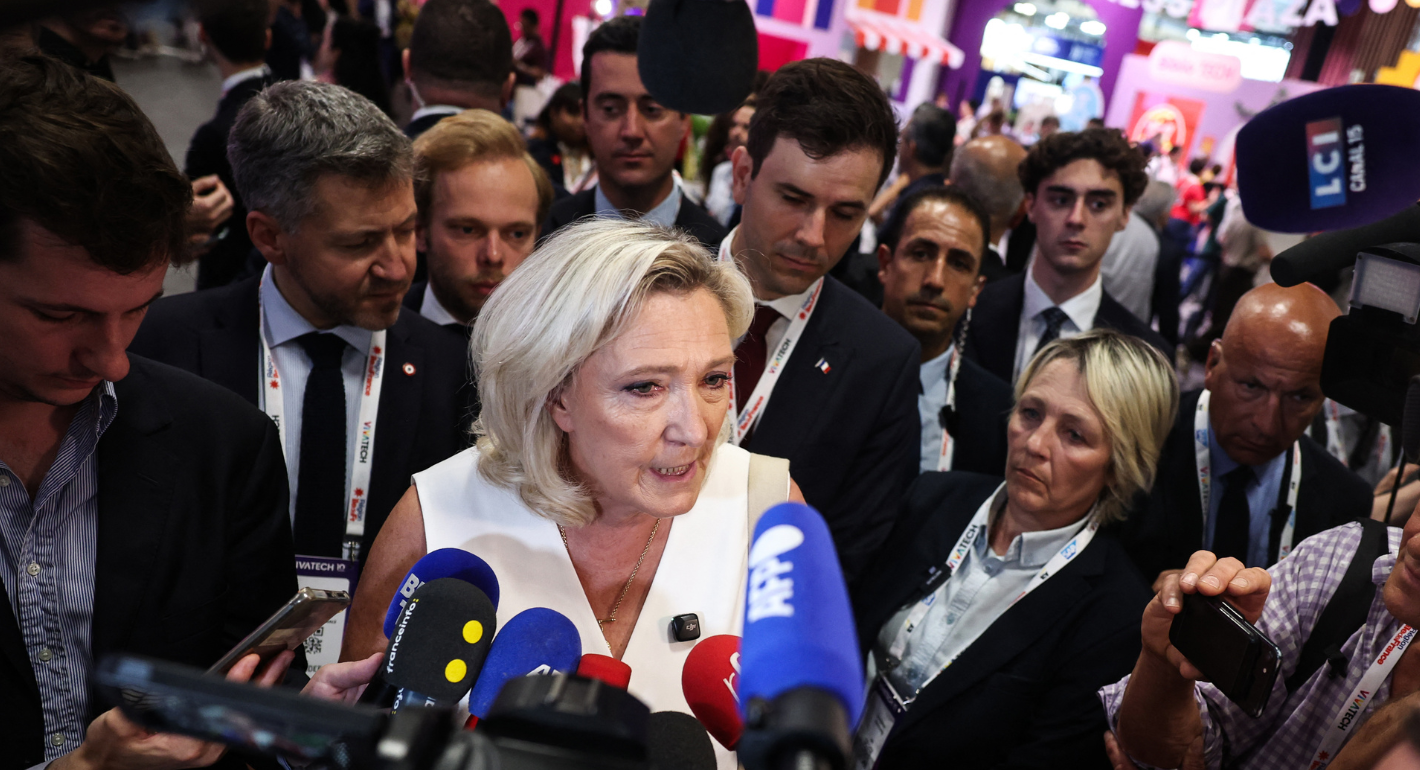
Far-right leader Marine Le Pen can—and will—run in France’s next presidential election. What does the outcome of her appeal against a 2025 embezzlement conviction mean for the country’s political future?
Catherine Fieschi