• Research
  • Strategic Europe
  • About
  • Experts
Carnegie Europe logoCarnegie lettermark logo
EUUkraine
  • Donate
{
  "authors": [
    "James Sherr"
  ],
  "type": "commentary",
  "blog": "Strategic Europe",
  "centerAffiliationAll": "",
  "centers": [
    "Carnegie Endowment for International Peace",
    "Carnegie Europe"
  ],
  "collections": [],
  "englishNewsletterAll": "",
  "nonEnglishNewsletterAll": "",
  "primaryCenter": "Carnegie Europe",
  "programAffiliation": "",
  "programs": [],
  "projects": [],
  "regions": [
    "Eastern Europe",
    "Russia",
    "Ukraine",
    "Western Europe"
  ],
  "topics": [
    "Democracy",
    "Security",
    "Foreign Policy",
    "EU",
    "Civil Society"
  ]
}

Strategic Europe logo

Source: Getty

Commentary
Strategic Europe

A Memo on Russia and Ukraine

If Russia’s actions the Crimean peninsula succeed in undermining the post–Cold War order, the sanctity of the whole transatlantic alliance will be called into question.

Link Copied
By James Sherr
Published on Mar 6, 2014
Strategic Europe

Blog

Strategic Europe

Strategic Europe offers insightful analysis, fresh commentary, and concrete policy recommendations from some of Europe’s keenest international affairs observers.

Learn More

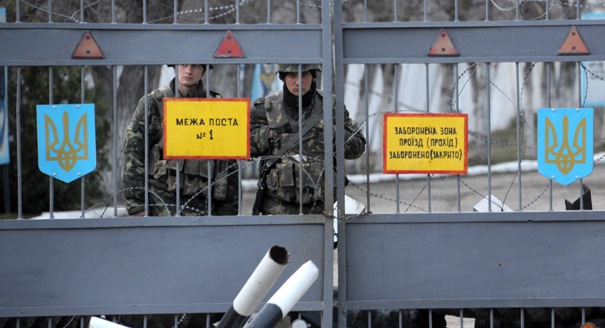
On March 5, Carnegie Europe, the Polish Institute of International Affairs, and the Atlantic Council hosted a think tank summit in Warsaw on the ongoing turmoil in Ukraine. The event revealed important differences but also common objectives, both among the European participants and between the European and American experts, on how to deal with Ukraine and Russia’s invasion of Crimea.

James Sherr, associate fellow in Chatham House’s Russia and Eurasia Program, offered the following insights on the reasons for Russia’s intervention, what Moscow hopes to achieve, and what the consequences might be.

Why has Russia intervened in Crimea?

  • The Kremlin believes there is a direct connection between the fate of the post-Soviet order in Ukraine and that of Russia itself.
     
  • Russia is in shock. Having stated as recently as December 2013 that “Ukraine is now ours,” Moscow suddenly finds itself with no influence in Kiev at all.
     
  • To defend its vital interests, the Kremlin is prepared to accept high risks and temporary losses—both financial and political. It believes that is a major advantage in any contest with the West. Moscow fears EU integration, has little respect for EU leaders, and believes that European business interests will trump geopolitical ones.
     

What are Moscow’s objectives?

  • Russia’s objective is Ukraine as a whole, not just Crimea, whose importance is only instrumental.
     
  • Moscow’s political goals are threefold. First, to make Ukraine ungovernable by undermining the executive and by depriving outside stakeholders such as the EU and IMF of predictability and confidence. Second, to impose on Ukraine a Western-sanctioned constitutional “solution” based on federalization (which, under current conditions, means disintegration) and a special status for Crimea. Third, to show Kiev, Brussels, and Washington that nothing can be achieved in Ukraine without Moscow’s consent. In sum, Russia wants to reduce Ukraine to subservience—or chaos.
     
  • Russia’s military goals are evolving. Moscow’s tactics are based on the principle of razvedka boem, or employing military means to assess an adversary’s strength and willpower.
     

What are the consequences of Russian success?

  • If Russia succeeds in undermining the pillars of the post–Cold War order, such as the Organization for Security and Cooperation in Europe, the Paris Charter, and the Budapest Memorandum on Security Assurances, the sanctity of the transatlantic alliance itself will be called into question. That particularly affects countries like Latvia that are vulnerable to Russian indirect aggression and intervention by stealth.
     
  • Success for Moscow in Ukraine would lead Poland and the Baltic states to renationalize parts of their defense structures.
     
  • More broadly, there would be a reassessment of the West’s willingness and capacity to act in other theaters.
     

What are the consequences of Russian failure?

  • If Moscow fails to achieve its objectives in Ukraine, that would deal a blow to the ideological foundations of Russia’s political order, which justifies itself in the name of distinctive, historically determined Slavic and Orthodox values.
     
  • Eurasian integration efforts would swiftly unravel. Without Ukraine, they raise the prospect of Russia becoming an Asiatic formation, something that would alarm both liberals and ethno-Russian nationalists.
     
  • Russian President Vladimir Putin’s political position would be fundamentally weakened. Stakeholders in the dozen or so baronial structures that hold ultimate power in Russia’s neofeudal system would lose confidence in Putin’s ability to act as guarantor of their interests.
     

About the Author

James Sherr

Chatham House

James Sherr
Chatham House
DemocracySecurityForeign PolicyEUCivil SocietyEastern EuropeRussiaUkraineWestern Europe

Carnegie does not take institutional positions on public policy issues; the views represented herein are those of the author(s) and do not necessarily reflect the views of Carnegie, its staff, or its trustees.

More Work from Strategic Europe

  • Commentary
    Strategic Europe
    Russia’s Imperial Retreat Is Europe’s Strategic Opportunity

    The war in Ukraine is costing Russia its leverage overseas. Across the South Caucasus and Middle East, this presents an opportunity for Europe to pick up the pieces and claim its own sphere of influence.

      William Dixon, Maksym Beznosiuk

  • Commentary
    Strategic Europe
    Europe and the Arab Gulf Must Come Together

    The war in Iran proves the United States is now a destabilizing actor for Europe and the Arab Gulf. From protect their economies and energy supplies to safeguarding their territorial integrity, both regions have much to gain from forming a new kind of partnership together.

      • Rym Momtaz

      Rym Momtaz

  • Commentary
    Strategic Europe
    Taking the Pulse: Is France’s New Nuclear Doctrine Ambitious Enough?

    French President Emmanuel Macron has unveiled his country’s new nuclear doctrine. Are the changes he has made enough to reassure France’s European partners in the current geopolitical context?

      • Rym Momtaz

      Rym Momtaz, ed.

  • Commentary
    Strategic Europe
    The EU Needs a Third Way in Iran

    European reactions to the war in Iran have lost sight of wider political dynamics. The EU must position itself for the next phase of the crisis without giving up on its principles.

      Richard Youngs

  • Commentary
    Strategic Europe
    Global Instability Makes Europe More Attractive, Not Less

    Europe isn’t as weak in the new geopolitics of power as many would believe. But to leverage its assets and claim a sphere of influence, Brussels must stop undercutting itself.

      Dimitar Bechev

Get more news and analysis from
Carnegie Europe
Carnegie Europe logo, white
Rue du Congrès, 151000 Brussels, Belgium
  • Research
  • Strategic Europe
  • About
  • Experts
  • Projects
  • Events
  • Contact
  • Careers
  • Privacy
  • For Media
  • Gender Equality Plan
Get more news and analysis from
Carnegie Europe
© 2026 Carnegie Endowment for International Peace. All rights reserved.






