

Commentary
Judy Dempsey
{
  "authors": [
    "Judy Dempsey"
  ],
  "type": "commentary",
  "blog": "Strategic Europe",
  "centerAffiliationAll": "",
  "centers": [
    "Carnegie Endowment for International Peace",
    "Carnegie Europe"
  ],
  "collections": [],
  "englishNewsletterAll": "",
  "nonEnglishNewsletterAll": "",
  "primaryCenter": "Carnegie Europe",
  "programAffiliation": "",
  "programs": [],
  "projects": [],
  "regions": [
    "Russia",
    "Eastern Europe",
    "Western Europe",
    "Germany",
    "Europe"
  ],
  "topics": [
    "Security",
    "Foreign Policy",
    "EU"
  ]
}
Source: Getty
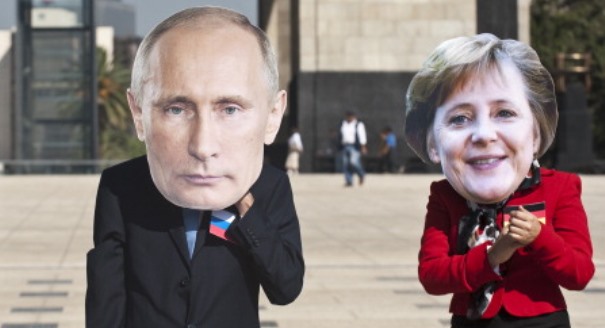
The decades-old special relationship between Berlin and Moscow is fraying. Neither Russia nor Germany should underestimate what that might mean for EU foreign and security policy.
The German government is facing one of its most serious foreign policy crises since the collapse of the Berlin Wall nearly a quarter of a century ago. After investing much political, economic, and diplomatic capital in its relations with Russia, Germany is coming to realize that many of those efforts may have been squandered.
Over the past several weeks, when prodemocracy demonstrators in Ukraine ousted president Viktor Yanukoych and Russian President Vladimir Putin invaded Crimea, Berlin consistently pursued a diplomatic track with Moscow.
Frank-Walter Steinmeier, the German foreign minister, is a firm believer in Ostpolitik, the Eastern approach that has underpinned the German-Russian relationship for decades. During recent talks with his Russian counterpart Sergei Lavrov, Steinmeier had one goal in mind: to deescalate the crisis. It was a blow to him when the regional parliament in Crimea announced, with Russian backing, that it would hold a referendum on the peninsula’s status on March 16.
Both Steinmeier and German Chancellor Angela Merkel had also hoped that Russia would stick to its word and give an international “contact group” a chance to establish some kind of dialogue between Moscow and the provisional government in Kiev.
But the Kremlin has made it clear that it has no intentions of talking to Ukraine’s interim leaders. Berlin has been forced to conclude that for the moment, Russia is simply not willing to deescalate and negotiate. Instead, Moscow is set on establishing facts on the ground in Crimea. That is a bitter blow for German diplomacy.Efforts by the Organization for Security and Cooperation in Europe (OSCE) also came to naught. Even though Russia is a leading member of the OSCE, it has never been able to bend the organization to its will. Moscow loathes the OSCE’s monitoring of elections and its stance on the freedom of the media. In the current crisis, unarmed OSCE monitors were prevented by force from entering Crimea.
In the longer term, Russia’s rejection of Germany’s diplomatic efforts spells bad news for Russia itself: Moscow risks losing one of its most important allies in Europe.
Those allies are already few and far between. Putin’s close friend former Italian prime minister Silvio Berlusconi has left Italy’s political stage. François Hollande, the French president, has few bonds with the Kremlin apart from a lucrative French defense contract. Barring one or two staunch supporters of Russia, such as Hungarian Prime Minister Viktor Orbán, Russia risks being completely isolated in Europe.
Russia should not underestimate what losing Germany as an ally could mean. Putin’s rejection of Germany’s diplomatic overtures could precipitate the end of Steinmeier’s long-held belief in Ostpolitik. That would have tremendous consequences for Germany’s relations not only with Russia but also with Ukraine, Belarus, Moldova, and Georgia.
By dismissing Germany’s diplomatic efforts, Russia could be encouraging Germany to take a much more considered look at the geopolitical and security concerns of Poland, the Baltic states, and indeed Ukraine—countries that are now deeply afraid of Russia.
Indeed, Steinmeier’s brief visit to the Baltic states on March 11 was about more than symbolism. The last thing Berlin wants is instability in the region or a backlash against these countries’ ethnic Russian minorities that could provoke Russia in any way. Steinmeier sought to reassure the leaders of the Baltic states that they could count on the EU’s—and Germany’s—solidarity.
“We are not going to abandon Estonia and the Baltic states,” the German foreign minister said after his talks in Tallinn. “This isn’t a problem for Estonia or the Baltic states. This is a common problem for the EU and NATO.” That is a real shift in language. Until recently, NATO had figured low on Berlin’s radar screen.
A day later, Merkel flew to Warsaw to hold talks with Donald Tusk, the Polish prime minister. Until recently, the Poles had made every effort to put their relations with Russia on a more predictable and pragmatic basis. The crisis in Ukraine has changed that.
Poland and its Baltic neighbors do not just want promises of respect for their territorial integrity. They are also anxious for greater security guarantees and increased support from NATO allies and other EU countries.
Merkel is now in the unenviable position of having to decide whether to impose sanctions on Russia. Her government cannot be faulted for having tried diplomacy. But Berlin has now exhausted that track.
One thing is clear: sanctions would be the nail in the coffin for Ostpolitik. Then, Germany could finally begin to pull the EU together around a long-overdue new policy toward Russia and Europe’s Eastern neighborhood.

Nonresident Senior Fellow, Carnegie Europe
Judy Dempsey is a nonresident senior fellow at Carnegie Europe
Recent Work
Judy Dempsey
Judy Dempsey
Carnegie does not take institutional positions on public policy issues; the views represented herein are those of the author(s) and do not necessarily reflect the views of Carnegie, its staff, or its trustees.

The European Commissioner for Trade is headed to China. But after President Xi’s bridge-building visit to Washington, can a more isolated EU overcome Beijing’s stranglehold on critical raw materials? Who will blink first?

Rym Momtaz, ed.

The domestic impacts of how long it is taking to end the war in Ukraine have pushed the French electorate to the political extremes and compromised the country’s diplomatic capacity.
Rym Momtaz

Before the next wave of EU enlargement takes place, the union needs to grapple with thorny questions of how power is distributed among its members.


Emil Sondaj Hansen, Ditte Brasso Sørensen

A summer of escalation in the Black Sea has hurt Ukraine economically and is exacerbating world food security. A truce is needed—as is a broader reframing of Europe’s Ukraine strategy.

Thomas de Waal

Are Germany’s economic, industrial, and political struggles becoming a liability for the EU’s ability to rise to the geopolitical moment?
Rym Momtaz, ed.