

Commentary
European reactions to the war in Iran have lost sight of wider political dynamics. The EU must position itself for the next phase of the crisis without giving up on its principles.
Richard Youngs
{
  "authors": [
    "Tedo Japaridze"
  ],
  "type": "commentary",
  "blog": "Strategic Europe",
  "centerAffiliationAll": "",
  "centers": [
    "Carnegie Endowment for International Peace",
    "Carnegie Europe"
  ],
  "collections": [],
  "englishNewsletterAll": "",
  "nonEnglishNewsletterAll": "",
  "primaryCenter": "Carnegie Europe",
  "programAffiliation": "",
  "programs": [],
  "projects": [],
  "regions": [
    "Eastern Europe",
    "Caucasus",
    "Russia",
    "Georgia",
    "Ukraine",
    "Western Europe",
    "Europe"
  ],
  "topics": [
    "Security",
    "Military",
    "Foreign Policy",
    "EU"
  ]
}
Source: Getty
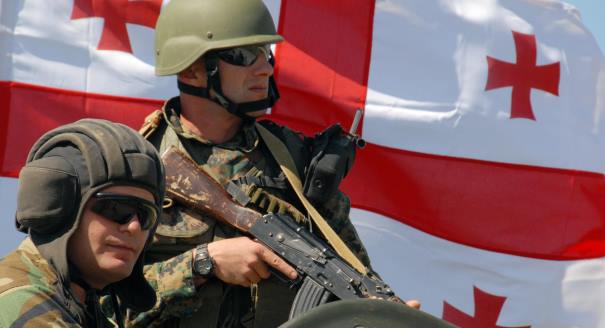
The West should integrate Georgia into the transatlantic security community. If it does not, Tbilisi will live under the constant threat of Russian aggression.
Recent events in Ukraine have sadly demonstrated that Russia intends to force its neighbors to adhere to its own vision of a modern society. Democracy, tolerance, and, above all, national sovereignty play no role in that vision.
That is why Georgia places so much importance on building ties to NATO and the European Union. Only by becoming full members of the Western community can Georgians emulate the success of the Baltic states, be certain of their democratic future, and create an anchor of stability in a troubled region.
What form will Georgia’s future relationship with NATO take—full membership of the Euro-Atlantic community or just membership of the alliance’s Partnership for Peace, a bilateral cooperation program? The answer to this question will be essential for defining Georgia’s national future. As part of the Western community, the country would prosper. As an associated partner, it would live under the constant threat of Russian aggression.
Many NATO members understand the stark choice that Georgia is facing and have expressed strong support for the country’s wish for a Membership Action Plan, an assistance program tailored for states wishing to join the alliance. Other NATO countries seem to believe that Georgia should define its future solely through symbolic NATO support, coupled with dialogue with Russia.
I want to state clearly and firmly that to deny Georgia a Membership Action Plan at September’s NATO summit would be to confirm to Russia that the West will always give in to Moscow’s pressure tactics.
Russia is steadily moving border markers further into Georgian territory beyond the limits of the two occupied provinces of Abkhazia and South Ossetia. Whether Georgia receives a Membership Action Plan or not, Tbilisi can be sure that this pressure will continue. The only question will be how far the Russians believe they can push.
Too many Westerners still seem to look at the Southern Caucasus primarily as a “front line”—a region where Russia’s strategic interests collide with those of the West; as a dangerous territory rather than a potential partner.
For many in Russia, Georgia should remain part of a “Trans-Caucasian” community where Moscow can pursue its “special interests.” These perceptions die hard and are still a decisive factor in the minds of many policymakers in Russia. Yet, given that 20 percent of Georgian sovereign territory is occupied by Russia (Abkhazia and South Ossetia), it is obvious that Georgians cannot possibly support the idea of a Russian-led Trans-Caucasian community.
Tbilisi seeks pragmatic and friendly relations with Moscow, but Russia wishes to set up a new Eurasian union, a free trade–based zone that does not represent European values. At the same time, an overwhelming majority of Georgians regard themselves as Europeans. That is why Georgia recently opted for an association agreement with the EU over membership in Russia’s Eurasian union.
Closer ties with the EU and NATO are an affirmation of Georgia’s right to exist. For some in the West, however, Georgia should remain only a partner: supported by NATO but not a full member of the alliance. Some Western governments are concerned that inviting Georgia to move closer to NATO could strain their own relations with Moscow. I hope they understand the consequences of their approach. Lack of a Membership Action Plan for Georgia in September would be a green light for Russia’s next step against Georgia, Moldova, or both.
But there are other important reasons to welcome Georgia into the Western community, which go beyond personal wishes.
Indeed, regarding the Southern Caucasus in zero-sum terms is old-fashioned and false. Rather, the region is a space where Russia and the West can collaborate jointly for the sake of enhancing stability in the region, for energy and trade reasons.
For both East and West, access to the Southern Caucasus is a common strategic objective, perhaps for the very same motives. The Southern Caucasus is the only corridor that connects NATO territory with Central Asia, Afghanistan, and Iran. At the same time, it is also the glue that keeps Russia’s European and Far Eastern territories connected.
There are further common strategic interests that the two sides could share. Both the Euro-Atlantic community and Russia will likely be engaged in the fight against religious radicalism and terrorism for the foreseeable future. In that context, preserving access to the entire Caucasus is a common priority.
Georgia has demonstrated in multiple ways that it doesn’t want a free ride. For one thing, the country is the largest non-NATO contributor in Afghanistan.
When Georgian Prime Minister Irakli Garibashvili visited NATO headquarters on February 5, NATO Secretary General Anders Fogh Rasmussen praised Georgia’s many reform efforts and said that the alliance stood by its commitments. “At the Bucharest summit in 2008, we decided that Georgia would become a NATO member, provided you meet the necessary requirements,” Rasmussen told the country. “That decision still stands.”
The Georgian people expect NATO to keep its word, something that the government of Georgia takes for granted. Not doing so would be tantamount to undermining the very security framework for which NATO stands.
Tedo Japaridze is chair of the Foreign Affairs Committee of the Georgian Parliament.
Tedo Japaridze
Member, Georgian parliament
Tedo Japaridze is a member of the Georgian parliament, former ambassador, and chairman of the Foreign Relations Committee.
Carnegie does not take institutional positions on public policy issues; the views represented herein are those of the author(s) and do not necessarily reflect the views of Carnegie, its staff, or its trustees.
European reactions to the war in Iran have lost sight of wider political dynamics. The EU must position itself for the next phase of the crisis without giving up on its principles.

Richard Youngs
Europe isn’t as weak in the new geopolitics of power as many would believe. But to leverage its assets and claim a sphere of influence, Brussels must stop undercutting itself.

Dimitar Bechev

Europe’s reaction to the war in Iran has been disunited and meek, a far cry from its previously leading role in diplomacy with Tehran. To avoid being condemned to the sidelines while escalation continues, Brussels needs to stand up for international law.

Pierre Vimont
France and Germany’s failure to agree on the Future Combat Air System (FCAS) raises questions about European defense. Amid industrial rivalries and competing strategic cultures, what does the future of European military industrial projects look like?

Rym Momtaz, ed.
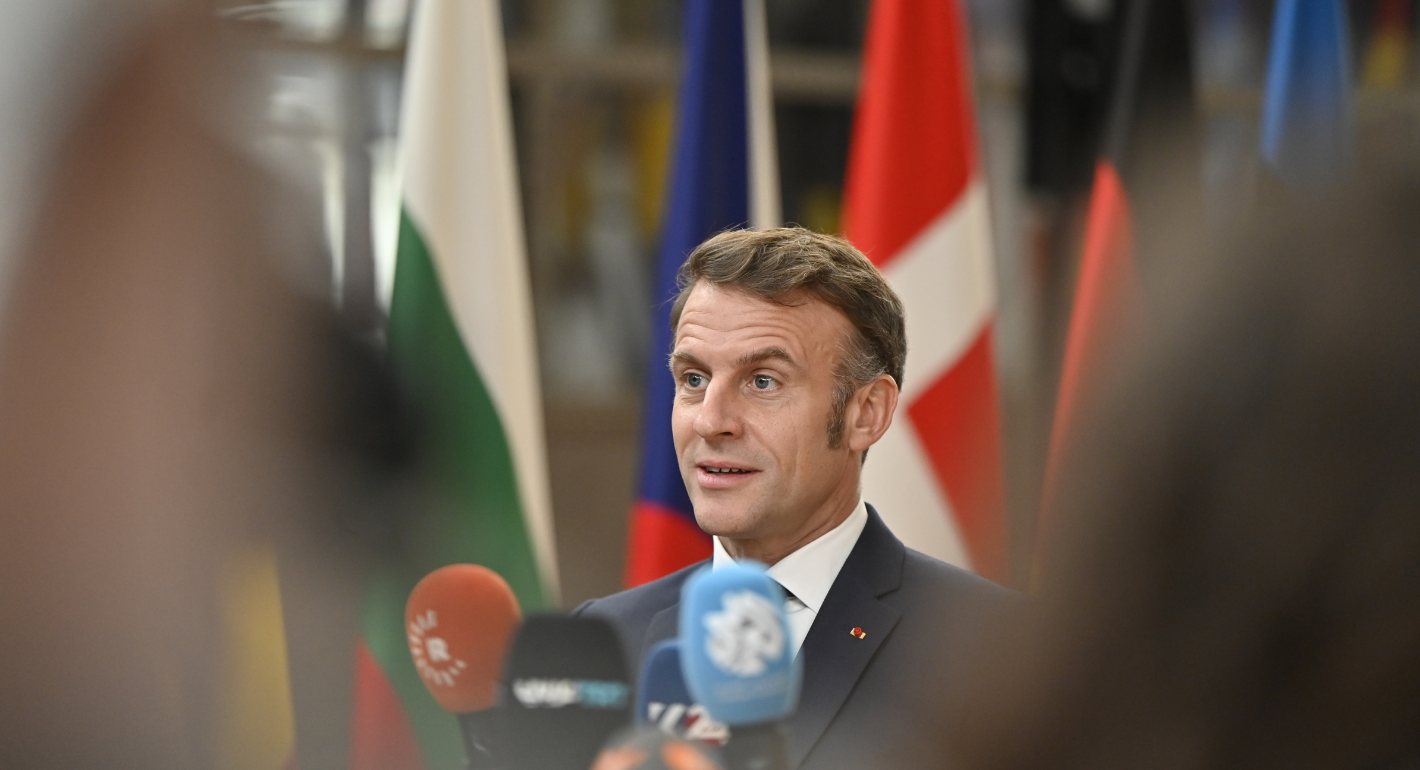
France has stopped clinging to notions of being a great power and is embracing the middle power moment. But Emmanuel Macron has his work cut out if he is to secure his country’s global standing before his term in office ends.
Rym Momtaz