

Commentary
Judy Dempsey
{
  "authors": [
    "Judy Dempsey"
  ],
  "type": "commentary",
  "blog": "Strategic Europe",
  "centerAffiliationAll": "",
  "centers": [
    "Carnegie Endowment for International Peace",
    "Carnegie Europe"
  ],
  "collections": [],
  "englishNewsletterAll": "",
  "nonEnglishNewsletterAll": "",
  "primaryCenter": "Carnegie Europe",
  "programAffiliation": "",
  "programs": [],
  "projects": [],
  "regions": [
    "Russia",
    "Western Europe",
    "Europe"
  ],
  "topics": [
    "Security",
    "Military",
    "Foreign Policy"
  ]
}
Source: Getty
Every week, a selection of leading experts answer a new question from Judy Dempsey on the foreign and security policy challenges shaping Europe’s role in the world.
Every week, a selection of leading experts answer a new question from Judy Dempsey on the foreign and security policy challenges shaping Europe’s role in the world.
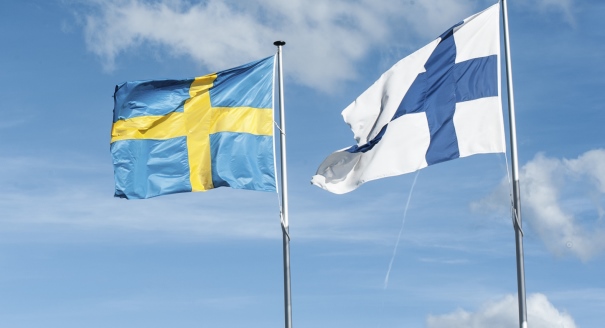
It seems rather pointless to discuss whether Finland and Sweden should join NATO since this clearly will not happen. Majorities in both countries remain opposed to NATO membership, and the two states’ strategic cultures carry too much baggage of neutrality or nonalignment. In the absence of a clear and present danger to their national security from Russia, membership is not a viable option for Finnish or Swedish decisionmakers.
Strategically, this is actually a good thing. From a NATO perspective, admitting Finland and Sweden would add little value since both countries already employ NATO procedures and participate in NATO exercises and missions. Their status as nonmembers forces them to spend more on defense than members of the alliance: both countries spend more than NATO’s European average, and both reacted to Russia’s annexation of Crimea by increasing their defense spending.
Finnish and Swedish cooperation with the alliance will now deepen to make NATO support more likely in the improbable event of Russian aggression against the two Nordic states. This desire will give NATO greater leverage to persuade Finland and Sweden to embrace NATO’s smart defense agenda than the alliance has with respect to its existing members. Maintaining the status quo is therefore a win-win situation for NATO and the two countries concerned.
Not only should Finland and Sweden join NATO, but they should have done so a long time ago. Isn’t it strange that these two Nordic countries—with such an obvious need for military support if push came to shove in Northern Europe—are still hesitating to join an alliance designed to provide defense for precisely such countries?
There is no popular support in Finland or Sweden for NATO membership, say the politicians. True, only a third of each country’s population wants it to join the alliance. But when people are asked whether they would support their government if it decided to apply for NATO membership, two-thirds reply affirmatively.
So, what is lacking in Finland and Sweden is bold and forward-looking political leadership on this issue. People are ready to follow, if such leadership materializes.
One tool that could help is a thorough and honest study of the pros and cons of NATO membership, widely distributed and popularly debated. The two countries could draft this study as a joint effort. That would increase citizens’ level of information on NATO and would make it easier for politicians to lead from the front, not hide behind the backs of voters.
It is not up to a German official to suggest that Sweden and Finland should join the Atlantic alliance. Still, it is interesting to see a debate emerging in both countries without NATO or any member of the alliance actively pushing for their membership. Arguably, Moscow’s new territorial expansionism has helped fuel the discussion, given that Finland shares a 1,340-kilometer (833-mile) border with Russia.
In Sweden in particular, the membership debate started long before the Ukraine crisis. Stockholm was extremely close to NATO during the Cold War, having adapted its entire defense posture to NATO standards. In the case of war with the Moscow-aligned Warsaw Pact, Sweden would have become a de facto NATO member overnight. A Swedish government report in the 1990s revealed these close links with NATO, putting Sweden’s traditional assertion of neutrality into perspective.
Should either Sweden or Finland decide to apply for NATO membership, it would not only be because of Russia and a desire for a security guarantee under NATO’s Article 5 mutual defense clause. More important is the fact that both countries fully share NATO’s values and contribute significantly to NATO operations—more than some current members do.
At the same time, due to their geography, both states are affected by almost any major decision that the alliance makes. Being NATO members would give Finland and Sweden a full vote and an impact on NATO’s course of action instead of just a consultative role. In turn, NATO would certainly profit from two new members who are true net contributors to the transatlantic security community.
The views expressed above are the responsibility of the author alone.
Membership in NATO would strengthen Finland’s security and enhance its defense capabilities. NATO is a community of democratic countries, and 22 of the EU’s 28 member states are also members of the alliance. Their population represents 95 percent of EU citizens.
Finland is an active partner of NATO and already cooperates closely with it. But as long as Finland is not a full member, it has no access to the alliance’s intelligence, planning, security guarantees, and decisionmaking. I wish to highlight these facts openly in the future as well.
However, it will not be possible for Finland to join NATO during the current legislature. Accession needs to be thoroughly discussed in Finland in the run-up to the 2015 parliamentary elections and the subsequent government negotiations. Finland’s accession to the alliance will be possible only on the basis of broad public support and agreement among key state institutions.
European security and defense policy and Nordic defense cooperation are both important, but they are not sufficient substitutes for NATO membership. The Swedish debate on its possible NATO membership is interesting, but in the end, Finland will have to make an independent decision. I refrain from commenting on Sweden’s possible accession to NATO.
Strategically, Sweden and Finland today share fundamental problems. Sweden relies officially on military cooperation with other countries—essentially, Nordic and EU countries and the United States—and has a limited, though increasingly professional, defense force. Finland has large but in part badly equipped armed forces consisting of conscripts and relies rhetorically on nonalignment.
Neither country can cope with the direct or indirect threat of a revanchist Russia. Joining NATO would solve this and a number of other security issues for both states. Thanks to NATO’s deterrence value, Sweden and Finland would get far more protection than their national defenses can ever achieve. Both countries would also gain greatly in terms of international influence through their seats at the North Atlantic Council, NATO’s decisionmaking body.
With all the Scandinavian and Baltic states as NATO members, a rational defense planning process for the Baltic Sea region as a whole could take place. This would minimize the freedom of action of any aggressor in the area. The current situation—in which Sweden and Finland exercise, cooperate, and integrate militarily in many ways with NATO without subscribing formally to its collective defense—might actually create instability and provide opportunities for an aggressor.
The author writes here in a personal capacity.
Yes, Finland and Sweden should join NATO, but it is by no means clear that they will. There is no doubt that both countries would represent a real asset for NATO, and the alliance would be delighted to take them in.
Being located in a strategically difficult environment, in direct proximity to an increasingly belligerent Russia, has encouraged both Sweden and Finland to get serious about their defense efforts. Today, their armed forces are more capable than those of many NATO members. Both countries have sizable, modern defense industries that are well incorporated into existing Western European networks as major stakeholders or collaborators.
Both Sweden and Finland have a long tradition of working with NATO. In fact, they are often better socialized into the alliance than some of its existing members. However, the two Nordic states also have a tradition of neutrality that is deeply ingrained in their political and strategic cultures. As a result, advocates of NATO membership, whose number is growing in both countries, will have a hard time working against established mind-sets.

Nonresident Senior Fellow, Carnegie Europe
Judy Dempsey is a nonresident senior fellow at Carnegie Europe
Recent Work
Judy Dempsey
Judy Dempsey
Carnegie does not take institutional positions on public policy issues; the views represented herein are those of the author(s) and do not necessarily reflect the views of Carnegie, its staff, or its trustees.

The battle over free speech has taken center stage since U.S. Vice President JD Vance accused Europe of censorship. From travel bans to social media regulation, especially around the Israel-Palestine conflict, are liberal democratic governments weaponizing free speech?

Rym Momtaz, ed.
Europe seems to have accepted its sidelining in the Middle East. The EU must reassert its support for the international rules-based order and step up engagement.
Rym Momtaz
Amid uncertainty caused by the Iran war, the global drive for nonproliferation has stalled. With Europe diplomatically marginalized and countries reassessing their nuclear options, efforts to curb the spread of nuclear weapons risk becoming irrelevant.

Jane Darby Menton
Preparing candidate countries for EU membership is no longer enough. As the enlargement process becomes a reality, the union must also prepare its own societies.

Iliriana Gjoni
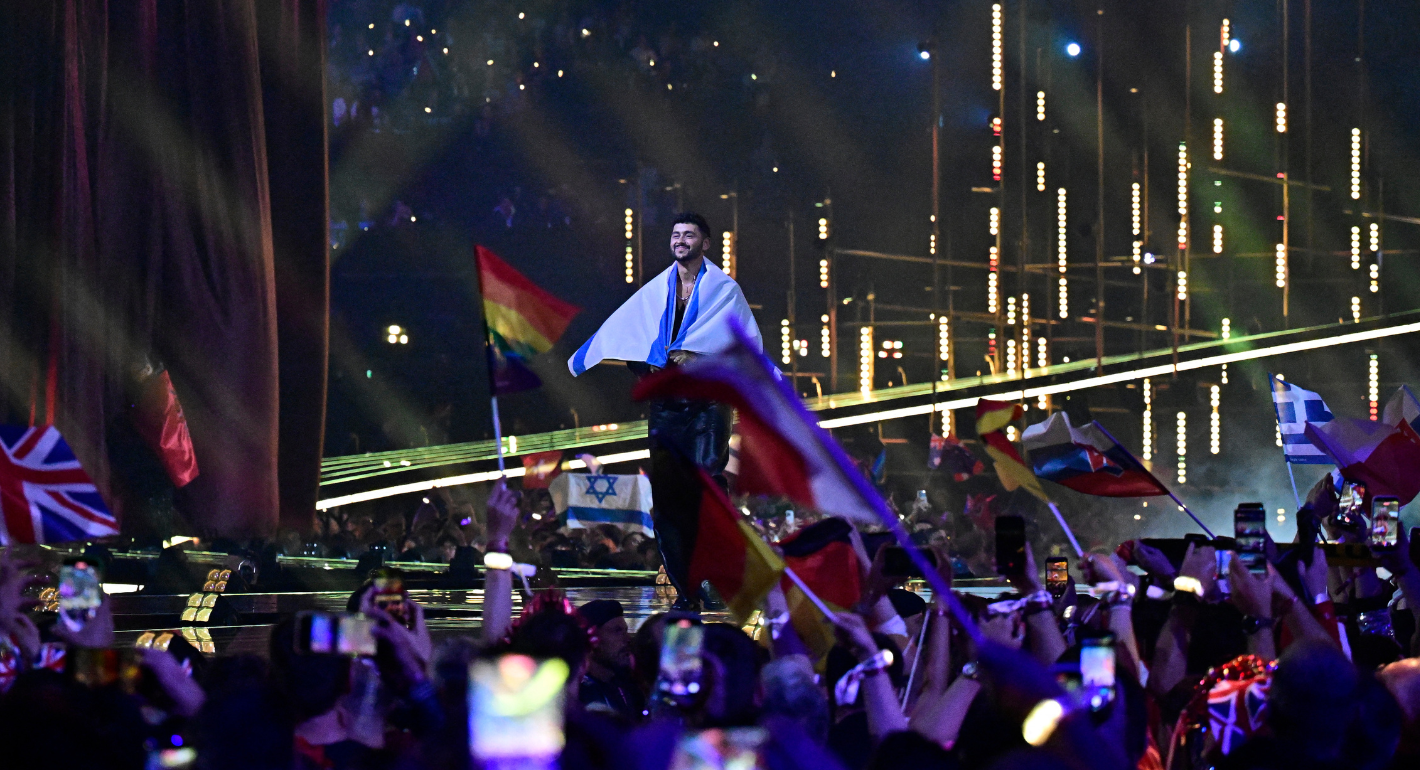
Five countries staged the biggest political boycott in Eurovision history over Israel’s participation. With the FIFA World Cup and other sporting or cultural touchstones on the horizon, are boycotts effective?
Rym Momtaz, ed.