

Commentary
Judy Dempsey
{
  "authors": [
    "Judy Dempsey"
  ],
  "type": "commentary",
  "blog": "Strategic Europe",
  "centerAffiliationAll": "",
  "centers": [
    "Carnegie Endowment for International Peace",
    "Carnegie Europe"
  ],
  "collections": [],
  "englishNewsletterAll": "",
  "nonEnglishNewsletterAll": "",
  "primaryCenter": "Carnegie Europe",
  "programAffiliation": "",
  "programs": [],
  "projects": [],
  "regions": [
    "Eastern Europe",
    "Russia",
    "Ukraine",
    "Western Europe",
    "Germany",
    "Europe"
  ],
  "topics": [
    "Security",
    "Foreign Policy",
    "EU"
  ]
}
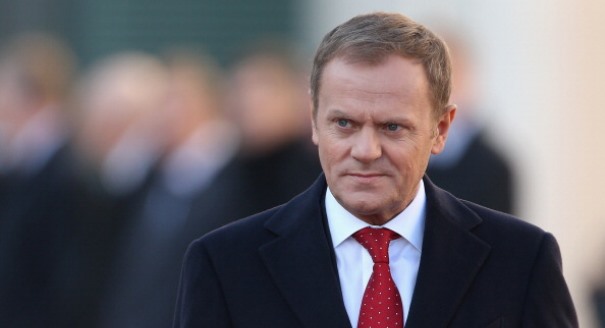
Source: Getty
Poland fears that Germany’s policy during the Ukraine crisis could undo the special relationship between Berlin and Warsaw. What a loss for Europe and what a gain for Russia!
One of the great unsung achievements in Europe over recent years has been the remarkable rapprochement between Germany and Poland.
After decades of tense relations, German Chancellor Angela Merkel and Polish Prime Minister Donald Tusk managed to build a close alliance and even friendship between their two countries. Yet this now risks becoming undone because of fundamental differences over Russia that have emerged during the Ukraine crisis.
Previous German chancellors had tiptoed toward improving relations with their most important Eastern European neighbor. But they kept looking at Poland through the prism of Germany’s close relations with Russia.
To cap it all, bilateral trade between Germany and Poland is higher than between Germany and Russia. In 2013, Poland was Germany’s tenth-largest trading partner with a turnover of €78.1 billion ($107.1 billion), while Russia came in eleventh with €76.5 billion ($104.9 billion).
Just as importantly, Poland and Germany together worked hard to build a special triangular relationship with Russia. That was not easy for Poland, given a history of invasion and occupation by Russia that is no lighter than what it experienced with Germany.
Tusk’s Civic Platform government, in power since 2007, has made the strategic choice of improving relations with Berlin, on the one hand, and Moscow, on the other. That strategy gave Poland more clout inside the EU because it couldn’t be seen as either anti-Russian or anti-German.
It also meant that Russia could no longer play Germany off against Poland, as it had tried to do in 2005 by imposing a ban on Polish meat exports to Russia. When Poland retaliated by saying it would veto any new EU trade partnership with Russia, Merkel took Warsaw’s side. The Russian ban was soon lifted.
That strategy paid off in other ways, too. The inhabitants of Kaliningrad, a Russian exclave sandwiched between Lithuania and Poland, are now able to travel to Poland without a visa. That could not have happened without the Warsaw-Berlin-Moscow axis and without Warsaw and Berlin jointly lobbying the EU for a visa exemption for Russian citizens.
Now, according to Polish and German analysts, the Ukraine crisis and Germany’s policy toward Russia risk destroying this unique edifice. The reason is that the Poles suspect that Merkel, despite having been extremely critical of Putin’s policies in Ukraine, may compromise with Russia for the sake of stability.
Of course, all European governments would support efforts to restore stability in Ukraine. The specter of a return of the partisan war that was so bitterly waged during the Second World War and afterward is too awful to contemplate.
What worries Polish analysts—and some German ones—is that Germany may be tempted to make stabilization such a priority that Berlin will tacitly accept Russia’s annexation of Crimea. And they are concerned that Germany will turn a blind eye to Moscow’s continuing influence on what remains of Ukraine, including a gradual federalization of the country.
In other words, Poland fears that Germany will not make the hard decisions required to stop Russia from acting again.
One such decision, according to Warsaw, would be to have NATO troops permanently deployed in Poland and the Baltic states. Berlin opposes that on the grounds that it would provoke Russia (as if it needed any provoking).
Warsaw also has qualms about the composition of planned roundtable talks on Ukraine’s future. The chairman of the discussions, former German diplomat Wolfgang Ischinger, proposed including pro-Russian militia groups in the talks. Germany is broadly in favor, but Poland fears that this could legitimate the militias’ actions. Overall, Poland sees a Germany that is unwilling to go the long haul with Russia, especially over sanctions.
If that is the case, then Germany’s role in the Ukraine crisis could weaken the EU vis-à-vis Russia, not strengthen it. This would certainly be what Russian President Vladimir Putin is hoping for, and what Poland and the Baltic states fear.
The short-term stability that Germany, other European countries, and the United States yearn for has already proven expensive. The West has tacitly accepted, but not recognized, Russia’s annexation of Crimea. It’s the same with South Ossetia and Abkhazia, which Russia has effectively controlled since a brief war with Georgia in 2008.
What worries the Poles is that if stability in Ukraine returns under terms suitable to the Kremlin, it may only be a matter of time before it is business as usual with Russia. That would give Russia the space to make another move.

Nonresident Senior Fellow, Carnegie Europe
Judy Dempsey is a nonresident senior fellow at Carnegie Europe
Recent Work
Judy Dempsey
Judy Dempsey
Carnegie does not take institutional positions on public policy issues; the views represented herein are those of the author(s) and do not necessarily reflect the views of Carnegie, its staff, or its trustees.

In supporting Europe’s far-right, MAGA and Russia both want the same thing: a weaker EU. Europe must defend itself without abandoning the openness these forces exploit.

Armida van Rij

As we close out another season of Strategic Europe, it is worth taking stock of the deep shifts underway.

Rym Momtaz
The EU had to compromise to adopt a twenty-first sanctions package against Russia, exposing growing cracks in the union’s resolve. Is this latest, weaker round worth it to keep pressure on Moscow?
Rym Momtaz, ed.

Trump is distracted and Ukraine wants Europe to step up. The continent’s leaders must find their voice and assert it in talks with Russia.

Alissa de Carbonnel

Mounting economic strain and battlefield losses will not necessarily make the Kremlin less dangerous. They could instead push Moscow toward a more aggressive hybrid campaign designed to test NATO’s Eastern flank, exploit allied hesitation, and fracture European resolve.

Maksym Beznosiuk