

Commentary
Judy Dempsey
{
  "authors": [
    "Judy Dempsey"
  ],
  "type": "commentary",
  "blog": "Strategic Europe",
  "centerAffiliationAll": "",
  "centers": [
    "Carnegie Endowment for International Peace",
    "Carnegie Europe"
  ],
  "collections": [
    "Europe’s Eastern Neighborhood"
  ],
  "englishNewsletterAll": "",
  "nonEnglishNewsletterAll": "",
  "primaryCenter": "Carnegie Europe",
  "programAffiliation": "",
  "programs": [],
  "projects": [],
  "regions": [
    "Europe",
    "Eastern Europe",
    "Ukraine",
    "Russia"
  ],
  "topics": [
    "Foreign Policy",
    "EU"
  ]
}
Source: Getty
When European foreign ministers meet on July 22 they might finally understand what the downing of MH17 means for their policy toward Russia.
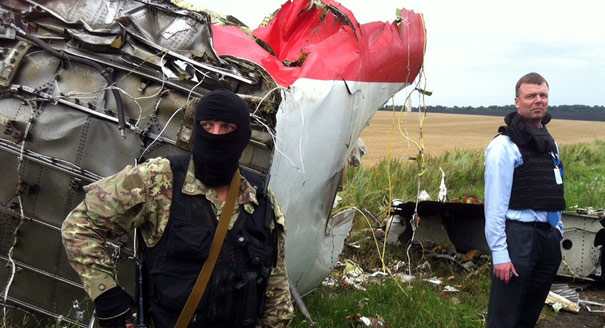
The way in which armed, pro-Russian rebels have prevented investigators from visiting the crash site of Malaysia Airlines flight 17 is shocking.
It’s shocking not only for the families of those who died in this terrible tragedy. They have had to endure television footage of the wreckage without being able to claim the bodies. They have also had to face a stream of propaganda coming out of Russia’s state-controlled media and from Ukraine as well.
Above all, it’s shocking because European leaders, five days after the tragedy, can only threaten Russian President Vladimir Putin with more sanctions. As if they didn’t have the chance to impose much tougher sanctions weeks ago.
But when? Is this yet another delaying tactic to preempt sanctions? And if Putin insists that the rebels did not shoot down MH17, then what has he to hide when it comes to ordering the rebels to hand over the flight’s black box? It is all too clear that the longer the rebels and Russian intelligence experts have access to the site, the more the evidence will be contaminated. This is a damning indictment of Putin’s worldview.
This is not the time to give Putin more time. European leaders have been making that mistake repeatedly since Russia annexed Crimea in March. Not only have most European leaders de facto accepted the annexation of Crimea, they have encouraged Russia to meddle and destabilize eastern Ukraine even further—precisely because the European response has been weak and divided and the two rounds of sanctions were simply insufficient to change Putin’s mind.
Instead, the Europeans dispatched the OSCE to eastern Ukraine and established a special contact group to negotiate with the rebels. But the OSCE, despite all the goodwill, is toothless because it lacks the political means to change Europe’s policy toward Russia. It showed the helplessness of their efforts when armed rebels took unarmed OSCE diplomats hostage in April.
After all the mistakes and hand-wringing by European leaders over the situation in eastern Ukraine, and now the downing of a commercial aircraft, this surely is the time to act decisively. Tough sanctions should be imposed immediately. Yes, it will give Putin even more of an opportunity to rail against the West and again resort to calling the government in Kiev a bunch of fascists. And yes, his domestic ratings will go up even further. But none of this is new.
Furthermore, with a huge show of political will, all the countries that had citizens on board MH17 should agree to send investigators, together in large numbers and in protected vehicles, to the crash site. This is Ukrainian territory. This will demand nerves of steel. But now is the time to hold and act together—and not waver, which Putin expects.

Nonresident Senior Fellow, Carnegie Europe
Judy Dempsey is a nonresident senior fellow at Carnegie Europe
Recent Work
Judy Dempsey
Judy Dempsey
Carnegie does not take institutional positions on public policy issues; the views represented herein are those of the author(s) and do not necessarily reflect the views of Carnegie, its staff, or its trustees.

The European Commissioner for Trade is headed to China. But after President Xi’s bridge-building visit to Washington, can a more isolated EU overcome Beijing’s stranglehold on critical raw materials? Who will blink first?

Rym Momtaz, ed.

The domestic impacts of how long it is taking to end the war in Ukraine have pushed the French electorate to the political extremes and compromised the country’s diplomatic capacity.
Rym Momtaz

Before the next wave of EU enlargement takes place, the union needs to grapple with thorny questions of how power is distributed among its members.


Emil Sondaj Hansen, Ditte Brasso Sørensen

A summer of escalation in the Black Sea has hurt Ukraine economically and is exacerbating world food security. A truce is needed—as is a broader reframing of Europe’s Ukraine strategy.

Thomas de Waal

Are Germany’s economic, industrial, and political struggles becoming a liability for the EU’s ability to rise to the geopolitical moment?
Rym Momtaz, ed.