

Commentary
Judy Dempsey
{
  "authors": [
    "Judy Dempsey"
  ],
  "type": "commentary",
  "blog": "Strategic Europe",
  "centerAffiliationAll": "",
  "centers": [
    "Carnegie Endowment for International Peace",
    "Carnegie Europe"
  ],
  "collections": [],
  "englishNewsletterAll": "",
  "nonEnglishNewsletterAll": "",
  "primaryCenter": "Carnegie Europe",
  "programAffiliation": "",
  "programs": [],
  "projects": [],
  "regions": [
    "Europe",
    "Western Europe"
  ],
  "topics": [
    "Foreign Policy",
    "Security",
    "Military",
    "EU"
  ]
}
Source: Getty
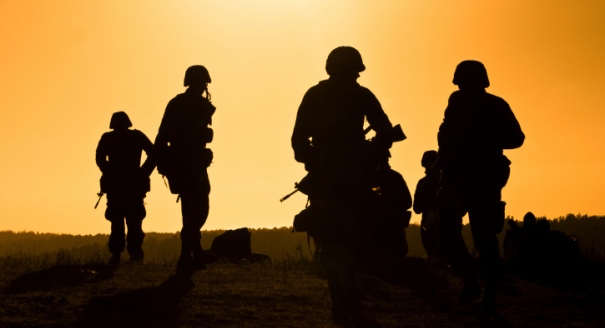
EU member states’ armed forces are unable to provide the necessary military hardware to support soft-power tasks. That undermines Europe’s foreign policy ambitions.
Over the past few weeks, the military spotlight in Europe has been on the sorry state of Germany’s armed forces, or Bundeswehr.
German Defense Minister Ursula von der Leyen had commissioned an independent consortium of experts to look into the state of the Bundeswehr. In its findings, the group identified 140 problems and risks in nine major arms projects. For Europe’s biggest economy and the EU member state with the biggest number of soldiers, it was a pretty damning report.
Yet Germany is not alone in its shortcomings.
Europeans’ reluctance to embrace hard power coincides with an arc of growing instability along Europe’s Eastern and Southern neighborhoods. That trend was apparent even before the Ukraine crisis, Russia’s annexation of Crimea, and Moscow’s proxy takeover of Ukraine’s eastern Donbas area. Now, the instability on the EU’s doorstep can no longer be ignored.
If European governments and EU leaders think soft power is sufficient to contain conflicts or project influence, they are mistaken. To have any impact, soft power needs the support of military hardware. Without such essential hardware—be it military air transport and logistics, intelligence, or protection for soldiers—the effect of soft power is weakened.
Soft power is about much more than relying on diplomacy, offering development aid, or funding nongovernmental organizations. It is also about building state institutions, protecting refugees, and providing security for essential infrastructure such as energy supplies, shipping lanes, and border controls.
Europeans are deluded if they think soft power is effective without hard power.Tweet This
Because these tasks are increasingly taking place in conflict zones, they require the support of hard power—which means the availability of well-equipped and well-trained armed forces. Yet either Europe’s means to support these aspects of soft power are decreasing or there is a reluctance to accept that soft power needs the backing of hard power. A report earlier this year by a select committee of the UK parliament raised precisely these issues.
Defense budgets across Europe are falling. But that is not the main reason for the gradual demilitarization of Europe’s armed forces. Nor is this trend mostly due to public opposition to more big military missions such as the operation NATO is ending in Afghanistan or the alliance’s failed mission in Libya.
The main reason for the shift, say defense experts, is that Europe’s biggest countries are not thinking or acting strategically.
This has immense implications for Europe’s foreign policy ambitions. Without a strong defense and security policy, Europe will be unable to project any role as a global player—or even as a soft-power player.
Europe has been unable to provide a strong and collective response on #Ebola, #Ukraine, or #ISIS.Tweet This
Recent events confirm this, as Europe has been unable to provide a strong and collective response to the three major crises.
The first is the Ebola virus that is killing hundreds of people a day in Liberia, Guinea, and Sierra Leone. The second is the conflict in eastern Ukraine, which continues to threaten the stability of Eastern Europe. The third is the war being waged by the Islamic State across Iraq and Syria.
In all three cases, the EU is playing no strategic or security role. Take the Ebola virus. The United States reacted by sending troops to Liberia to assist in containing the outbreak. Already, about 700 soldiers have been deployed in the country, where they are helping to build hospitals. The Pentagon reckons a total of up to 4,000 troops could be sent in the coming weeks.
Meanwhile, British troops are building an emergency hospital in Freetown, Sierra Leone, while French soldiers are doing the same in neighboring Guinea. But the EU, so far, is providing no security or military assistance to help build hospitals, transport the sick, or provide essential medical evacuation flights.
Similarly, amid the Ukraine crisis, the EU is playing no role in providing intelligence or security to its own Eastern members. Again, it is the United States and NATO that have taken the lead in boosting the defenses of Poland, the Baltic states, and Romania. The contribution of the European allies is far below expectations.
And then there is the Islamic State. Understandably, the EU is unwilling to get involved militarily. But can’t the member states use their armed forces to protect or evacuate refugees from Iraq and Syria?
In all three cases, Europe is almost a bystander—as if it were oblivious to the threats that confront the continent. If European governments cling to the belief that soft power is a substitute for hard power, then they will be completely unprepared to deal with any crisis once it reaches the EU itself.

Nonresident Senior Fellow, Carnegie Europe
Judy Dempsey is a nonresident senior fellow at Carnegie Europe
Recent Work
Judy Dempsey
Judy Dempsey
Carnegie does not take institutional positions on public policy issues; the views represented herein are those of the author(s) and do not necessarily reflect the views of Carnegie, its staff, or its trustees.

A summer of escalation in the Black Sea has hurt Ukraine economically and is exacerbating world food security. A truce is needed—as is a broader reframing of Europe’s Ukraine strategy.

Thomas de Waal

Are Germany’s economic, industrial, and political struggles becoming a liability for the EU’s ability to rise to the geopolitical moment?

Rym Momtaz, ed.

European Commission President Ursula von der Leyen is about to give her annual address on the state of the EU. Here’s what she won’t—but should—say.
Rym Momtaz

The aftermath of the Ceuta crisis shows Europe has drawn the wrong lessons. Rather than doubling down on failed migration policies, the EU needs to address the underlying roots of such episodes.

Richard Youngs

An overwhelming victory by a far-right-wing party in a small state in eastern Germany will have major repercussions for Chancellor Friedrich Merz’s coalition.
Judy Dempsey