

Commentary
Judy Dempsey
{
  "authors": [
    "Judy Dempsey"
  ],
  "type": "commentary",
  "blog": "Strategic Europe",
  "centerAffiliationAll": "",
  "centers": [
    "Carnegie Endowment for International Peace",
    "Carnegie Europe"
  ],
  "collections": [
    "Europe’s Eastern Neighborhood"
  ],
  "englishNewsletterAll": "",
  "nonEnglishNewsletterAll": "",
  "primaryCenter": "Carnegie Europe",
  "programAffiliation": "",
  "programs": [],
  "projects": [],
  "regions": [
    "Europe",
    "Eastern Europe",
    "Ukraine"
  ],
  "topics": [
    "Democracy",
    "EU",
    "Civil Society"
  ]
}
Source: Getty
In parliamentary elections on October 26, Ukrainians voted for a pro-Western course. The country’s leaders must stick to that path and not squander this opportunity again.
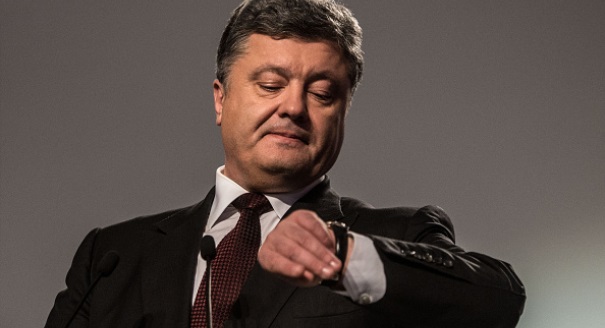
Petro Poroshenko is basking in victory. In Ukraine’s parliamentary election on October 26, his bloc won 23 percent of the vote. This is Poroshenko’s second major victory since May, when he was elected president. The result confirms his popularity and support for his efforts to bring peace and stability to Ukraine.
This could be Ukraine’s chance for a new beginning since the country became independent from the Soviet Union in 1991. It could also be a chance for the European Union to decide once and for all what kind of long-term strategy it wants to forge with Ukraine.
For the EU to congratulate Ukraine on its pro-Western choice is not enough to secure the country’s future. Providing enormous amounts of financial assistance is not sufficient either. Ukraine needs something more fundamental. The EU must decide about the future of its influence in Eastern Europe. In practice, that means asking how far the EU is prepared to enlarge eastward and, inevitably, what kind of relationship it wants with Russia.
Poroshenko and Yatsenyuk have pledged to introduce far-reaching reforms, although little has been achieved so far. Now, the leaders have few excuses if it turns out that the overwhelming majority in the 450-member Rada, or parliament, is pro-Western. That is not yet clear. About half of the seats were elected through party lists. Pro-European forces obviously did very well, but it will take time to analyze the remaining, single-mandate seats.
Moreover, for the first time since Ukraine’s independence, the Communists failed to get elected. And while the Rada also includes Svoboda (Freedom), an extreme right-wing nationalist movement supported by the ousted president, Viktor Yanukovych, the party’s members are too weak to block reforms. In short, this is the chance for Ukraine’s leaders to match their pro-Western rhetoric with fundamental reforms.
Poroshenko seems in a hurry.
Speaking at a news conference on the evening of election day, he said the People’s Front would be the “main partner” in any parliamentary coalition. Talks to form a majority could begin on October 27. Poroshenko wanted to wrap up the negotiations quickly to form Ukraine’s “best government.”
#Ukraine's leaders must match their pro-Western rhetoric with reforms.Tweet This
Ukraine’s new executive faces immense challenges. The biggest one is to show to the West—and, more importantly, to Ukraine’s neighbors—that the country can introduce reforms even though Russia has done everything possible to prevent this. The fact that parts of eastern Ukraine are now a de facto frozen conflict should not distract from the government’s reform efforts.
Indeed, other frozen conflicts that pepper the region—the Nagorno-Karabakh dispute between Armenia and Azerbaijan and the stalemate over the breakaway region of Transnistria in Moldova—show the value of such situations for Russia. Moscow can use these conflicts as pressure points on any reform-minded government.
Ukraine must buck this trend.
Introducing reforms does not mean that the new government is turning its back on what Russia is doing in eastern Ukraine and Crimea. On the contrary, pressing ahead with long-overdue reforms shows that Russia’s actions will not deter Poroshenko and Yatsenyuk.
If Ukraine’s leaders fail in this regard, Russia’s tactics will have succeeded. A Ukraine that is a strong and vibrant democracy underpinned by reforms should, rationally, be in Russia’s interests—but that is not so under President Vladimir Putin.
Ukraine’s reform agenda is gargantuan, to say the least. Reports published by the European Bank for Reconstruction and Development, which uses investment to help build market economies, explain in detail how the entire state apparatus is dysfunctional.
#Poroshenko faces a huge challenge of rebuilding all of #Ukraine's institutions.Tweet This
It is easy to blame Yanukovych, who was ousted from power in February after massive pro-democracy demonstrations in Kiev and other Ukrainian cities, for weakening and corrupting the basic state structures. But that process was well in train during the 1990s. Poroshenko’s team faces a huge challenge of rebuilding from scratch all of Ukraine’s institutions.
To do that, the president needs well-paid civil servants and experts who are free from the bondage of corruption established by the country’s oligarchs and by its weak and squabbling leaders. This is where EU financial assistance could make a big difference in providing Ukraine’s budget with funds to build up and finance a “clean” civil service.
Poroshenko also needs strong, independent, and competent civil society groups to monitor Ukraine’s ministries, courts, judiciary, and security services.
To outsiders, these reforms are not visible. But to ordinary Ukrainians, they matter a huge amount. Ukraine’s citizens have had to endure years of endemic corruption throughout the state administration and the state-run economy. They have had to pass bribes to officials for access to basic services. They want this to end. That is the change Ukrainians voted for on October 26.

Nonresident Senior Fellow, Carnegie Europe
Judy Dempsey is a nonresident senior fellow at Carnegie Europe
Recent Work
Judy Dempsey
Judy Dempsey
Carnegie does not take institutional positions on public policy issues; the views represented herein are those of the author(s) and do not necessarily reflect the views of Carnegie, its staff, or its trustees.

Before the next wave of EU enlargement takes place, the union needs to grapple with thorny questions of how power is distributed among its members.


Emil Sondaj Hansen, Ditte Brasso Sørensen

A summer of escalation in the Black Sea has hurt Ukraine economically and is exacerbating world food security. A truce is needed—as is a broader reframing of Europe’s Ukraine strategy.

Thomas de Waal

Are Germany’s economic, industrial, and political struggles becoming a liability for the EU’s ability to rise to the geopolitical moment?

Rym Momtaz, ed.

European Commission President Ursula von der Leyen is about to give her annual address on the state of the EU. Here’s what she won’t—but should—say.
Rym Momtaz

The aftermath of the Ceuta crisis shows Europe has drawn the wrong lessons. Rather than doubling down on failed migration policies, the EU needs to address the underlying roots of such episodes.

Richard Youngs