

Commentary
Nathalie Tocci, Jan Techau
{
  "authors": [
    "Jan Techau"
  ],
  "type": "commentary",
  "blog": "Strategic Europe",
  "centerAffiliationAll": "",
  "centers": [
    "Carnegie Endowment for International Peace",
    "Carnegie Europe"
  ],
  "collections": [
    "EU Integration and Enlargement"
  ],
  "englishNewsletterAll": "",
  "nonEnglishNewsletterAll": "",
  "primaryCenter": "Carnegie Europe",
  "programAffiliation": "",
  "programs": [],
  "projects": [],
  "regions": [
    "Europe",
    "Western Europe"
  ],
  "topics": [
    "EU",
    "Economy",
    "Climate Change"
  ]
}
Source: Getty
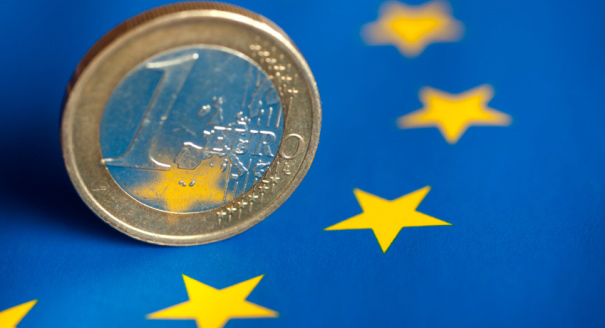
Europeans must save the euro and, more importantly, draw the consequences of the current crisis. That means preparing for political union.
It might be a tad unpopular to say such a thing at the moment, but the European Union’s common currency, the euro, was and is the right project at the right time. Scores of commentators claim these days that the euro—an idea that was meant to cement European unity—has turned into an explosive that is now bound to destroy the EU.
This might very well be, but such a failure would not be the euro’s fault. It would be the fault of Europeans, people and leaders alike, who have decided to demonstrate, willingly or unwillingly, that they have fundamentally misunderstood the political dynamics of globalization.
The euro is the right kind of project at a time when Europe—an aging, resource-dependent, inherently unstable, and decreasingly economically dynamic continent—seeks to maintain its standard of life, its affluence, its relative political stability, and its say in international affairs.
And it is the right kind of project at a time when Europe’s immediate and wider neighborhood, from the Arctic to North Africa, demands the united attention of all European countries. Instability and war in those regions can and will affect Europe’s peace and stability directly.
The euro was originally designed to make European integration irreversible by forcing Europe’s nations to integrate politically as a result of deep economic integration. The goal was to create peace in a traditionally violent continent through integration so deep and comprehensive that the old patterns of European conflict would become obsolete.
And the euro created exactly that kind of dynamic. Monetary union pressed ahead with economic integration so dramatically that much deeper political cooperation became necessary to keep the powers at bay that the euro unleashed. The financial crisis after the 2008 collapse of Lehman Brothers demonstrated the impossibility of integrating economically without also integrating politically.
The Greek crisis is a direct result of the failure of member states to draw the inevitable conclusions from the deep economic integration they voluntarily embraced. When European leaders failed to create a system of political governance commensurate with the need to administer an economy united by a single market, a shared trade policy, sophisticated competition laws, and a common currency, they unleashed the powers of political undergovernance. Where an orderly adjustment can’t be organized, a disorderly adjustment will find its own way to correct mistakes.
The key point is that the pressure—created by the euro—to make big political decisions in Europe has very little to do with the currency itself. The euro only accelerated a process that had been long in the making before the currency’s inception. Even without the euro, there would have been the same kind of pressures on Europe to either integrate or fall by the wayside of history, only perhaps in a less compressed, less concentrated way.
The euro was designed to create peace in Europe. Now, it has turned into the project that will decide whether Europe can survive in a world that has become more integrated, more populated, more competitive, less stable, more dangerous, and less governable. The kind of political integration the euro dictates is precisely the kind of unity Europe will need anyway—with or without the euro—if it wants to preserve both its internal peace and its external edge.
The common currency has at least one achievement: the question of political integration can no longer be avoided. The European Union could perhaps survive the downfall of the euro. But Europe would most likely not survive the failure to unite in the face of existential threats and global challenges.
So what should Europeans do? Save the euro, but then draw the consequences: prepare for political union. Make the eurozone the starting point of the process. This is where, during the crisis, the EU already put in place many building blocks for political union. Now, the EU should systematize those blocks and prepare to give the eurozone a new governance treaty after the French and German elections are over in 2017.
Again, Europeans should draw the consequences: prepare for a two-speed Europe, because this will inevitably be the result of further integration. They should create a constitutional arrangement for the EU that can accommodate one highly integrated core, the eurozone, and one less integrated group without the euro, ideally led by the UK. And they should expect that not all eurozone members will want to take that step, so some will leave the group even before the new setup emerges.
Within the eurozone, consequences will again follow. If the EU establishes a political union—the core of which will be a fiscal union, a unified budgetary process, a transfer union, and partly harmonized tax regimes—this entity will require new ways of legitimizing itself. Indirect mandates (such as those that national governments bring to the European Council when they legislate there) or half-baked ones (such as the European Parliament claims for itself) will no longer suffice to root legislative and executive action in the will of the people.
None of this necessarily means a federal Europe in the classic sense. Political integration would not have to lead to the centralization of all state functions. Quite on the contrary: this new arrangement would only be accepted if it left local and regional traditions, cultures, forms of governance, and identities untouched.
If, however, the euro is saved but the political conclusions are not drawn, then one of two outcomes will happen: either Europe will collapse altogether in a disorderly way, only a bit later; or Europe will muddle through, paying enormous amounts of money to artificially balance a structurally unbalanced political order.
It is crunch time. That’s not the euro’s fault. The euro only reminds Europeans that they must either unite or become irrelevant.

Director, Europe Team, Eurasia Group
Techau is director with Eurasia Group's Europe team, covering Germany and European security from Berlin. Previously, he was director of Carnegie Europe.
Recent Work

Nathalie Tocci, Jan Techau
Jan Techau
Carnegie does not take institutional positions on public policy issues; the views represented herein are those of the author(s) and do not necessarily reflect the views of Carnegie, its staff, or its trustees.
The EU had to compromise to adopt a twenty-first sanctions package against Russia, exposing growing cracks in the union’s resolve. Is this latest, weaker round worth it to keep pressure on Moscow?

Rym Momtaz, ed.
Trump is distracted and Ukraine wants Europe to step up. The continent’s leaders must find their voice and assert it in talks with Russia.

Alissa de Carbonnel

Mounting economic strain and battlefield losses will not necessarily make the Kremlin less dangerous. They could instead push Moscow toward a more aggressive hybrid campaign designed to test NATO’s Eastern flank, exploit allied hesitation, and fracture European resolve.

Maksym Beznosiuk

Over the past ten years, NATO has held almost as many summits as it did during the entirety of the Cold War. Are they still useful, or is it time to stop holding annual meetings?
Rym Momtaz, ed.
Nearly a year and a half after Europeans leaned into sucking up to Trump, the strategy has produced some benefits when it comes to Ukraine.
Rym Momtaz