

Commentary
Trump is distracted and Ukraine wants Europe to step up. The continent’s leaders must find their voice and assert it in talks with Russia.
Alissa de Carbonnel
{
  "authors": [
    "John Kornblum"
  ],
  "type": "commentary",
  "blog": "Strategic Europe",
  "centerAffiliationAll": "",
  "centers": [
    "Carnegie Endowment for International Peace",
    "Carnegie Europe"
  ],
  "collections": [],
  "englishNewsletterAll": "",
  "nonEnglishNewsletterAll": "",
  "primaryCenter": "Carnegie Europe",
  "programAffiliation": "",
  "programs": [],
  "projects": [],
  "regions": [
    "Europe",
    "Western Europe",
    "Germany"
  ],
  "topics": [
    "EU"
  ]
}

Source: Getty
The German economy is out of balance with those of other EU member states. Increasingly, Germany’s strength is blamed for Europe’s woes.
What’s not to like? After a disastrous flirt with global power in the nineteenth and twentieth centuries, Germany has become an almost model country.
It is peaceful, industrious, and progressive, and it pays its bills. Responsibility and stability are its basic credos. New ideas take hold only after they are tested against Germany’s traditional values. But when they do, Germany often moves to the head of the pack.
Recent statistics revealed that 85 percent of all personal purchases in Germany are still transacted in cash. In fact, nearly 13 billion deutsche marks (€6.6 billion, or $7.3 billion) in notes and coins remain in circulation. And many stores continue to accept this obsolete currency as legal tender. Even so, Germany has rapidly moved to the top of the European start-up chart. Unemployment in April 2015 was 4.7 percent. The European average was more than double that.
In other words, this is Ronald Reagan’s world. Germany is a nation of well-scrubbed, honest people who do not threaten anyone, who go to bed early, and who work hard. Germans also make the world’s best industrial goods and—for now, at least—have the best football team.
So what has caused Greeks to sport Hitler mustaches? Why did German Green politician Reinhard Bütikofer recently state that “the heartless, domineering, and ugly German has a face again, and it is the face of [German Finance Minister Wolfgang] Schäuble”? Why do real or imagined French philosophers talk about Germany in terms usually reserved only for the Americans?
There are many reasons, of course. As the rest of the continent has been unable to cope, Germany has become a pillar of stability at the center of a weakened neighborhood. The German economy is out of balance with those of other EU member states. Increasingly, Germany’s strength is blamed for Europe’s woes.
The great British-American historian Walter Laqueur commented in 2013: “Europe will not be buried by ashes, like Pompeii or Herculaneum, but Europe is in decline. It’s certainly horrifying to consider its helplessness in the face of the approaching storms. After being the center of world politics for so long, the old continent now runs the risk of becoming a pawn.”
Under such conditions, questions about Europe’s future are spreading. European Commission President Jean-Claude Juncker recently admitted that as an elite project, the EU had lost contact with its citizens. Europe should rethink everything, he suggested.
But rethinking everything suggests that there should be an answer. And Germany’s answers are different from those of most European countries. Financial Times commentator Wolfgang Münchau reckons that only six other members of the EU see the world through German eyes. The country’s Foreign Minister Frank-Walter Steinmeier put the point bluntly in a recent policy review when he stated that Germany must avoid being forced to choose between maintaining its economic dynamism and continuing European solidarity.
There you have it. Two words define the battle of visions for the future of Europe: efficiency and solidarity. Those who berate the Germans for their lack of compassion and solidarity haven’t cracked the code. To most Germans, the word “solidarity” is shorthand for the final victory of wastefulness and indolence over the stability of the deutsche mark world. It took the blatant cheating of Greece to slam the point home.
Germany’s approach to the Greek crisis is in fact a textbook version of the mechanisms German society has developed to compensate for its national fear of the unknown.
In a nation traumatized by violent upheavals, voters seem to demand an emotional insurance policy before accepting something new. New ideas must be sold as not really changing anything. Change must be seen as a method of strengthening existing stability, not as a new way of doing things. German Chancellor Angela Merkel has become especially adept at making new ideas sound like old ones. Thus, it’s OK to hoard your old deutsche marks, because the euro is really the deutsche mark in disguise. Unless the Greeks (or maybe the Americans) destroy it, of course.
Some commentators have been pointing to Germany’s fixation with rules. But rules are the symptom rather than the cause. Germany had no problem breaking the rules in 2003 when its own deficit exceeded the 3 percent level set by the EU’s Stability and Growth Pact. But Berlin knew it would pay the money back. Increasingly, Germany doesn’t trust most of the rest of Europe to do the same.
Behind the rules is an existential fixation with maintaining the basic tenets of a society that has clawed its way back from near-annihilation. Many Germans have told me with a straight face that as long as the United States didn’t understand the importance of burying its power lines, they couldn’t trust America. Really? Apparently, power outages are somehow seen as a first step to chaos.
In other words, what the world wants from Germany is the one thing the country’s leaders probably cannot deliver: that Germany grow up and lead with the graciousness, compassion, and, above all, flexibility urgently needed from Europe’s most indispensable leader.
Germany is still far from building the inner equilibrium that is an essential foundation for playing confidently in the risk-and-reward culture of a globalized world. Until it somehow masters the alchemy of turning the winds of globalization into the soft breezes of stability, today’s Germany will lack the resilience to apply its influence cooperatively with others.
America’s failure to understand this special German approach to change has been one of the major contributors to the image of German insensitivity in Greece. By preaching American solutions to a nation incapable of accepting them, both U.S. President Barack Obama and his predecessor George W. Bush severely weakened America’s ties to its most important ally.
So heated were the discussions during a recent visit to Berlin by U.S. Treasury Secretary Jack Lew that the two sides even canceled a planned press conference. When stubbornness meets self-righteousness, there is rarely a winner.
John Kornblum is a senior counselor at Noerr LLP and a former U.S. ambassador to Germany.
John Kornblum
Centre for Strategic and International Studies
Carnegie does not take institutional positions on public policy issues; the views represented herein are those of the author(s) and do not necessarily reflect the views of Carnegie, its staff, or its trustees.

Trump is distracted and Ukraine wants Europe to step up. The continent’s leaders must find their voice and assert it in talks with Russia.

Alissa de Carbonnel

Mounting economic strain and battlefield losses will not necessarily make the Kremlin less dangerous. They could instead push Moscow toward a more aggressive hybrid campaign designed to test NATO’s Eastern flank, exploit allied hesitation, and fracture European resolve.

Maksym Beznosiuk

Over the past ten years, NATO has held almost as many summits as it did during the entirety of the Cold War. Are they still useful, or is it time to stop holding annual meetings?

Rym Momtaz, ed.
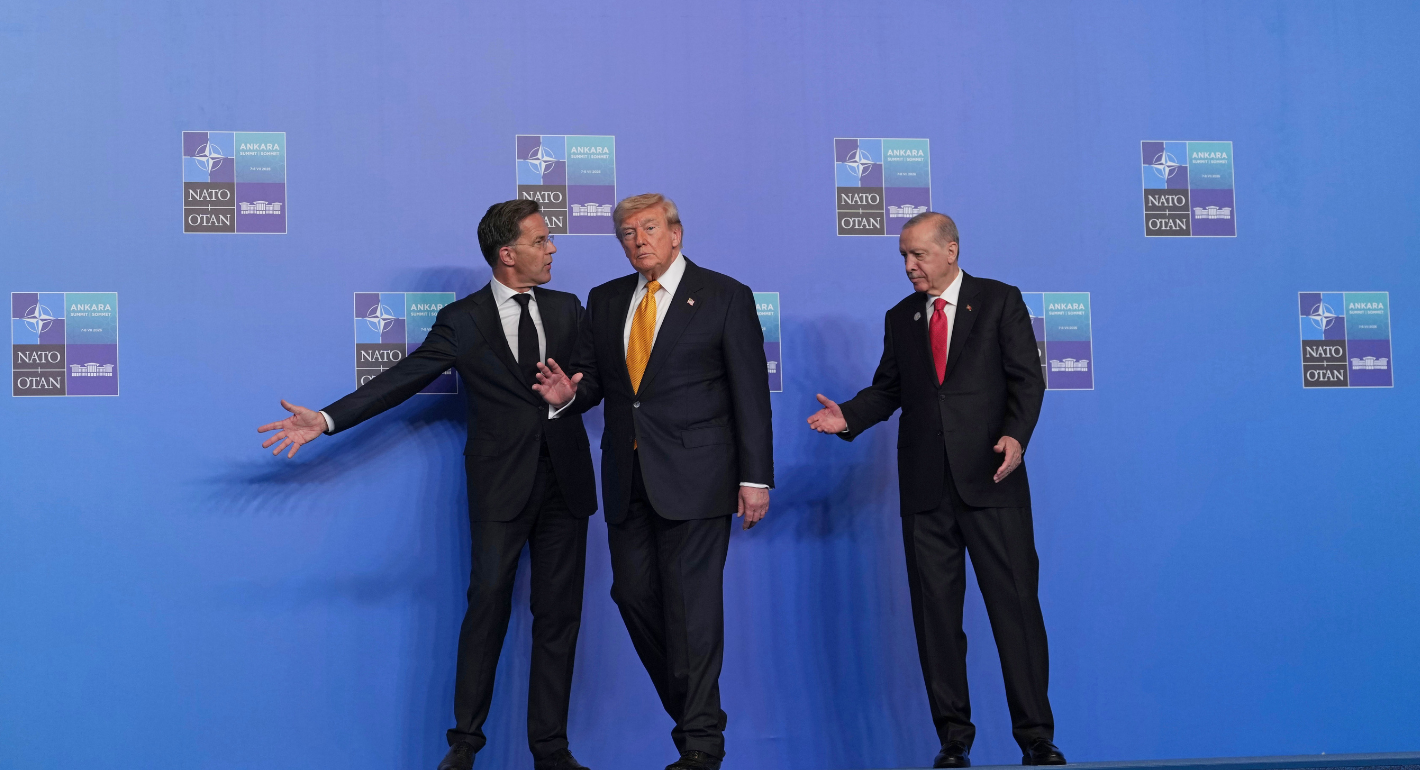
Nearly a year and a half after Europeans leaned into sucking up to Trump, the strategy has produced some benefits when it comes to Ukraine.
Rym Momtaz
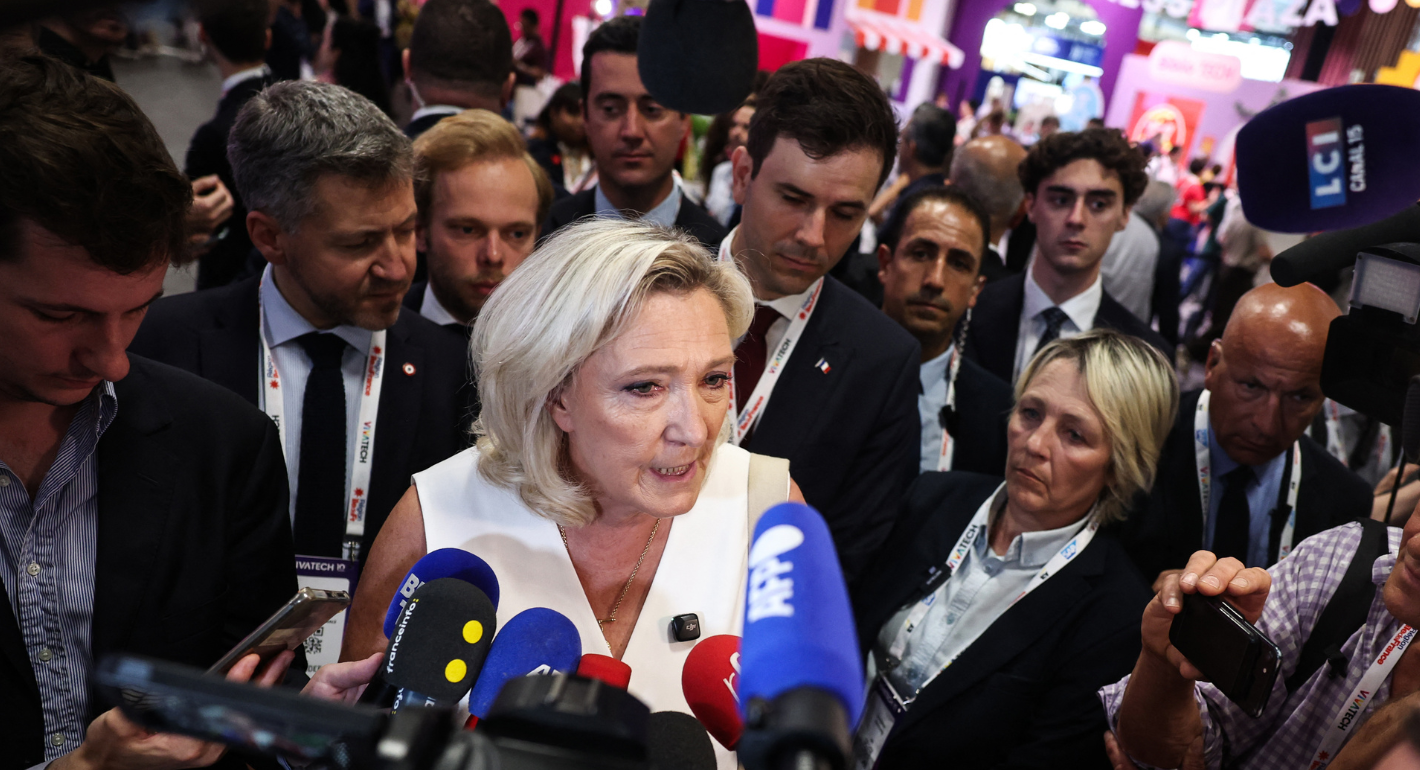
Far-right leader Marine Le Pen can—and will—run in France’s next presidential election. What does the outcome of her appeal against a 2025 embezzlement conviction mean for the country’s political future?

Catherine Fieschi