

Commentary
Judy Dempsey
{
  "authors": [
    "Judy Dempsey"
  ],
  "type": "commentary",
  "blog": "Strategic Europe",
  "centerAffiliationAll": "",
  "centers": [
    "Carnegie Endowment for International Peace",
    "Carnegie Europe"
  ],
  "collections": [],
  "englishNewsletterAll": "",
  "nonEnglishNewsletterAll": "",
  "primaryCenter": "Carnegie Europe",
  "programAffiliation": "",
  "programs": [],
  "projects": [],
  "regions": [
    "Russia",
    "Europe",
    "Western Europe",
    "Germany"
  ],
  "topics": [
    "EU",
    "Migration"
  ]
}
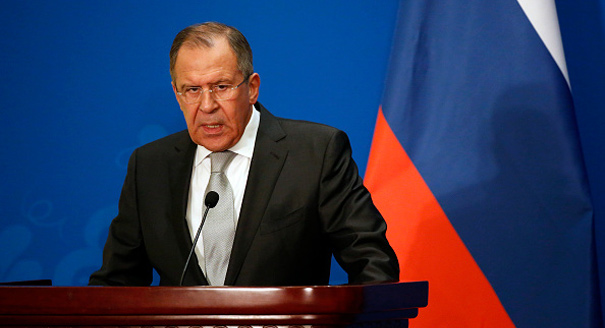
Source: Getty
The Kremlin and the Russian media are using Europe’s refugee crisis to sow further divisions in the EU and weaken Angela Merkel.
Russia’s propaganda machine—which went full blast against members of the Ukrainian government during the Ukraine crisis, labeling them fascists and anti-Semites—is in full swing again. This time, the target is Germany, once considered Russia’s closest ally in Europe.
Ever since Chancellor Angela Merkel declared her intention to allow refugees from Syria to enter Germany, the Russian media have been reporting every twist and turn of the opposition that is building up in her conservative bloc and among sections of the German public to her open-door refugee policy.
Now, Russia may be using Germany’s Russian-speaking community to create further opposition to Merkel, similar to the way it tries to instrumentalize the ethnic Russian communities in the Baltic states. Merkel is an easy target, certainly for many Russians living in Germany and for Russians back home. To the surprise and annoyance of the Kremlin, Merkel has managed to keep the EU united over maintaining sanctions on Russia after it annexed Crimea in March 2014 and subsequently invaded eastern Ukraine.
But Russian President Vladimir Putin can take solace over how the refugee crisis has divided and weakened Europe and, day by day, is making life more difficult for Merkel.
That may explain why the Russian media have homed in on the case of Lisa, the thirteen-year-old daughter of a Russian immigrant family. Ivan Blagoy, a correspondent for Russia’s state-run First Channel TV, reported that the girl had disappeared for thirty hours and had been raped by “southern-looking” asylum seekers. His report went viral on Facebook.
Ethnic Russians recently held demonstrations in several German cities. Over 700 gathered outside the Chancellery on January 24 holding up placards demanding protection for their daughters. They accused the police of a cover-up and of political correctness in dealing with the refugees, a repeat of what was leveled against the police during New Year’s celebrations in Cologne and other German cities, where gangs of North African men sexually assaulted women.
The Berlin police said the girl was neither abducted nor raped. The details are still vague. Blagoy has been reported to the police for incitement.
That didn’t stop Lavrov from wading in. “It is clear that Lisa did not exactly decide voluntarily to disappear for 30 hours,” Lavrov said during a news conference in Moscow on January 26. Then, challenging the integrity of Germany’s police and investigation authorities, he added: “I hope these issues do not get swept under the rug, repeating the situation when a Russian girl’s disappearance in Germany was hushed up. . . . Truth and justice must prevail here.”
This hit a raw nerve in the German Chancellery, the foreign ministry, and the government. Steffen Seibert, the government spokesman, said there was “no reason, in fact it is even impermissible, to make political use of this case.”
Frank-Walter Steinmeier, the German foreign minister, was unusually critical of his Russian counterpart. The case should not be used “for political propaganda, and to inflame and influence what is already a difficult debate about migration within Germany,” he said.
Norbert Röttgen, the chairman of the parliament’s Foreign Affairs Committee, was even more critical. “Manipulation and untruths are common methods in the propaganda used by the Russian leadership,” he said. “The case shows that domestic questions of power in Russia appear to be more important than relations with other countries.”
But it’s more than that. It’s about Russia using propaganda to weaken the EU’s common positions and therefore the union itself. There have been numerous reports of how Russia has been financing far-right movements or parties that are Euroskeptic and that challenge Europe’s basic values of human rights, dignity, and media freedom.
Lavrov denied that Russia wanted to see a weakened EU. “We are not interested in seeing the EU weakened or split,” he said at the news conference. “We are interested in a united and strong European Union, a partner to work with comfortably on economic issues and other matters,” he added. Now that’s news.

Nonresident Senior Fellow, Carnegie Europe
Judy Dempsey is a nonresident senior fellow at Carnegie Europe
Recent Work
Judy Dempsey
Judy Dempsey

Mounting economic strain and battlefield losses will not necessarily make the Kremlin less dangerous. They could instead push Moscow toward a more aggressive hybrid campaign designed to test NATO’s Eastern flank, exploit allied hesitation, and fracture European resolve.

Maksym Beznosiuk

Over the past ten years, NATO has held almost as many summits as it did during the entirety of the Cold War. Are they still useful, or is it time to stop holding annual meetings?

Rym Momtaz, ed.
Nearly a year and a half after Europeans leaned into sucking up to Trump, the strategy has produced some benefits when it comes to Ukraine.
Rym Momtaz
Far-right leader Marine Le Pen can—and will—run in France’s next presidential election. What does the outcome of her appeal against a 2025 embezzlement conviction mean for the country’s political future?

Catherine Fieschi
While Russia is not ready to sue for peace on Europe’s terms, it could still either seek a ceasefire in Ukraine or try escalation. Brussels needs to prepare for both and prioritize that preparation over normative discussions.
Kadri Liik