

Commentary
Judy Dempsey
{
  "authors": [
    "Judy Dempsey"
  ],
  "type": "commentary",
  "blog": "Strategic Europe",
  "centerAffiliationAll": "",
  "centers": [
    "Carnegie Endowment for International Peace",
    "Carnegie Europe"
  ],
  "collections": [
    "Europe’s Eastern Neighborhood"
  ],
  "englishNewsletterAll": "",
  "nonEnglishNewsletterAll": "",
  "primaryCenter": "Carnegie Europe",
  "programAffiliation": "",
  "programs": [],
  "projects": [],
  "regions": [
    "Russia"
  ],
  "topics": [
    "Foreign Policy",
    "Security",
    "EU"
  ]
}
Source: Getty
Moscow is working hard to break the EU’s unity on sanctions against Russia, even though they are the only instrument Europeans have to apply pressure on the Kremlin.
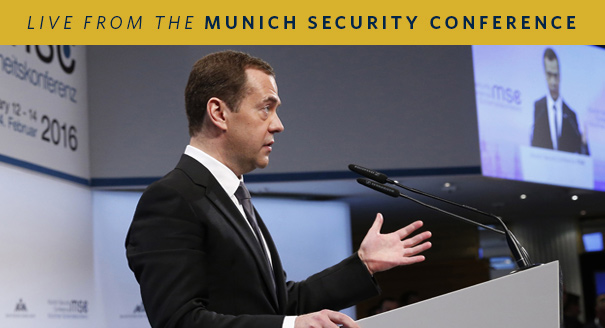
Carnegie Europe was on the ground at the 2016 Munich Security Conference, offering readers exclusive access to the debates as they unfolded and providing insights on today’s most urgent international issues. Check out our live coverage here.
*
Dmitry Medvedev sure knows how to press the right buttons. Here was the Russian prime minister making his first appearance at the 2016 Munich Security Conference, an annual gathering of top policymakers and security experts.
Medvedev didn’t find it difficult to defend Russia’s policy in Syria: it was about defeating terrorism. Forget what Syrian President Bashar al-Assad’s forces have been doing to the country’s population. Russia was not going to walk away from propping up Assad.
But when it came to focusing on Europe, Medvedev hit three nerve points, ones that particularly affect Germany. The first was the EU’s policy of sanctions, which were imposed on Russia after its March 2014 annexation of Crimea. Poor German industry, he opined. German businesses were suffering because of the sanctions. Medvedev made no mention of how deeply the measures were hurting Russia.
Medvedev was making his pitch to German companies and the German Social Democrats, who have always felt uncomfortable with the sanctions. He didn’t quite say it, but he clearly implied it was time for the Europeans and the Russians to put aside their differences. No doubt German business couldn’t agree more.
Then Medvedev hit the second nerve point. “We have sloped back to a new cold war,” he said. This is something that Russia’s old allies in Europe—Germany but also France and Italy—dread. Just by mentioning the idea of a new cold war, Medvedev would provide the center-left Social Democrats as well as the conservative Christian Social Union (CSU), the Bavarian sister party of German Chancellor Angela Merkel’s Christian Democrats, with enough reason to prevent such a situation from becoming a reality. Ending sanctions on Russia would surely stop a new cold war.
This is something that the CSU would welcome. Lifting the sanctions would revive economic ties between the EU and Russia. Horst Seehofer, the leader of the CSU, was in Moscow earlier in February talking with Russian President Vladimir Putin about business and sanctions.
There is nothing like helping Putin to weaken Merkel further, with the refugee crisis taking up so much of her time and the CSU criticizing the way in which she opened Germany’s borders to those fleeing war and persecution. Linked to this is a residual opposition by the CSU to Merkel’s policy on Russia.
It is very hard to explain to outsiders how Merkel’s government allies are doing everything possible to undermine a leader who has tried to keep Europe together over Ukraine and protect Europe’s values and solidarity over refugees. Merkel’s other coalition partner, the Social Democrats, can hide behind the CSU’s Russia policy.
The third nerve Medvedev hit was European security. “We in Russia understand the current state of European security,” he said. “There is no united Europe. Our economies are stagnating. The conflicts in North Africa and the Middle East are increasing. There is civil war in Ukraine.” (Yes, he called it civil war. Nothing about Russia’s invasion of parts of eastern Ukraine or the annexation of Crimea.)
Medvedev first raised the idea of a common European security architecture when he visited Berlin in June 2008. For NATO and the United States, this proposal was aimed at weakening the transatlantic alliance. It never materialized. But among German Social Democrats who still hanker after Ostpolitik—Germany’s Cold War–era policy of forging a special relationship with Moscow—and who are not intrinsically Atlanticist, Medvedev’s plan found some support.
To revive this Russian proposal would be to weaken further the transatlantic relationship. It would also weaken the countries of Eastern Europe. As it is, they have no security guarantees. They exist in a security vacuum.
No wonder Ukrainian President Petro Poroshenko warned against Europe going wobbly over Russia. “I hate the idea among some leaders that we urgently need dialogue with Russia,” he said to Munich Security Conference participants. “I want to remind you about the Russian aggression in Georgia, in Ukraine, and what’s happening in Ukraine. There are voices saying that sanctions are not working. Sanctions are not punishment. They are an instrument. They are about keeping Russia at the negotiating table. There is no other instrument.”
U.S. Secretary of State John Kerry couldn’t agree more. Referring to the Minsk accords aimed at resolving the conflict in eastern Ukraine, he said, “Europe must sustain sanctions on Russia for as long as necessary. Minsk must be fully implemented.”

Nonresident Senior Fellow, Carnegie Europe
Judy Dempsey is a nonresident senior fellow at Carnegie Europe
Recent Work
Judy Dempsey
Judy Dempsey
Carnegie does not take institutional positions on public policy issues; the views represented herein are those of the author(s) and do not necessarily reflect the views of Carnegie, its staff, or its trustees.

Trump is distracted and Ukraine wants Europe to step up. The continent’s leaders must find their voice and assert it in talks with Russia.

Alissa de Carbonnel

Mounting economic strain and battlefield losses will not necessarily make the Kremlin less dangerous. They could instead push Moscow toward a more aggressive hybrid campaign designed to test NATO’s Eastern flank, exploit allied hesitation, and fracture European resolve.

Maksym Beznosiuk

Over the past ten years, NATO has held almost as many summits as it did during the entirety of the Cold War. Are they still useful, or is it time to stop holding annual meetings?

Rym Momtaz, ed.
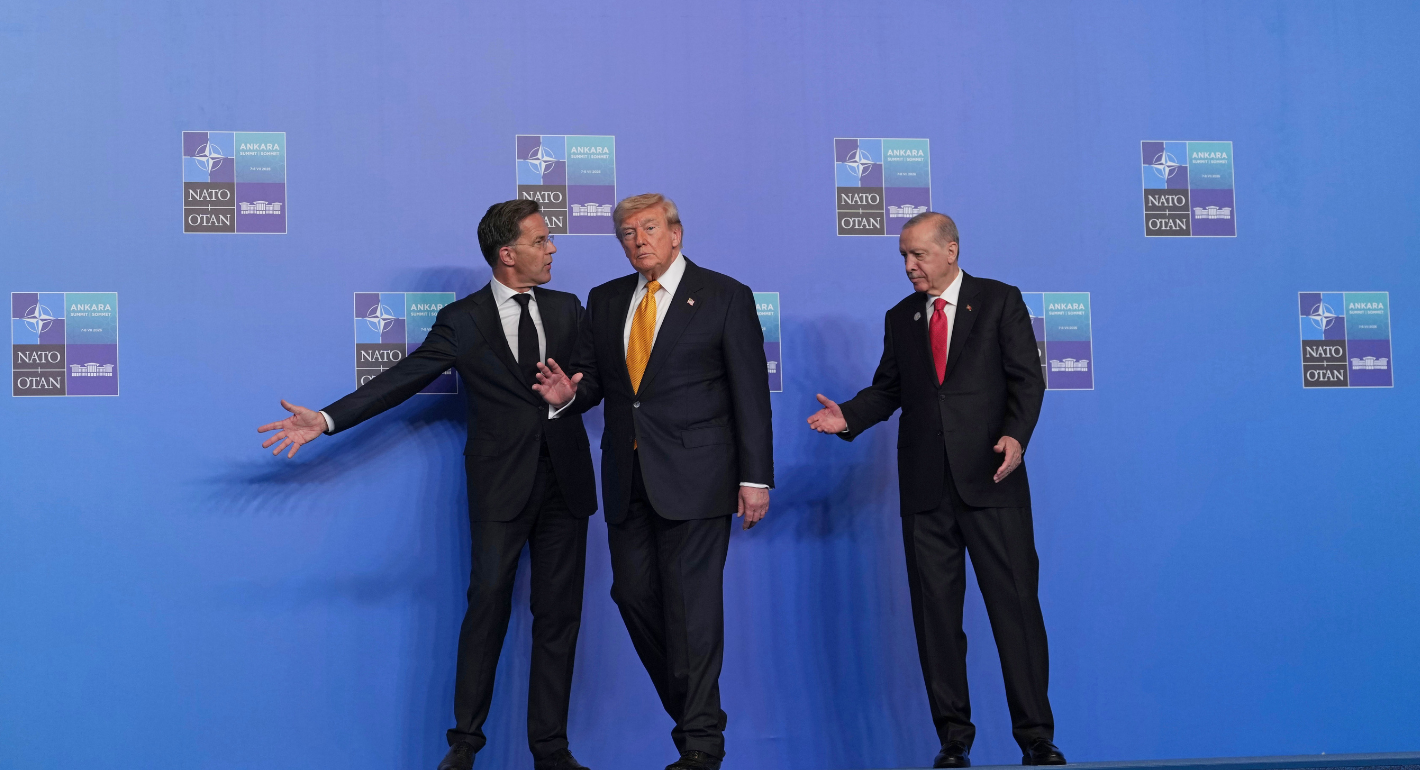
Nearly a year and a half after Europeans leaned into sucking up to Trump, the strategy has produced some benefits when it comes to Ukraine.
Rym Momtaz
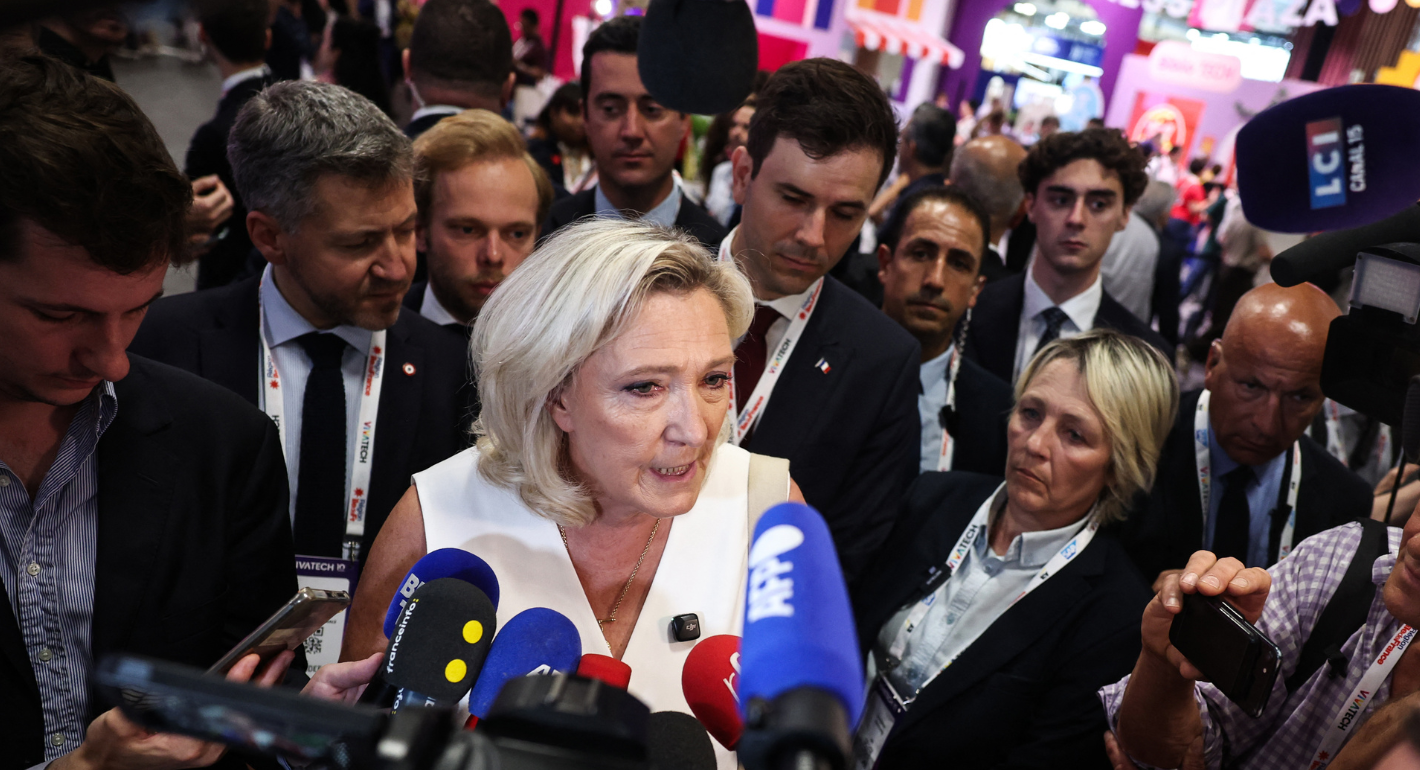
Far-right leader Marine Le Pen can—and will—run in France’s next presidential election. What does the outcome of her appeal against a 2025 embezzlement conviction mean for the country’s political future?
Catherine Fieschi