

Commentary
Judy Dempsey
{
  "authors": [
    "Judy Dempsey"
  ],
  "type": "commentary",
  "blog": "Strategic Europe",
  "centerAffiliationAll": "",
  "centers": [
    "Carnegie Endowment for International Peace",
    "Carnegie Europe"
  ],
  "collections": [
    "Europe’s Southern Neighborhood"
  ],
  "englishNewsletterAll": "",
  "nonEnglishNewsletterAll": "",
  "primaryCenter": "Carnegie Europe",
  "programAffiliation": "",
  "programs": [],
  "projects": [],
  "regions": [
    "Middle East",
    "Europe",
    "Israel",
    "North Africa",
    "Egypt",
    "Libya",
    "Algeria",
    "Morocco",
    "Tunisia",
    "Lebanon",
    "Jordan",
    "Palestine",
    "Syria",
    "Western Europe",
    "Southern, Eastern, and Western Africa"
  ],
  "topics": [
    "Foreign Policy",
    "EU"
  ]
}
Source: Getty
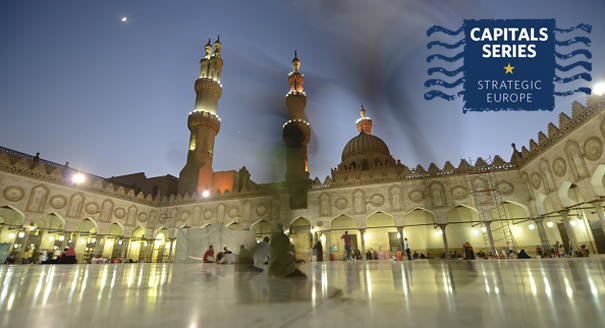
In its foreign policy toward North Africa and the Middle East, the EU is putting stability before human rights, as it did before the Arab Spring.
Since January 2016, Carnegie Europe has asked authors from Europe’s Southern neighborhood to give candid assessments of the EU’s foreign policy toward their countries. The analysts from Algeria, Egypt, Israel, Jordan, Lebanon, Libya, Morocco, Palestine, Syria, and Tunisia also had the task of ranking the EU’s policy in their countries on a scale from “irrelevant” to “helpful.” In all but two cases—Palestine and Libya, in which the union’s approach was deemed “unconstructive”—the EU was viewed as “confused.”
But the war in Syria, the huge influx of refugees and migrants reaching Europe, and the recent terrorist attacks in Paris and Brussels have in turn created a sense of confusion in Europe about how it sees the lands beyond the Mediterranean.
Indeed, the letters from Damascus and Tripoli showed how the EU is reaping its abysmal failures in Syria and Libya, no thanks to NATO’s intervention in the latter and Western indecision—if not indifference—in the former.
Building walls to keep out migrants and subcontracting the refugee problem to Greece and Turkey are no substitutes for either a short-term or a long-term policy toward any of the North African and Middle Eastern countries. Nor are such decisions any excuse for Europe’s previous and current myopic policies in the region.
On the ground, the authors shared a common perception of the EU. Whether in Jordan or Palestine, Morocco or Algeria, they argued that the EU is too timid in promoting human rights and genuine political reforms. Writing from Amman, Ahmad Masa’deh bemoaned the fact that “in the domain of political development and reform, including the creation of a proper system of political parties and democratization, EU programs have not delivered much and have been limited in their impact.”
Palestine falls into the same category. There, the EU has channeled billions of euros to the Palestinian Authority but has had no impact on nurturing democracy, which the corrupt authority has never wanted to champion. As for the ever-increasing expansion of Israeli settlements on occupied land in the West Bank, the EU has been completely ineffectual. Its support for a two-state solution is now just rhetoric. Indeed, writing about Palestine, Raja Khalidi asked if EU aid and economic peace were not “merely substitutes for rights and justice.” In other words, is the EU doing some of Israel’s bidding?

Egypt is a prime and depressing example of this policy. Leaders “turn a blind eye to increasing repression and human rights violations in Egypt, assuming that the government in Cairo will be able to maintain stability by following a firm security policy,” argued Nancy Okail. In a nutshell, “EU support for and cooperation with Egypt is skewed toward security and the military.” Wasn’t that the policy the EU pursued before the Arab Spring: propping up dictatorships and authoritarian regimes at the expense of supporting human rights?
In his letter from Rabat, Aboubakr Jamai exposed the dilemma facing the EU in his country. Because Morocco’s monarch is a “good team player on security issues such as fighting terrorism, and displays some of the trappings of democratic transition,” that seems good enough for the North African country’s EU supporters, particularly France.

Europe is confused about how it sees the lands beyond the Mediterranean.Tweet This
When the EU does support independent civil society movements, as it does in Tunisia, Walid Haddouk sensed that the EU thinks it knows best. For example, proposals to donors must be submitted in either French or English, even though Tunisia’s official language is Arabic. This may seem a frivolous complaint for bureaucrats in Brussels. But as Haddouk argued, this insistence “constitutes a major obstacle for many local civil society organizations that are keen to access EU opportunities but do not have sufficient command of either of these two languages.” He also suggested that many Tunisians consider EU support for local civil society “an attempt by Europeans to exercise cultural hegemony.”
The conclusions to be drawn from the authors are twofold. First, the EU was ill-equipped and too slow to react to the Arab Spring. Where democracy is trying to take root, the EU is cautious, to say the least. Yet transitions to democracy are highly complex, as the EU sees in its Eastern neighborhood.
Second, terrorism and migration are influencing the EU’s perceptions of the region to such a degree that the union is prepared to defend stability and turn a blind eye to repression at the expense of the many who are struggling for human rights.
Altogether, a depressingly shortsighted if not backward-looking view of the EU’s Southern neighbors.

Nonresident Senior Fellow, Carnegie Europe
Judy Dempsey is a nonresident senior fellow at Carnegie Europe
Recent Work
Judy Dempsey
Judy Dempsey
Carnegie does not take institutional positions on public policy issues; the views represented herein are those of the author(s) and do not necessarily reflect the views of Carnegie, its staff, or its trustees.

With its public finances in shambles, the far right polling at 35 percent ahead of the 2027 presidential election, and a growing protest movement, is France’s crisis a threat to the EU’s geopolitical awakening?

Rym Momtaz, ed.

Ahead of a tough winter for Ukraine, Donald Trump’s swing back toward Russia bodes ill. But instead of panicking, Kyiv’s European allies are focusing on action.
Rym Momtaz

While the EU and European governments are embracing the much-lauded middle-power moment, this entails three difficult conundrums.

Richard Youngs
Much has been said of the changes Brussels is trying to make to the EU enlargement process. Here’s why gradual integration might—or might not—be the answer.

Dimitar Bechev

The European Commissioner for Trade is headed to China. But after President Xi’s bridge-building visit to Washington, can a more isolated EU overcome Beijing’s stranglehold on critical raw materials? Who will blink first?
Rym Momtaz, ed.