

Commentary
Judy Dempsey
{
  "authors": [
    "Judy Dempsey"
  ],
  "type": "commentary",
  "blog": "Strategic Europe",
  "centerAffiliationAll": "",
  "centers": [
    "Carnegie Endowment for International Peace",
    "Carnegie Europe"
  ],
  "collections": [
    "EU Integration and Enlargement"
  ],
  "englishNewsletterAll": "",
  "nonEnglishNewsletterAll": "",
  "primaryCenter": "Carnegie Europe",
  "programAffiliation": "",
  "programs": [],
  "projects": [],
  "regions": [
    "Europe",
    "Western Europe"
  ],
  "topics": [
    "EU",
    "Migration",
    "Security"
  ]
}
Source: Getty
European governments refuse to work together to deal with the migration crisis. Putting on hold the Schengen passport-free travel area could shift attitudes.
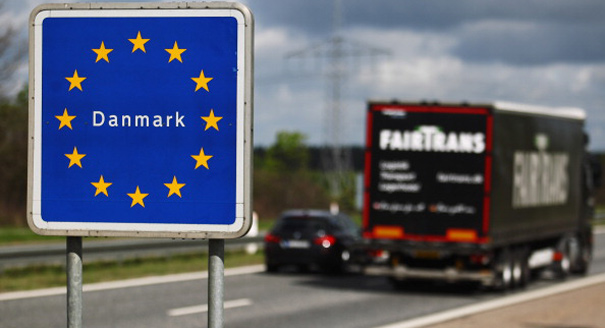
It is time for the European Union to suspend the Schengen Agreement. To hold on to the myth that the EU’s arrangement of passport-free travel continues to work amounts to self-denial. Several European countries have already reimposed border controls to quell or restrict the flow of refugees and migrants. Belgium became the most recent example when it introduced checks on its border with France on February 23.
And because Greece is now saddled with having to cope with the thousands of refugees reaching its shores from Turkey, there was a suggestion in Brussels that Greece be suspended from Schengen—as if that would solve the refugee crisis. That suggestion, thankfully shelved, showed how the EU Council of Ministers, which represents the member states, was yet again trying to pass the buck and continue the blame game. Both must stop.
This is because Schengen is about much more than a Europe without border controls, something that has been a boon for the free movement of people, labor, and goods.
It is also about intelligence gathering and sharing. The Schengen Information System is supposed to “[allow] national border control and judicial authorities to obtain information on persons or objects.” That proved ineffective before the terrorist attacks in Paris in November 2015. It is well-known in Brussels and the member states that the Schengen Information System is underperforming. Sharing intelligence is not an automatic reflex for most EU governments.
Schengen is connected to the protection of the EU’s external borders as well. Without that, the entire raison d’être of Schengen, including the security of European citizens, would be undermined. In 2004, after several years of haggling, the member states agreed to set up the bureaucratically titled European Agency for the Management of Operational Cooperation at the External Borders of the Member States of the European Union.
The agency, now known as Frontex, was mandated to “provide the [European] Commission and the Member States with the necessary technical support and expertise in the management of the external borders and promote solidarity between Member States.” That solidarity has hardly gone far since the refugee crisis, which began soon after the Arab Spring erupted in late 2010.
Individual countries have consistently hindered Frontex’s ability to become a genuine EU agency for protecting the bloc’s external borders. As the agency’s mandate states, “the responsibility for the control and surveillance of external borders lies with the Member States.” Germany, Austria, and some other EU countries have declined to give Frontex the support it needs. The agency has had a measly budget and receives miserly contributions of officers to give it credibility and visibility.
Schengen was also aimed at pushing the EU into forging a common asylum and migration policy. The so-called Dublin Regulation stipulated that the first EU country an asylum seeker reached was responsible for registering that person’s asylum claim. That didn’t take place in Italy. And Greece’s conditions for migrants were so bad that Germany refused to send people back to the country. The EU Council of Ministers and the European Commission knew that the Dublin Regulation wasn’t working. But neither institution acted, even as the refugee crisis grew bigger.
The regulation was flawed because many member states didn’t have in place an efficient system to register migrants and asylum seekers. Germany is a case in point. During his visit to Tunisia, Morocco, and Algeria from February 28 to March 1, Germany’s Interior Minister Thomas de Maizière briefed his counterparts about repatriating thousands of their citizens. His interlocutors replied that repatriation was all very well—if the people had identity papers. Most have none. They destroyed them, as the German judicial and police authorities explained. This means that Germany didn’t have a functioning registration system, even before the huge influx of refugees.
This dysfunction is damaging for several reasons. First, it creates a security issue. European authorities do not know the backgrounds of individuals reaching European countries. That is all the more important given recent terrorist attacks and threats. Little can be shared via the Schengen Intelligence System.
Second, Euroskeptics, populists, and xenophobes can exploit these deficiencies to promote their own causes. Third, the weaknesses in the Schengen setup can be abused by those wanting to commit terrorist acts. And fourth, the system’s shortcomings hurt those who really need refuge.
All these failings—poor intelligence sharing, insufficient external border controls, and the lack of a proper EU-wide asylum and migration policy—have undermined Schengen. It has become a free-for-all.
To tackle these failings, the Schengen Agreement should be suspended for a limited period—up to twelve months. Commuters, industry, small businesses, truck drivers, and tour operators would all complain. So they should. The inconvenience and economic costs would be high. But that might finally concentrate the minds of EU governments. The suspension of Schengen should be used during that time to address the abysmal failures of the system and the EU’s abysmal failure to cope with the refugee crisis.
EU governments’ refusal to pull together over such an important issue is entirely consistent with their inability to understand the necessity of common foreign, security, and defense policies. That is why the EU lacks a strategic culture, solidarity, and political will. If terrorist attacks or the refugee crisis won’t change that, what will?

Nonresident Senior Fellow, Carnegie Europe
Judy Dempsey is a nonresident senior fellow at Carnegie Europe
Recent Work
Judy Dempsey
Judy Dempsey
Carnegie does not take institutional positions on public policy issues; the views represented herein are those of the author(s) and do not necessarily reflect the views of Carnegie, its staff, or its trustees.

Before the next wave of EU enlargement takes place, the union needs to grapple with thorny questions of how power is distributed among its members.


Emil Sondaj Hansen, Ditte Brasso Sørensen

A summer of escalation in the Black Sea has hurt Ukraine economically and is exacerbating world food security. A truce is needed—as is a broader reframing of Europe’s Ukraine strategy.

Thomas de Waal

Are Germany’s economic, industrial, and political struggles becoming a liability for the EU’s ability to rise to the geopolitical moment?

Rym Momtaz, ed.

European Commission President Ursula von der Leyen is about to give her annual address on the state of the EU. Here’s what she won’t—but should—say.
Rym Momtaz

The aftermath of the Ceuta crisis shows Europe has drawn the wrong lessons. Rather than doubling down on failed migration policies, the EU needs to address the underlying roots of such episodes.

Richard Youngs