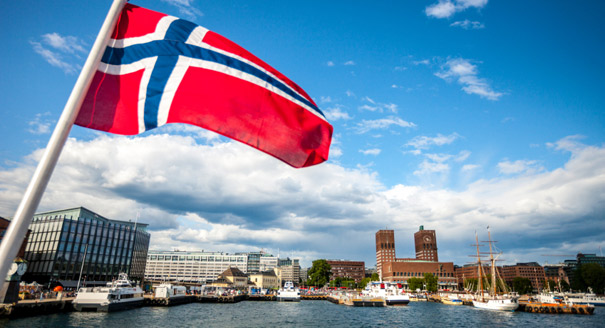
Even though Norway is not an EU member state, the country’s fate is inseparable from that of the rest of Europe. When Europe’s economic and security interests are challenged, Norway’s interests are challenged too.
Europe is currently facing several complex and dynamic security risks at the same time. Europeans are experiencing greater vulnerability and a feeling that the security architecture that they have gradually built over the past few decades is more fragile than previously perceived.
Never before have security and prosperity in Europe depended so much on security and prosperity elsewhere. Geographic distance from a crisis no longer implies distance from its consequences. The terrorist attacks in Brussels in March 2016 and in Paris in November 2015 are tragic reminders of this. The role of criminal networks in the migration crisis is another example of the complexity of the security threats Europe is facing.
In a rapidly changing, challenging, and complex security environment, strategic analysis and policymaking are more important than ever before. From a Northern perspective, I will present four strategic policy approaches to enhancing Europe’s ability to maintain its own security.
First, the EU and NATO must cooperate better. Representing the pillars of European prosperity and security, the union and the alliance should agree on a set of joint objectives as a basis for future cooperation and coordination in the face of the complex security challenges of our time.
More specifically, the EU and NATO need better mechanisms for intelligence fusion and sharing and more regular political consultations. Cooperation on crisis management, capacity building, and stabilization efforts should be improved. In addition, Europeans all stand to benefit from increased cooperation on maritime security as well as on cybersecurity. The two organizations should aim to identify concrete objectives in several of these areas in time for the European Council meeting in June 2016 and NATO’s Warsaw summit in July.
Second, the security challenges posed by fragile and failed states call for a much stronger and better-coordinated European response. Indeed, many of the crises Europe is facing have their origins in a belt of fragile or failed states on or close to its Southern borders. Europe needs a more strategic and comprehensive policy to address the interlinked issues of security, development, migration, and humanitarian assistance in fragile states.
In terms of stabilization efforts, Europe must seek to do more than eliminate the self-proclaimed Islamic State and the other terrorist groups that currently threaten European security. Europe’s longer-term goal must be to make sure that the Islamic State’s successors, wherever they emerge, do not find fertile ground for their extremist ideologies in fragile states in the future.
Third, in its relations with Russia, Europe must remain united in upholding respect for international law, democracy, and human rights. Through its unacceptable actions in Ukraine and elsewhere, Russia has contributed to a greater sense of insecurity in Europe. Even so—and I say this as the foreign minister of a country that shares a border with Russia—it is in Europe’s long-term security interest to develop a more constructive relationship with Russia. There is no contradiction between safeguarding common interests in cooperation with Russia and standing firm on the commitment to international law and on fundamental principles of international relations.
Fourth, Europe should look to the North. In today’s volatile world, where so many regions are affected by conflict and tension, the Arctic stands out as a remarkable exception. But stability in the North cannot be taken for granted. Russia’s military buildup and intensification of military exercises in the Arctic show that Europe must remain vigilant.
Moreover, the strategic importance of the Arctic for Europe’s economy and security will continue to grow. Climate change is making minerals and energy more accessible, and increased access to the Northeast Passage may reduce the route from Europe to East Asia by 30 percent. Provided they are sustainably managed, Arctic fish stocks will be an important source of food for a growing European population. To avoid geopolitical tension and an unsustainable race for resources, Europe’s economic and security interests in the Arctic are best served by a coherent approach to the Northern sea areas based on respect for international law.
Unity and cooperation, based on common norms, are Europe’s most important assets when it comes to reducing vulnerabilities and enhancing resilience to security threats. The EU Global Strategy to be presented in June 2016 should acknowledge that these assets become even more powerful when they extend beyond the geographic boundaries of the EU.
At this point in Europe’s history, as the continent faces a complex and dynamic security environment, the alternative to closer cooperation appears to be a divided and weaker Europe. Seen from the North, it is all too clear that this would serve only to undermine Europe’s—and Norway’s—security.
In the past, Europe has demonstrated its ability to emerge stronger from crises. For the sake of Europe’s security and prosperity, it is vital that it succeeds this time too.
Børge Brende is the Norwegian minister of foreign affairs.