

Commentary
Judy Dempsey
{
  "authors": [
    "Judy Dempsey"
  ],
  "type": "commentary",
  "blog": "Strategic Europe",
  "centerAffiliationAll": "",
  "centers": [
    "Carnegie Endowment for International Peace",
    "Carnegie Europe"
  ],
  "collections": [
    "EU Integration and Enlargement"
  ],
  "englishNewsletterAll": "",
  "nonEnglishNewsletterAll": "",
  "primaryCenter": "Carnegie Europe",
  "programAffiliation": "",
  "programs": [],
  "projects": [],
  "regions": [
    "Europe",
    "Western Europe"
  ],
  "topics": [
    "EU"
  ]
}
Source: Getty
The Dutch referendum on April 6 was not only about a trade accord between the EU and Ukraine. It was also about Europe’s future.
In the first referendum of its kind, Dutch voters on April 6 rejected a far-reaching EU trade and political accord with Ukraine. Roughly 64 percent of voters opposed the EU-Ukraine Association Agreement, while 36 percent supported it, according to preliminary results. As if that were not bad enough for the Dutch government, the turnout was over 30 percent, the minimum required to make the referendum valid.
Even though the result is nonbinding, the reality is that neither Dutch Prime Minister Mark Rutte nor the EU can ignore it. This is because the outcome is a vote against European integration. It is a fillip for Euroskeptics across the bloc. It will give a big boost to Brexit supporters, who want Britain to leave the EU when the UK votes in its own referendum in June. And it is a very welcome present for Russian President Vladimir Putin, who seeks a weakened and divided EU.
Viewed from outside, the EU, which is already split over the refugee crisis and nowhere near out of the woods with regard to the eurozone crisis, is fragmenting instead of integrating.
In a referendum in 2005, the Dutch rejected the proposed EU constitution, which was supposed to make the bloc’s institutions more efficient. The poll signaled the beginning of an inexorable shift in the attitudes of the Dutch public.
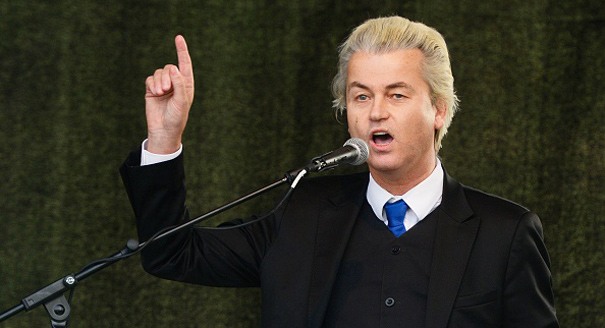
Geert Wilders, the leader of the Euroskeptic Party for Freedom, was quick to capitalize on the latest referendum’s outcome. “[This is] the beginning of the end of the EU,” he tweeted. “I hope that later, both in the United Kingdom and elsewhere in Europe, other countries will follow,” he said earlier. Euroskeptic movements abroad such as the UK’s Brexit camp and France’s far-right National Front were cock-a-hoop over the Dutch result.
Dutch EU supporters had been caught in a bind over whether to abstain or vote. By turning out as they did, they validated the poll. But then again, had the pro-EU camp run a strong, confident, and inspiring campaign, it might have turned the tables.
The Dutch government is now in no position to ask the country’s parliament to ratify the EU-Ukraine Association Agreement, making the Netherlands the only one of the 28 member states not to have done so. Rutte said he would have to consult with the parliament and his European colleagues “step by step,” without giving any details.
As for the Dutch parliament, which has been stung by the results, it cannot propose raising the 30 percent turnout threshold required to make similar polls valid in the future, nor can it raise the number of signatures from the 300,000 needed under Dutch law to call for such a referendum. To do either would play into the hands of the Euroskeptics.
Because the EU needs unanimity to ratify the agreement with Ukraine, the bloc is now burdened with finding an opt-out clause for the Dutch until Rutte decides what is feasible. The worst outcome is to ignore that 27 other countries have ratified the accord. This would be extremely damaging for the pro-reform movement in Ukraine, which needs this agreement to strengthen its position back home at a time when the country’s oligarchs, including the presidential administration, keep imposing obstacles to fundamental reforms, particularly in the judiciary.
Further east, Putin can take solace from the results. A weakened EU is exactly what the Russian president wants. It gives him more opportunities to tap into Euroskeptic movements, some of which identify with Putin’s brand of conservatism, nationalism, and patriotism.
A fractured union also gives Putin more opportunities to play off the member states against each other. Above all, an enfeebled and divided EU weakens the transatlantic relationship. What more could Russia ask for after the Dutch referendum?

Nonresident Senior Fellow, Carnegie Europe
Judy Dempsey is a nonresident senior fellow at Carnegie Europe
Recent Work
Judy Dempsey
Judy Dempsey
Carnegie does not take institutional positions on public policy issues; the views represented herein are those of the author(s) and do not necessarily reflect the views of Carnegie, its staff, or its trustees.

Before the next wave of EU enlargement takes place, the union needs to grapple with thorny questions of how power is distributed among its members.


Emil Sondaj Hansen, Ditte Brasso Sørensen

Are Germany’s economic, industrial, and political struggles becoming a liability for the EU’s ability to rise to the geopolitical moment?

Rym Momtaz, ed.

European Commission President Ursula von der Leyen is about to give her annual address on the state of the EU. Here’s what she won’t—but should—say.
Rym Momtaz

The aftermath of the Ceuta crisis shows Europe has drawn the wrong lessons. Rather than doubling down on failed migration policies, the EU needs to address the underlying roots of such episodes.

Richard Youngs

An overwhelming victory by a far-right-wing party in a small state in eastern Germany will have major repercussions for Chancellor Friedrich Merz’s coalition.
Judy Dempsey