

Commentary
Judy Dempsey
{
  "authors": [
    "Judy Dempsey"
  ],
  "type": "commentary",
  "blog": "Strategic Europe",
  "centerAffiliationAll": "",
  "centers": [
    "Carnegie Endowment for International Peace",
    "Carnegie Europe"
  ],
  "collections": [
    "EU Integration and Enlargement"
  ],
  "englishNewsletterAll": "",
  "nonEnglishNewsletterAll": "",
  "primaryCenter": "Carnegie Europe",
  "programAffiliation": "",
  "programs": [],
  "projects": [],
  "regions": [
    "Europe",
    "Western Europe",
    "Germany"
  ],
  "topics": [
    "EU",
    "Security"
  ]
}
Source: Getty
Germany’s role in Europe risks being distracted by a string of important regional elections that will set the tone for next year’s federal poll.
With European leaders drifting back to their desks after the summer break, none has an agenda so packed, so complex, and so time-consuming as Angela Merkel’s.
The German chancellor’s in tray has two sections: international issues and domestic affairs. Her ability to juggle both could influence the outcome of next year’s federal election, during which Merkel, barring any unforeseen circumstances, will be seeking a fourth term.
Her foreign policy agenda includes the increasingly controversial deal with Turkey over stopping refugees and migrants from reaching Europe, with most wanting to settle in Germany. Germany’s opposition parties despise the deal. For them, as much as for Merkel, realpolitik has taken precedence over criticizing Turkish President Recep Tayyep Erdoğan’s all-out policy of clamping down on the media, the judiciary, and the opposition.
Then there is the ever-growing fragility of the Minsk II accord that Merkel negotiated with Russian President Vladimir Putin in February 2015 to end the war in eastern Ukraine.
A look at a recent OSCE monitoring reports shows a rise in violations, mostly by the Russian side. Putin, meanwhile, seems more interested in walking away from the Minsk deal, a move that would end the accord’s diplomatic track, however flawed it was from the beginning.
And how could anyone forget Brexit? Theresa May, the British prime minister, seems in no hurry to trigger Article 50 of the EU treaty that would start the negotiations for Britain’s exit from the European Union.
When talks do start, the conditions for Britain’s exit will have an enormous impact on the future cohesion of the EU, as French presidential candidate and leader of the National Front Marine Le Pen well knows. If Le Pen wins next year’s election, she wants a referendum that would decide France’s future in the EU. A Frexit would sign the EU’s death warrant.
On August 22, Merkel, French President François Hollande, and Italian Prime Minister Matteo Renzi will hold a minisummit in Italy to coordinate their positions on Brexit.
On all the above issues, Merkel’s role has been and continues to be central. Even though the recent terrorist attacks in Germany have dented her popularity, Merkel remains Europe’s most important leader.
Back home, Merkel has to contend with an increasingly confused domestic debate over how to deal with terrorism and protect Germany from further attacks. Her government has already agreed to introduce tougher surveillance and security measures.
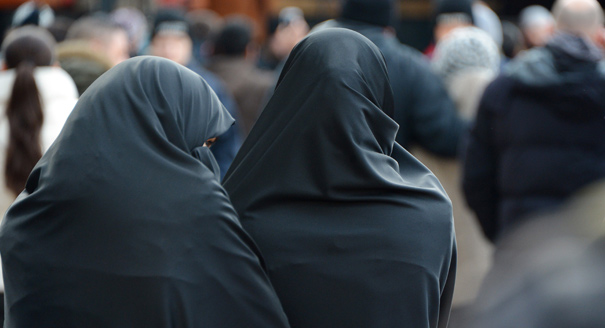
One of the problems with the security issue is that politicians from Merkel’s Christian Democratic Union party and its sister party, the Christian Social Union, are using it to try and introduce a ban on women wearing burkas, which cover the enitre body, including the face, from head to toe.
They want this ban for electoral reasons but also for cultural reasons. They are increasingly worried about the growing popularity of the far-right, anti-immigration Alternative for Germany party, or AFD.
The AFD is expected to do well in next month’s state elections in Berlin and Mecklenburg-Vorpommern. As a result, some CDU politicians—most notably Frank Henkel, Berlin’s interior minister, who is doing everything possible to unseat the Social Democrat mayor from power—want to ban the burka in the hope of winning votes.
Henkel has little hope of unseating the Social Democrats, despite his campaign signs and slogans. One of the CDU placards shows a baby hippopotamus snuggling up to its large mother. “A strong Berlin” and “more time for family,” states the uninspiring text.
Attempts by some CDU politicians to link terrorist threats with a burka ban sit uncomfortably with Merkel, German Interior Minister Thomas de Maizière, and other top CDU officials.
Armin Laschet, the party’s deputy chairman, said the proposals to ban the burka are a “phony debate.” And Heiko Maas, the Social Democrat justice minister, said the burka controversy has to be kept separate from the security challenges now facing Germany.
Merkel has not come out against the burka as such. Instead, she regards the issue as closely linked with integration. “In my view, a fully-veiled woman has almost no chance of integrating successfully in German society,” she said. “An Islam that works and lives on the basis of the constitution . . . belongs to Germany,” she added.
CDU interior ministers recently agreed that women working as civil servants, attending public demonstrations, and appearing in court should not wear the burka.
To impose a blanket ban, which would probably be challenged by the constitutional court, would mean that some women would never leave their home. Furthermore, Germany’s efforts to integrate immigrants could be negatively affected, argued Andreas Nahles, the Social Democratic employment and social affairs minister.
However much Merkel and her ministers hope the burka issue is a passing phenomenon, the AFD is expected to play the anti-immigration and anti-Islam card as hard as possible. According to opinion polls, the AFD could win a fifth of the votes in the state of Mecklenburg-Vorpommern, which borders the Baltic Sea.
Small wonder that Merkel’s coalition partners know the next twelve months will be anything but plain sailing.

Nonresident Senior Fellow, Carnegie Europe
Judy Dempsey is a nonresident senior fellow at Carnegie Europe
Recent Work
Judy Dempsey
Judy Dempsey
Carnegie does not take institutional positions on public policy issues; the views represented herein are those of the author(s) and do not necessarily reflect the views of Carnegie, its staff, or its trustees.

European Commission President Ursula von der Leyen is about to give her annual address on the state of the EU. Here’s what she won’t—but should—say.

Rym Momtaz

The aftermath of the Ceuta crisis shows Europe has drawn the wrong lessons. Rather than doubling down on failed migration policies, the EU needs to address the underlying roots of such episodes.

Richard Youngs

An overwhelming victory by a far-right-wing party in a small state in eastern Germany will have major repercussions for Chancellor Friedrich Merz’s coalition.
Judy Dempsey

Canadian Prime Minister Mark Carney has twice inspired praise for standing up to U.S. President Donald Trump: at the 2026 World Economic Forum in Davos and on Canada-U.S. trade negotiations. Is Carney showing a third way better than the EU has in dealing with the Trump administration?
Rym Momtaz, ed.

The EU’s responses to two recent incidents expose the gulf between European perceptions and capabilities. Unless the union can bridge that gap, it will never become a real geostrategic power.
Rym Momtaz