

Other
- +18
James M. Acton, Saskia Brechenmacher, Cecily Brewer, …
{
  "authors": [
    "Marc Pierini"
  ],
  "type": "commentary",
  "blog": "Strategic Europe",
  "centerAffiliationAll": "",
  "centers": [
    "Carnegie Endowment for International Peace",
    "Carnegie Europe"
  ],
  "collections": [
    "Turkey’s Transformation"
  ],
  "englishNewsletterAll": "",
  "nonEnglishNewsletterAll": "",
  "primaryCenter": "Carnegie Europe",
  "programAffiliation": "",
  "programs": [],
  "projects": [],
  "regions": [
    "Europe",
    "Türkiye",
    "Middle East"
  ],
  "topics": [
    "Foreign Policy",
    "Democracy",
    "EU"
  ]
}
Source: Getty
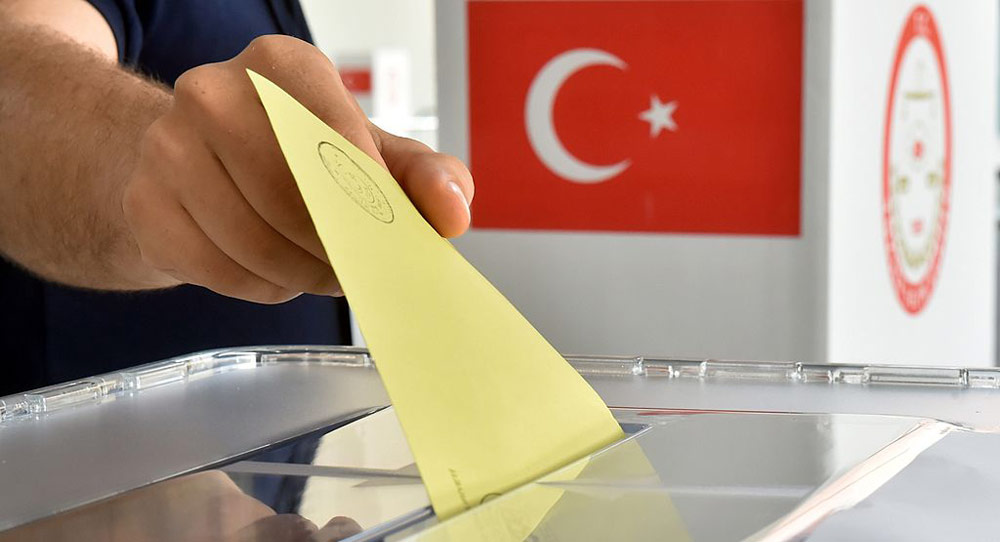
Whatever the outcome of Turkey’s April 16 referendum on a new constitution, the country’s relationship with the European Union has reached a watershed.
On April 16, the citizens of Turkey will vote in a crucial referendum on a new constitution, possibly ushering in a one-man-rule system with few checks and balances. The outcome is uncertain, and the risk of defeat for the Turkish leadership is real. But whatever the result, Turkey’s leaders may want to substantially revise their links with the EU, because the relationship has now reached a watershed. The predominant feeling in Ankara is that political ties with Brussels are no longer needed to consolidate power and bring progress to the country. The only precaution is an explicit desire to maintain economic relations.
Turkey’s leadership has many woes. The proposed constitution splits both the ruling Justice and Development Party (AKP) and its ally, the Nationalist Movement Party (MHP). Turkish security forces are still recovering from the psychological effects of the failed coup in July 2016 and the operational toll of the massive purge that followed. Ankara’s Operation Euphrates Shield in Syria is now confined to the strict geographic limits set by Russia, Iran, and the United States. Turkey’s much-touted participation in the battle for Raqqa is far from accepted by the United States and Russia. And Turkey’s diplomatic isolation is at its greatest for fifteen years.
In such a heated political context, the impact of words can easily be underestimated or ignored, and the meaning of history can quickly be lost. A diplomatic spat with Germany and the Netherlands has left both sides feeling deeply hurt and caused a bigger estrangement between Turkey and the EU than at any time since 2002, when the AKP came to power.
Internationally, Ankara might well be tempted in the next few years to adopt a permanently confrontational attitude with all its major partners—the EU, the United States, and Russia—without much attention to the economic consequences and the divisive effects on society. Internally, while the AKP sees a fiercely nationalist, antiforeigner narrative as useful, it is not certain that the country’s immensely resilient and diverse society would go along with a radical transformation around religious-conservative norms.
The outcome of the April 16 referendum will make little difference. If the yes camp prevails, Turkey’s leadership will be comforted, and the country’s rule-of-law architecture will remain at its current very low level for many years to come. If the no side wins, emergency decrees will stay in place, and a de facto executive presidency will remain the rule. In addition, the government might call a snap parliamentary election in the hope of reinforcing its current majority. In either case, Turkey’s religious-conservative societal concept will prevail, and the country’s democrats will suffer.
Looking beyond the horizon, one can see four distinct trends that have emerged since July 2016 and are now coming together.
First, Turkey’s economic successes are being impaired as the rule of the arbitrary takes over, and the public is increasingly feeling the domestic consequences.
Second, the country’s recent foreign policy evolution risks making Turkey a pawn on Russia’s continental chessboard, where Moscow’s game is distinctly anti-EU and anti-NATO.
Third, the tactics of constantly bullying the EU, a major political, economic, and social partner, for domestic political purposes have now reached their limits, especially concerning future relations between Turkish and EU leaders.
Fourth, the upcoming referendum is not only about an autocratic power structure but also about a societal transformation of historical proportions.
These developments leave EU leaders with a decision to make on both the style and the substance of future relations with Turkey.
On a personal level, a bridge has been burned. To borrow an expression from former U.S. first lady Michelle Obama, EU leaders—and, more importantly, EU citizens—have been shaken to their core in a way they couldn’t have predicted by Turkish President Recep Tayyip Erdoğan’s words comparing Europeans with Nazis. No amount of diplomacy can smooth over these feelings, and it would be unrealistic to expect Turkish leaders to backtrack on their statements. EU heads of state and government may not want to sit around a table with the Turkish president anytime soon. Except for G20 summits, future political discussions will probably take place at lower levels than summitry.
On substance, a presidential statement on March 23 said that “Turkey will review all political and administrative ties with the EU after the April referendum, but will maintain economic relations.” This is a clear indication that the political and technical conditions for EU accession and for visa liberalization—jointly set and accepted by Turkey—have become contradictory with the Turkish leadership’s concept of power. As long as the rules of the European club are perceived as impositions on Turkey, no progress can be expected, and negotiations will remain in limbo. That may suit Ankara for the time being.
However, if Turkey opts to sever its political ties with the EU, it can do so in one of two ways. Either Ankara could have the Turkish parliament reinstate the death penalty and the president could confirm this move, which would immediately close the EU accession talks. Or, as the president mentioned on March 25, the government could call a referendum on EU accession—and campaign with fierce anti-EU rhetoric.
To maintain an active relationship, EU and Turkish leaders might agree on a package of policies: modernizing the EU-Turkey Customs Union, which has brought immense benefits to both sides and for which the European Commission has submitted a modernization proposal to the EU Council of Ministers; cooperating on counterterrorism; and implementing the refugee assistance deal to which Brussels and Ankara agreed in March 2016. Such a package might seem rather thin, but if accepted by all EU governments, it might offer a realistic way forward.
EU leaders have no appetite to sever all ties with Turkey and ignore the aspirations of liberal-minded Turks, but Turkey’s interference in Europe’s political life has reached clear limits. On the one hand, equating scuffles in Rotterdam with the Holocaust goes way beyond the acceptable because it amounts to reducing humanity’s worst-ever genocide to an unpleasant demonstration. On the other hand, the EU’s perception is that Ankara’s harsh narrative on Europe’s future and lectures on the freedom of expression feed the rhetoric of Europe’s own dreadful populists.

Senior Fellow, Carnegie Europe
Pierini is a senior fellow at Carnegie Europe, where his research focuses on developments in the Middle East and Turkey from a European perspective.
Recent Work



James M. Acton, Saskia Brechenmacher, Cecily Brewer, …
Marc Pierini
Carnegie does not take institutional positions on public policy issues; the views represented herein are those of the author(s) and do not necessarily reflect the views of Carnegie, its staff, or its trustees.
European reactions to the war in Iran have lost sight of wider political dynamics. The EU must position itself for the next phase of the crisis without giving up on its principles.

Richard Youngs
Europe isn’t as weak in the new geopolitics of power as many would believe. But to leverage its assets and claim a sphere of influence, Brussels must stop undercutting itself.

Dimitar Bechev
Europe’s reaction to the war in Iran has been disunited and meek, a far cry from its previously leading role in diplomacy with Tehran. To avoid being condemned to the sidelines while escalation continues, Brussels needs to stand up for international law.

Pierre Vimont
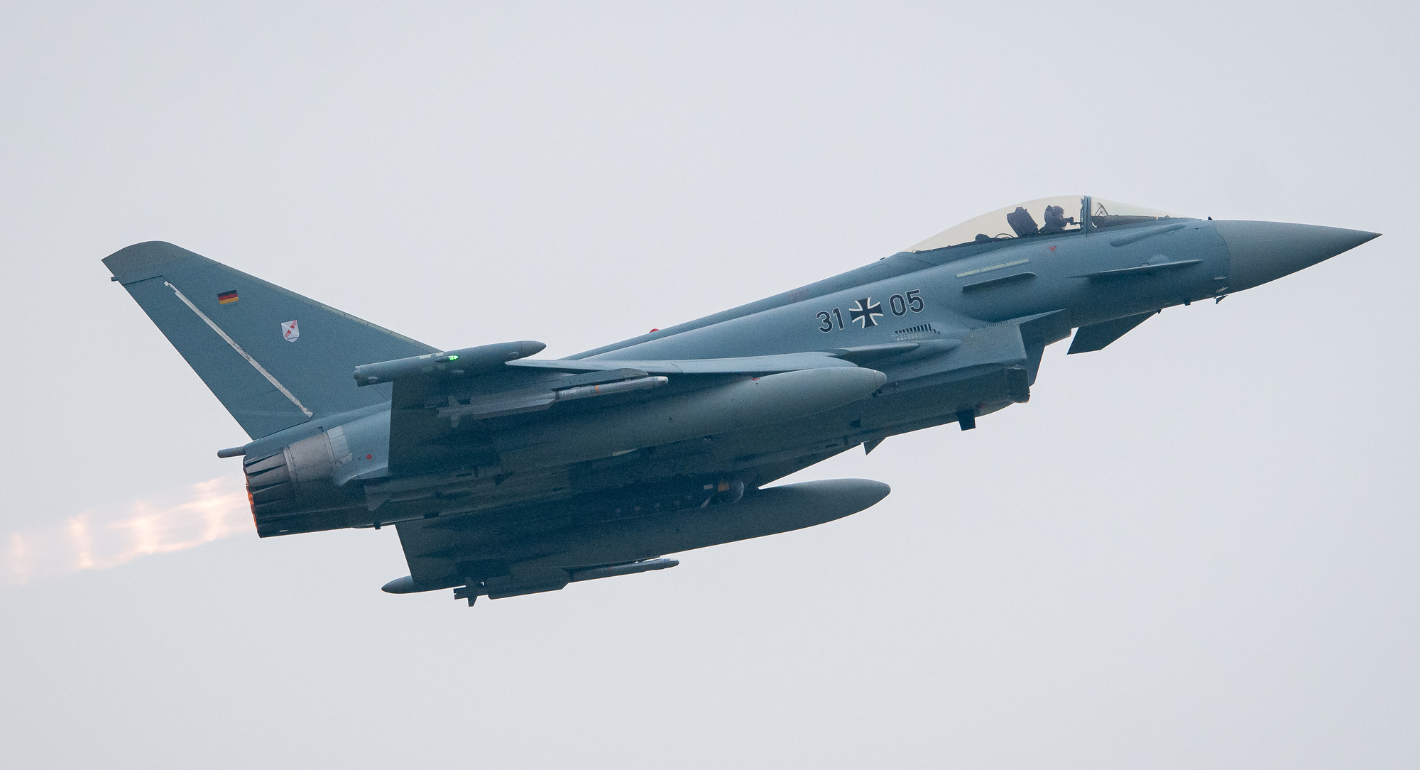
France and Germany’s failure to agree on the Future Combat Air System (FCAS) raises questions about European defense. Amid industrial rivalries and competing strategic cultures, what does the future of European military industrial projects look like?

Rym Momtaz, ed.
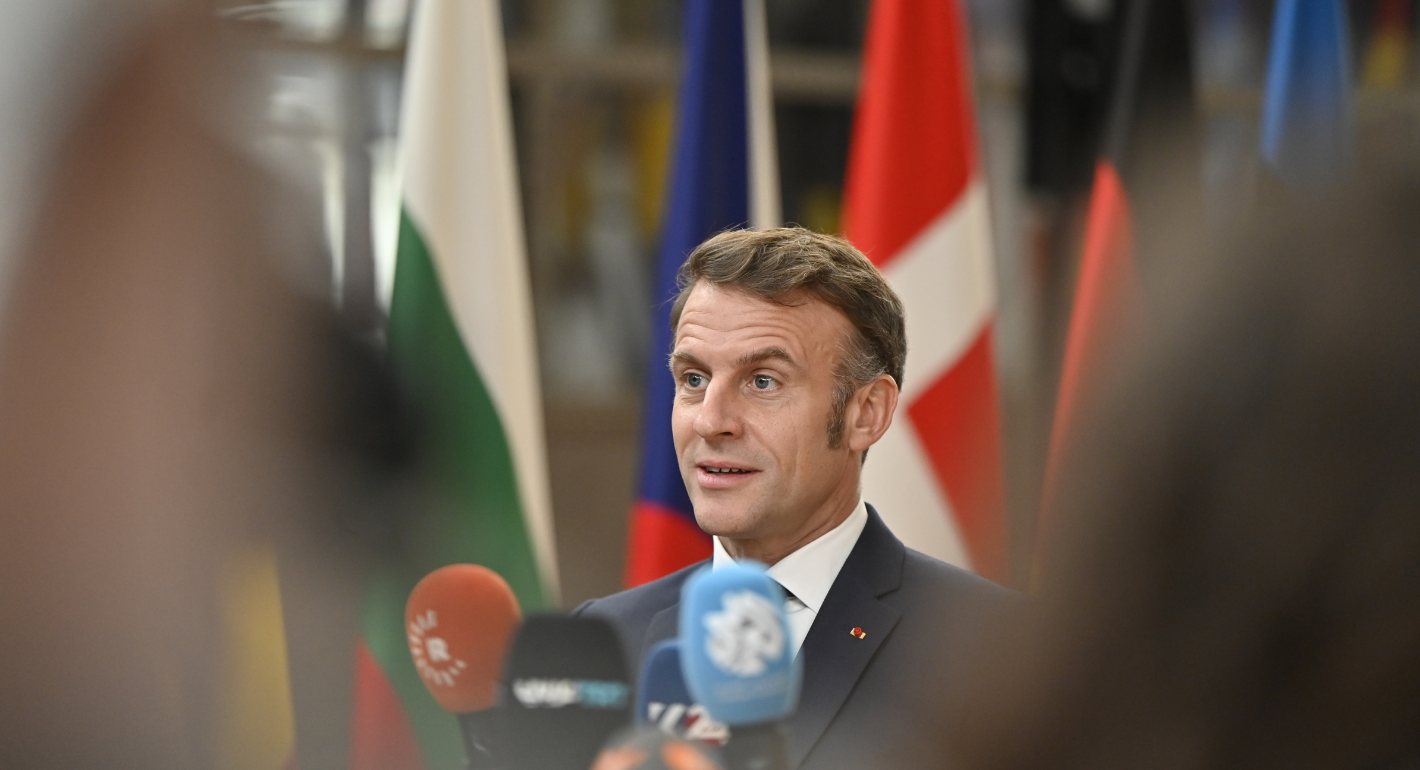
France has stopped clinging to notions of being a great power and is embracing the middle power moment. But Emmanuel Macron has his work cut out if he is to secure his country’s global standing before his term in office ends.
Rym Momtaz