

Commentary
Judy Dempsey
{
  "authors": [
    "Judy Dempsey"
  ],
  "type": "commentary",
  "blog": "Strategic Europe",
  "centerAffiliationAll": "",
  "centers": [
    "Carnegie Endowment for International Peace",
    "Carnegie Europe"
  ],
  "collections": [
    "EU Integration and Enlargement"
  ],
  "englishNewsletterAll": "",
  "nonEnglishNewsletterAll": "",
  "primaryCenter": "Carnegie Europe",
  "programAffiliation": "",
  "programs": [],
  "projects": [],
  "regions": [
    "Europe",
    "Western Europe",
    "France"
  ],
  "topics": [
    "EU",
    "Political Reform"
  ]
}
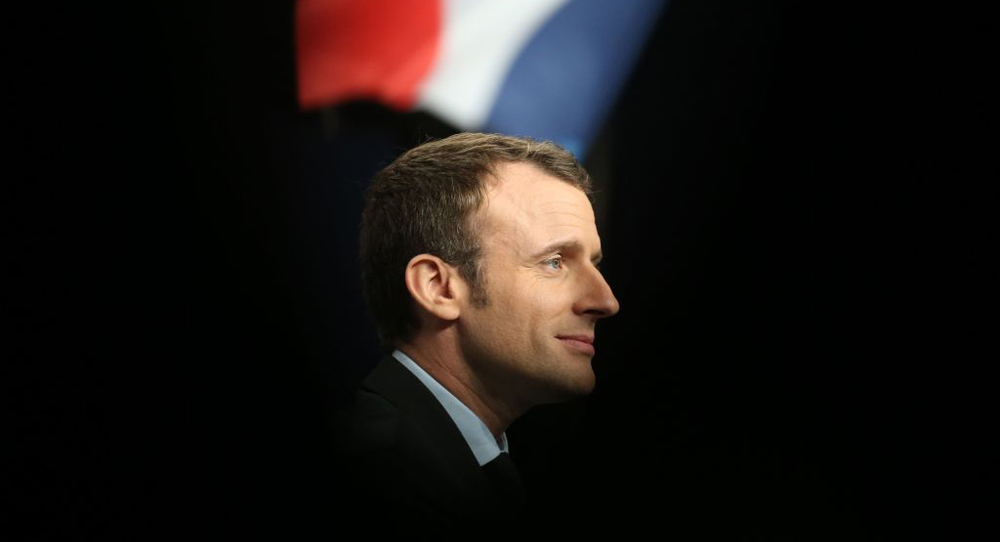
Source: Getty
The future of Europe and, especially, of the Franco-German relationship depends on who becomes France’s next president.
If Britain’s June 2016 vote to leave the EU shook the European project, the outcome of France’s 2017 presidential election will have profound implications for the future of the bloc. The importance of the result cannot be overestimated. It will show whether the EU will move on after Brexit or descend slowly down the path of disintegration.
It is impossible to predict who will enter the Élysée Palace after the second round of voting on May 7. According to opinion polls, the two front-runners are Marine Le Pen, leader of the far-right National Front, and Emmanuel Macron, leader of the new centrist movement En Marche ! (On the Move!).
Both are indefatigable campaigners. But they have very different views of what direction France and Europe should take. Le Pen advocates a French exit from the eurozone, a move that would effectively break up the EU’s single currency besides dealing a huge blow to the bloc’s credibility as France moves away from this post-1945 project. Macron has a completely different view of how to revitalize Europe and, particularly, the Franco-German relationship, which has until recently driven Europe forward.
But over the past decade or more, the economic and political imbalance between Berlin and Paris has become so great that it fell to Germany to steer the EU through the euro crisis and several other major upheavals, including the refugee and Ukraine crises. In short, France’s economic and political malaise diminished its influence as well as the ability of Berlin and Paris to work together and set an agenda for Europe.
To discuss Macron’s views about his country, Europe, and Germany, I spoke to Sylvie Goulard, who is in charge of European affairs in the Macron team.
Goulard, a former foreign ministry official and a former adviser to the European Commission, has been a prominent member of the European Parliament since 2009 and a staunch supporter of the EU’s federalist movement. She is also passionate about the importance of the Franco-German relationship: she was a member of the French team that negotiated the reunification of Germany. It was that relationship that we broached first.
Judy Dempsey: Why is the French presidential election important for Germany?
Sylvie Goulard: Because we have the same currency. We draw prosperity from the same market. We share the same future.
JD: But the relationship is in bad shape. What is needed to kick-start it?
SG: The first thing is that France needs to introduce structural reforms and put its public finances in order. Second, it is necessary to look at the national level and then to look at options together [with Germany]. There is a window of opportunity to develop common options. There is a need for a cool analysis of the challenges, how to strengthen the eurozone post-Brexit, how to define a strategy for and after the German parliamentary election, and how to involve other countries. We need a comprehensive approach, whether on internal security or on defense. The point is that we need to begin in 2018.
JD: And Brexit’s impact?
SG: Brexit shows that national politics still play a big role.
JD: What does that mean for traditional democratic practices?
SG: There is a need to get back to the basics of democracy. To connect, to ask, to involve people. To make people own the results of elections. To listen to the people. It has to be a bottom-up, grassroots approach. To make people be aware of their responsibilities.
JD: This brings us to the EU. What kind of Europe does Macron want?
SG: This is not an easy question to answer in just a few words. Macron considers that in many fields, sovereignty can only be exercised at the supranational level. He wants to relaunch Europe with the Germans first and all willing countries, and he is ready to cope with the duties linked to the next steps. A comprehensive approach is needed—not only to fix the single market and the euro area but also to address internal security and defense. This must be done step by step, but there is no time to lose. It is urgent to get the Europeans on board. There is also a need for democratic conventions as soon as possible in 2018.
JD: Getting back to France, what is at stake for your country?
SG: What is at stake is the continuation of the European project. You have to remember that people are focused on internal issues and social frustration. Some Le Pen supporters do not realize or take into consideration the consequences of their votes on the future of the euro, even though many of them want to keep the euro.
JD: And the impact of the French election on Europe’s future?
SG: Seventy years of the common project might be destroyed unilaterally. Depending on how France decides, it could mean the end of the European currency project.
This blog post is the second in a set of contributions providing insights into the 2017 French presidential election.

Nonresident Senior Fellow, Carnegie Europe
Judy Dempsey is a nonresident senior fellow at Carnegie Europe
Recent Work
Judy Dempsey
Judy Dempsey
Carnegie does not take institutional positions on public policy issues; the views represented herein are those of the author(s) and do not necessarily reflect the views of Carnegie, its staff, or its trustees.

Trump is distracted and Ukraine wants Europe to step up. The continent’s leaders must find their voice and assert it in talks with Russia.

Alissa de Carbonnel

Mounting economic strain and battlefield losses will not necessarily make the Kremlin less dangerous. They could instead push Moscow toward a more aggressive hybrid campaign designed to test NATO’s Eastern flank, exploit allied hesitation, and fracture European resolve.

Maksym Beznosiuk

Over the past ten years, NATO has held almost as many summits as it did during the entirety of the Cold War. Are they still useful, or is it time to stop holding annual meetings?

Rym Momtaz, ed.
Nearly a year and a half after Europeans leaned into sucking up to Trump, the strategy has produced some benefits when it comes to Ukraine.
Rym Momtaz
Far-right leader Marine Le Pen can—and will—run in France’s next presidential election. What does the outcome of her appeal against a 2025 embezzlement conviction mean for the country’s political future?
Catherine Fieschi