

Commentary
As we close out another season of Strategic Europe, it is worth taking stock of the deep shifts underway.
Rym Momtaz
{
  "authors": [
    "Emily B. Landau",
    "Shimon Stein"
  ],
  "type": "commentary",
  "blog": "Strategic Europe",
  "centerAffiliationAll": "",
  "centers": [
    "Carnegie Endowment for International Peace",
    "Carnegie Europe"
  ],
  "collections": [
    "Transatlantic Cooperation",
    "Iranian Proliferation"
  ],
  "englishNewsletterAll": "",
  "nonEnglishNewsletterAll": "",
  "primaryCenter": "Carnegie Europe",
  "programAffiliation": "",
  "programs": [],
  "projects": [],
  "regions": [
    "Middle East",
    "Europe",
    "North America",
    "United States",
    "Iran",
    "Western Europe"
  ],
  "topics": [
    "Foreign Policy",
    "Nuclear Policy",
    "EU",
    "Security"
  ]
}
Source: Getty
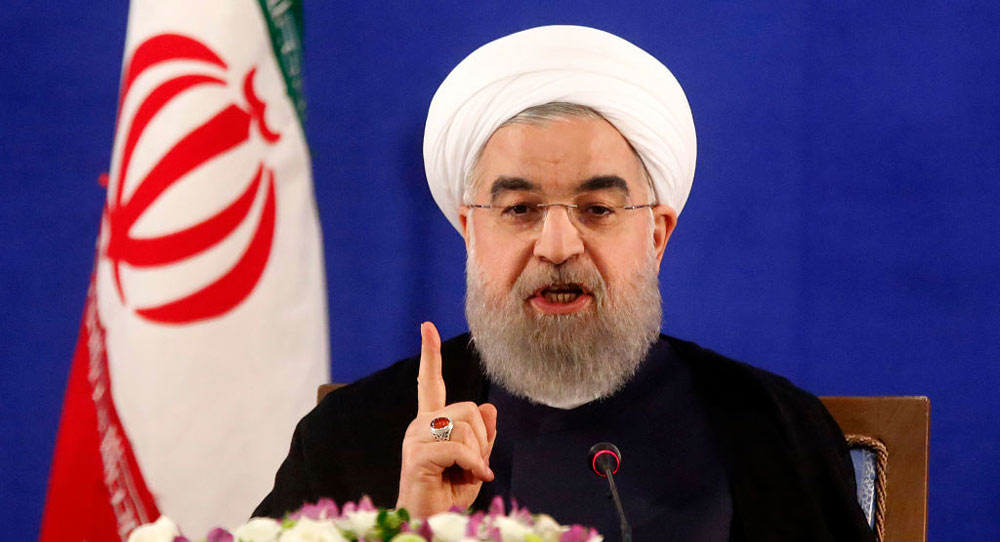
The United States and Europe should consider bringing their current divergent positions on Iran closer into line.
Some observers in the West—first and foremost in Europe—rejoiced at Hassan Rouhani’s landslide victory over his conservative opponent in Iran’s presidential election on May 19. But their expressed hope for a new and moderate approach from Tehran is puzzling. In his first four-year term as president, Rouhani had no success in enhancing more moderate trends in Iran, nor did he have an impact on curbing the aggressive hegemonic course that the country has been pursuing across the Middle East.
Barring a major change in the power structure in Iran, the prospect that the reelected president will change course on foreign and security policies is anything but given. In this context, hopes that the international nuclear deal concluded in 2015 would have a moderating impact on Iran’s basic policy directions have not materialized.
Any decision in Iran to modify the country’s foreign and defense policies is the prerogative of the Islamic Revolutionary Guard Corps and, ultimately, of Supreme Leader Ayatollah Ali Khamenei, which means that Rouhani’s prospects for shaping Iran’s policies are quite slim. If the president’s views are at odds with Khamenei’s, and if the former is sincere in his desire to improve relations with the West in the wake of the nuclear deal, one wonders how he intends to live up to this goal.
As for the West’s response, the EU has turned a blind eye to the reality of decisionmaking in Iran. The EU’s foreign policy high representative, Federica Mogherini, was among the first to congratulate Rouhani after the election, noting that the EU was “ready to continue work for full . . . implementation [of the nuclear deal], [bilateral] engagement [and] regional peace.”
But this stance undermines the EU’s interests in stability in the Middle East. Such stability will only be fostered by solving the major regional crises in which Iran is heavily involved—such as those in Syria and Iraq—in a way that is counter to the goals mentioned by Mogherini, including combating nuclear proliferation and fighting against states that sponsor terrorism. If the EU means to rely on engagement to change Iran’s behavior, there is no reason to believe this strategy will be any more successful than past failed attempts.
Moreover, placing economic interests at the top of the European agenda while ignoring the rest of the picture undermines not only Europe’s own interests but also those of many countries in the region. Nor does such an approach enhance the EU’s credibility. While the Europeans want to return to business as usual and pin their hopes on a reelected Rouhani, Western states would do well to adopt a comprehensive approach that takes all elements into account.
The first step for the West is to restore its deterrence vis-à-vis Iran—to get the message across to Tehran that its ongoing aggressive policies will not be tolerated. The administration of U.S. President Donald Trump has been taking clear steps toward reestablishing deterrence. The statements on Iran that Trump issued during his visit to Saudi Arabia in May placed Iran squarely in the crosshairs as the common enemy of pragmatic Sunni Arab states and Israel.
Trump’s allies in this regard are the Sunni Arab states in the Gulf, led by Saudi Arabia and the United Arab Emirates, and Israel. Egypt is part of this group; and judging by its recent diplomatic isolation, Qatar is not. The approach that the United States is putting in place will necessarily put more weight and emphasis on the participation of regional players in efforts to counter Iran’s malign plans for the Middle East.
So the United States and Europe have adopted different positions on Iran, but a divided West is not conducive to conveying a clear message to Tehran. It would be preferable and more effective if the two sides of the Atlantic were on the same page.
For this to happen, however, the Europeans must be much more circumspect with regard to Iran than they have been, and abandon their false hopes as far as Rouhani is concerned. They must get serious about their regional and nonproliferation responsibilities. Any plans to assist Rouhani and the so-called moderates in Iran should be subject to a carrots-and-sticks approach that makes cooperation with Iran conditional on a clear indication of changed stances in the nuclear realm and toward the Middle East. Rouhani has yet to indicate that he deserves the credit being extended to him by some in the West.
For its part, the United States should find a way to improve consultation and, if possible, coordination with European allies to avoid creating an image of disunity. Trump’s declaration of intent toward Iran comes against the backdrop of the comprehensive review of Iran policy that the U.S. administration is currently conducting. An initial step toward creating a more united front against Iran could be to try to coordinate more closely with European states on this review.
The fundamental differences that are currently at play between the EU and the United States do not bode well for creating the basis for a common Western approach toward Iran. Against this backdrop—and the doubts regarding what can conceivably be achieved together, especially if the Europeans insist on unconditional engagement with Tehran—the United States might have no choice but to move forward in implementing its Iran policy on its own. If Washington and Brussels progress with independent and conflicting strategies, however, the winner is likely to be Iran.
Emily B. Landau is a senior research fellow and head of the Arms Control and Regional Security Program at the Institute for National Security Studies at Tel Aviv University. Shimon Stein is a senior research fellow at the Institute for National Security Studies and was Israel’s ambassador to Germany from 2001 to 2007.

Emily B. Landau

Shimon Stein
Carnegie does not take institutional positions on public policy issues; the views represented herein are those of the author(s) and do not necessarily reflect the views of Carnegie, its staff, or its trustees.

As we close out another season of Strategic Europe, it is worth taking stock of the deep shifts underway.

Rym Momtaz
The EU had to compromise to adopt a twenty-first sanctions package against Russia, exposing growing cracks in the union’s resolve. Is this latest, weaker round worth it to keep pressure on Moscow?
Rym Momtaz, ed.

Trump is distracted and Ukraine wants Europe to step up. The continent’s leaders must find their voice and assert it in talks with Russia.

Alissa de Carbonnel

Mounting economic strain and battlefield losses will not necessarily make the Kremlin less dangerous. They could instead push Moscow toward a more aggressive hybrid campaign designed to test NATO’s Eastern flank, exploit allied hesitation, and fracture European resolve.

Maksym Beznosiuk

Over the past ten years, NATO has held almost as many summits as it did during the entirety of the Cold War. Are they still useful, or is it time to stop holding annual meetings?
Rym Momtaz, ed.