

Commentary
French President Emmanuel Macron has unveiled his country’s new nuclear doctrine. Are the changes he has made enough to reassure France’s European partners in the current geopolitical context?
Rym Momtaz, ed.
{
  "authors": [
    "Yannos Papantoniou"
  ],
  "type": "commentary",
  "blog": "Strategic Europe",
  "centerAffiliationAll": "",
  "centers": [
    "Carnegie Endowment for International Peace",
    "Carnegie Europe"
  ],
  "collections": [],
  "englishNewsletterAll": "",
  "nonEnglishNewsletterAll": "",
  "primaryCenter": "Carnegie Endowment for International Peace",
  "programAffiliation": "",
  "programs": [],
  "projects": [],
  "regions": [
    "Western Europe",
    "Germany",
    "Europe"
  ],
  "topics": [
    "Economy",
    "EU",
    "Climate Change"
  ]
}
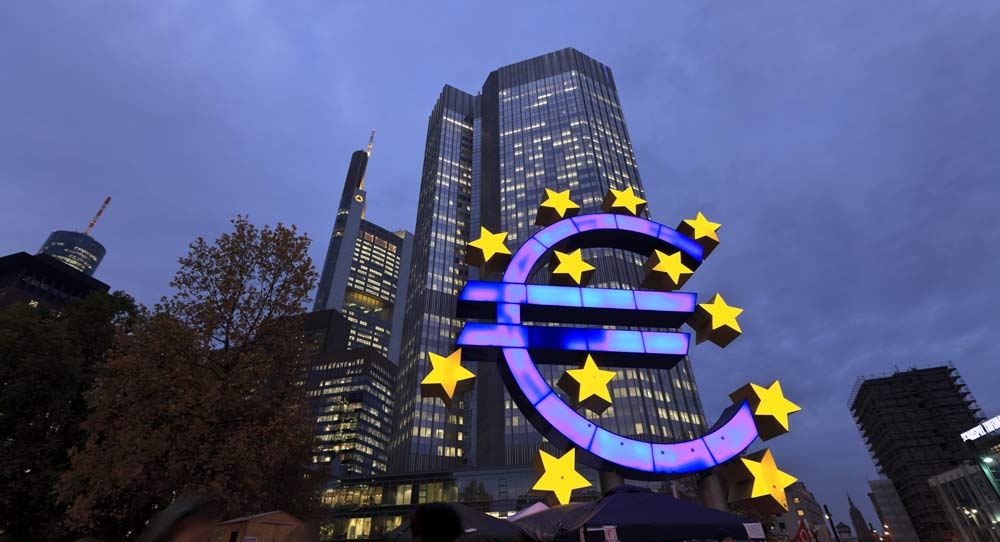
Source: Getty
Together with France, Germany’s next finance minister must push to further integrate the eurozone.
As the German election campaign kicks into high gear, now is a good time to assess the country’s approach toward the eurozone. In a nutshell, excessive austerity and the lack of progress on eurozone integration form the legacy of German economic policy since the beginning of the euro crisis nearly a decade ago.
For years, the eurozone economy seemed caught in a spiral as austerity measures led to higher, rather than lower, debt-to-GDP ratios. This was the consequence of large output losses, particularly in over-indebted countries in southern Europe. Economic failure undermined confidence in the euro, generating fears that weaker members would leave the eurozone and, worse still, that the monetary union would collapse.
German Finance Minister Wolfgang Schäuble was reluctant to address the eurozone’s economic weaknesses. His main concern was that fiscal integration would help establish a transfer union for the benefit of the area’s poorer members. It was feared that this would encourage debt creation, running counter to a fiscal approach embedded in German culture: namely, that thrift and debt avoidance are desirable because they are consistent with the ethical standards of personal behavior.
Added to these reservations was a scepticism of Keynesian policies that focus on aggregate demand. Germans tend to believe that long-term economic trends depend on maintaining financial discipline and promoting structural reforms.
Nonetheless, the “orthodox” assumption that imposing top-down financial imperatives—such as balanced budgets or the gold standard in previous times—necessarily produce the intended adjustments in the real economy has once again been disproved. Increased confidence accruing from fiscal consolidation and the implementation of reforms were not sufficient for igniting robust growth and exiting the prolonged recession in Europe, underlining the need for macroeconomic policies designed to influence demand and output.
As it is, the European economy, though gradually improving, continues to display serious weaknesses. The eurozone’s per capita GDP is only 0.8 percent higher than it was in 2008. This compares to a 5.9 percent rise in per capita GDP growth in the United States over the same period. And, at 9.1 percent, the eurozone’s unemployment rate is currently twice as high as that in the United States. Income disparities in Europe are also on the rise, while the divide has widened between the continent’s more advanced northern countries and the weaker economies in the south.
The challenge for Germany’s next finance minister is to overcome this legacy by adopting a more flexible fiscal policy and supporting further integration. Here are few ideas on how to do that.
A revision of the Stability and Growth Pact would increase the responsiveness of fiscal policy to cyclical movements of economic activity. Moreover, the creation of a eurozone budget would provide an additional instrument of macroeconomic policy, particularly if a European finance minister position is created.
Furthermore, debt mutualization—through the issuance of Eurobonds—would reinforce confidence in the sustainability of the euro. So too would the establishment of a fully-fledged deposit insurance scheme.
Finally, this new institutional setup would contribute to reducing existing tensions between Berlin and the European Central Bank, as responsibility for economic policy would be shared in a more balanced way between fiscal and monetary authorities, thus permitting more harmonious cooperation, similar to the U.S. approach. In the United States, the two economic policy centers—the U.S. Treasury and the Federal Reserve—consult each other within the constitutional framework that protects the central bank’s independence and coordinates their activities, instead of publicly exposing differences and harming effectiveness as a result.
It remains to be seen whether such a policy shift would be supported by the current German political class. Substantial parts of the economic and academic establishments oppose deviation from financial orthodoxy. On the other hand, France’s newly elected president, Emmanuel Macron, is pushing in the direction of reform.
The political change in France could revive the Franco-German partnership, especially if—as expected—Angela Merkel is reelected German Chancellor. This would install new power into the European motor. A more flexible fiscal policy and the restructuring of the eurozone could unleash confidence effects leading to a faster pace of reforms and a more prosperous Europe with stronger global standing.
However, the extent of reform will be ultimately decided by how Germany prefers to exercise its power within the EU: by assuming, as the stronger partner, wider responsibilities in organizing the currency union, or by weighing short-term costs and advantages. It is hoped that any temptation to take a “Germany First” approach will not prevail. Such a move would risk demolishing the entire EU project. In the long term, responsible partnership offers the best guarantee for a European revival that would sustain Germany’s own economic prosperity.
Yannos Papantoniou is president of the Center for Progressive Policy Research, an independent think-tank.

Yannos Papantoniou
Carnegie does not take institutional positions on public policy issues; the views represented herein are those of the author(s) and do not necessarily reflect the views of Carnegie, its staff, or its trustees.
French President Emmanuel Macron has unveiled his country’s new nuclear doctrine. Are the changes he has made enough to reassure France’s European partners in the current geopolitical context?

Rym Momtaz, ed.
European reactions to the war in Iran have lost sight of wider political dynamics. The EU must position itself for the next phase of the crisis without giving up on its principles.

Richard Youngs
Europe isn’t as weak in the new geopolitics of power as many would believe. But to leverage its assets and claim a sphere of influence, Brussels must stop undercutting itself.

Dimitar Bechev
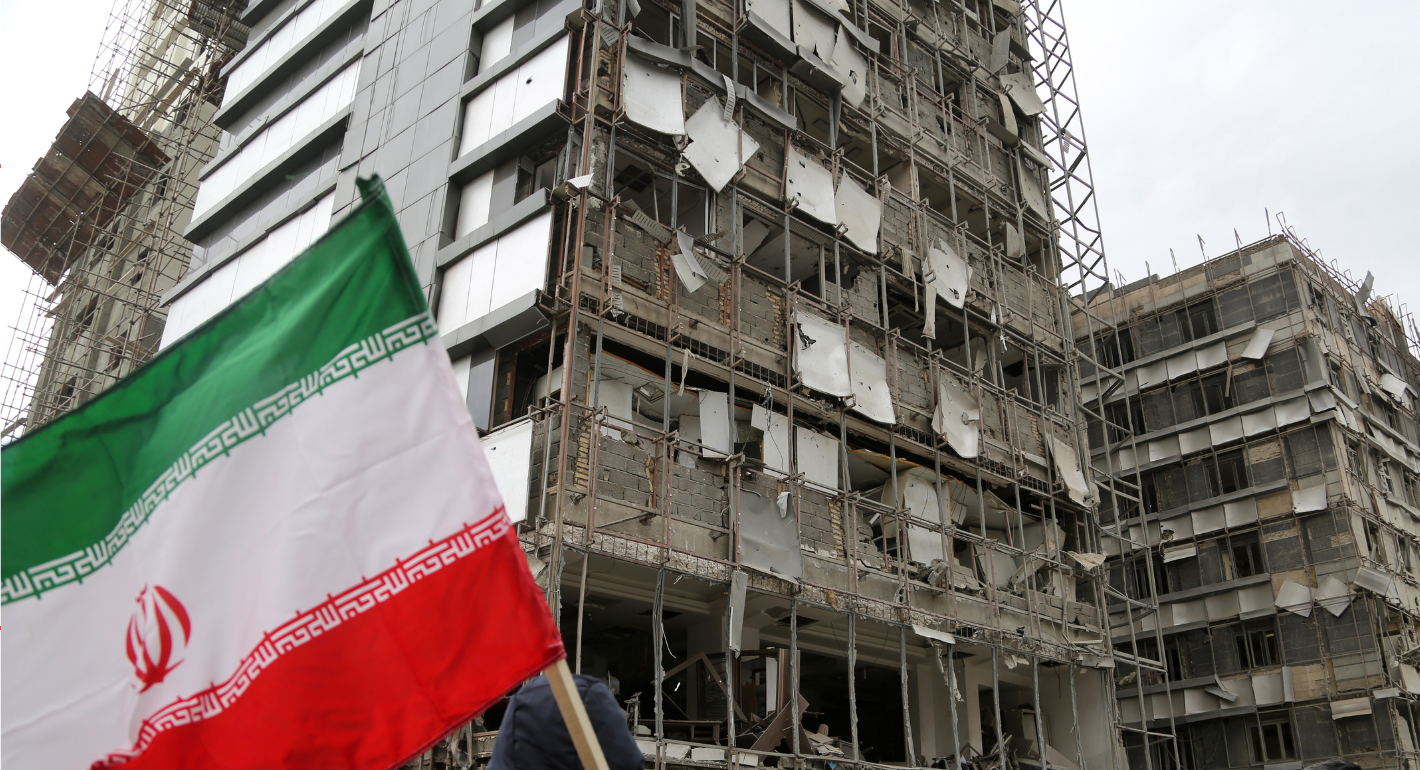
Europe’s reaction to the war in Iran has been disunited and meek, a far cry from its previously leading role in diplomacy with Tehran. To avoid being condemned to the sidelines while escalation continues, Brussels needs to stand up for international law.

Pierre Vimont
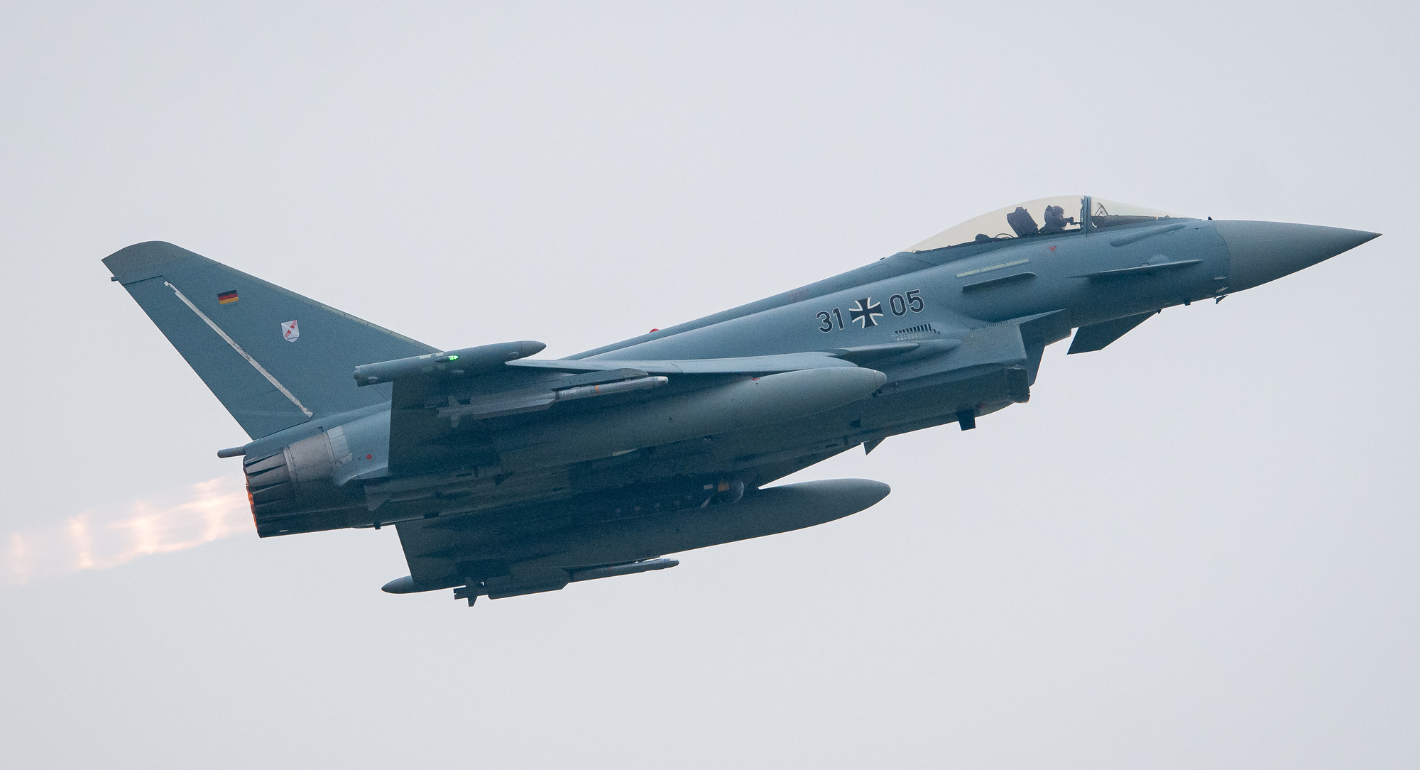
France and Germany’s failure to agree on the Future Combat Air System (FCAS) raises questions about European defense. Amid industrial rivalries and competing strategic cultures, what does the future of European military industrial projects look like?
Rym Momtaz, ed.