

Commentary
Judy Dempsey
{
  "authors": [
    "Judy Dempsey"
  ],
  "type": "commentary",
  "blog": "Strategic Europe",
  "centerAffiliationAll": "",
  "centers": [
    "Carnegie Endowment for International Peace",
    "Carnegie Europe"
  ],
  "collections": [],
  "englishNewsletterAll": "",
  "nonEnglishNewsletterAll": "",
  "primaryCenter": "Carnegie Europe",
  "programAffiliation": "",
  "programs": [],
  "projects": [],
  "regions": [
    "Europe",
    "Western Europe",
    "France",
    "Germany"
  ],
  "topics": [
    "EU"
  ]
}
Source: Getty
Germany will have no new government until at least next February, as Europe’s biggest economy begins to lose influence and predictability under its chancellor.
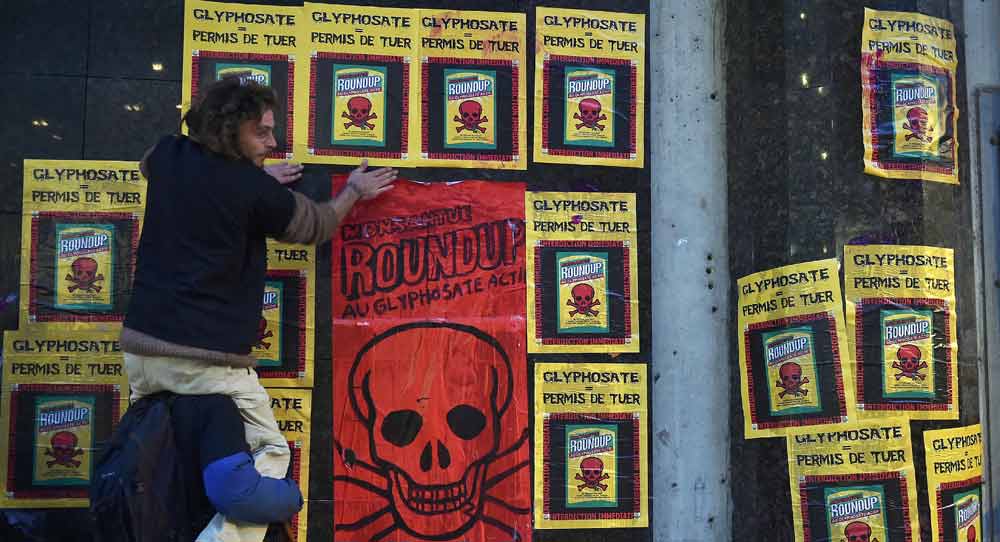
A weed killer has proven an unlikely issue to explain the poisonous atmosphere inside Angela Merkel’s conservative bloc and her relations with her would-be coalition partners, the Social Democrats.
Yet this is exactly what the weed killer, glyphosate, represents. This fiercely strong pesticide that destroys everything around it except the crop has been widely used by farmers in Europe for decades. But a study by the World Health Organization concluded in 2015 that it probably caused cancer.
At that stage, pending its own findings, the EU allowed the license to be rolled over for 18 months. In March, the European Chemicals Agency reported that there was no evidence linking glyphosate to cancer in humans. Given the intense debates among agricultural and health ministries about the chemical, it was decided that the 28 EU member states should vote on whether to extend the use of the weed killer for another five years.
The final vote—and showdown—took place on November 27. Going against the wishes of France, Germany got down off the fence, after months of abstaining to vote, in favor of extending the license. So much for Germany’s reputation as a country so wedded to strict health and environmental standards. In reality, Germany’s position reflected the sorry state of domestic politics—and Merkel’s waning influence inside her own conservative bloc.
Germany has been waiting for a new government since last September’s elections. Merkel’s conservative bloc won the most votes, but had its worst showing since the post-1945 era. Her coalition partners, the Social Democrats, fared no better. Its leader, Martin Schulz, vowed not to remain in the grand coalition that had been in power with Merkel’s conservatives since 2013.
After Merkel failed to clinch an agreement with the Greens and the pro-business Free Democrats to enter coalition talks, she was faced with the options of holding new elections, taking the risk of forming a minority government, or reaching out to the Social Democrats. So as not to give the outside world the impression that Germany was in for a bout of political uncertainty at a time when Europe is facing any number of major problems, including Brexit, President Frank-Walter Steinmeier, the former Social Democrat foreign minister, jumped in to mediate. He has been cajoling his party to stick with Merkel.
Were it as easy as that. Schulz’s credibility is waning by the day. Merkel’s isn’t in great shape, either.
The grassroots of the Social Democrats want nothing to do with Merkel. They want to go into opposition in order to rebuild and decide what kind of policies and identity the party should adopt.
Schulz, a former president of the European Parliament, is now trying to sell the message of “responsibility” to his party. Germany, he said, needs a stable government. Europe needs certainty from its most important member. Tell that to the party’s rank and file. Schulz will probably jump into Merkel’s coalition. After all, apart from being the man that might save Germany from instability, the lure of 2019 might prove just too big an attraction for him to ignore.
That’s when elections to the European Parliament will be held. And that’s when a new EU executive in the European Commission will be chosen. Merkel said it all on November 27 at her party’s Christian Democratic Union headquarters in Berlin. “There are European elections in 2019… so there is a big expectation that we take positions.” In short, if the grand coalition continues and unless Merkel can regain her authority, the chances are that the government may not see out its four-year term.
This is because the leaders of this coalition—Merkel and Schulz—have been electorally damaged, including Horst Seehofer, the leader of the Bavarian-based Christian Social Union (CSU) party, which is the sister party of Merkel’s Christian Democrats.
The CSU is now embroiled in a vicious leadership struggle after its poor showing in the federal elections, and ahead of its own regional elections next year. The far-right, anti-immigrant Alternative for Germany party is gnawing into the CSU’s base. Seehofer has blamed Merkel’s refugee policy for his party’s woes.
This is where the weed killer comes into play.
For months, Germany had abstained over extending the use of glyphosate. That was the policy of Merkel and Barbara Hendricks, the Social Democrat environment minister. But when it came to last Monday’s vote, Christian Schmidt, the food and agriculture minister, broke ranks with government policy. The CSU minister didn’t inform Merkel beforehand, but did tell Seehofer. If this wasn’t a kind of revenge or rebellion against Merkel policies and authority, what else would it be? It was also a nice present for Bavarian farmers ahead of the regional elections. As for the Social Democrats, they accused the CSU of reneging on previous decisions. That hardly bodes well for talks to form another grand coalition.
France was furious with Berlin’s decision. President Emmanuel Macron said he would, regardless, phase the weed killer out in three years—as if Macron doesn’t have his own agricultural lobby to deal with. Macron will probably forgive Merkel. But this weed killer episode reflects her weakening authority inside the conservative bloc.
More broadly, Germany’s influence among the other member states is not what it used to be. Even after lobbying for what should have been a shoo-in, it failed to host the European Banking Authority, which will have to leave London after Britain leaves the EU. Paris won it.

Nonresident Senior Fellow, Carnegie Europe
Dempsey is a nonresident senior fellow at Carnegie Europe
Recent Work
Judy Dempsey
Judy Dempsey
Carnegie does not take institutional positions on public policy issues; the views represented herein are those of the author(s) and do not necessarily reflect the views of Carnegie, its staff, or its trustees.
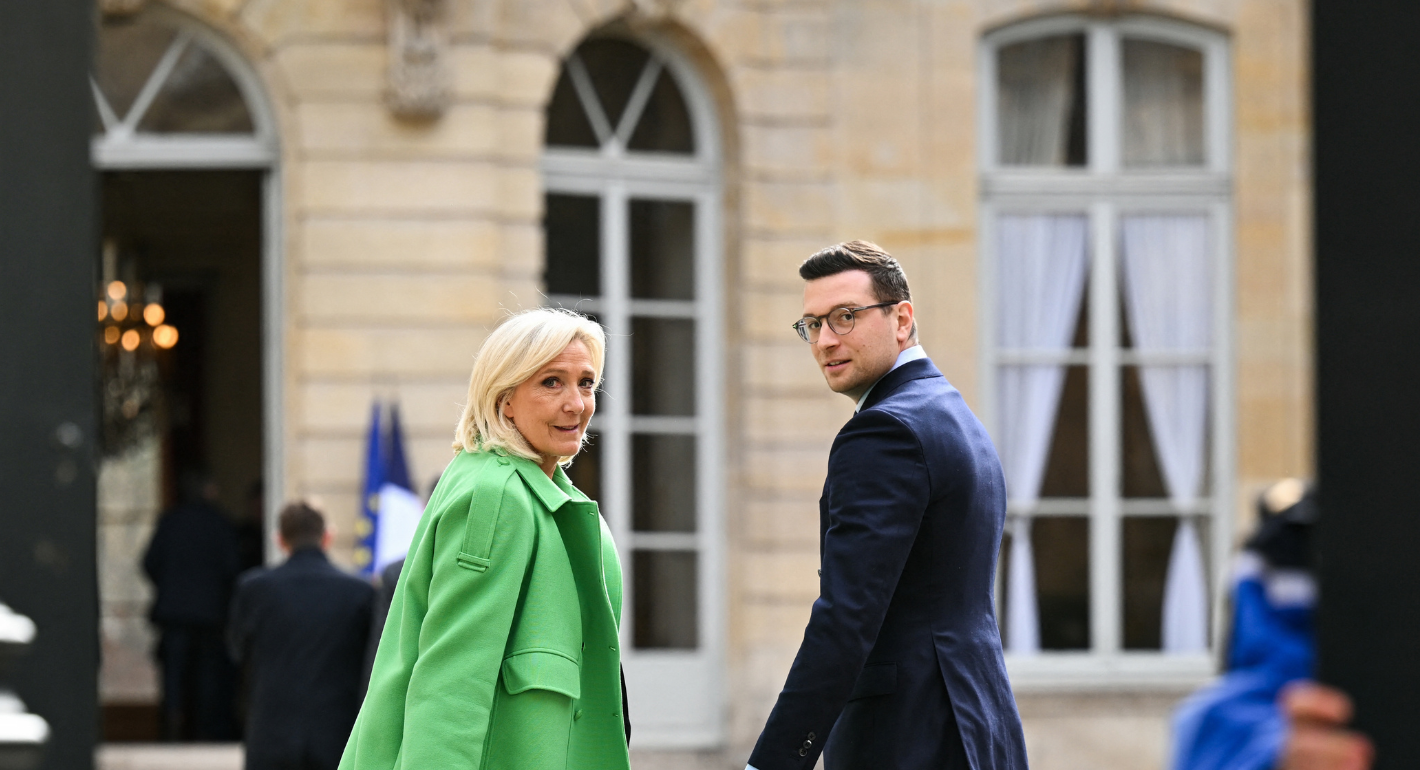
The far right failed to win big in France’s municipal elections. But that’s not good news for the country’s left wing, which remained disunited while the broader right consolidated its momentum ahead of the 2027 presidential race.
Catherine Fieschi
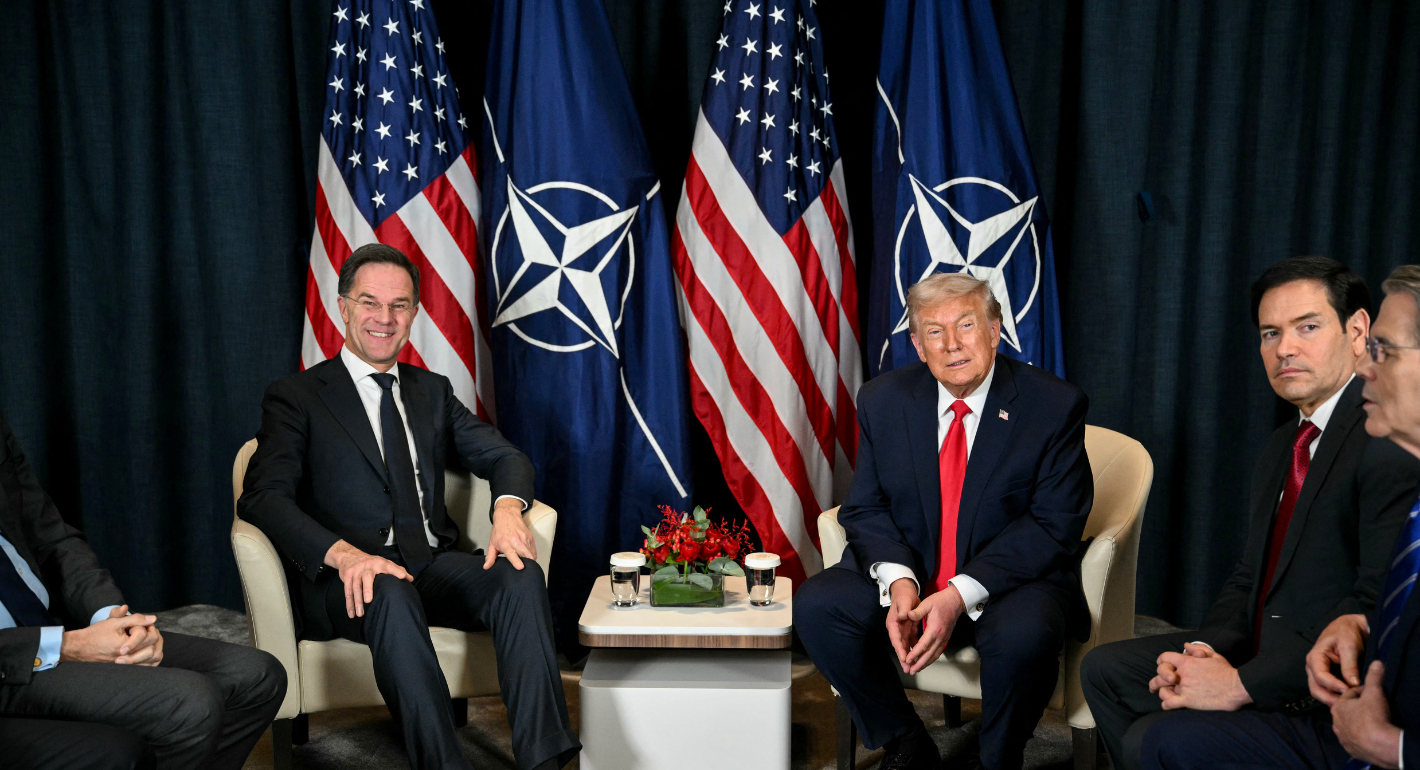
Donald Trump has demanded that European allies send ships to the Strait of Hormuz while his war of choice in Iran rages on. He has constantly berated NATO while the alliance’s secretary-general has emphatically supported him.

Rym Momtaz, ed.
The EU is structurally incapable of reacting to today’s foreign policy crises. The union must fold the EEAS into the European Commission and create a security council better prepared to take action on the global stage.

Stefan Lehne
The war in Ukraine is costing Russia its leverage overseas. Across the South Caucasus and Middle East, this presents an opportunity for Europe to pick up the pieces and claim its own sphere of influence.

William Dixon, Maksym Beznosiuk
The war in Iran proves the United States is now a destabilizing actor for Europe and the Arab Gulf. From protect their economies and energy supplies to safeguarding their territorial integrity, both regions have much to gain from forming a new kind of partnership together.
Rym Momtaz