

Commentary
Marc Pierini
{
  "authors": [
    "Marc Pierini"
  ],
  "type": "commentary",
  "blog": "Strategic Europe",
  "centerAffiliationAll": "",
  "centers": [
    "Carnegie Endowment for International Peace",
    "Carnegie Europe"
  ],
  "collections": [
    "Turkey’s Transformation"
  ],
  "englishNewsletterAll": "",
  "nonEnglishNewsletterAll": "",
  "primaryCenter": "Carnegie Europe",
  "programAffiliation": "",
  "programs": [],
  "projects": [],
  "regions": [
    "Middle East",
    "Europe",
    "Türkiye"
  ],
  "topics": [
    "EU",
    "Economy",
    "Climate Change"
  ]
}
Source: Getty
The latest standoff over energy resources in the Mediterranean illustrates the renewed risk of a military miscalculation in the region. More than ever before, diplomacy should prevail over saber rattling.
Cyprus—surrounded by Greece, Turkey, Syria, Lebanon, Israel, and Egypt—is located at the center of a geostrategic region. On and off, gas exploration activities and rights to underwater resources off the island’s shores have been a bone of contention between the Republic of Cyprus, Northern Cyprus, and Turkey for decades. The most recent standoff—about of fierce rhetoric coupled with naval activities—illustrates the renewed risk of a military mishap or miscalculation. More than ever before, diplomacy should prevail over saber rattling.
Much is at stake. The division of the island and the many attempts to reunite it, the delimitation of exclusive economic zones, exploration rights, gas supplies to the EU, EU-Turkey relations—all these issues are intertwined.And there are many players involved: the Republic of Cyprus, the so-called Turkish Republic of Northern Cyprus (recognized only by Turkey), Turkey itself, and a cohort of countries and companies interested in energy exploration, including Israel, Egypt, the United States, the EU, and Russian gas operators. This list itself makes for a problematic choreography.
Gas exploration around Cyprus lies at the intersection of two major litigations. One is the division of the island since the Turkish military occupation in 1974 and the failure, so far, to negotiate a comprehensive settlement under the aegis of the UN. The other is the definition of the exclusive economic zone (EEZ), itself a two-pronged issue because Turkey is challenging part of Cyprus’ rights and because the south and the north of the island have different views on the exercise of rights within the island’s EEZ.
In normal times, these differences would only trigger muscular diplomatic discussions, involving cohorts of legal experts and a massive use of contradictory maps. In an earlier life, I was part of such jousts.
At other times, fierce statements and the occasional use of gunboat diplomacy took over. For example, in the summer of 2011, when the Republic of Cyprus announced the start of exploratory drilling in disputed coastal waters, Ankara warned that “Turkey’s frigates, gunboats, and its air force will constantly monitor developments in the area” and that the drilling operations amounted to “madness.”
In the best of times, the leaders of both Cypriot communities seemed to agree that exploration and exploitation of the island’s gas resources should be a “federal-level issue.” One major difference remains to this date: the Republic of Cyprus argues that the entire island would benefit from these resources once an agreement on the island’s reunification has been reached, while the Northern Cypriots argue that energy issues should formally be part of the settlement negotiations. The only hopeful point is that both sides agree on the federal nature of energy issues in the scenario that an agreement to reunify Cyprus is reached. However, energy resources have not become an incentive to forge ahead with a comprehensive settlement.
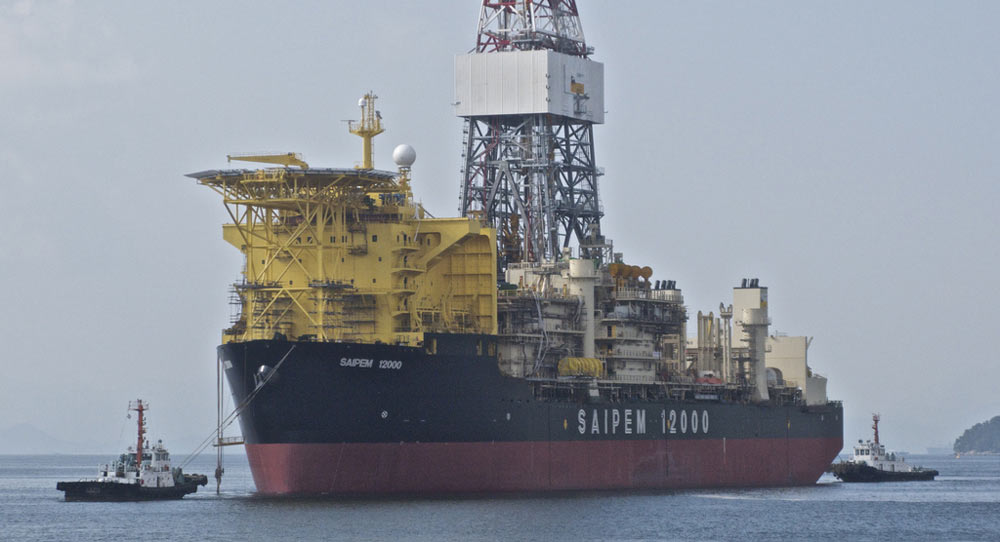
The latest flare-up in February is one of the negative episodes in the Cyprus gas saga—not unusual in itself but perhaps more risky than average. It started with the announcement that the Italian energy giant ENI would send a drilling platform—called Saipem 12000—to zones that are contested by Turkey. This operation is part of a larger drilling campaign launched by the Republic of Cyprus involving global energy firms such as French-owned Total and American Exxon, in addition to ENI.
Predictably, Ankara’s reaction—in itself, also not new—was couched in strong language by the Turkish foreign minister: “We find it unacceptable that the Greek Cypriot side persists in acting as though it were the sole owner of the island. … We have expressed our concerns, our outrage, and our indignation numerous times. … Everyone should understand that we are prepared to take all necessary measures to that end.”
After Turkish warships forced ENI’s drilling rig out of the area, diplomatic statements escalated further. While Cypriot President Nicos Anastasiades pleaded for moderation, the EU institutions reacted in an equally predictable way, with both European Council President Donald Tusk and European Commission President Jean-Claude Juncker squarely siding with the Republic of Cyprus. Turkish President Recep Tayyip Erdoğan, for his part, issued warnings similar to those used in 2011, when he was prime minister. Back to square one.
This time though, there are two major complicating factors. One is linked to gas markets, the other to Turkey’s internal politics. Both make the issue vastly more complicated than it ever was before.
Looking at gas exploration in the Eastern Mediterranean, the area is rife with drilling operations and plans about exports to regional consumers, as well as the EU. Competing countries and entities are at play: gas has been discovered in Egyptian, Israeli, and Cypriot waters so far. Various schemes are under consideration to export gas to Europe via Turkey or directly through Greece. Research by Lebanon and Turkey is also in preparation. Russia remains a powerful energy operator in the region, both with Lebanon and Egypt, in the context of an overall energy strategy based on retaining the maximum control on gas supplies to Western Europe.
Many of these plans have not reached an operational stage yet, especially since global gas prices are low and the investments needed are gigantic. But given the potential size of available resources, one can expect major political battles in a region already rife with conflicts—and which is one of the main theaters where Moscow is keen to illustrate its return as a major world power.
Turkey’s internal politics also make the situation more sensitive than before. Presidential and legislative elections are looming—they will be held simultaneously in November 2019, if not sooner—and President Erdoğan is not fully assured to carry the presidential vote and to see his party retain a substantial majority in parliament. For this reason, the ruling Justice and Development Party (AKP) has entered a coalition deal with the nationalist party (the MHP). This in turn has triggered a much fiercer nationalist narrative and is pushing back the likelihood of a comprehensive Cyprus settlement (which would entail a withdrawal of Turkish troops from the island).
There are strong reasons for diplomacy to prevail over saber rattling, before the latter turns belligerent. Hopefully, Moscow and Ankara will also see things this way.
Photo: Saipem 12000 by gCaptain.com is licensed under a Creative Commons Attribution-ShareAlike 3.0 Unported License.

Senior Fellow, Carnegie Europe
Marc Pierini is a senior fellow at Carnegie Europe, where his research focuses on developments in the Middle East and Turkey from a European perspective.
Recent Work
Marc Pierini
Marc Pierini
Carnegie does not take institutional positions on public policy issues; the views represented herein are those of the author(s) and do not necessarily reflect the views of Carnegie, its staff, or its trustees.

The EU can impose sanctions but struggles to enforce them without the United States. With Washington increasingly disinterested in backing European interests, the bloc must now fend for itself.


Nicu Popescu, Tiago Antunes

Russia is testing the waters of NATO’s mutual defense clause. What do strikes in Romanian territorial waters mean for the alliance’s posture toward Moscow?

Dimitar Bechev

With its public finances in shambles, the far right polling at 35 percent ahead of the 2027 presidential election, and a growing protest movement, is France’s crisis a threat to the EU’s geopolitical awakening?

Rym Momtaz, ed.

Ahead of a tough winter for Ukraine, Donald Trump’s swing back toward Russia bodes ill. But instead of panicking, Kyiv’s European allies are focusing on action.
Rym Momtaz

While the EU and European governments are embracing the much-lauded middle-power moment, this entails three difficult conundrums.

Richard Youngs