

Commentary
Judy Dempsey
{
  "authors": [
    "Judy Dempsey"
  ],
  "type": "commentary",
  "blog": "Strategic Europe",
  "centerAffiliationAll": "",
  "centers": [
    "Carnegie Endowment for International Peace",
    "Carnegie Europe"
  ],
  "collections": [],
  "englishNewsletterAll": "",
  "nonEnglishNewsletterAll": "",
  "primaryCenter": "Carnegie Europe",
  "programAffiliation": "",
  "programs": [],
  "projects": [],
  "regions": [
    "Europe",
    "Western Europe"
  ],
  "topics": [
    "EU",
    "Democracy",
    "Climate Change"
  ]
}
Source: Getty
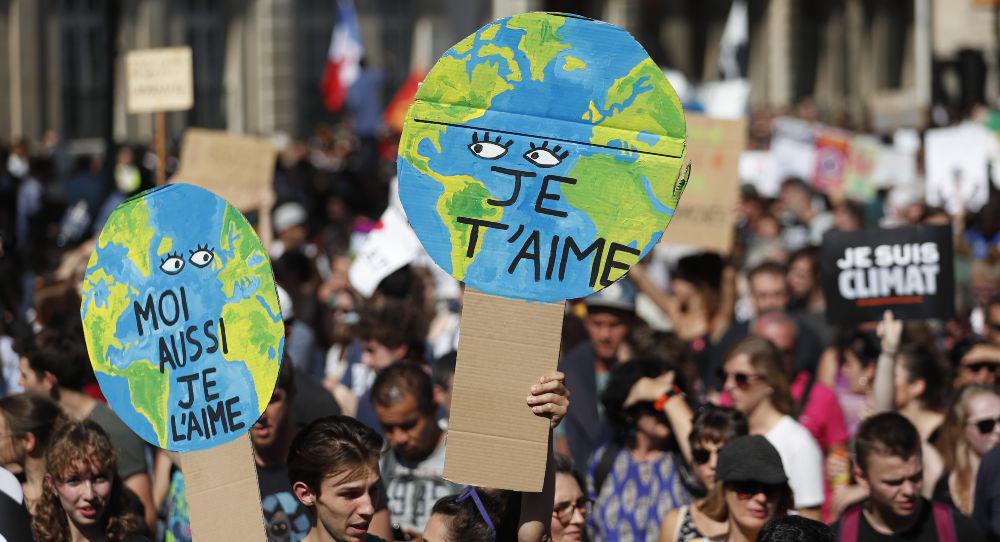
Citizens’ assemblies have sprouted up in several European countries. It remains to be seen whether they can efficiently boost governments’ responses to climate change.
Recent experiences, including in the UK and France, highlight the potential of citizens’ assemblies to help enhance climate action.
As governments need to address growing distrust in the capacity of representative democracy to drive system change and to prevent unfair climate policies, citizens’ deliberation can be a response to growing demands for climate action, social justice, and public participation.
Because citizens’ assemblies form representative samples of society, they can voice the needs of all social groups, help address social equity issues, and identify new compromises. Online public consultation and strong communication can also ensure transparency and broader public awareness.
Experiences show that citizens’ assemblies can handle the complexity of climate issues with adequate support and access to various resources, including literature synthesis, expert hearings, advice from expert groups, and fact-checkers.
The legitimacy of these assemblies also rests on their independence. Guarantors, advisers, and academic panels can ensure that the information provided is balanced, accurate, and comprehensive.
Ultimately, the impact of citizens’ deliberation depends on the link to decisionmaking, which varies with each country’s democratic culture. The UK climate assembly informed powerful parliamentary committees, while the French government created a precedent by committing to send the Citizens’ Convention on Climate’s proposals for adoption “without any filter.”
The climate crisis is so complex that no single action can be the answer to it. However, because of the complexity, formats that can connect otherwise distant actors meaningfully can play a very helpful role. Citizens’ assemblies fit that bill.
If well designed, such assemblies connect expertise with life realities, broaden the horizon of policymakers on what publics may be willing or even excited to consider, and enable publics to learn about options they did not know about. Rather than stoking divisions between people and businesses or between activists and state officials, they can foster common ground and create shared purpose, which is needed to combat comprehensive challenges like the climate crisis.
But the success of citizens’ assemblies to address the crisis depends on many factors. A well-run assembly may provide great input into the policy process, but to have impact on the public more widely further steps are needed. It may create new cooperation within a country, but a global response to the crisis requires global cooperation—and transnational formats.
Rather than thinking of the citizens’ assembly to provide the answer, we can think of multiple versions of such formats contributing to the range of answers we need.
From my point of view, citizens’ assemblies are first and foremost the key elements of improving the way democracies around the world work.
What the citizens’ assemblies provide are an opportunity to deliver well-thought-out decisions that are made for the common good by a group of people who are independent and who have had the chance to learn deeply about an issue and to discuss possible solutions with one another. All these elements contribute to the quality of decisions made by citizens’ assemblies. This is their great advantage.
Since several citizens’ assemblies have been organized on the topic of protecting the climate, we can already tell that this issue can be addressed by a group of randomly selected people. It works. What is also vital, however, is the next step: the implementation of the recommendations created by citizens’ assemblies.
If we really want democracies to be efficient, it seems to me that we should reform the whole democratic system, rather than just adding on a new element to it. I would suggest making a move toward full-scale deliberative democracies, where the citizens’ assemblies make legally binding decisions, choose who will be implementing them, and monitor the progress.
Citizens’ assemblies are part of the answer to the climate crisis, but the principles that underpin them are what’s important.
The challenges are well rehearsed. Tackling climate change requires action at all levels of society. The actions that are taken—and those that are not—will impact on all of our lives and the generations that follow us. Given that, how can governments take meaningful action that is supported by the public?
Citizens’ assemblies show that, when trusted, the public can grapple with complex issues, make difficult trade-offs, and develop robust recommendations for what should be done. They give decisionmakers a clear understanding of what a representative group of the public would do when faced with complex challenges.
But they are only one way in which people can be—and need to be—involved in decisionmaking. Underpinning citizens’ assemblies are the principles of participation—people being involved in the decisions that affect their lives—and deliberation—people sharing and testing ideas through inclusive and respectful conversations.
It is these principles that we need to build into decisionmaking at all levels of society in order to develop the ideas, energy, and ownership to answer the crisis.
Yes, in part, but not exclusively.
Climate change is an urgent and complex global problem, and as the UN states “it is critical that we employ all of the tools at our disposal.” This includes policy reform, faster innovation, economic restructuring, and behavioral change.
Citizens’ assemblies and other innovative forms of democratic participation have shown to be an important tool for improving policy outcomes and enhancing public trust necessary to carry out difficult reforms. But in order to be effective, assemblies must be accompanied by broader democratic transformations.
In France, for example, we saw climate change taxes imposed without public consultation spark months-long protests nationwide. This citizen anger pushed French President Emmanuel Macron to rethink public policy reform and, in turn, open a Grand Débat with citizens. This exercise, however faulty, prompted the current French climate convention. Following the last assembly on June 19–21, 2020, observers cast critical eyes on the government’s next steps to honor its commitment to implement the assembly’s proposals.
The questions now are how the French government responds and whether this collective reform process can yield structural and behavioral change. As the UK, the EU, and other governments follow suit, it is important to draw lessons from the French experience to strengthen and scale up future initiatives.
Citizens’ initiatives have proven to be effective in reaching a number of goals, but the pressure they can put on stakeholders is not always enough.
It’s not even the most reliable political force: remember that the enthusiasm and momentum of the climate protests has basically vanished since the start of the coronavirus crisis, as if people simply lost interest—though this is surely not the case. A difference can be made on the level of political leaders and, very importantly, on the level of the biggest actors of industry.
When it comes to their interests and decisions, profit is more important than what form we invent for citizens’ participation and activism. So, in short: I’m pretty skeptical.

Nonresident Senior Fellow, Carnegie Europe
Judy Dempsey is a nonresident senior fellow at Carnegie Europe
Recent Work
Judy Dempsey
Judy Dempsey
Carnegie does not take institutional positions on public policy issues; the views represented herein are those of the author(s) and do not necessarily reflect the views of Carnegie, its staff, or its trustees.

As we close out another season of Strategic Europe, it is worth taking stock of the deep shifts underway.

Rym Momtaz
The EU had to compromise to adopt a twenty-first sanctions package against Russia, exposing growing cracks in the union’s resolve. Is this latest, weaker round worth it to keep pressure on Moscow?
Rym Momtaz, ed.

Trump is distracted and Ukraine wants Europe to step up. The continent’s leaders must find their voice and assert it in talks with Russia.

Alissa de Carbonnel

Mounting economic strain and battlefield losses will not necessarily make the Kremlin less dangerous. They could instead push Moscow toward a more aggressive hybrid campaign designed to test NATO’s Eastern flank, exploit allied hesitation, and fracture European resolve.

Maksym Beznosiuk

Over the past ten years, NATO has held almost as many summits as it did during the entirety of the Cold War. Are they still useful, or is it time to stop holding annual meetings?
Rym Momtaz, ed.