

Commentary
Judy Dempsey
{
  "authors": [
    "Judy Dempsey"
  ],
  "type": "commentary",
  "blog": "Strategic Europe",
  "centerAffiliationAll": "",
  "centers": [
    "Carnegie Endowment for International Peace",
    "Carnegie Europe"
  ],
  "collections": [
    "Europe’s Eastern Neighborhood",
    "EU Integration and Enlargement"
  ],
  "englishNewsletterAll": "",
  "nonEnglishNewsletterAll": "",
  "primaryCenter": "Carnegie Europe",
  "programAffiliation": "",
  "programs": [],
  "projects": [],
  "regions": [
    "Russia",
    "Europe",
    "Eastern Europe",
    "Ukraine",
    "Western Europe"
  ],
  "topics": [
    "Foreign Policy",
    "Security",
    "EU"
  ]
}
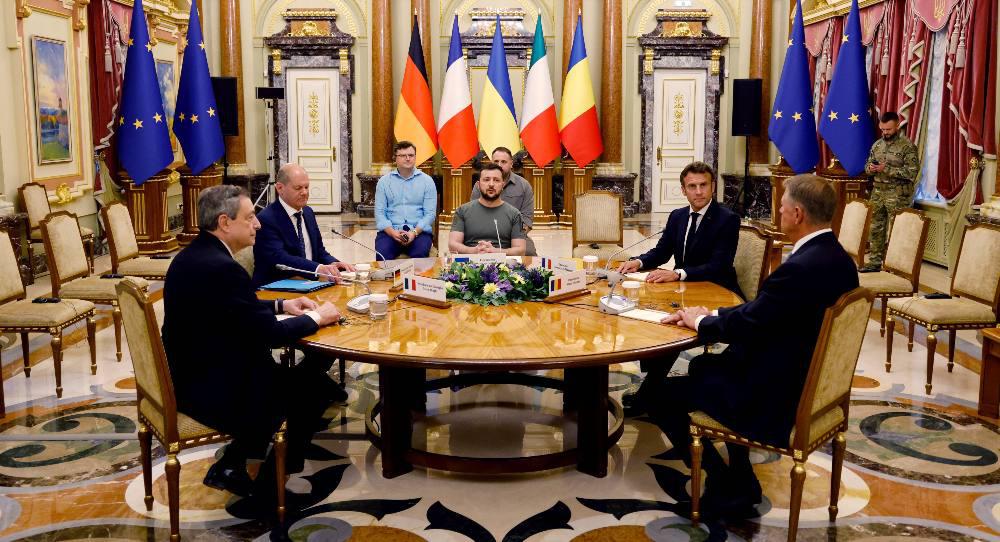
Source: Getty
The parliamentary election setback for President Macron and bickering inside the German and Italian coalitions play into Moscow’s hands. If EU member states falter over Ukraine, European security will be jeopardized.
There was that moment of much-needed euphoria in Ukraine when on June 16 the leaders of France, Germany, Italy, and Romania together visited the country and expressed support for its application to join the EU. All that’s needed now is a unanimous yes from European leaders who meet on June 23-24.
Membership is a long way off. But psychologically and politically, this is what Ukrainian President Volodymyr Zelensky needed as the Russian military pounds eastern Ukraine, forcibly deports thousands of children, and wages an intense propaganda campaign in areas under its control.
As for the Kremlin’s reaction to Ukraine one day joining the EU, it shrugged off the changing relationship between Kyiv and Brussels.
And no wonder. President Vladimir Putin need only look at the unfolding political and economic developments in Europe to see how his fortunes are shifting.
The outcome of the French parliamentary election in which President Emmanuel Macron lost his absolute majority will put domestic issues at the top of the agenda in Paris.
One of the leaders of the opposition is now Jean-Luc Mélenchon, a hard-left wing politician who is known for his anti-American, Euroskeptic, and Kremlin-friendly views. The other is Marine Le Pen’s, leader of the National Rally that did remarkably well. It now dominates the far right.
Over in Berlin, the Green vice-chancellor and economy minister, Robert Habeck, announced the reopening of coal plants to offset Russia’s decision to sharply reduce gas supplies. Just think what Green voters will think about that. Meanwhile, in Rome, Prime Minister Mario Draghi’s coalition is bitterly divided over sending arms shipments to Ukraine.
There’s a common thread linking Berlin, Paris, and Rome. It is about their relationship with Russia.
The leaders of these three founding members of the EU are loath to admit that de facto, Europe is at war with Russia. As it is, several countries are delivering weapon systems to Ukraine and even the EU as an institution is doing so, too.
Yet President Macron, German Chancellor Olaf Scholz, and Italian Prime Minister Mario Draghi prefer to see Russia’s brutal invasion of Ukraine as a crisis of relations with Moscow that could one day be repaired. As Macron likes to remind his interlocutors: humiliating Russia is not a good idea.
This is the crux of Europe’s policy toward Russia. Germany, along with France, are reluctant to accept that Russia, apart from trying to destroy Ukraine, has overturned the post–Cold War status quo. Putin’s threats to use nuclear weapons are his attempts to scare and neutralize Germany.
Yet as long as Berlin does not unambiguously abandon its Ostpolitik, or eastern policy, that is based on the idea of bringing Russia closer to Europe and ensuring the continent’s stability, there can be no coherent European policy toward Russia.
So while it’s all very well giving Ukraine candidate status, what is needed is a new mindset when it comes to Russia. At the moment, there is no such common mindset. Poland, Sweden, and the Baltic states, by virtue of their history with Russia and their location, understand what the war in Ukraine means not only for the existence of that country but also for Europe’s security.
Indeed, a Russian victory would give Putin the confidence to exploit a certain longing within Scholz’s Social Democratic Party and Germany’s left wing generally to overcome what they see as a crisis of relations with Moscow. For them, keeping the channels of communication open is a must. Furthermore, don’t underestimate the yearning by the German left for some kind of new security architecture that would involve Russia.
Few would argue against the need for Europe to take an unjaundiced, unideological look at the weak state of its security and defense preparedness. But any new security architecture, with NATO on board, can only be forged from a position of strength and unity. Otherwise, Russia could set the terms.
That is why Germany’s and France’s current and future policy toward Russia is so fundamental. And just as fundamentally, Ukraine must have the possibility to negotiate the end of this appalling war from a position of strength. If neither are givens, Europe’s security will be dangerously compromised.

Nonresident Senior Fellow, Carnegie Europe
Judy Dempsey is a nonresident senior fellow at Carnegie Europe
Recent Work
Judy Dempsey
Judy Dempsey
Carnegie does not take institutional positions on public policy issues; the views represented herein are those of the author(s) and do not necessarily reflect the views of Carnegie, its staff, or its trustees.
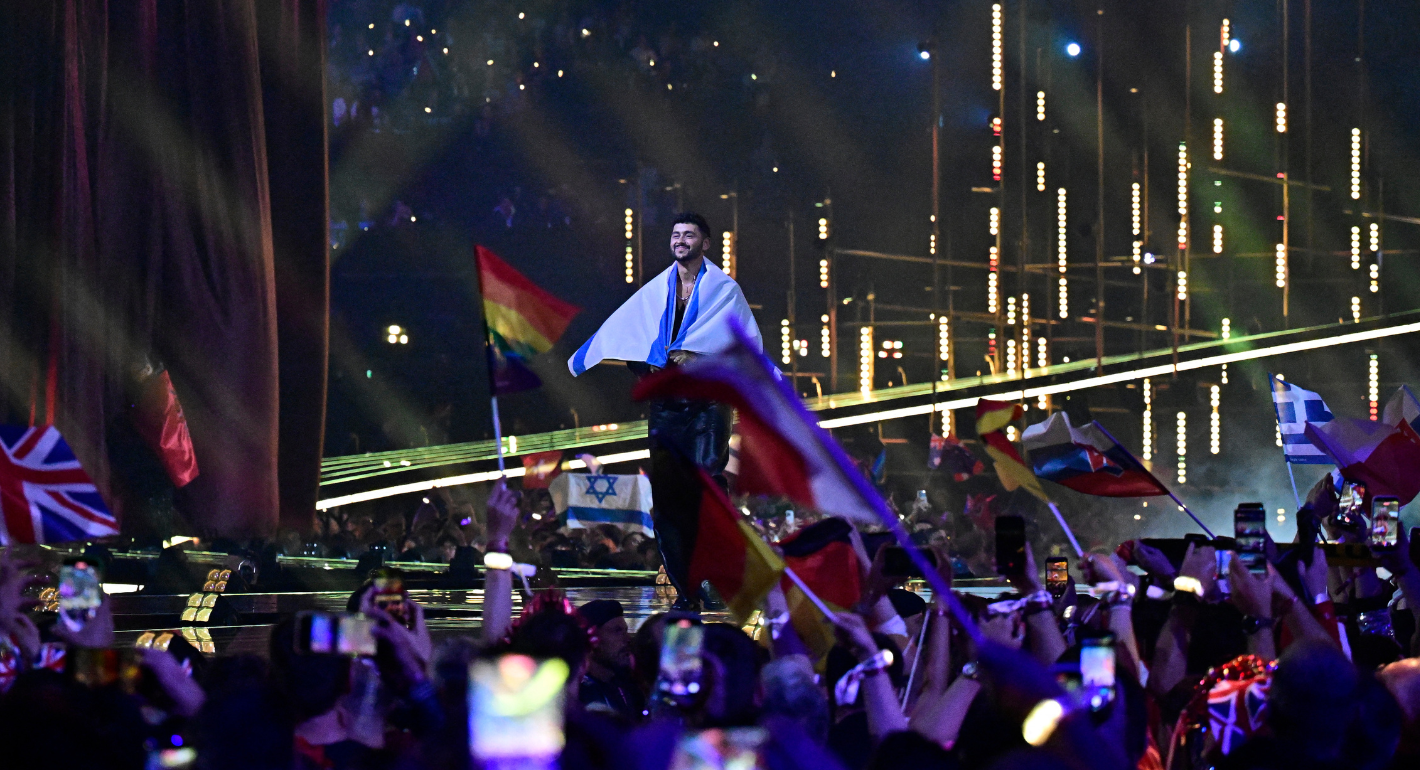
Five countries staged the biggest political boycott in Eurovision history over Israel’s participation. With the FIFA World Cup and other sporting or cultural touchstones on the horizon, are boycotts effective?

Rym Momtaz, ed.
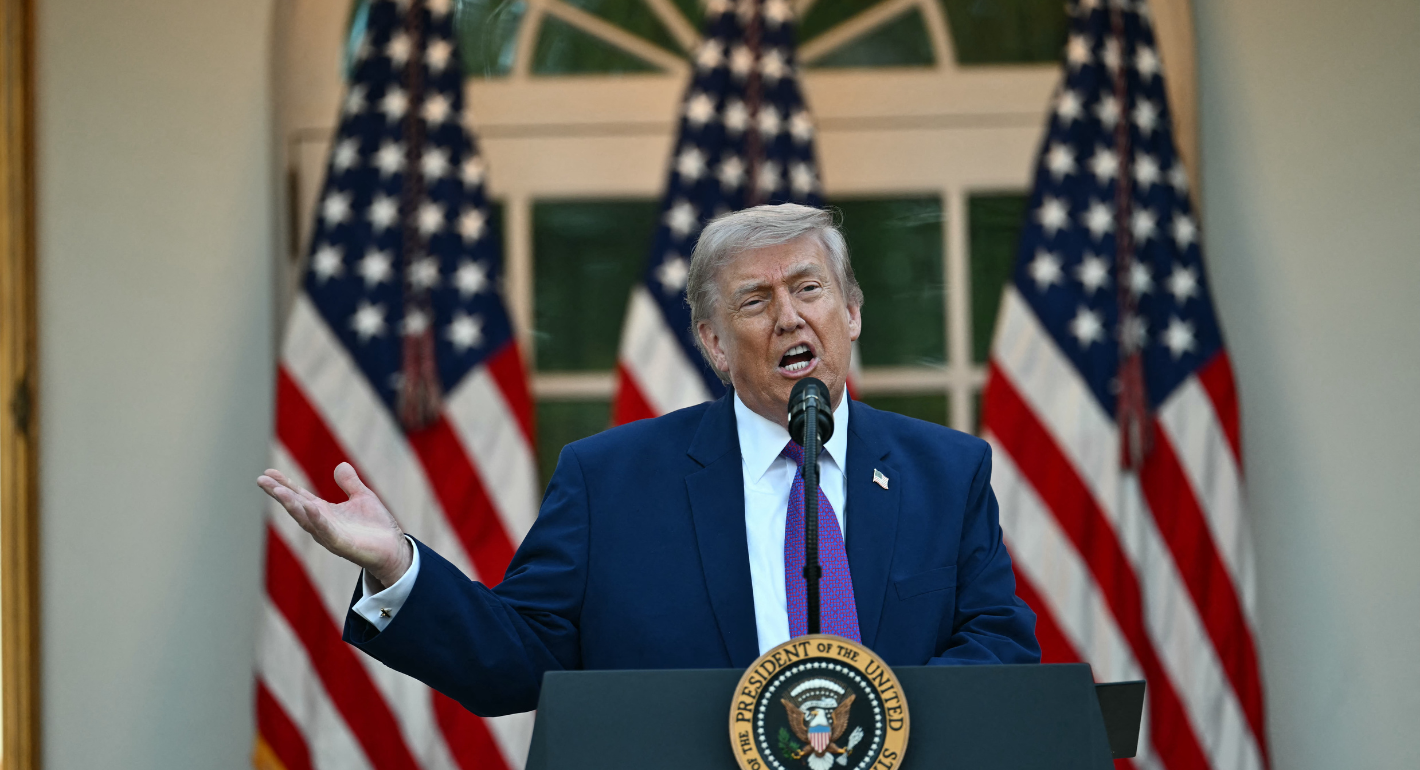
The full list of humiliations Europe has endured since Donald Trump returned to the White House makes for grim reading. But Washington’s adversarial approach to its allies undermines its own power base.
Rym Momtaz
The closure of the Strait of Hormuz has triggered a global energy crisis, but Europe is stuck in reaction mode. Without more strategic foresight, the EU will remain dependent on fossil fuels and will never be truly secure.


Milo McBride, Pauline Gerard
After spending much of 2025 trying to placate Donald Trump, some European leaders are starting to change posture. But is even a hostile Washington still so important to Europe that the U.S. president’s outbursts are worth putting up with?
Rym Momtaz, ed.
European leaders have now not only lost faith in Donald Trump’s U.S. presidency, but also in America’s hegemony as a whole. But short-term challenges make an immediate divorce unwise.
Rym Momtaz