

Commentary
Judy Dempsey
{
  "authors": [
    "Judy Dempsey"
  ],
  "type": "commentary",
  "blog": "Strategic Europe",
  "centerAffiliationAll": "",
  "centers": [
    "Carnegie Endowment for International Peace",
    "Carnegie Europe"
  ],
  "collections": [
    "Europe’s Eastern Neighborhood"
  ],
  "englishNewsletterAll": "",
  "nonEnglishNewsletterAll": "",
  "primaryCenter": "Carnegie Europe",
  "programAffiliation": "",
  "programs": [],
  "projects": [],
  "regions": [
    "Russia",
    "Europe",
    "Eastern Europe",
    "Ukraine"
  ],
  "topics": [
    "Security",
    "Democracy",
    "EU"
  ]
}
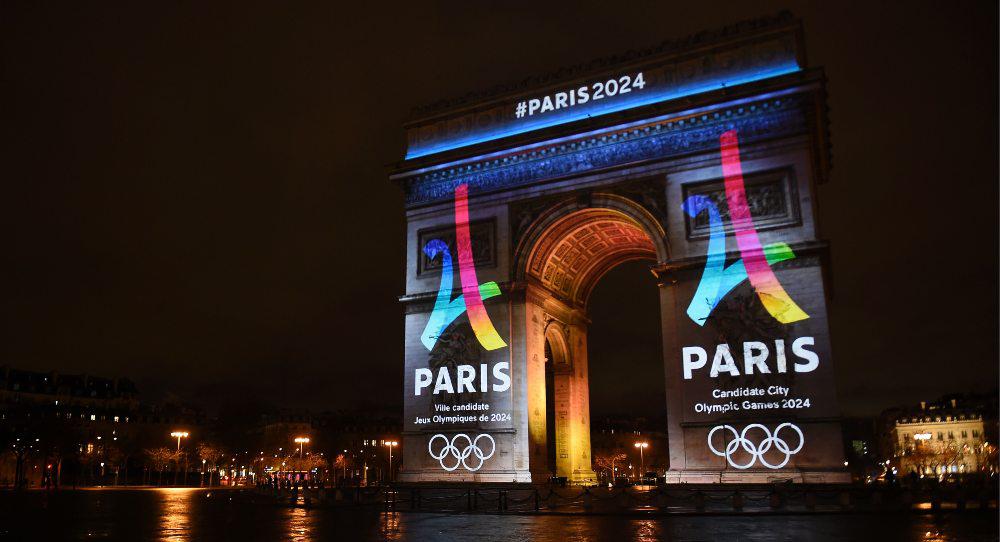
Source: Getty
The International Olympic Committee is seeking ways to allow Russian athletes to compete in the Paris Games. Their participation would give legitimacy to Moscow as it continues to bomb Ukraine.
It all seemed so clear.
When Russia invaded Ukraine nearly a year ago, the International Olympic Committee (IOC) recommended banning Russian and Belarusian athletes and officials from international competitions. That included the 2024 Olympics to be held in Paris.
Since then, Russia has waged a brutal and indiscriminate war against Ukraine. Cities, towns, and villages have been turned to rubble. Thousands of civilians have been killed. Millions have been forced to flee. Human rights organizations have documented torture and rape, not to mention how many Ukrainian children have been kidnapped and brought to Russia.
Despite these facts, the IOC in January 2023 changed tack. It is now examining a “pathway” to allow athletes from Russia and Belarus to take part in the 2024 Olympics, with some restrictions. There would be “no flag, anthem, colours or any other identifications whatsoever of these countries being displayed at any sports event or meeting, including the entire venue,” the IOC stated.
It added that the decision was based on a “strong commitment to the unifying mission of the Olympic Movement, requesting and encouraging it to live up to this unifying mission, particularly in these times of division, confrontation and war.”
Tell that to Ukrainian athletes. Vadym Guttsait, the country’s sports minister and president of Ukraine’s National Olympic Committee, told Reuters that at least 220 athletes and coaches have died in the war and over 340 sports facilities have been destroyed or damaged.
Incidentally, before it announced a plan to include Belarusians and Russians, the United Nations Human Rights Council—not known for its backbone—had challenged the IOC’s original proposal to ban both countries from the Paris Games.
“The IOC recommendation raised serious issues of direct discrimination, because athletes should not be discriminated against on the basis of their nationality,” the UN experts concluded.
Ukraine was dismayed by the IOC’s change of heart and the UN’s opinion.
Ukrainian President Volodymyr Zelensky said it showed that “terror is somehow acceptable.” Foreign Minister Dmytro Kubela went further. He pointed out that many Russian Olympians had ties to the Central Sports Club of the Russian Army, affiliated with the defense ministry—“the army that commits atrocities, kills rapes, and loots. This is whom the ignorant IOC wants to put under [a] white flag allowing to compete,” he tweeted.
Mykhailo Podolyak, Ukrainian presidential advisor, accused the IOC of “promoting violence, mass murders, destruction.” The IOC, he added was giving Russia “a platform to promote genocide.”
The IOC said it rejected “in the strongest possible terms this and other defamatory statements. They cannot serve as a basis for any constructive discussion.”
Kyiv has started an international campaign to reverse the IOC’s decision. The sports ministers of Estonia, Latvia, Lithuania, and Poland issued a statement criticising the IOC. According to them, it was “allowing sport to be used to legitimize and distract attention from Russia’s war of aggression against Ukraine.”
Other countries will be dragged into this growing controversy, including the United States and France. For now, Thomas Bach, IOC president who is German, has naturally defended his position. But German commentators have lambasted his decision.
The pressure on the IOC to change its mind is bound to increase between now and the Paris Olympics. In the meantime, once again international sporting federations are coming under intense scrutiny for failing to adhere to their principles of values, human rights, and upholding a policy of non-discrimination.
The 2022 FIFA World Cup in Qatar also raised ethical questions. More recently, it was revealed how Qatari officials went out of their way to persuade European Parliament deputies to play down the country’s human rights record, its treatment of foreign workers, and its ban on homosexuality.
So what is to be done?
Speaking out is necessary but carries a cost. If national sporting organizations take a stand, they have to decide how far they can go. To boycott these events means hurting the athletes who have invested so much in training for gold. Yet over the years, there have been many examples of such boycotts, mostly motivated by political reasons. There has also been inconsistency.
Despite criticism of Beijing’s human rights record, there was no boycott of China’s 2022 Winter Olympics. The 2014 Winter Games in Russia went on, despite Moscow’s illegal annexation of Crimea and invasion of eastern Ukraine. As the IOC would argue, these events transcend politics. Yet what about the intense, untransparent, and expensive lobbying that precedes the decision to award a country to such a big sporting competition?
These events, regardless of the political system, confer legitimacy on the hosts, the athletes, and the countries they represent. That would be Ukraine’s biggest and understandable grievance when—even if without their national flag or anthem—Russians and Belarusians compete in Paris.

Nonresident Senior Fellow, Carnegie Europe
Judy Dempsey is a nonresident senior fellow at Carnegie Europe
Recent Work
Judy Dempsey
Judy Dempsey
The battle over free speech has taken center stage since U.S. Vice President JD Vance accused Europe of censorship. From travel bans to social media regulation, especially around the Israel-Palestine conflict, are liberal democratic governments weaponizing free speech?

Rym Momtaz, ed.
Europe seems to have accepted its sidelining in the Middle East. The EU must reassert its support for the international rules-based order and step up engagement.
Rym Momtaz

Amid uncertainty caused by the Iran war, the global drive for nonproliferation has stalled. With Europe diplomatically marginalized and countries reassessing their nuclear options, efforts to curb the spread of nuclear weapons risk becoming irrelevant.

Jane Darby Menton
Preparing candidate countries for EU membership is no longer enough. As the enlargement process becomes a reality, the union must also prepare its own societies.

Iliriana Gjoni
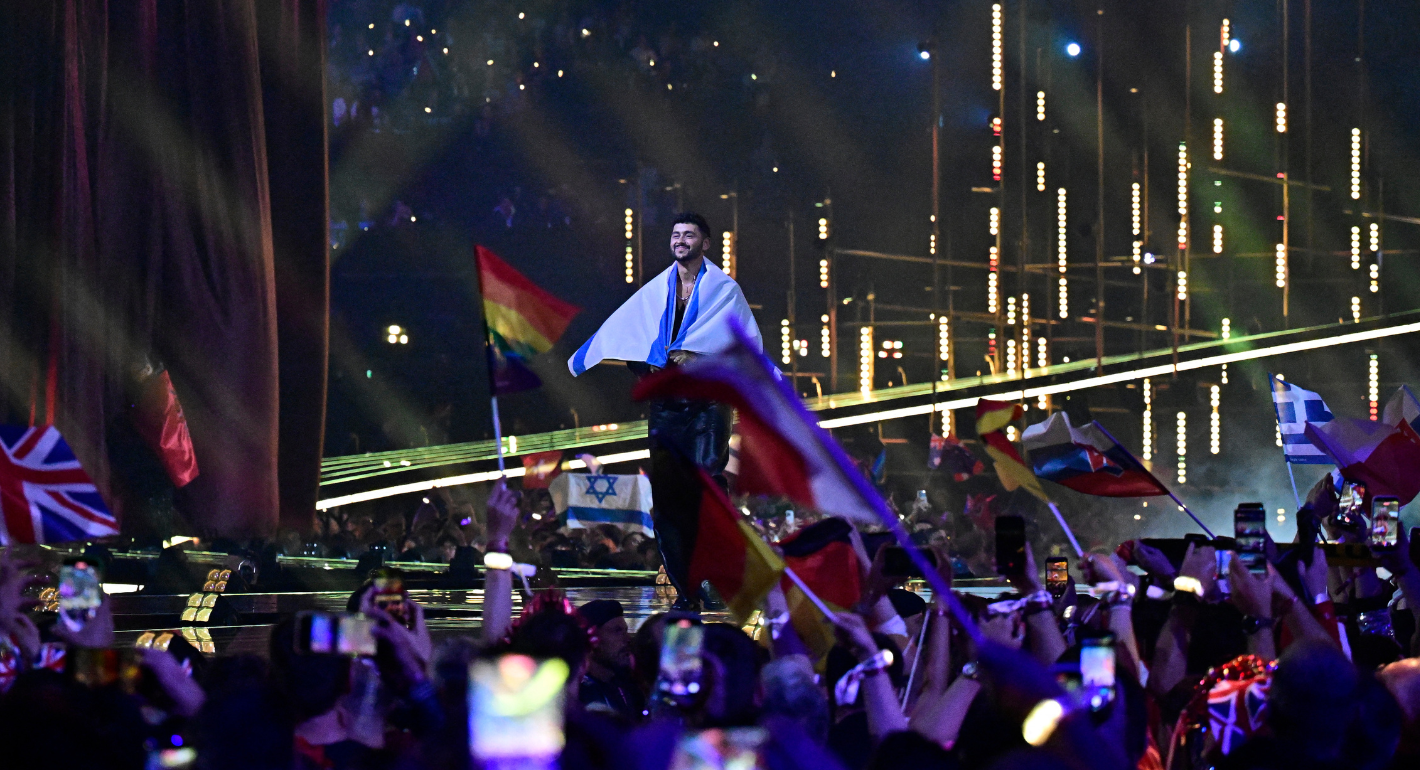
Five countries staged the biggest political boycott in Eurovision history over Israel’s participation. With the FIFA World Cup and other sporting or cultural touchstones on the horizon, are boycotts effective?
Rym Momtaz, ed.