

Commentary
Thomas de Waal
{
  "authors": [
    "Thomas de Waal"
  ],
  "type": "commentary",
  "blog": "Strategic Europe",
  "centerAffiliationAll": "",
  "centers": [
    "Carnegie Endowment for International Peace",
    "Carnegie Europe"
  ],
  "englishNewsletterAll": "",
  "nonEnglishNewsletterAll": "",
  "primaryCenter": "Carnegie Europe",
  "programAffiliation": "",
  "programs": [],
  "projects": [],
  "regions": [
    "United States",
    "Europe",
    "Caucasus"
  ],
  "topics": [
    "Foreign Policy",
    "EU",
    "Security"
  ]
}
Source: Getty
U.S. President Donald Trump’s claims to have ended eight wars may be debatable, but his peace efforts raise valid questions. Europe can learn lessons from Washington on how to break the deadlock in protracted conflicts.
The symbolism could not have been more blatant.
Earlier this year, U.S. President Donald Trump’s administration shut down the United States Institute of Peace (USIP), an organization devoted to the study of peacemaking staffed by scholars and veteran diplomats with long experience in negotiation processes. It was an embodiment in stone of the pursuit of liberal peace, through diplomacy and dialogue.
In December, the institute was suddenly re-opened with a new name etched on the facade: The Donald J. Trump Institute of Peace. White House spokesperson Anna Kelly explained that USIP “was once a bloated, useless entity that blew $50 million per year while delivering no peace.”
She went on, “Now, the Donald J. Trump Institute of Peace, which is both beautifully and aptly named after a President who ended eight wars in less than a year, will stand as a powerful reminder of what strong leadership can accomplish for global stability.”
The list of eight conflicts that Trump’s “art of the deal” ended includes one between the leaders of the Democratic Republic of Congo and Rwanda, who signed an agreement in Trump’s presence in the newly renamed building.
The list has many critics. Some of the eight examples championed by the White House do not qualify as proper peace agreements, such as the deal done between Egypt and Ethiopia over the Grand Ethiopian Renaissance Dam. Others, such as the U.S.-brokered agreement between Thailand and Cambodia, are unraveling, with new fighting reported. Few people can explain why Kosovo and Serbia were on the list at all.
With Israel and Hamas, it is much too early to say whether the deal will hold. Ukraine is not on the list at all for obvious reasons: Few outside Moscow and Washington see the latest U.S. plan as being a genuine peace effort that addresses the core reasons for the conflict.
And yet, as an EU official admitted to me: Trump may not have the right answers, but he often asks the right questions. Europeans had not been properly asking themselves “How do we stop the bloodshed in Ukraine?”
Seeing the bold ambition of the Trump peace agenda, Europeans should ask themselves why they lack the courage to take on these big issues.
Protracted conflicts have a tendency to acquire their own momentum: A dysfunctional status quo persists unless and until someone decides to spend political capital and break the deadlock. Cyprus is one such example—and one in which the EU effectively wrote itself out of conflict resolution when it invited one of the disputing parties, the Republic of Cyprus, to join the union in 2004.
Another sad case was the Minsk Group, created to facilitate peace negotiations between Armenia and Azerbaijan, which lasted from 1992 until this summer. After 1997, the mediators represented France, Russia, and the United States—three big powers with huge resources—but their default practice was not to confront the leaders of either side with difficult choices or force them to pay a price for perpetuating the conflict. The result was incrementalism and a process better described as conflict management than real peace negotiations. That process was brutally curtailed when Azerbaijan went back to war in 2020, with heavy bloodshed.
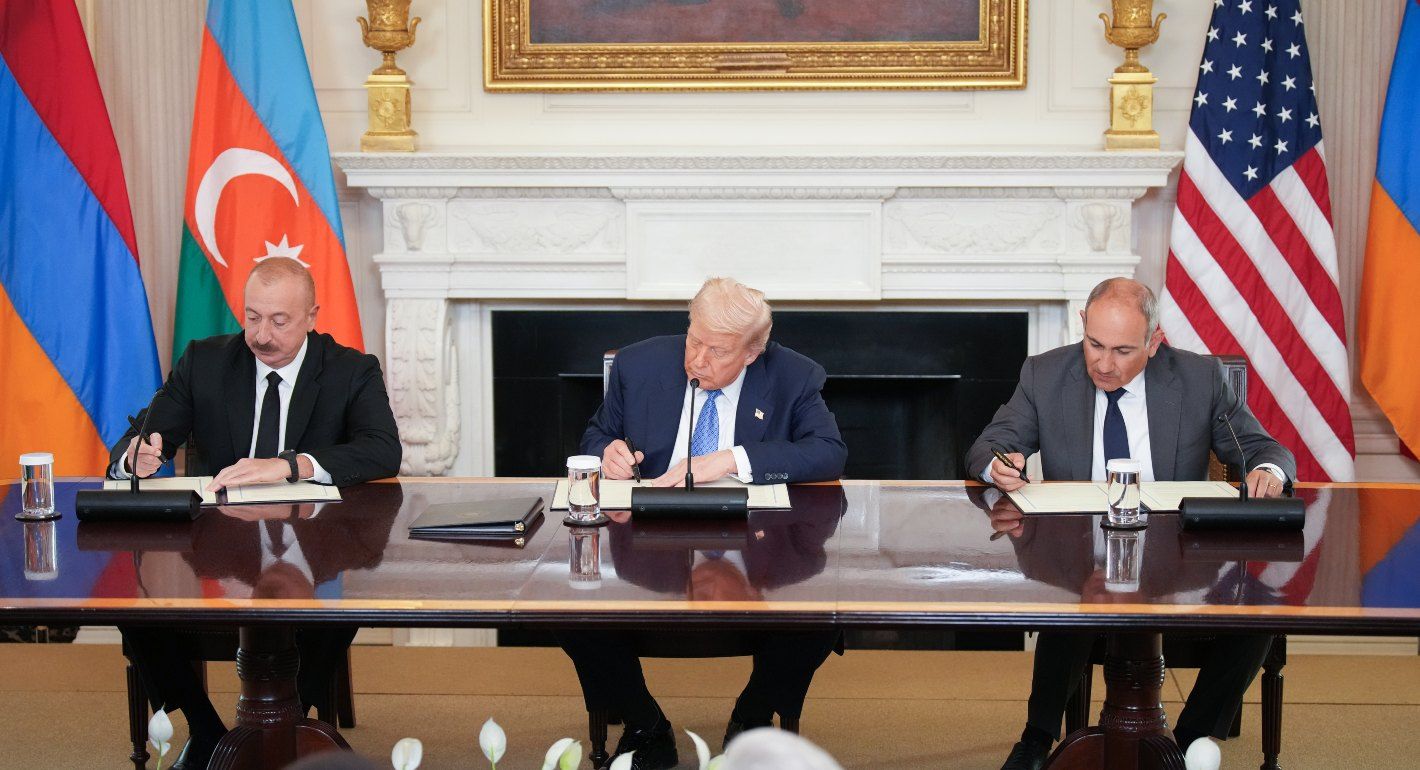
Armenia-Azerbaijan is one of the peace deals in the White House list, and here the Trump administration does deserve credit. In 2025, the United States came in to a process in which both Armenian and Azerbaijani leaders had already agreed on a draft peace agreement and were looking for a new guarantor to oversee next steps, which was not Russia. The Europeans had the expertise and the right people to deliver a deal, but it was the fast-moving Americans, with a show of speed and political will at the very top who convened a White House meeting in August, where new agreements were initiated and signed.
Being ready to use U.S. power cuts both ways. If used well, it can shake people out of their comfort zones. If used badly, it is the power of the bully—ask Ukraine.
The United States has acted like this before. When it struck the Dayton Accords, signed thirty years ago this month, Washington also showed impatience with Europe. A combination of diplomacy and hard power ended a war in Bosnia and Herzegovina that could have continued indefinitely. Imperfect as it is, Dayton has spared the region conflict for three decades.
So, should Europe be following Trump’s example? Yes and no.
The lesson of the U.S. president’s dealmaking strategy of the past few months is surely that if you want to change the status quo, you need to act tough and be ready to break things. The strongmen responsible for perpetuating conflicts—they are usually strong and usually men—will only change their behavior when they smell fear. This is what Trump is prepared to do.
Once the key breakthrough is made, however, turning the deal into a proper peace is a different matter. Hard work and old-fashioned diplomacy are still required to hammer out the details needed to make an agreement stick.
A well-known scholarly data point is that around half of peace deals fail within five years, as they are not properly implemented. Europe has to learn new habits to be a better deal broker; before that it can still be a vital actor who makes the pieces fit in conflict situations where Trump has made an agreement and moved on.

Senior Fellow, Carnegie Europe
Thomas de Waal is a senior fellow at Carnegie Europe, specializing in Eastern Europe and the Caucasus.
Recent Work
Thomas de Waal
Thomas de Waal
Carnegie does not take institutional positions on public policy issues; the views represented herein are those of the author(s) and do not necessarily reflect the views of Carnegie, its staff, or its trustees.

While the EU and European governments are embracing the much-lauded middle-power moment, this entails three difficult conundrums.

Richard Youngs

Much has been said of the changes Brussels is trying to make to the EU enlargement process. Here’s why gradual integration might—or might not—be the answer.

Dimitar Bechev

The European Commissioner for Trade is headed to China. But after President Xi’s bridge-building visit to Washington, can a more isolated EU overcome Beijing’s stranglehold on critical raw materials? Who will blink first?

Rym Momtaz, ed.

The domestic impacts of how long it is taking to end the war in Ukraine have pushed the French electorate to the political extremes and compromised the country’s diplomatic capacity.
Rym Momtaz

Before the next wave of EU enlargement takes place, the union needs to grapple with thorny questions of how power is distributed among its members.


Emil Sondaj Hansen, Ditte Brasso Sørensen