

Commentary
It should address the shortcomings of previous crisis communication efforts and adapt to the demands of frontier AI.
Lucy Luo
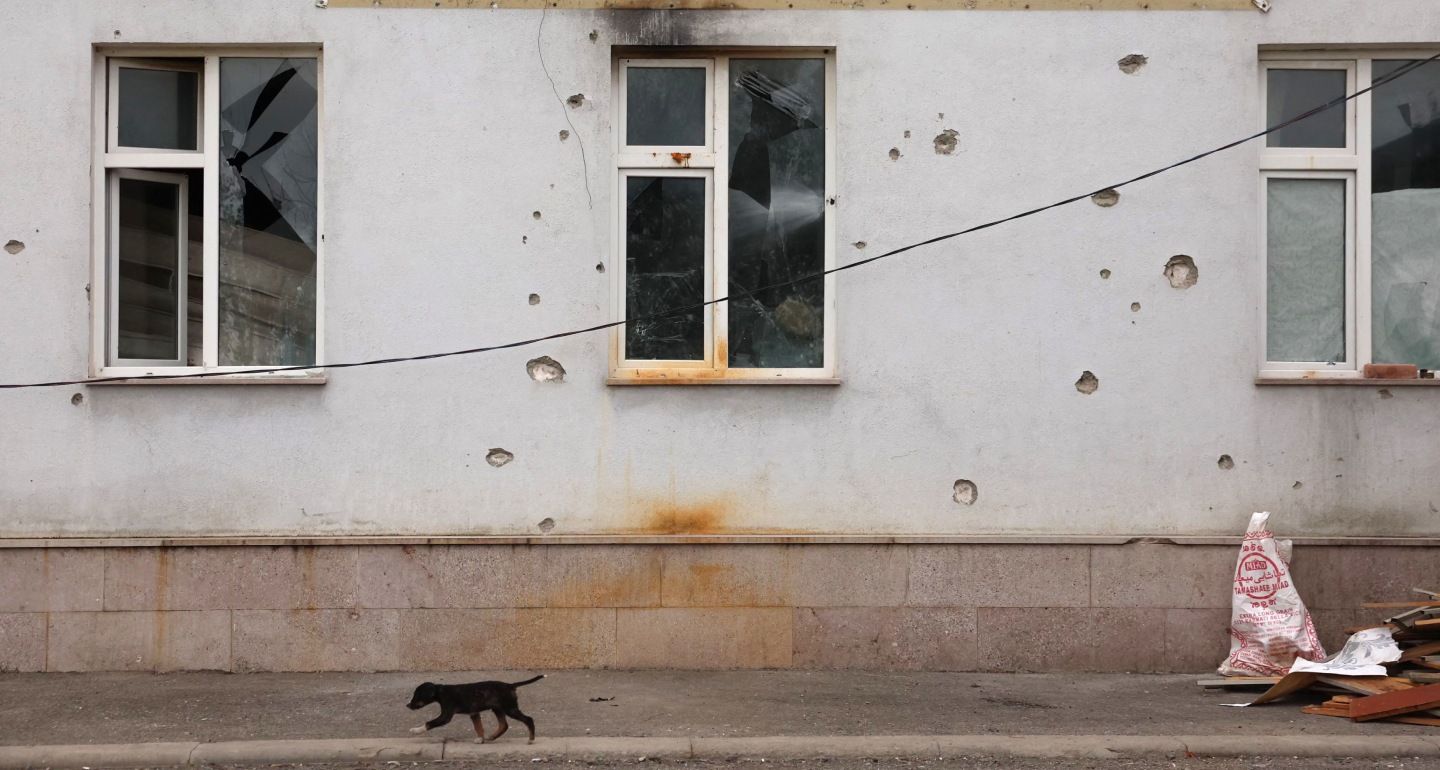
Фото: Getty Images
An official peace agreement between Armenia and Azerbaijan cannot by itself resolve decades of mistrust. The durability of peace will depend on healing trauma, reframing identities, diversifying narratives, and ensuring that ordinary citizens experience tangible improvements in daily life.
The Armenia-Azerbaijan peace process has reached a paradoxical moment. On the one hand, negotiations toward a political agreement to establish inter-state relations, which is being referred to in official discourse as a “peace agreement,” have advanced further than at any point in the past three decades. In March 2025, the two governments finalized the text of an “Agreement on the Establishment of Peace and Inter-State Relations,” widely hailed as a breakthrough,1 and in August, they initialed the text in Washington, one step short of signing it. Yet beneath this state-level progress lies a fractured civic and societal landscape. For most Armenians and Azerbaijanis, peace is abstract, politicized, or even threatening.
While the Armenian-Azerbaijani peace process was long criticized as elite-led and top-down, the current iteration can scarcely qualify even as that in the traditional sense of promoting coexistence as state policy. It is top-top: regional connectivity and high-level relations are advancing, yet societies remain isolated, with no provisions for coexistence. Peace is being negotiated as an interstate arrangement that bypasses the very communities most affected by the conflict.
Over the past few decades, in multiple post-communist contexts, reconciliation and intersocietal engagement were treated as essential pillars of peacebuilding. In the Balkans, peace agreements were paired with investments in cross-communal civil society cooperation, media exchanges, and return programs aimed at restoring the social fabric. In Central and Eastern Europe, from Bosnia and Herzegovina to Moldova, international and local actors prioritized dialogue mechanisms, community-level trust building, and rights-based frameworks for displaced persons. Even earlier Armenian and Azerbaijani initiatives, though elite-driven and often limited in reach, acknowledged the need for societal dialogue and for preparing populations for peace.
In contrast, the current process is concentrated in the hands of an even narrower elite, with no provisions for the return of refugees, or upholding the rights of many of the conflict-affected communities, and no systematic consideration of coexistence or intersocietal peace.
This paper offers a general framework for consolidating peace between Armenia and Azerbaijan—beyond the negotiation of an official treaty. It translates insights from expert dialogues held in Abu Dhabi in January 2025 and London in July 2025 into a strategy that can guide government actors, civil society, and international partners.2 The goal is to align post-conflict transition and political normalization with societal reconciliation so that the benefits of peace can be felt in daily life, and reinforced through institutions, culture, and policymaking.
Our point of departure is simple. Agreements can end a war, yet only comprehensive work on identity, memory, and trauma, in addition to economic connectivity and mutual political recognition processes, can help societies transition from conflict to durable peace. This analysis, therefore, looks beyond official diplomacy and into what is left out of the current official process: how narratives are formed; how communities experience change; and how external actors can support rather than overshadow a locally led peace process that can benefit larger segments of society. It also identifies structural gaps such as trauma, contested identities, the absence of everyday peace benefits, shrinking civic space, and geopoliticization,3 and offers strategic pathways to address them.
The paper is organized into four sections, including three strategic directions followed by a set of recommendations. The first is support for the development of post-conflict national identity, with attention to trauma healing, narrative and memory work, and feasible approaches to justice. The second is enhanced local ownership of peace at the national and community level, including the design of partnerships and connectivity that deliver visible dividends to wide sectors of the populations. The third is building synergistic networks of peace actors, with education, solidarity, and coordination. The fourth section consists of tailored recommendations for governments, civil society, and donors, followed by a brief conclusion linking strategy to action.
We acknowledge that the Armenia-Azerbaijan and Armenia-Türkiye normalization processes are intrinsically interrelated and mutually constitutive, yet distinct. As a result, some of the analysis and recommendations offered here, particularly those related to identity, apply to both contexts, while others are specific to one or the other. Given the already broad scope and length of this paper, and in light of the authors’ expertise, we focus primarily on the Armenia and Azerbaijan context.
Throughout, the approach is evidence-based, sensitive to context, and oriented toward implementation. The proposals presented here were developed through four strategy workshops that brought together representatives of analytic communities and peacebuilding organizations from Armenia and Azerbaijan, and at times from Türkiye. These meetings took place in Abu Dhabi, Brussels, and London in January, May, July, and September of 2025. The proposals are designed to be realistic in constrained environments, adaptable to changing conditions, and measurable over time through clear markers of progress, such as diversified narratives and tangible improvements in the lives of border and conflict-affected communities. Taken together, they aim not only to offer recommendations for a diverse set of actors, but also to create the conditions in which peace can acquire real meaning.
We recognize that the agenda outlined in this paper is ambitious, and that is intentional. Our analysis and recommendations emerged from consultations with a diverse group of stakeholders and analysts from Armenia and Azerbaijan and are not intended to serve as a program for any single donor or organization. Rather, they aim to articulate a broader framework for the new political context in which Armenia and Azerbaijan find themselves: an expansive strategy that can guide actors committed to peace work over the coming decade. Many recommendations are aspirational and require further research, including feasibility assessments and sensitivity to political context when designing interventions. We invite colleagues in Armenia, Azerbaijan, and internationally to engage with, critique, and build on this analysis as they find appropriate.
The collapse of Nagorno-Karabakh as a political entity and the flight of the remaining Armenian population in 2023 marked not only the end of the violent phase of a decades-long conflict, but also the decisive closure of the Karabakh question as a distinct political issue that had long shaped identities in both Armenia and Azerbaijan.4 For over thirty years, the Karabakh conflict functioned not merely as a territorial dispute, but as the central narrative around which national identity, political legitimacy, and everyday discourse in both Armenia and Azerbaijan were organized. Its resolution on the battlefield left a symbolic and emotional vacuum. The question is no longer who controls Karabakh, but what comes next for two societies whose self-understanding was deeply intertwined with conflict.
For over thirty years, the Karabakh conflict functioned as the central narrative around which national identity, political legitimacy, and everyday discourse in both Armenia and Azerbaijan were organized. Its resolution left a symbolic and emotional vacuum.
In Azerbaijan, the restoration of sovereignty has been celebrated as the fulfillment of a generational struggle, drawing on a narrative rooted in decades of war, territorial loss, and the trauma of mass displacement. The language of victory is now ubiquitous in official speeches, school textbooks, and public commemoration. Yet this triumph is provisional. It has not been transformed into a forward-looking vision that can unify citizens around new aspirations beyond the cause of Karabakh and restoration of territorial integrity. The legacy of the conflict still shapes the national psyche, where growing confidence in Azerbaijan’s strength coexists uneasily with deep-seated grievances and insecurity. For much of the population, this legacy also informs perceptions of Armenia—even as the old framing of Armenia as an existential threat no longer carries the same weight. Still, in Azerbaijani official discourse, Armenia continues to be cast as a nation that could one day attempt a reconquista. At the same time, the conflict has taken on a new discursive and symbolic dimension through the notion of “Western Azerbaijan,” framed in Baku as the right of return of Azerbaijanis who once lived in Armenia, and seen in Yerevan as an implicit territorial claim. This discourse keeps both societies within the logic of grievance and unfinished conflict. Unlike Karabakh, it does not function as a unifying national cause: as one senior Azerbaijani official explained, it is something Baku “keeps in its pocket,”5 a counter-claim to hold in reserve should future Armenian governments press for the unconditional return of Karabakh Armenians outside Azerbaijan’s legal framework. These narratives may fill a short-term political need, but risk leaving Azerbaijani society trapped in a logic of conflict rather than moving into a post-conflict phase.
In Armenia, the loss of Karabakh created a profound rupture in national identity. Prime Minister Nikol Pashinyan has sought to fill this vacuum with the idea of a “Real Armenia,”6 urging citizens to move away from ethnic and historical notions of nationhood and embrace a civic nationalism rooted in the country’s internationally recognized borders. For his supporters, this shift represents a painful but necessary reorientation toward state-centered realism. For opposition parties and the guardians of ethno-nationalist narratives in civil society and academia both at home and in diaspora, it is seen as surrender; a betrayal that abandons the rights of Armenians in Karabakh and beyond. Some exploit this tension, blending the legitimate grievances of conflict-affected populations with revanchist rhetoric, resisting efforts to reframe national identity. In the middle of the spectrum, there are voices who accept the logic of moving beyond the conflict, and who find meaning in the concept of “Real Armenia,” but who regard Pashinyan’s approach as heavy-handed and insensitive to the needs of conflict affected populations: more of a top-down imposition than a reorientation achieved through dialogue with society. As one senior Western diplomat said, it is like “trying to work gold with a hammer.”7 The result is deep polarization, in which society is divided by competing understandings of who Armenians are and to what they should aspire.
Both contexts highlight the problem of leaving the redefinition of post-conflict national identity solely to political elites. In Azerbaijan, the state’s near-monopoly over the national narrative may consolidate internal cohesion in the short term, but risks keeping Armenians framed as a perpetual “other.” Despite Baku’s recent use of the language of peace and normalization toward the current Armenian government, the underlying narrative about Armenians still views them through the lens of conflict. The rhetoric of peace looks to tomorrow, but its logic still belongs to yesterday. In Armenia, the government’s unilateral effort to impose a new identity without broader civic dialogue risks alienating those who suffered from the conflicts, and whose needs remain unaddressed in the post-conflict environment. The absence of wider consultations and dialogue further mobilizes resistance from independent media and academia, long socialized in upholding ethno-national narratives and the discourse of the unity of Armenia and Karabakh. By seeking to replace one official narrative with another, it risks foreclosing the civic debate needed for genuine renewal.
The first strategic direction for peacebuilding in the upcoming years, therefore, requires a separation of the legitimate needs of conflict-affected populations, which need to be addressed, from political rhetoric aimed at keeping the conflict alive. The three conflict drivers connected to the legitimate needs of conflict-affected populations are: the unaddressed trauma of thirty years of war and displacement; lack of local ownership of the peace process at both a national and community level, as well as the harmful impact of geopolitical competition; and the inadequate capacity of local actors, including gaps in skills and competencies, to advance the peace agenda, coupled with a lack of solidarity and systematic collaborations among existing peace actors.
War, mass displacement, and disappearances have left deep scars that extend far beyond individuals. They shape collective narratives, family memories, and political choices.
In Armenia, some psychosocial initiatives emerged after the 2020 war, mapping trauma and supporting displaced persons. Around 100,000 people fled Nagorno-Karabakh in 2023, adding to the legacy of displacement of hundreds of thousands of Armenians from Azerbaijan in the 1990s. Yet these efforts remain small in scale and unevenly coordinated. Many war veterans are reluctant to seek help, and communities displaced in the 1990s and 2023 are often overlooked. National discourses that frame Armenians as victims of betrayal and abandonment provide a language of shared suffering, but they also risk reinforcing a sense of helplessness and blame toward those most directly affected by the war. In public debate and some media discourse, veterans and displaced persons are at times portrayed less as survivors than as reminders of loss. Such portrayals reinforce a broader culture of unresolved grief and hinder open discussion about healing and adaptation. This persistent narrative of victimhood and abandonment rarely translates into sustained, forward-looking strategies for recovery.
In Azerbaijan, trauma is connected with the experience of displacement and violence of the 1990s. By the mid-1990s, Azerbaijan had seen roughly 750,000 people displaced by the conflict: about 186,000 refugees from Armenia and around 560,000 from Nagorno-Karabakh and the surrounding districts, amounting to roughly 10 percent of the country’s population.8 Those expelled from Armenia were categorized as refugees, while the larger group uprooted from Nagorno-Karabakh and the adjacent regions were registered as internally displaced, making displacement one of the country’s most significant long-term social challenges. For three decades, more than half a million people uprooted from Nagorno-Karabakh and the surrounding districts carried the burden of loss in their daily lives, reinforcing a lasting sense of injustice and humiliation. Refugees from Armenia, in contrast, gradually integrated into society, yet their memories of departure remained part of the country’s broader landscape of displacement. The return of land after 2020 was celebrated as the correction of history, but the emotional burden of decades-long exile did not disappear overnight. Had return and resettlement proceeded more swiftly, they might have helped ease this collective trauma and allowed people to reestablish a sense of home after decades of displacement. Yet by mid-2025, only about 25,000 displaced people had returned, as large-scale reconstruction and demining continue to delay the process. Furthermore, many veterans of the 2020 war struggle with post-traumatic stress, substance abuse, or social isolation. Suicide rates among ex-combatants underscore the depth of this crisis.9 Support systems remain limited: psychosocial services are rudimentary, and mental health has not been prioritized by foreign donors within post-conflict recovery efforts.
Without adequate support, trauma is recycled into, respectively, suspicion of Azerbaijanis and Armenians, and resistance to peace.
Addressing trauma requires more than individual therapy. It must be understood as political and social. Trauma narratives fuel national discourses of victimhood or victory; they are instrumentalized by elites and transmitted across generations. Without adequate support, trauma is recycled into, respectively, suspicion of Azerbaijanis and Armenians, and resistance to peace. Healing must therefore be embedded in institutions, education, and community life. Local traditions of care, art, and storytelling can play as important a role as clinical interventions. Working with trauma also needs to be inclusive, recognizing the distinct needs of women, caregivers, displaced families, and veterans.
If left unaddressed, trauma becomes a barrier to normalization, ensuring that even if treaties are signed, societies remain locked in grievance. If validated and processed, however, trauma can become a basis for empathy and recognition across divides. Structured exchange programs, joint commemorations, or even parallel but simultaneous acknowledgment rituals can create openings for mutual recognition of suffering without requiring immediate political compromise, illustrated by post-conflict initiatives in the Western Balkans, Cyprus, Northern Ireland, and Colombia.
The shaping of identity is not only a matter of high politics, but also of day-to-day education, cultural production, and memory practices.10 Both Armenia and Azerbaijan rewrote their school textbooks in the 1990s to emphasize conflict and national grievance, erasing Soviet narratives of coexistence. Generations of students grew up learning about the other as a historical enemy, and this legacy continues to shape collective imaginations. Where peace is referenced, it is framed as the result of victory—rather than coexistence.
This antagonism has been central to modern nation-building in both countries. What began in the late 1980s as a dispute over administrative status escalated into ethnic cleansing, displacement, and war that crossed the boundaries of the Soviet-era Nagorno-Karabakh Autonomous Oblast (NKAO), becoming foundational to post-Soviet statehood. In Armenia, Karabakh’s defense symbolized survival against Turkic and Islamic colonizers. In Azerbaijan, its loss embodied humiliation and dispossession, framed as part of a broader historical injustice in the existential struggle against Christian imperialism, locally associated with Armenians.
These narratives permeated state institutions, school curricula, monuments, and cultural production. They normalized enmity, sustaining what the British author Michael Billig terms “banal nationalism.”11 Over time, conflict became central to each society’s sense of self.
Culture mirrors these dynamics. In Azerbaijan, literature, film, and visual arts overwhelmingly depict Armenians through the lens of enmity, with recent state funding privileging narratives of restoration and victory. In Armenia, cultural production has been shaped by themes of loss, betrayal, and existential insecurity. Independent spaces that attempt to explore shared histories or humanize the other side remain marginal and often stigmatized.
The 2020 war and 2023 displacement dissolved the territorial core of the conflict, but not its identity foundations. In Azerbaijan, victory fostered ontological affirmation: victimhood gave way to restored pride and ambition. This was reflected in the reconstruction of Shusha city as a symbol of national revival, the elevation of the “Western Azerbaijan” narrative as a framework for historical justice, and most recently, the ambition to redesign Khankendi, which had been since 1923 the administrative center of the NKAO and later unrecognized Nagorno-Karabakh under the name Stepanakert, into a city embodying Azerbaijani sovereignty. In Armenia, defeat provoked crisis. For decades, defending Karabakh was a source of pride and legitimacy; its loss fractured identity. While Armenian Prime Minister Pashinyan promotes a “Real Armenia” within recognized borders, revanchism persists.
This asymmetry—Azerbaijan’s confidence versus Armenia’s fragmentation—has disrupted the old equilibrium, but left intact the scaffolding of rivalry. Education, public memory, and media still reproduce grievance, while intellectual elites benefit from sustaining antagonism.
If the current inertia hardens into a new status quo, the region risks returning to cycles of violence. Even though the current Armenian government does not contest the political status of Karabakh, the region remains contested as a place of memory and identity, and a historical and potentially future homeland for many. This is especially true among Karabakh Armenians, the organized diaspora, opposition groups, and numerous public intellectuals in Armenia. The task now is not only to negotiate borders, but to reimagine the foundations of identity itself.
Reconciliation remains almost entirely absent from the Armenia and Azerbaijan peace agenda, yet it is essential for any durable settlement. Engaging in normalization and the struggle for new national narratives without acknowledging harms, addressing trauma, and supporting social repair risks rendering political agreements fragile and incomplete. Unaddressed trauma and the struggle for a new national narrative reflect the gap between the realpolitik peace after the Second Karabakh War and justice. In Armenia and Azerbaijan alike, competing historical narratives, often infused with conspiracy theories and selective interpretations of events, are repeatedly echoed by senior political figures, reinforcing mistrust and sustaining a sense of collective grievance. At present, any discussion of justice or reconciliation is absent from the official Armenia-Azerbaijan agenda. The governments of Azerbaijan and Armenia treat normalization as a technical matter of borders, transport corridors, and embassies. The text of the peace agreement involves provisions where both sides commit to withdraw cases over human rights violations against one another in international courts, but without any indication that alternative mechanisms for addressing the consequences of violence and displacement will be put in place. Yet unresolved grievances, missing persons, and collective losses remain open wounds, leaving large segments of the population dissatisfied with the peace process. While the initialed peace agreement contains a provision on missing persons, including investigations, exchange of information, and the return of remains, its treatment at the government-to-government level has not alleviated a sense of injustice among affected families or the wider public.
“Transitional justice” cannot happen without criminal tribunals or truth commissions—and these are politically impossible. Thus, attempts at justice risk sliding into “transactional justice”: outcomes dictated by the more powerful side, and framed as conditions for peace.
An approach that would be traditionally associated with “transitional justice” cannot happen without criminal tribunals or truth commissions—and these are politically impossible. As a result, attempts at justice risk sliding into what we term “transactional justice”: outcomes dictated by the more powerful side, and framed as conditions for peace. Justice thus becomes less about mutual accountability and more about one party demanding, at minimum, symbolic acts of submission, such as apologies or unilateral recognition of blame. Instead, alternative symbolic and pragmatic approaches to address the needs of conflict-affected populations are both feasible and necessary. The dignified treatment of civilian remains, transparent accounting for the missing, acknowledgement of the suffering of non-combatants, and restitution for those who lost homes could lay the foundation for trust, acceptance, and peace. These remain deeply sensitive issues in both Armenia and Azerbaijan, where thousands of people are still unaccounted for in the aftermath of successive cycles of violence. Azerbaijan has reported about 3,990 missing persons12 and Armenia around 970,13 yet recovery and identification of remains have often served to fuel and reflect broader political tensions instead of leading to shared humanitarian concerns. Community-based dialogue, whether among displaced returnees in Azerbaijan or war-affected families in Armenia, could unearth truths that official channels ignore.
Acknowledgment is the vital first step in any reconciliation process, yet it is also the most difficult, as it challenges national narratives and can create liability. For more than three decades, discussions about how Armenians and Azerbaijanis might coexist have dominated political and peacebuilding agendas, but the deeper challenge has been—and remains—whether each society truly recognizes the existence and legitimacy of the other. Genuine reconciliation requires not only confronting one’s own losses, but also recognizing and taking responsibility for those of the other side, a task made harder by years of nationalist narratives and mutual blame. In Azerbaijan, the return of displaced persons must be more than a question of logistics. It must address social inclusion, rebuilding communities, livelihood security, and trauma recovery. In Armenia, reconciliation means creating political and civic spaces where acknowledging the suffering of others is not stigmatized as betrayal.
Neither country is entirely without resources, but investing in reconciliation and humanitarian issues is politically sensitive: doing so can be perceived as assuming responsibility or liability. As a result, these areas are rarely prioritized in national budgets. International partners, including the European Union, United Nations agencies, development institutions, and philanthropic donors, can therefore play an essential role by partnering with civil society organizations and supporting documentation efforts, symbolic gestures, and enabling cross-border exchanges that address justice-related issues without requiring formal intergovernmental endorsement.
Supporting post-conflict national identity is not an abstract exercise. It is the foundation on which any normalization process must rest. Societies that remain trapped in trauma and antagonistic memory will not internalize peace, no matter what documents their governments sign. The challenge is immense: to turn victory and defeat into renewal and recognition; to move from grievance to dignity. Comparative experience shows that this work is possible, but only through sustained and intentional effort. In Northern Ireland, the transformation of national identity is supported through integrated education programs, sustained community dialogue, and the institutional recognition of diverse narratives of suffering. In the Western Balkans, local civil society initiatives such as youth exchanges, joint commemorations, and truth-seeking projects have helped soften the sharpest edges of post-war identity, even when political elites resisted. In Croatia and Serbia, return programs combined with public acknowledgment of loss, however incomplete, laid the groundwork for more pragmatic cross-border relations. These cases illustrate that reimagining identity after conflict is a generational process rooted in education, culture, public discourse, and a willingness to confront loss.
This requires a three-pronged approach: institutionalizing trauma healing; investing in a search for post-conflict national identity through education and culture; and introducing justice mechanisms that validate loss while promoting coexistence. Experiences from Northern Ireland, South Africa, and Colombia show that reconciliation can take root when education, civic dialogue, and justice mechanisms work together, while in Bosnia and Cyprus, fragmented or politically constrained efforts have left peace fragile. These are not quick fixes. They are long-term strategies that must be pursued patiently, and often indirectly. But without them, treaties will remain performative, and peace can remain fragile.
Since the outbreak of war between Armenia and Azerbaijan in the early 1990s, the two countries have rarely communicated directly. They fought with the support of their allies, and negotiated through mediators, each seeking a sympathetic sponsor among the great powers. For over thirty years, the process was largely shaped by external actors. Yet local resistance, combined with growing geopolitical competition among mediators, often hindered rather than advanced peace. Local ownership of peace and reconciliation efforts remained marginal and fragmented, as well as constrained by the dominance of state elites and external mediators in negotiations, which left little room for civil society or displaced communities to have a voice in the process.
This pattern persisted after the Second Karabakh War in 2020 when mediation became another arena of competition, with Moscow on one side and Brussels and Washington on the other. This tended to obstruct, rather than further, the cause of peace. Ankara, though not a mediator, emerged as an important regional player through its alignment with Baku and its expanding influence in the South Caucasus, including by engaging in its own process of political normalization with Armenia. The impediment, therefore, lay not only in the rivalry among foreign capitals, but also in the post-imperial mindset of local actors themselves. While emerging from the long shadows of the Ottoman, Persian, and Russian empires, the South Caucasus states retained the vertical, top-down habits of diplomacy shaped by their long subordination to imperial powers. They looked to distant metropoles to protect their interests instead of across their own borders to their neighbors.
In late 2023, Baku and Yerevan abandoned the practice of “forum shopping” for friendly mediators and instead turned to bilateral talks.
That pattern began to shift in late 2023, when Baku and Yerevan abandoned the practice of “forum shopping” for friendly mediators and instead turned to bilateral talks.14 Progress was swift. Yet it remains fragile and vulnerable to renewed geopolitical competition and the temptation to once again outsource negotiations, which could open the door to renewed conflict.
Unlike governments that reclaimed ownership over the peace process, ordinary citizens continue to experience peace as something distant. The lack of cross-border interaction and the absence of tangible change in daily life mean that peace is felt primarily as official rhetoric rather than lived reality. The end of large-scale fighting since 2023 has brought relief and a fragile sense of stability, but for most people, peace remains something announced in diplomatic statements or debated in the media, not something visible in local communities or economic opportunities.
For peace to become resilient, it must be reframed as a locally owned process that delivers clear benefits. This requires the active involvement of educators, local authorities, civil society, and community leaders, not just national elites. It also requires reducing harmful external influences, including geopolitical rivalries that have long fueled mistrust, and avoiding international initiatives that overlook or impose on local realities. Instead, partnerships should empower local actors, embed peace in connectivity projects that generate community-level benefits, and ensure that normalization produces visible dividends for ordinary people.
If normalization between Armenia and Azerbaijan is to endure beyond formal state-to-state agreements, it must take root within societies themselves.
The South Caucasus is a highly contested geopolitical space, a marketplace of competing influences where regional and external powers vie for leverage but where in recent years, none has been able to impose decisive control. This dynamic is illustrated by the so-called 3+3 regional platform proposed in 2020 and first convened in 2021 to bring together Armenia, Azerbaijan, and Georgia with Russia, Türkiye, and Iran, even as Georgia stayed out.15 Conceived as a forum for regional cooperation, it has gained little traction, reflecting both waning influence and entrenched rivalries among its members. Russia maintains a fading but persistent security presence in Armenia; Türkiye is closely allied with Azerbaijan, and intermittently gestures toward improved ties with Armenia; and Iran positions itself as a counterweight to Western influence. The United States and the European Union remain important actors, though their engagement reflects a mix of pragmatic interests and normative language. Georgia, meanwhile, drifts, most recently without a clear foreign-policy orientation, yet often presents itself as a neutral venue for dialogue between Armenia and Azerbaijan. Each actor competes to shape the Armenia-Azerbaijan peace process, often pushing agendas intended to muscle out the competition that override local needs.
This geopolitical contest is not limited to the immediate regional powers. India and Pakistan filter the conflict through their own rivalry: India has increasingly aligned with Armenia, while Pakistan supports Azerbaijan. Israel has emerged as a key security partner for Baku, while Greece and France have offered political support to Yerevan. In this way, the Armenia-Azerbaijan confrontation extends into the global arena, further complicating local efforts toward peace.
These external pressures have concrete consequences. They have led to inflexible negotiating positions, injected mistrust into already fragile dialogue, and shifted the public perception of peace from a civic process into a geopolitical game. A recent Swiss-sponsored initiative on the potential return of Karabakh Armenians, for example, was embraced by some Armenian civic actors as rights-based reconciliation. In Azerbaijan, however, it was perceived as an illegitimate attempt to reopen a closed question, feeding suspicions of foreign bias and undermining trust in the broader peace process. At the same time, Europe’s increasing cooperation with Azerbaijan, reinforced by its growing reliance on Azerbaijani gas following Russia’s invasion of Ukraine, and what many in Armenia see as European silence over the displacement of Karabakh Armenians caused by Azerbaijan’s use of force, is viewed in Armenia as enabling Baku to act with greater assertiveness and effectively giving it a free hand.16
Reducing harmful geopolitical influences, however, does not mean excluding external actors. It means local governments and civil society actors should simultaneously build bilateral relations and work with external actors, seeking mutually beneficial cooperation. Peace cannot be imposed from outside, and it will remain fragile if external powers treat the South Caucasus primarily as a proxy conflict. Local agency—political, civic, and community-based—must be centered.
Pathways include pressure by local actors to prevent activities that turn them into proxies, and advocacy for prioritizing donor support that privileges local leadership, advisory panels that bring Armenian and Azerbaijani civic actors into regional programming, and narrative interventions that are factual counterweights to speculation and propaganda. Diaspora networks, while important, must be encouraged to align with local needs, supporting trauma recovery, scholarships, and border livelihoods—rather than lobbying for symbolic maximalism.
External donors once played a more visible role in the Armenia-Azerbaijan peacebuilding process, but their presence has sharply diminished in recent years.
External donors once played a more visible role in the Armenia-Azerbaijan peacebuilding process, but their presence has sharply diminished in recent years. Azerbaijan has effectively become an aid-free zone, while in Armenia international engagement continues, though mostly through modest and low-visibility projects. This contraction reflects both domestic political dynamics, in particular a nearly total veto on foreign funding and NGO activity in Azerbaijan, and broader global trends, including the diversion of resources toward Ukraine and other larger-scale international crises. As a result, the South Caucasus has become a largely donor-light environment, with Armenia and Azerbaijan seeing decreasing external support for peacebuilding and civil-society initiatives.
Further, many of the peacebuilding interventions that continue to operate emphasize visibility rather than depth. High-profile conferences, quick-impact initiatives, and elite dialogues dominate donor and implementer portfolios, while long-term strategic efforts that improve the everyday lives of conflict-affected communities remain underfunded and overlooked. This is true even in areas where constructive work is feasible: a gap this paper seeks to highlight and address. The result is a peacebuilding environment where in addition to political challenges on the ground, implementers also face pressure to perform for donor audiences rather than work to the genuine benefit of societies. Despite this decline, the region still offers openings for constructive engagement, particularly for actors with the resources and credibility to invest in initiatives that can tangibly improve the lives of conflict-affected populations.
The EU and its member states are well positioned to shift this dynamic. As normative actors, they retain the credibility, resources, and diplomatic influence to support locally led initiatives, but doing so requires revising current practices. Instead of reinforcing dependence on international implementers, donors could work with them to build local infrastructure and gradually transfer ownership of long-term transformation efforts. This includes supporting locally based research and educational centers, youth groups, and grassroots organizations that work directly with conflict-affected communities and hold local trust. As international funding priorities move elsewhere, international institutions can contribute most by serving as facilitators and conveners, helping local actors to connect across borders and draw on global expertise.
Partnerships must also adapt to repressive contexts. In Azerbaijan, visible association with Western donors can endanger local actors. Support, therefore, should be discreet, long-term, and flexible. Fellowships, stipends, and informal learning programs can sustain civic capacity without exposing individuals to political risk. In Armenia, where the civic space is broader but polarized, partnerships should emphasize inclusivity, ensuring that peace is not monopolized by government or opposition narratives.
Third-country platforms also matter. Tbilisi, Batumi, or even EU capitals can host Armenian-Azerbaijani initiatives when cross-border engagement closer to home is unsafe. Diaspora networks, if oriented toward constructive engagement, can provide additional safe spaces. Donors should fund these platforms not as one-off events, but as sustained ecosystems where relationships can be built and renewed.
Finally, partnerships must go beyond “peace-as-security” to integrate intersection with justice and environmental causes. Initiatives that connect peace to water management, wildfire response, or climate adaptation are often less politically sensitive, and resonate more with local needs. Such cross-sector partnerships can normalize cooperation while sidestepping ideological battles.
Connectivity projects, including trade routes and transport links, are often cited as the economic dividends of peace. They have the potential to transform normalization from abstract diplomacy into tangible benefit. But connectivity is not inherently peace-positive. In the South Caucasus, many routes and infrastructure plans have been shaped by decades of confrontation and in service of war, privileging control and exclusion over exchange and cooperation. For connectivity to contribute meaningfully to peace, it must go beyond macro-economic projects and trade routes and deliver visible benefits to people: creating jobs, improving mobility, and fostering human contact across divides. Connectivity should therefore be understood not only as economic, but also as political and social, requiring transparency and deliberate efforts to prevent it from becoming a geopolitical bargaining chip or a source of inequality.
For border residents in particular, connectivity can mean either opportunity or dispossession. Roads and railways may open new markets, but they can also bypass local economies or privilege transnational companies. Large-scale projects, negotiated at state or regional levels, rarely consult the communities directly affected. This lack of participation undermines trust and risks reinforcing the perception that normalization only benefits governments and external actors.
Connectivity must also extend beyond physical infrastructure. Cultural mobility and simplified visas enabling cross-border travel for artists, academics, and students can create soft corridors of exchange. Joint educational programs, joint cultural festivals, and digital collaboration are forms of connectivity just as vital as roads and pipelines. These initiatives cultivate habits of cooperation and recognition, which physical corridors alone cannot achieve.
Perhaps the most important dimension of local ownership is whether ordinary people experience peace in their daily lives. At present, they rarely do. War is familiar, tangible, and clearly understood. Peace is abstract, elusive, often politicized, and understood as injustice. In Armenia, supporters of peace equate it with security, or at least the absence of another war, while opponents see it as capitulation, injustice, and legitimation of displacement. In Azerbaijan, proponents of peace often reduce it to the state’s diplomatic agreements, with little reflection on coexistence, while opponents see it as an unjustified giveaway to an enemy. Public debates and everyday conversations in both countries suggest that peace is still perceived as something managed by elites rather than experienced by citizens. For both societies, peace remains light on practical benefits, and emotionally distant.
For both societies, peace remains light on practical benefits, and emotionally distant.
To address this, peace must be tied to dignity, mobility, livelihoods, and recognition. Citizens should experience concrete dividends that show why normalization matters. Neutral spaces like community centers, libraries, and youth hubs can host dialogues and other apolitical interactions, which normalize coexistence. The taboo on cross-border initiatives should be lifted. Small-scale initiatives, including health caravans, school exchanges, and sports leagues, can make peace visible in ways that treaties never will. Even symbolic gestures, such as holiday greetings during Independence Day celebrations, the spring festival Novruz, Easter, and Christmas, have shown their potential to resonate positively across borders when not heavily politicized.
To make connectivity peace-supportive, projects must be designed to benefit the conflict-affected populations in Armenia and Azerbaijan, tying infrastructure to local jobs, environmental safeguards, and safety measures. The long-term sustainability of these roads as economic projects depends on lasting peace and security in the region. Designing these projects with long-term peace in mind, therefore, fits both a normative and pragmatic rationale.
In addition to trade routes, it is critical to focus on linked smaller-scale initiatives like artisan supply chains, hospitality and joint tourism ventures, and digital services. These help local communities see everyday dividends and push them to support peace—rather than resisting it.
Day-to-day dividends also depend on good communication. Citizens need accessible information about what peace means. Complex policy needs to be simplified into infographics, public talks, or short videos that can help bridge the knowledge gap. When people see that normalization can improve their safety, livelihoods, or mobility, peace becomes a collective aspiration.
Enhancing local peace ownership requires a fundamental shift in peacebuilding. It means reframing peace not only as a geopolitical game and elite negotiation, but as a civic and everyday process. This involves four interlocking moves.
First, local actors should cooperate to reduce the impact of geopolitical distortions by prioritizing their own agency over external agendas. Over the past two years, governments have taken tangible steps in this direction, including revisiting earlier commitments that ceded control of borders and communication routes to Russian intelligence agencies and adopting other measures that assert greater autonomy and elevate overlapping local interests above those of outside powers. Civil society actors have also expanded direct bilateral engagement and should continue broadening cross-border collaboration across multiple sectors.
Second, external partnerships must be redesigned to empower, rather than overshadow. Donors should commit to long-term, discreet, and locally grounded support, avoiding the temptation of quick visibility.
Third, connectivity must be inclusive, ensuring infrastructure projects deliver tangible benefits to border communities, rather than serving only state or regional interests.
Fourth, peace must be tangible, and felt in small but real dividends: shared spaces, cultural mobility, and everyday interactions that gradually normalize coexistence.
Without these steps, peace will remain abstract, performative, and vulnerable to reversal. With them, normalization can move beyond state rhetoric to become a lived reality.
Peace processes rarely survive in isolation. They require webs of actors who can sustain dialogue, carry forward narratives of reconciliation, and embed peace in everyday practice. In Armenia and Azerbaijan, however, such networks remain fragile, fragmented, and uneven. The non-governmental sector is divided along generational, sectoral, and ideological lines. Education reproduces antagonism rather than cooperation. Funding mechanisms foster competition and fragmentation, rewarding performance over substance. In Azerbaijan, a constrained civic environment pushes many actors into coded language, exile, or silence; in Armenia, polarization and fatigue erode trust.
Even in this inhospitable landscape, and despite repeated setbacks in the official peace process, peacebuilding initiatives have been resilient. The challenge is not the absence of peace actors, but their isolation from one another, their shortage of resources, and their vulnerability to political or social pressure. Building synergistic networks means connecting fragmented actors, expanding peace education, and fostering solidarity to withstand an increasingly restrictive environment and polarization.
Education is the primary arena for future generations to expand the boundaries of their imagination and the mechanisms for implementing change. In both Armenia and Azerbaijan, however, formal education has long been a tool for embedding zero-sum narratives and sustaining rivalry. Textbooks frame the other side as the enemy, victory as the ultimate goal, and coexistence as unrealistic.17 Critical thinking about the conflict is discouraged, and alternative narratives are absent. Students graduate well-versed in grievance, but unprepared for reconciliation.
Peace education, in contrast, remains marginal, and is often externally funded. In Azerbaijan, limited initiatives such as the Conflict Transformation School once provided young people with exposure to dialogue and conflict analysis. In Armenia, NGOs and international partners have run youth exchanges and summer programs where participants encountered perspectives beyond the nationalist mainstream. Several organizations, such as the Imagine Center, also held annual dialogue initiatives where young people could meet peers from across the border, share stories of violence, and build trust.18 Many participants recall these experiences as transformative, shifting how they viewed themselves, their communities, and the other side. Yet these programs remain small, urban-centered, and vulnerable to political pushback.
The absence of systemic peace education creates a generational gap. Whereas those who grew up in the 1990s and 2000s had some access to dialogue and peace education, today’s young people inherit trauma but are not given the tools to process it.
The absence of systemic peace education creates a generational gap. Whereas those who grew up in the 1990s and 2000s had some access to dialogue and peace education, today’s young people inherit trauma but are not given the tools to process it. In Armenia, the post-2020 and post-2023 generation expresses deep disillusionment: some withdraw into apathy, others adopt hardline nationalist positions. Recent surveys reflect the same generational mood, with younger respondents notably more skeptical and less supportive of a peace deal with Azerbaijan.19 In Azerbaijan, young people navigate a wider ecosystem—schools, media, and public discourse—in which conflict narratives remain persistent and difficult to escape, even years after the fighting with Armenia ended. Both societies risk producing new generations unable to envision alternatives to conflict.
Moreover, for decades, an active conflict has shaped the skill sets of peace actors, who trained primarily in crisis management and mediation. Today’s context, however, requires different capacities: those of post-conflict transition and reconciliation.
Expanding peace education requires a dual approach. In Armenia, formal curriculum reform is possible, and should be supported. In Azerbaijan, where such reform is unlikely in the short term, the focus can be on para-curricular and informal programs, complemented by opportunities for foreign education. Joint Armenian-Azerbaijani teacher fellowships and certificate programs could create networks of educators who can gradually introduce alternative methods into classrooms. International scholarships should prioritize young people from border regions and displaced communities, ensuring that those most affected by conflict are equipped with broader perspectives. While large-scale exchange programs remain limited, particularly on the Azerbaijani side, for political and administrative reasons, smaller, targeted initiatives have been effective and, if expanded, can help rebuild trust and develop a new generation of professionals equipped with skills that advance conflict transformation and normalization.
Education should not be limited to young people. Adults, too, require opportunities to unlearn entrenched narratives. Media literacy workshops, cross-border cultural exchanges, and community storytelling programs can create spaces for reexamining assumptions and imagining shared futures. Cultural sectors, including those dealing with film, literature, theater, and visual arts, also provide entry points into peace education via creativity. When supported, these spaces can normalize empathy and pluralism in ways that formal institutions resist.
Peace education, however, must be scaled thoughtfully. Programs that remain elite, or donor-facing, risk reinforcing perceptions that peacebuilding is foreign-imposed. The most promising models connect with local realities. By grounding education in lived challenges, peace becomes not an abstraction, but a practical skill set for navigating post-conflict life.
If education shapes the future, solidarity among practitioners sustains the present. In both Armenia and Azerbaijan, civic and professional peace actors, from teachers and academics to journalists, analysts, feminist and environmental activists, NGOs, and local leaders, often operate in isolation from others pursuing similar goals.
In Azerbaijan, political restrictions have sharply limited independent civic activity, and in both societies NGOs and grassroots groups rarely coordinate, often divided by competition for resources. Generational mistrust has developed, with older and younger activists skeptical of each other and each other’s goals and methods. Thematic silos further fragment the field: feminist, environmental, and peace movements operate separately, while those with realist, liberal, or critical approaches to peace frequently refuse legitimacy to one another. Donor practices that privilege short-term, narrowly focused projects reinforce these divides, as do governments that stigmatize or repress civic activism.
Years of donor withdrawal, limited renewal, burnout, and gatekeeping have left the peacebuilding field overstretched and inward-looking. Bridging these gaps requires building horizontal solidarity networks across civil society and professional communities. Some actors should prioritize engagement with conflict-affected communities or advance public debate, while others interface with officials and support negotiations by sharing research, monitoring public perceptions of peace, and facilitating dialogue on coexistence, displacement, and regional connectivity. Stronger solidarity and mutual support among actors working with different constituencies and at different levels can help create protective space, enhance safety, and contribute to more durable impact.
Building solidarity requires deliberate investment in trust and infrastructure, where coordination, if not full cooperation, delivers mutual benefits. Retreats, strategy workshops, and funding schemes that incentivize complementarity are essential. Intergenerational mentorship, cross-sectoral exchange, and dialogues across ideological lines can bridge divides. Honest assessments of past and present initiatives—what worked, what failed, and what can be learned—are critical to prevent the loss of knowledge as older generations burn out or withdraw. Funding should incentivize collaboration rather than competition, rewarding coalitions that cut across sectors and generations.
These spaces must also allow for honest reflection on failures (reframed as lessons learned) as well as successes. Current funding structures reward short-term achievements and punish long-term strategic investments, making open reflection on failure practically impossible, since it risks loss of future funding.
Cross-movement collaboration is another key pathway. Peace, gender justice, environmental protection, and labor rights are intersecting struggles. They impact everyday life simultaneously, from the experiences of displaced women to border communities confronting climate change. Yet initiatives addressing these needs rarely coordinate. Strategy sessions, joint campaigns, collaborative workshops, and shared media platforms can build complementarities, reduce fragmentation, and increase effectiveness and long-term impact.
Digital platforms also offer opportunities, despite their risks. When used strategically, they can amplify reconciliatory messages and reach audiences otherwise untouched by peace discourse. For example, Armenian Prime Minister Pashinyan’s condolence message after an Azerbaijani plane crash in December 2024 was widely shared on Azerbaijani social media, generating positive engagement.20 Similarly, his more recent public remarks acknowledging the pain and losses on the Azerbaijani side were widely circulated on Azerbaijani social media, prompting a visible wave of online responses. Civil society can follow suit by celebrating achievements in the neighboring country, as well as expressing solidarity with its tragedies. Such gestures of empathy resonate with the public, even when official discourse remains antagonistic. Peace actors can harness these moments, using digital platforms to expand dialogue beyond elite circles.
International support can strengthen solidarity, but it must be carefully calibrated. Overexposure to foreign funding risks stigmatizing local actors as “foreign agents.” Gestures of solidarity require little more than political will, and should originate locally. International support should prioritize discreet, long-term investments in networks of care: psychosocial support for activists, secure digital tools, and quiet backchannels for coordination.
In environments where political repression and societal hostility are constant threats, networks of trust and care allow peacebuilding to endure.
Ultimately, solidarity among peace actors is not a luxury—it is a necessity for survival. In environments where political repression and societal hostility are constant threats, networks of trust and care allow peacebuilding to endure. They transform isolated individuals into resilient communities that are capable of sustaining dialogue even when official processes falter.
Building synergistic peace actor networks is about more than short-term coordination. It is about resilience and the long-term effectiveness of peace efforts. In Armenia and Azerbaijan, the fragility of peacebuilding reflects not only political constraints, but also the absence of durable social infrastructure and solidarity networks. Education continues to promote ethno-nationalism, producing only a very small number of new peace practitioners. These few are often fragmented and vulnerable, more frequently in conflict and competition with one another than in collaboration. Without stronger networks, peace initiatives will remain low-impact, donor-driven, and disconnected from societal needs.
The strategic direction, therefore, is twofold. First, expand peace education by preparing new generations for post-conflict life, building networks of individuals who study together, sharing language, and developing joint analytic frameworks and conflict resolution processes. This means scaling para-curricular programs, investing in teacher networks, and broadening access to international opportunities. Second, foster solidarity among practitioners through trust-building, joint strategy development, intergenerational mentorship, and cross-movement collaboration. This requires reorienting donor incentives, protecting activists from repression, and creating safe spaces—both physical and digital—for sustained engagement.
Peace is not built by agreements alone. It is carried forward by educators, activists, artists, and community leaders who sustain dialogue in the face of fatigue, repression, or indifference. By investing in networks of care, solidarity, and imagination, Armenia and Azerbaijan can begin to lay the social foundations of a durable peace.
The following recommendations distill the strategic directions into practical guidance for key stakeholders. They are not idealistic prescriptions, but context-sensitive strategies designed to balance ambition with realism in highly constrained environments.
The signing of a peace agreement between Azerbaijan and Armenia would mark a significant milestone on the long path toward a sustainable peace. An incremental approach focused on resolving the most immediate and compromise-ready issues can lay the groundwork for addressing deeper challenges in the future. Yet history shows that government efforts alone are not enough: peace agreements frequently break down within only a few years, a trend identified in multiple comparative studies.21 An agreement cannot by itself resolve decades of mistrust, trauma, and structural inequality. Sustained, pragmatic, and internationally supported engagement will be required not only for signing and implementing the treaty, but also for future rounds of negotiations. This includes regular assessments, adaptive planning, and mechanisms to address emerging problems.
Governments, civil society, and donors each have distinct responsibilities, but their efforts must strategically align. Governments should create enabling environments and model inclusive narratives. Civil society must innovate while safeguarding integrity and public trust. Donors must recalibrate support to be discreet, long-term, and grounded in local realities.
Taken together, these recommendations are meant to provide a strategic map for actors committed to long-term peace. We welcome the movement of political elites toward signing agreements, while recognizing that the durability of peace will depend on healing trauma, reframing identities, diversifying narratives, and ensuring that ordinary citizens experience tangible improvements in daily life. Beneficiaries of the conflict will continue to promote enmity and preserve old patterns of mistrust. This underscores what is at stake: without gradual transformation of these dynamics, any progress will remain fragile. Yet each modest step toward dialogue, inclusion, and cooperation offers the possibility of shifting these patterns, allowing peace to take root not only on paper, but in the lived experience of Armenians and Azerbaijanis.

Nonresident Scholar, Carnegie Russia Eurasia Center
Zaur Shiriyev is a nonresident scholar at the Carnegie Russia Eurasia Center.
Philip Gamaghelyan
Philip Gamaghelyan is an associate professor at the University of San Diego and editor of Caucasus Edition.
Carnegie does not take institutional positions on public policy issues; the views represented herein are those of the author(s) and do not necessarily reflect the views of Carnegie, its staff, or its trustees.

It should address the shortcomings of previous crisis communication efforts and adapt to the demands of frontier AI.

Lucy Luo

Washington’s decision to support some UN functions while letting others wither is pulling the organization apart at the seams.

Stewart Patrick, Theodore Zaritsky

Are Germany’s economic, industrial, and political struggles becoming a liability for the EU’s ability to rise to the geopolitical moment?

Rym Momtaz, ed.

China’s police training infrastructure construction projects provide benefits to recipient countries, promote China’s image as a major global security provider, and are likely to reinforce alignment between Beijing’s security priorities and those of countries in the Global South.


Cameron Waltz, Sheena Chestnut Greitens, Kim Nguyen, …

The Bureau of Industry and Security needs to adjust its focus and practices to maintain its position as the U.S. government’s primary champion of international technological competition.

Geoffrey Irving