

Commentary
Rym Momtaz
{
  "authors": [
    "Rym Momtaz"
  ],
  "type": "commentary",
  "blog": "Strategic Europe",
  "centerAffiliationAll": "",
  "centers": [
    "Carnegie Endowment for International Peace",
    "Carnegie Europe"
  ],
  "englishNewsletterAll": "",
  "nonEnglishNewsletterAll": "",
  "primaryCenter": "Carnegie Europe",
  "programAffiliation": "",
  "regions": [
    "Europe",
    "United Kingdom"
  ],
  "topics": [
    "EU",
    "Foreign Policy",
    "Trade"
  ]
}
Source: Getty
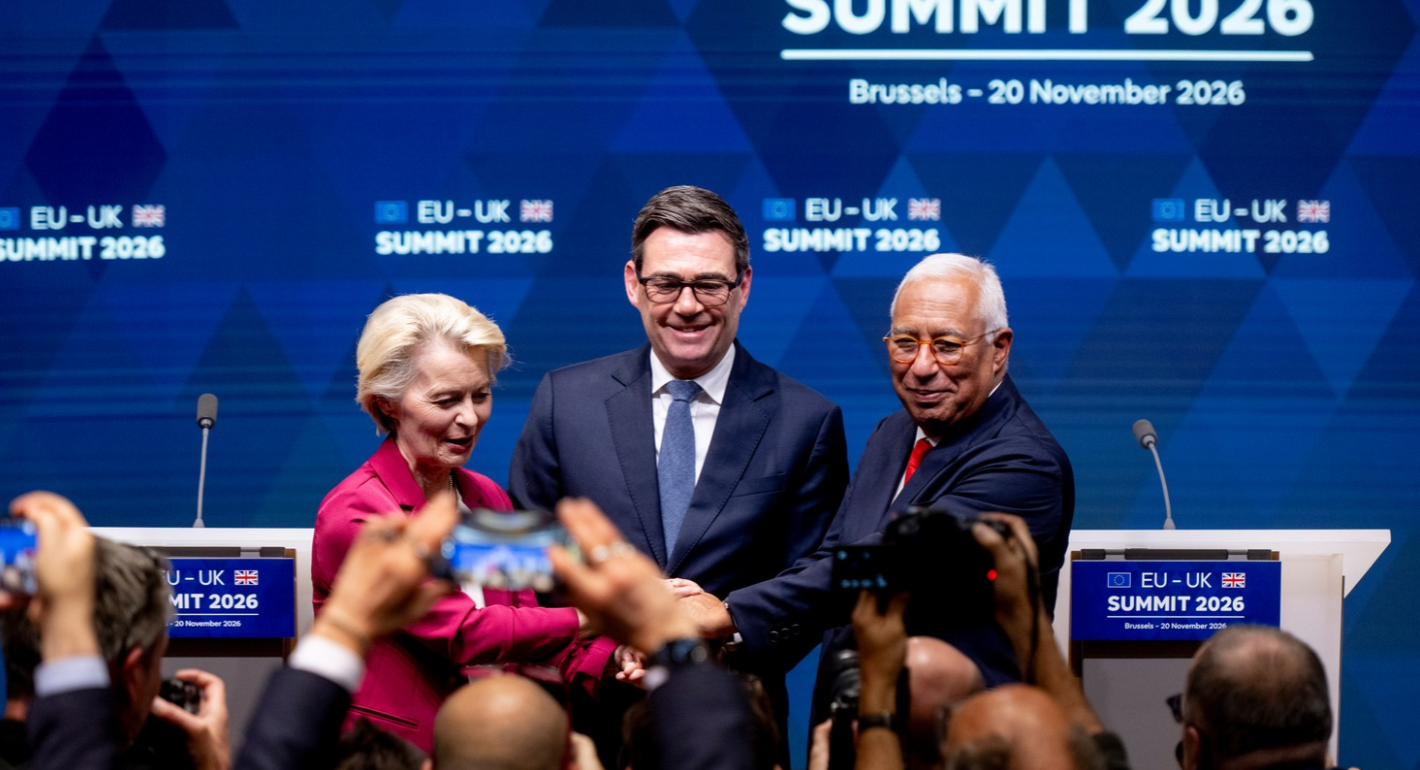
Ending in an impasse on university tuition fees, the EU-UK summit came to a muddled conclusion. Did the meeting live up to the hype, or was it counterproductive?
Chief Executive and Chief Economist, European Policy Centre
The November 20, 2026, EU-UK summit was a step forward but fell short of the reset needed in today’s increasingly hostile geopolitical environment. This does not mean that the opportunity has been lost. Agreed provisions on economic security could become the foundation for a more ambitious partnership. But are both sides willing to invest the necessary political capital?
For London, the immediate economic gains will be limited: The fundamentals of the post-Brexit economic relationship remain unchanged. For Brussels, expectations must be limited: It will not be able to pursue its own priorities with the UK simply signing up and paying up without receiving commensurate benefits.
The controversy over tuition fees illustrates the limitations of a transactional approach. Individual demands might be defensible in isolation, but become counterproductive in the wider strategic context.
The emerging EU–Canada relationship demonstrates that a different level of ambition is possible. What matters is delivering strategic outcomes that neither side can achieve alone, from economic security to defense and democratic resilience. This is also what can convince governments and populations of the merits of closer integration.
The real mistake would be to assume that incremental progress is an adequate response to common strategic challenges.
Senior Fellow and Special Adviser to the President, German Marshall Fund for the United States
Summits are risky, above all when they fail to deliver. The fairest verdict is that this second EU-UK summit was a partial success. The wins were expected: a deal to facilitate trade in agrifoods, linking both parties’ emissions trading systems, and the promise to let up to 100,000 young Britons live, work, and travel in the EU—and vice-versa—for up to three years from 2030.
That said, the summit probably marks the end of London’s incrementalist approach. It is difficult to imagine what more the UK could get without revisiting its red lines—an unattractive prospect domestically, including for some members of Prime Minister Andy Burnham’s own party.
Burnham has promised to explore options for closer relations, and the EU has said it would be willing to brainstorm with him. But brainstorming does not mean informal negotiations: The ball is still very much in the UK’s court.
Yet, the mood was positive. There was no willingness to linger over differences—even if big differences remain. This is important because good relations matter: They open up some space for creative thinking and draw more political attention from EU capitals who have, understandably, been busy with other, more pressing issues.
Managing Director, Europe, Eurasia Group
From Andy Burnham’s point of view, the EU-UK summit was a necessary hors d’oeuvre to show the British public the benefits of closer cooperation before he serves up the main meal: whether to rejoin the club.
Yet, member states ambushed him by making the new deal on agrifoods, carbon emissions, and a youth experience scheme conditional on EU students who come to Britain paying the same tuition fees as British students. We can hardly blame the EU for playing hardball: London cannot let this deal collapse.
Burnham’s other problem was that two months before the summit, he had already launched a great debate on rejoining. As the old joke about playing the piano goes, Burnham played the right notes in the wrong order.
Five former prime ministers—Tony Blair, David Cameron, Theresa May, Boris Johnson, and Rishi Sunak—have since queued up to criticize Burnham for reopening the Brexit debate. He neatly dismissed them as “stuck in the past,” claiming public opinion is on his side. He is right. However, even some senior Labour figures, including members of his own cabinet, now worry that the prime minister has unleashed a monster he cannot control.
Professor of European Politics and Foreign Affairs, King’s College London
The EU and UK had to have a summit and had to ensure that they could portray its outcome as a success. The optics of a failure would have been dreadful.
That said, the details of what was agreed have been somewhat drowned out by the swirling rumors about what Andy Burnham now intends to propose for the broader relationship. In his speech and subsequent comments at the 2026 Labour Party conference, he intimated that options for the future should include “going all the way,” which is to say the UK could rejoin.
And this is what the British debate is now focused on. We are waiting with bated breath to see what happens as a result of the brainstorming the prime minister has said he wants with the EU, and of the national conversation he alluded to back in September. Perhaps more importantly, we wait to see what a cabinet that, by all accounts, is divided over whether to restart the EU debate decides to do.
The crucial decision will be what to put in the next Labour election manifesto. Whether the next parliament is one in which the debate over membership restarts in earnest, only time will tell.
Director, UK Trade Policy Project, European Centre for International Political Economy
EU-UK relations have to be strong for the sake of a continent that is struggling economically and geopolitically. Europe represents the world’s second largest trade flow, over half of the G7, and two-fifths of the UN Security Council. Unfortunately, since Brexit, both sides have tended toward thinking in transactional terms with support for Ukraine being almost the sole positive example of cooperation.
Andy Burnham raising the possibility of rejoining has started to change that dynamic, but as the summit showed, there is still a long way to go. Deals agreed will be helpful but not game-changing, while frictions over tuition fees and the Made in Europe scheme have caused issues—even if they can be solved with political goodwill.
Polling suggests the British public now feel more European, but few in Westminster make that case. Meanwhile, the EU claims openness to closer relations but has of late been treating partners as unnecessary, particularly on trade.
If it came to it, accession for the UK could not be a normal process. Such an important event would need to be handled seriously on both sides. But even other options need better handling, and that is where regular summits and other meetings are essential.
Associate Professorial Research Fellow, London School of Economics and Political Science
Absolutely not. Was it dull? A little, and that might be a sign of what’s to come. Andy Burnham will certainly be hoping that his bid to be the prime minister who takes the UK back into Europe follows a pragmatic course, largely lacking in drama—even mundane. “Problem solving, not point scoring,” as he likes to put it.
The dispute over student fees seems unlikely to throw him off course, and may even make him more determined. It demonstrates to UK policymakers just how difficult it is for non-members to secure even minor wins from such a large and often protectionist-minded geopolitical bloc. The risk now is that each side views the trivial nature of the fees dispute as a sign of the other’s fundamental lack of seriousness. This would be a big mistake, since it actually shows how thin the policy differences between London and Brussels really are.
If Burnham seeks a mandate at a general election to begin negotiations on rejoining, he would surely be delighted if all the arguments turned on issues as prosaic as tuition fees. Should that prove to be the shape of the debate to come, then the case for rejoining will already be half-won.
Assistant Director, Centre for European Reform
This was the summit of partial progress. The mood between UK Prime Minister Andy Burnham, European Commission President Ursula von der Leyen, and European Council President António Costa was warm, and the two sides wrapped up talks on three agreements covering agrifood trade, linking emissions trading systems, and youth mobility.
But the package hinges on an agreement on tuition fees, which remains contentious for the British government and might become entangled with another unresolved issue: whether the UK and its carmakers will qualify under the Made in Europe criteria of the EU’s Industrial Accelerator Act. There is still some tough negotiating to come in the new year.
But the bigger question is what Burnham decides to do at home. Now that he has let the genie out of the bottle, he has to decide how far to take the debate about rejoining the union. Does he want his premiership to be defined by Europe? Will he go into the next general election promising to take Britain back into the EU?
Subscribe to Strategic Europe, delivered every Tuesday and Thursday!

Editor in Chief, Strategic Europe
Rym Momtaz is the editor in chief of Carnegie Europe’s blog Strategic Europe. A multiple Emmy award-winning journalist-turned-analyst, she specializes in Europe and the Middle East and the interplay between those two spaces.
Recent Work
Rym Momtaz
Rym Momtaz, ed.
Carnegie does not take institutional positions on public policy issues; the views represented herein are those of the author(s) and do not necessarily reflect the views of Carnegie, its staff, or its trustees.
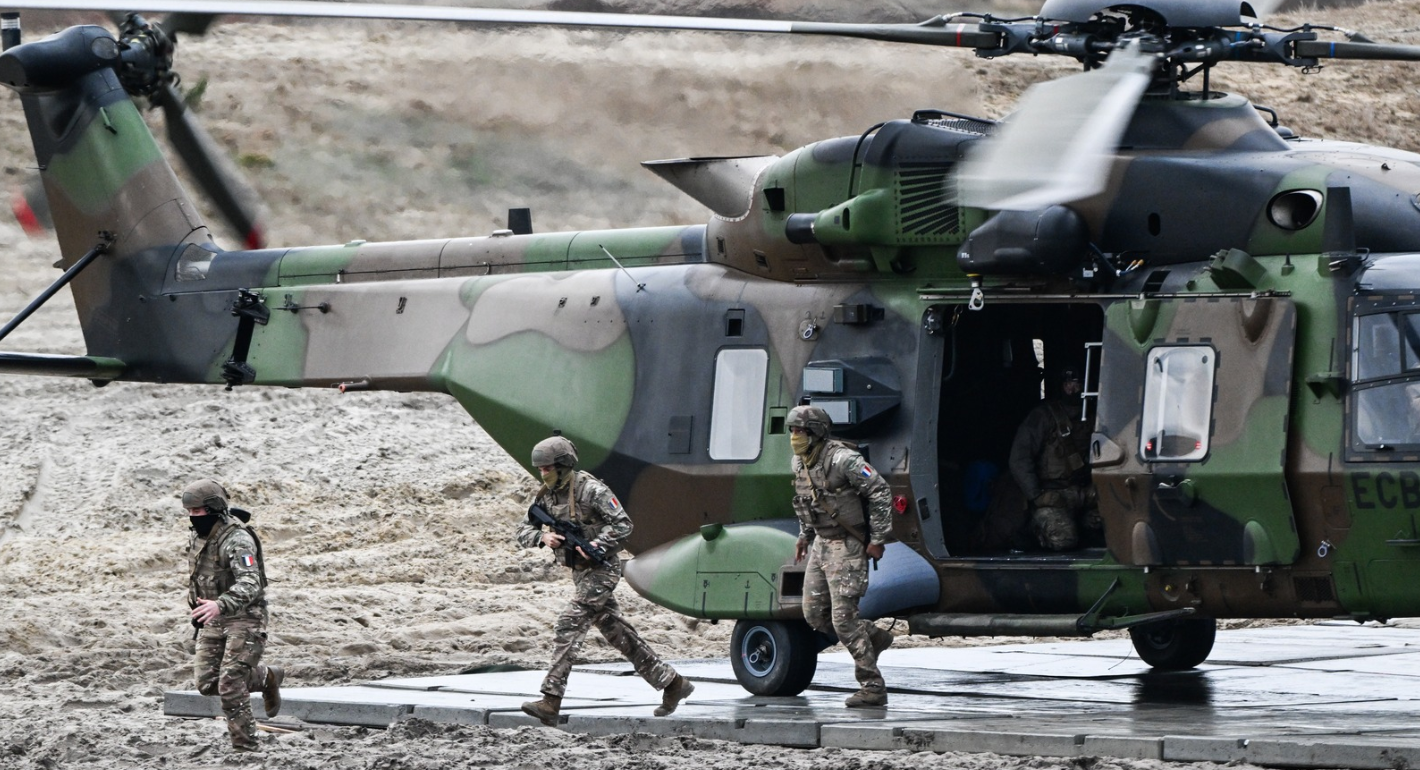
A trilateral summit in China was advertised as the new Yalta but yielded little more than a photo opportunity for Vladimir Putin. The real work was being done by the Europeans, quietly, in rural Poland.
Rym Momtaz
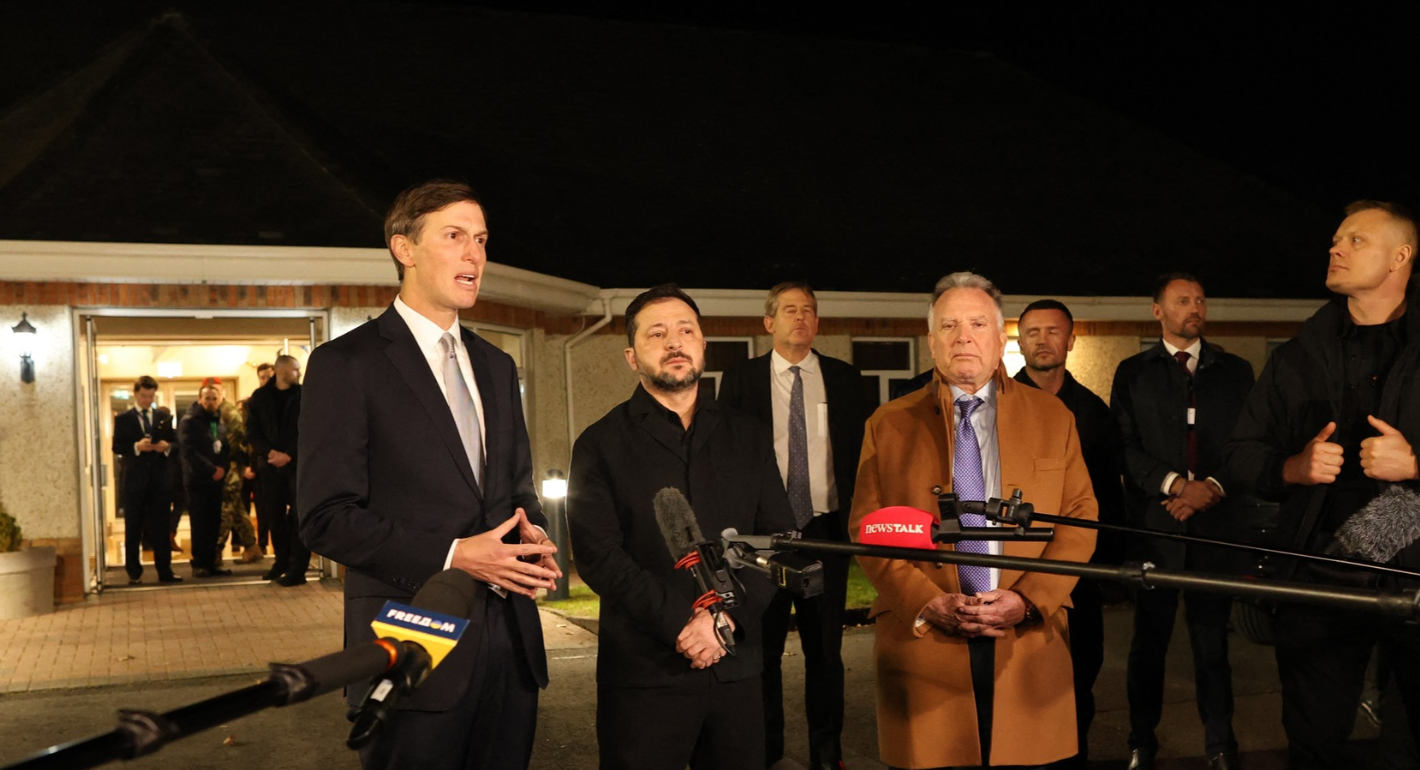
Russia’s maximalist demands are preventing any serious attempt at ending the war in Ukraine. To make peace a realistic prospect, Putin must recognize that diplomacy is a two-way street.
Kadri Liik
Too many national interests, too many EU institutions, and too little political will are preventing Europe from acting in its own best interests.

Judy Dempsey
A sizeable funding shortfall looks increasingly likely to hit Ukraine in 2027. Can the Europeans, with their strained budgets and economies, come up with the cash without seizing frozen Russian assets?
Rym Momtaz, ed.
A blue wave has swept over the U.S. midterms, with Democrats regaining control of both houses of Congress. But Europeans hoping for a return to business as usual should think again.
Rym Momtaz