

{
  "authors": [
    "William Chandler",
    "Dadi Zhou",
    "Jessica Tuchman Mathews"
  ],
  "type": "event",
  "centerAffiliationAll": "dc",
  "centers": [
    "Carnegie Endowment for International Peace"
  ],
  "collections": [],
  "englishNewsletterAll": "ctw",
  "nonEnglishNewsletterAll": "",
  "primaryCenter": "Carnegie Endowment for International Peace",
  "programAffiliation": "SCP",
  "programs": [
    "Sustainability, Climate, and Geopolitics"
  ],
  "projects": [],
  "regions": [
    "North America",
    "United States",
    "China"
  ],
  "topics": [
    "Climate Change",
    "Military",
    "Foreign Policy"
  ]
}
Breaking the U.S.-China Climate Suicide Pact
Thu, May 8th, 2008
Washington, D.C.
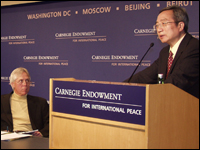
Carnegie’s William Chandler and Zhou Dadi discussed how to break the U.S.-China “suicide pact” of self-destructive, energy-using behavior during a May 8, 2008 event at the Carnegie Endowment. They suggest U.S.-China climate and energy cooperation as a critical step toward a global climate agreement. China and the U.S. must work together to define tangible, credible implementation mechanisms, while also working toward a global climate agreement. The event was moderated by Carnegie president Jessica T. Mathews.
Chandler emphasized the potential of demand-side energy options in both China and the United States. The technology required to improve energy efficiency is available, but unexpected barriers – including confiscatory tax policy and industrial policy that discourages financing to energy-intensive sectors – stymie its implementation. Zhou highlighted the Chinese commitment to reducing China’s rate of emissions growth. China is on track to reach its commitments of a 20 percent reduction in energy intensity and 10 percent increase in renewable energy by 2010, and is working toward a less energy-intensive model of development.
During a question and answer session, Zhou and Chandler address the capacity gap between the Chinese central government and provincial governments, the possibility of setting sectoral emissions targets in an international climate agreement, demand-side energy policy and suggestions to the next U.S. president on breaking the U.S.-China suicide pact. The two countries must work together to demonstrate real progress toward those goals. Carnegie’s project on U.S.-China Climate Cooperation works to facilitate discussion among high-level officials from both countries to shape the policy process. It builds teams that provide resources to provincial leaders to effect real progress on the ground.
Carnegie does not take institutional positions on public policy issues; the views represented herein are those of the author(s) and do not necessarily reflect the views of Carnegie, its staff, or its trustees.
Event Speakers
Former Adjunct Senior Associate, Energy and Climate Program
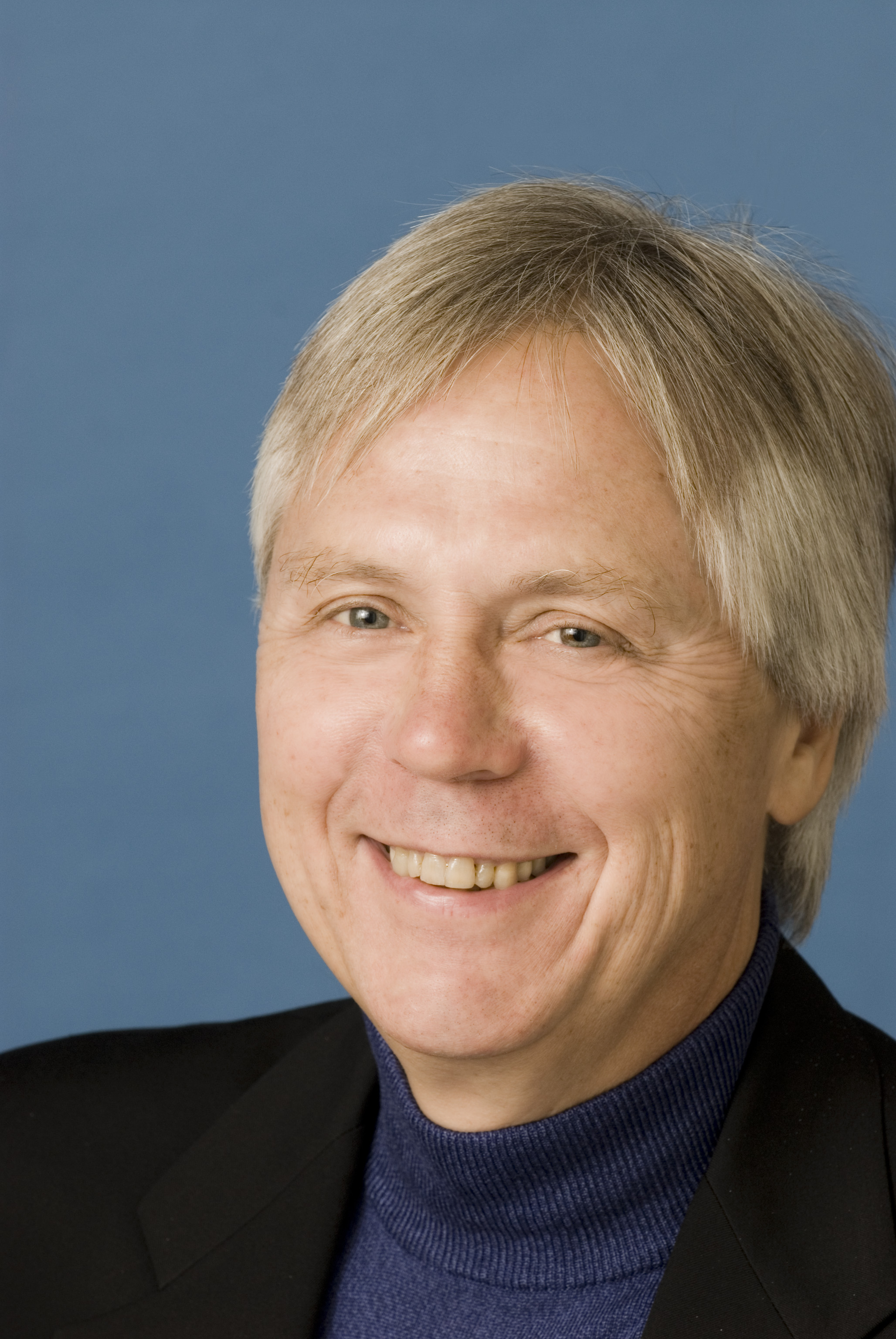
Chandler is a leading expert on energy and climate. As an adjunct senior associate in the Energy and Climate Program he supports Carnegie’s work in these fields, collaborating closely on projects with Carnegie’s offices in Moscow, Beijing, Brussels, and Beirut.
Former Senior Associate, Energy and Climate Program
Zhou serves as the vice chairman of the State Expert Advisory Committee to the National Energy Leading Group of China, a member of the National Expert Team of China for Climate Change, and as vice president of the China Institute of Geo-politics and Energy Strategy.
Distinguished Fellow

Mathews is a distinguished fellow at the Carnegie Endowment for International Peace. She served as Carnegie’s president for 18 years.