

{
  "authors": [
    "Martha Brill Olcott",
    "Omurbek Tekebayev"
  ],
  "type": "event",
  "centerAffiliationAll": "dc",
  "centers": [
    "Carnegie Endowment for International Peace"
  ],
  "collections": [],
  "englishNewsletterAll": "ctw",
  "nonEnglishNewsletterAll": "",
  "primaryCenter": "Carnegie Endowment for International Peace",
  "programAffiliation": "russia",
  "programs": [
    "Russia and Eurasia"
  ],
  "projects": [],
  "regions": [
    "Central Asia",
    "Kyrgyz Republic"
  ],
  "topics": [
    "Political Reform",
    "Democracy"
  ]
}
The New Political System in Kyrgyzstan: In Search of Sustainability
Fri, December 12th, 2008
Washington, D.C.
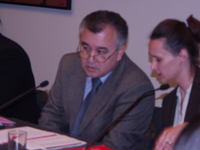
IMGXYZ1090IMGZYXThree years since the Tulip Revolution much of the optimism for the current Kyrgyz government has faded. The Kyrgyz opposition, who once struggled to bring about this revolution, now argues that simply changing the people in power will not produce the needed reforms. Instead, the opposition contends that a new political system, one that checks the power of the majority party and President, must be implemented.
Head of the Kyrgyz Socialist Party Ata-Meken, Omurbek Tekebayev, presented this argument for the first time in the U.S. at Carnegie. Tekebayev argued that the current constitution provides too much power to the President and has thus led to an authoritarian-like system similar to the authoritarian systems of Kyrgyzstan’s past. Tekebayev claimed that excessive executive power has led to the growth of nepotism and corruption in Kyrgyzstan, and the curtailing of democratic institutions. Tekebayev offered examples such as the recent elimination of BBC and Radio Free Europe/Radio Liberty broadcasts from Kyrgyz airwaves, as well as, the heavy and undue influence that the family of Kyrgyz President Kurmanbek Bakiyev yields.
New System
Tekebayev stressed that a political system cannot rely on a good-natured leader coming to power. Instead, it should be empowered to check presidential authority. A political system that creates competition between parties is ideal. Tekebayev's new proposed plan would limit the allocation of seats for a single party to 50 out of an available 90. The parliament minority will also be entitled to select the Deputy Chairman of Parliament, who will serve as the representative for minority parties.
Tekebayev would like to implement this model by achieving a political consensus with the main political actors. However, he did caution that should the current Kyrgyz leadership not be willing to reform, mass protests may occur.
Addressing Criticism
According to Tekebayev, one of the leading criticisms of this system is that scandals will be frequent. However, Tekebayev does not view this as a problem because he views such scandals as helpful for developing new ways of political interaction. And as to his own aspirations, the Kyrgyz leader answered that ambition is not bad. Those who seek a place in the history of their nation are likely to serve most honestly; and, with a twinkle in his eye he implied that he would do so.
Carnegie does not take institutional positions on public policy issues; the views represented herein are those of the author(s) and do not necessarily reflect the views of Carnegie, its staff, or its trustees.
Event Speakers
Former Senior Associate, Russia and Eurasia Program and, Co-director, al-Farabi Carnegie Program on Central Asia
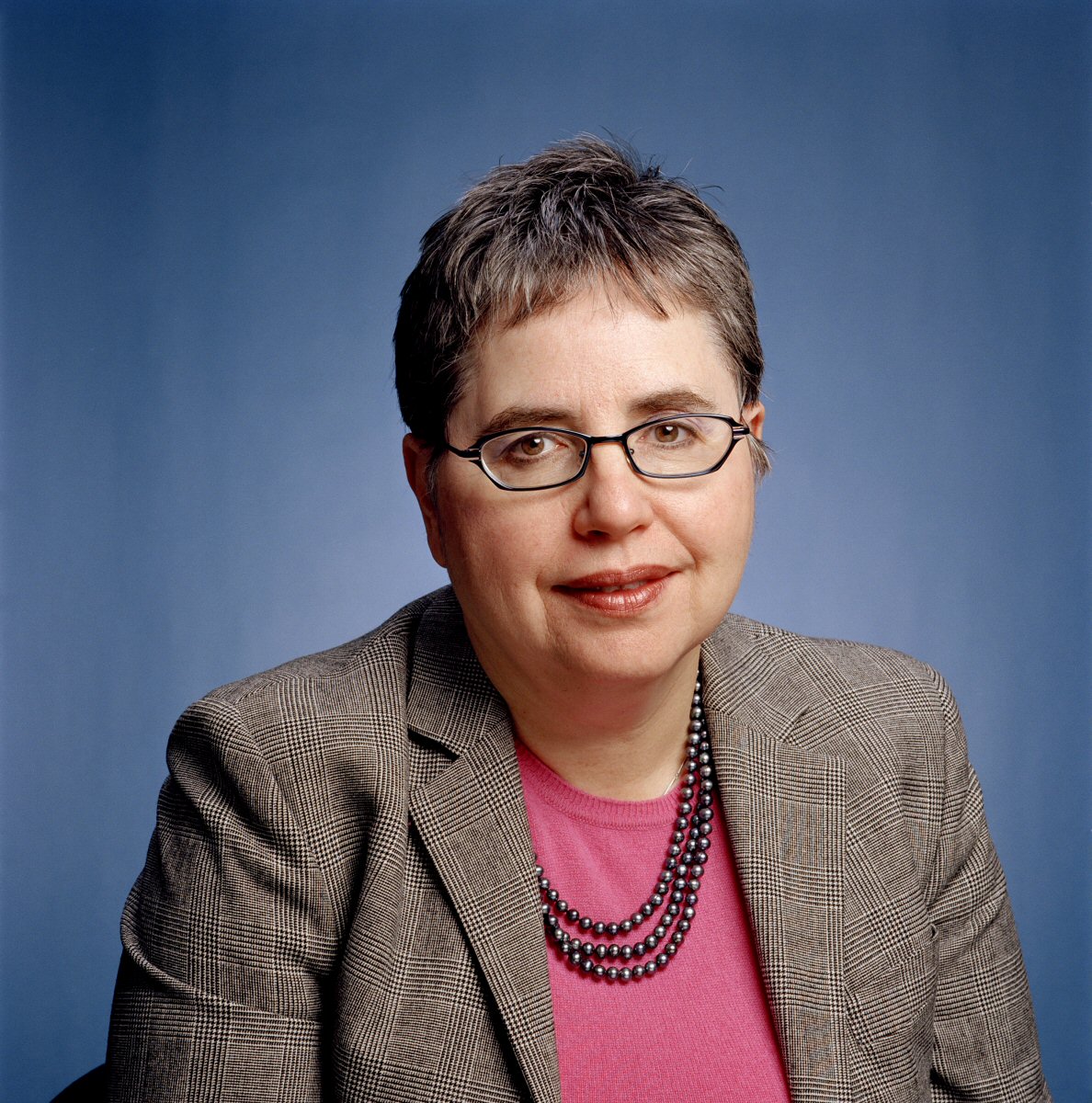
Olcott is professor emerita at Colgate University, having taught political science there from 1974 to 2002. Prior to her work at the endowment, Olcott served as a special consultant to former secretary of state Lawrence Eagleburger.
Omurbek Tekebayev