

{
  "authors": [
    "Gilles Dorronsoro",
    "Shada Islam",
    "Daniel Korski",
    "Fabrice Pothier"
  ],
  "type": "event",
  "centerAffiliationAll": "",
  "centers": [
    "Carnegie Endowment for International Peace",
    "Carnegie Europe"
  ],
  "collections": [],
  "englishNewsletterAll": "",
  "nonEnglishNewsletterAll": "",
  "primaryCenter": "Carnegie Endowment for International Peace",
  "programAffiliation": "",
  "programs": [],
  "projects": [],
  "regions": [
    "North America",
    "United States",
    "South Asia",
    "Afghanistan",
    "Pakistan",
    "Western Europe",
    "Asia",
    "Europe"
  ],
  "topics": [
    "Security",
    "Military",
    "Foreign Policy"
  ]
}
Obama’s Afghanistan and Pakistan Strategy – Where Now for Europe?
Tue, May 5th, 2009
Brussels
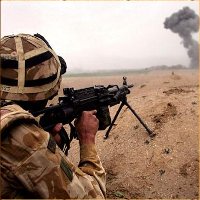
IMGXYZ1210IMGZYXPresident Obama’s recent announcement on Afghanistan has set a clear strategic direction for U.S. efforts in the region: pursue terrorist strongholds and build an indigenous Afghan security capacity. Obama’s strategy recognizes that the stabilisation of Afghanistan is inextricably linked to that of Pakistan. This places pressures on European governments, who are being asked to contribute to military and civilian surges while European popular support for the mission is waning.
Gilles Dorronsoro, Visiting Scholar at the Carnegie Endowment for International Peace; Shada Islam, Senior Programme Executive at the European Policy Centre (EPC); and Daniel Korski, Senior Policy Fellow at the European Council on Foreign Relations (ECFR), discussed how Europe can renew its commitments to Afghanistan. The event was chaired by Fabrice Pothier, Director of Carnegie Europe.
Highlights include:
- Although Europe is unable to commit more combat troops, Gilles Dorronsoro argued that it can do more to hinder the advance of the Taliban in the North of Afghanistan by working with the Afghan police. With training and an increase in resources, the Afghan police could effectively combat the Taliban in a province like Kunduz, where there are no more than a few hundred Taliban.
- Daniel Korski argued that the Taliban’s success is largely due to its ability to co-opt individuals who have been alienated by the Afghan government, or those individuals for whom cooperation with insurgents promises greater benefit than cooperation with the government.
- Shada Islam suggested that the situation in Pakistan has been exacerbated by the successful attempts of the Taliban to establish links with local Pakistani extremist groups trained and equipped by the Pakistani intelligence services. Europe and the United States must push the Pakistani intelligence services, government and army to sever these links.
Carnegie does not take institutional positions on public policy issues; the views represented herein are those of the author(s) and do not necessarily reflect the views of Carnegie, its staff, or its trustees.
Event Speakers
Former Nonresident Scholar, South Asia Program
Dorronsoro’s research focuses on security and political development in Afghanistan. He was a professor of political science at the Sorbonne in Paris and the Institute of Political Studies of Rennes.
Shada Islam
Daniel Korski
Former Director, Carnegie Europe
Pothier, director of Carnegie Europe, is a noted commentator on European policy in Afghanistan and Pakistan, transatlantic issues, and global drug policy.