

{
  "authors": [
    "Thomas Carothers",
    "Gunilla Carlsson",
    "Anders Borg",
    "Shari Bryan"
  ],
  "type": "event",
  "centerAffiliationAll": "dc",
  "centers": [
    "Carnegie Endowment for International Peace"
  ],
  "collections": [
    "Arab Awakening"
  ],
  "englishNewsletterAll": "democracy",
  "nonEnglishNewsletterAll": "",
  "primaryCenter": "Carnegie Endowment for International Peace",
  "programAffiliation": "DCG",
  "programs": [
    "Democracy, Conflict, and Governance"
  ],
  "projects": [],
  "regions": [
    "Middle East",
    "North Africa"
  ],
  "topics": [
    "Political Reform",
    "Democracy",
    "Economy"
  ]
}
Economic Growth, Gender, and Development in the Context of Arab Political Change: A Swedish Perspective
Mon, September 26th, 2011
Washington, DC
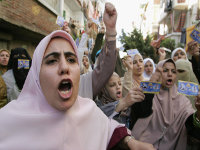
IMGXYZ3171IMGZYXDuring the January 2011 uprising in Egypt, women made their presence felt in Tahrir Square, calling for greater political freedom and economic opportunities alongside their male counterparts. Similarly, women played a key role in the overthrow of the Ben Ali regime in Tunisia. Drawing greater attention to the role of women, the World Bank recently released its 2012 World Development Report, which analyzes the relationship between gender equality, economic development, and female political participation.
In cooperation with the Swedish Embassy and the National Democratic Institute (NDI), Carnegie hosted a panel discussion on gender equity and women’s political participation in the Arab world featuring Swedish Minister for International Development Cooperation Gunilla Carlsson, Swedish Minister of Finance Anders Borg, and Shari Bryan, vice president of NDI. Carnegie’s Thomas Carothers moderated.
Economic Growth and Gender Equity
- Non-competing objectives: The idea that people have to choose between addressing the current global economic crisis and improving gender equality is incorrect, Borg argued, because greater gender equality contributes to greater economic growth.
- Investing in women: Investing in women, Borg stated, will increase the human capital of any country and increase the education and health of both male and female children. Borg added that greater gender equality and better market access will increase market stability as well as labor force participation.
- Inclusive economic growth: Carlsson argued that gender equality is a core development objective in its own right. To achieve greater gender equality, she added, economic growth must be inclusive. Inclusive economic growth is not a political question, but a question of modernization.
- Building trust: Inclusive economic growth will not only help to empower women, but will also help to build trust between a country’s government and its population, Carlsson added. This is particularly key for countries going through political transitions.
Role of Women in the Arab Spring
- Political landscape: The Arab uprisings will change the region’s political landscape in both the long and short term and they were in large part driven and organized by youth and women, Carlsson stressed. She noted the need to focus on the roles of youth and women and continue the current positive momentum coming out of the uprisings.
- Leadership: Female participation in the economy is important, Bryan argued, but it is crucial that women in the Arab world also are in decision-making positions. They need to be part of the constitution-drafting committees, so that women’s rights and political and economic reforms are enshrined in the constitution.
- Transitional governments: Bryan expressed concern over the lack of female representation in the decision-making bodies of many of the transitional governments in the Arab world such as the Transitional National Council in Libya and the Supreme Council of the Armed Forces in Egypt.
International Support for Gender Equality
- Role for Scandinavian countries: Bryan called on the Scandinavian countries to draw attention to issues of gender equality because of their success in this area.
- Sweden: Carlsson emphasized that the Swedish International Development Cooperation Agency is focused on gender issues, as well as accountability, human rights, and freedom and democracy.
- Areas for investment: There is a need to invest in health and education programs and to reduce barriers to female market participation in order to increase gender equality and female labor force participation, Borg stated.
- Leading from behind: Both Carlsson and Bryan stressed that the international community must help women to help themselves and not impose a specific agenda on the population.
- Islamist parties: It is possible to have a modernizing Islamist party that is based on Islamic democratic values, Borg stated. Although it is difficult for the international community to be certain of the agenda of Islamist parties regarding women and women’s rights, Bryan added, countries and organizations must still engage with them as participants in the democratic process.
Carnegie does not take institutional positions on public policy issues; the views represented herein are those of the author(s) and do not necessarily reflect the views of Carnegie, its staff, or its trustees.
Event Speakers
Harvey V. Fineberg Chair for Democracy Studies; Senior Fellow, Democracy, Conflict, and Governance Program

Thomas Carothers, a senior fellow in the Carnegie Endowment for International Peace’s Democracy, Conflict, and Governance Program, is a leading expert on comparative democratization and international support for democracy.
Gunilla Carlsson
Anders Borg
Shari Bryan