

{
  "authors": [
    "Li Bin",
    "Tong Zhao",
    "James M. Acton"
  ],
  "type": "event",
  "centerAffiliationAll": "dc",
  "centers": [
    "Carnegie Endowment for International Peace"
  ],
  "collections": [],
  "englishNewsletterAll": "ctw",
  "nonEnglishNewsletterAll": "",
  "primaryCenter": "Carnegie Endowment for International Peace",
  "programAffiliation": "NPP",
  "programs": [
    "Nuclear Policy"
  ],
  "projects": [],
  "regions": [
    "North America",
    "United States",
    "East Asia",
    "China",
    "South Korea"
  ],
  "topics": [
    "Security",
    "Military",
    "Nuclear Policy",
    "Arms Control",
    "Foreign Policy"
  ]
}
Non-nuclear Weapons and the Risk of Nuclear War: A Chinese Perspective
Wed, November 8th, 2017
Washington, DC
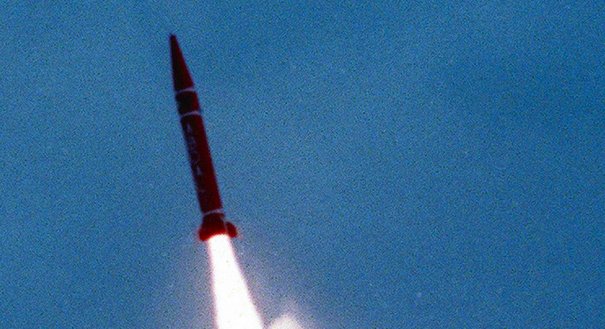
The risk of a nuclear war is rising because of growing non-nuclear threats to nuclear weapons and their command-and-control systems. In a conventional war, such “entanglement” could lead to non-nuclear operations inadvertently threatening the opponent’s nuclear deterrent or being misinterpreted as preparations for nuclear use, potentially sparking catastrophic escalation. Carnegie will launch a new volume in which two leading scholars, Tong Zhao and Li Bin, present a first-of-its-kind Chinese perspective on this critical emerging risk. James Acton will moderate.
Li Bin
Li Bin is a senior fellow with the nuclear policy program and Asia program at the Carnegie Endowment for International Peace.
Tong Zhao
Tong Zhao is a fellow in the nuclear policy program at the Carnegie–Tsinghua Center for Global Policy.
James Acton
James Acton is co-director of the nuclear policy program and senior fellow at the Carnegie Endowment for International Peace.
Carnegie does not take institutional positions on public policy issues; the views represented herein are those of the author(s) and do not necessarily reflect the views of Carnegie, its staff, or its trustees.
Event Speakers
Former Senior Fellow, Nuclear Policy Program and Asia Program
Li was a senior fellow working jointly in the Nuclear Policy Program and Asia Program at the Carnegie Endowment for International Peace.
Senior Fellow with the Nuclear Policy Program and Carnegie China

Tong Zhao is a senior fellow with the Nuclear Policy Program and Carnegie China, Carnegie’s East Asia-based research center on contemporary China. Formerly based in Beijing, he now conducts research in Washington on strategic security issues.
Jessica T. Mathews Chair, Co-director, Nuclear Policy Program

Acton holds the Jessica T. Mathews Chair and is co-director of the Nuclear Policy Program at the Carnegie Endowment for International Peace.