

Article
Ronit Langer, Shruti Sharma
{
  "authors": [
    "Ronit Langer"
  ],
  "type": "commentary",
  "centerAffiliationAll": "",
  "centers": [
    "Carnegie Endowment for International Peace"
  ],
  "collections": [
    "Biotechnology",
    "Coronavirus"
  ],
  "englishNewsletterAll": "",
  "nonEnglishNewsletterAll": "",
  "primaryCenter": "Carnegie Endowment for International Peace",
  "programAffiliation": "",
  "programs": [],
  "projects": [],
  "regions": [],
  "topics": [
    "Technology"
  ]
}
Source: Getty
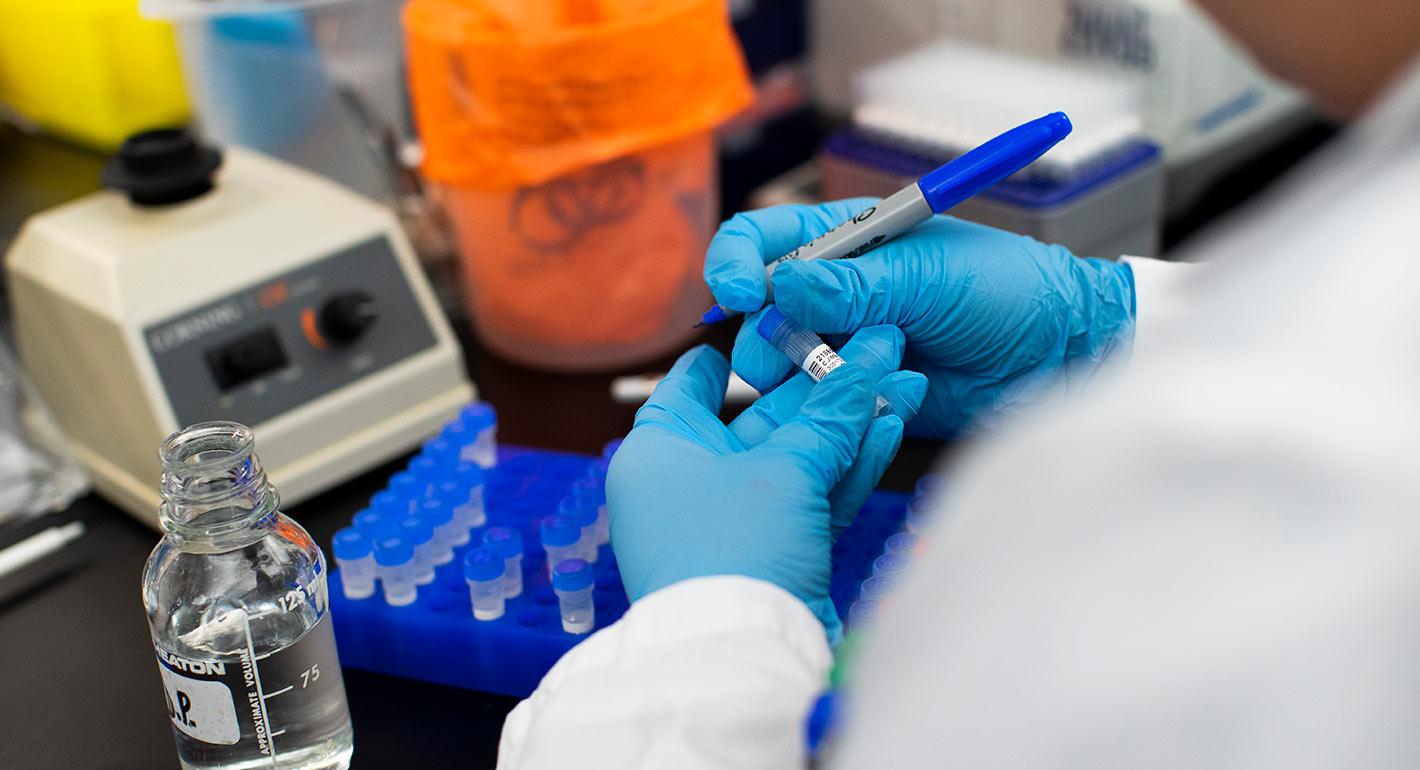
The global coronavirus response is providing a critical test bed for new technologies to detect, diagnose, and treat infectious diseases. But broader investments in public health are needed to capitalize on these advances.
It may be tempting to imagine a room of all-seeing officials managing the global response to the novel coronavirus epidemic, like desk officers directing a field operative in an international spy movie. While this is certainly not the case, rapid technological advances could soon bring this vision closer to reality.
Improved systems and data sharing have already enabled a faster, more effective response to COVID-19, the disease caused by this coronavirus strain, than to any previous outbreak. The virus’s DNA sequence was released in record time, at least eleven labs have begun to ship out diagnostic tests, and the biotech firm Moderna hopes to have a vaccine ready for clinical trials as early as April. In the years ahead, technologies for early detection, rapid diagnosis, and remote treatment will make it easier and safer to contain the spread of future outbreaks.
The Chinese government has been criticized for its weeks-long delay between diagnosing its first COVID-19 patients and notifying global health authorities. Yet a team at the Canadian start-up BlueDot was able to detect the outbreak days before initial reports from the Centers for Disease Control and Prevention (CDC) and the World Health Organization. BlueDot’s algorithm picked up early warning signals by applying natural language processing and machine learning to data sets including news coverage, global flight patterns, and government reports.
But an algorithm is only as good as the data fed into it. While Bluedot’s current algorithm relies on data from outside healthcare, the growth of available data from interoperable electronic medical records and personal health monitors, such as Fitbits, will provide extra predictive power. However, the ready availability of such personal data will make it even more urgent to agree on standards around privacy and security.
Concerns about a lack of diagnostic ability have mounted as the scope of the public health emergency has become clear. In the United States, the test rolled out by the CDC, which amplifies DNA samples through a polymerase chain reaction, sometimes failed to generate a result due to a “faulty component.” In those cases, labs had to send their samples to the CDC, causing a delay in testing results that in turn slowed officials’ understanding of the spread of the disease.
A new class of diagnostics relies instead on DNA sequencing, which allows multiple pathogens to be detected simultaneously and does not require a unique test for each new virus. Of the eleven tests currently deployed around the world, only one is sequence-based, but this method will become more prevalent as the cost of sequencing continues to fall and genetic analysis improves.
In many outbreaks, healthcare providers are hit the hardest. Over 3,000 healthcare workers have been infected in China, often after treating patients without proper protective gear. Some countries have turned to telemedicine for patients with COVID-19. Israel’s Sheba Medical Center, which is treating twelve passengers from the Diamond Princess cruise ship, employs remote monitoring and a robotic medicine cart controlled by doctors and nurses. Continued improvements in robotics technologies will make it easier to make highly infectious patients feel genuinely cared for, even at a distance.
Despite advances in these areas, the global health community may remain poorly prepared to deal with pandemics. Good infrastructure is the foundation of outbreak management; without it, early detection of an outbreak is of little use. Taking advantage of a rapid diagnostic test still requires that resources be quickly deployed to the population centers that need them the most. Likewise, telemedicine developments offer patients little help if hospitals lack adequate funding for staff and equipment. It’s those underlying investments in infrastructure that lay the groundwork for the cutting-edge technologies that ideally will be available when the next dangerous virus emerges.
Former Scoville Fellow, Technology and International Affairs Program
Ronit Langer was a Scoville Fellow working with Michael Nelson in the Technology and International Affairs Program.
Recent Work

Ronit Langer, Shruti Sharma
Carnegie does not take institutional positions on public policy issues; the views represented herein are those of the author(s) and do not necessarily reflect the views of Carnegie, its staff, or its trustees.
Washington is racing China to the AI frontier but missing a second race: diffusion. For African developers, the choice of model is a practical matter of affordability, access, and agency.
Jane Munga

Recent interest in understanding competitive cyber statecraft has been motivated by the recognition that various states are pursuing both diplomatic and operational lines of effort to achieve their respective national strategic objectives in and through cyberspace.
Joe Devanny, Arthur P.B. Laudrain

Alongside official pushback, Chinese tech and policy communities are meeting calls for a slowdown with skepticism—rather than rejection—that mirrors the reactions in the United States.


Matt Sheehan, Sophie Zhuang
In an increasingly competitive landscape, Seoul should expand its current partnership with Washington and deepen ties with Brussels and New Delhi.


Darcie Draudt-Véjares, Milo McBride

Too many national interests, too many EU institutions, and too little political will are preventing Europe from acting in its own best interests.

Judy Dempsey