Donald Trump’s return to the White House has once again altered the contours of international politics. The second Trump administration has adopted a more assertive and unpredictable approach to U.S. foreign policy—deploying tariffs and other economic tools against both rivals and partners, expressing open hostility toward multilateral institutions, and pursuing a highly transactional, personalized style of diplomacy.
These developments have unfolded amid intensifying geopolitical competition and the weakening of the post–Cold War international system, contributing to a more fluid and uncertain global order.
For India, this evolving context raises several important questions about the viability of its foreign policy approach. To what extent is Trump 2.0 disrupting the foundations of India’s approach to the world, and where is it instead reinforcing longer-term trends that were already underway?
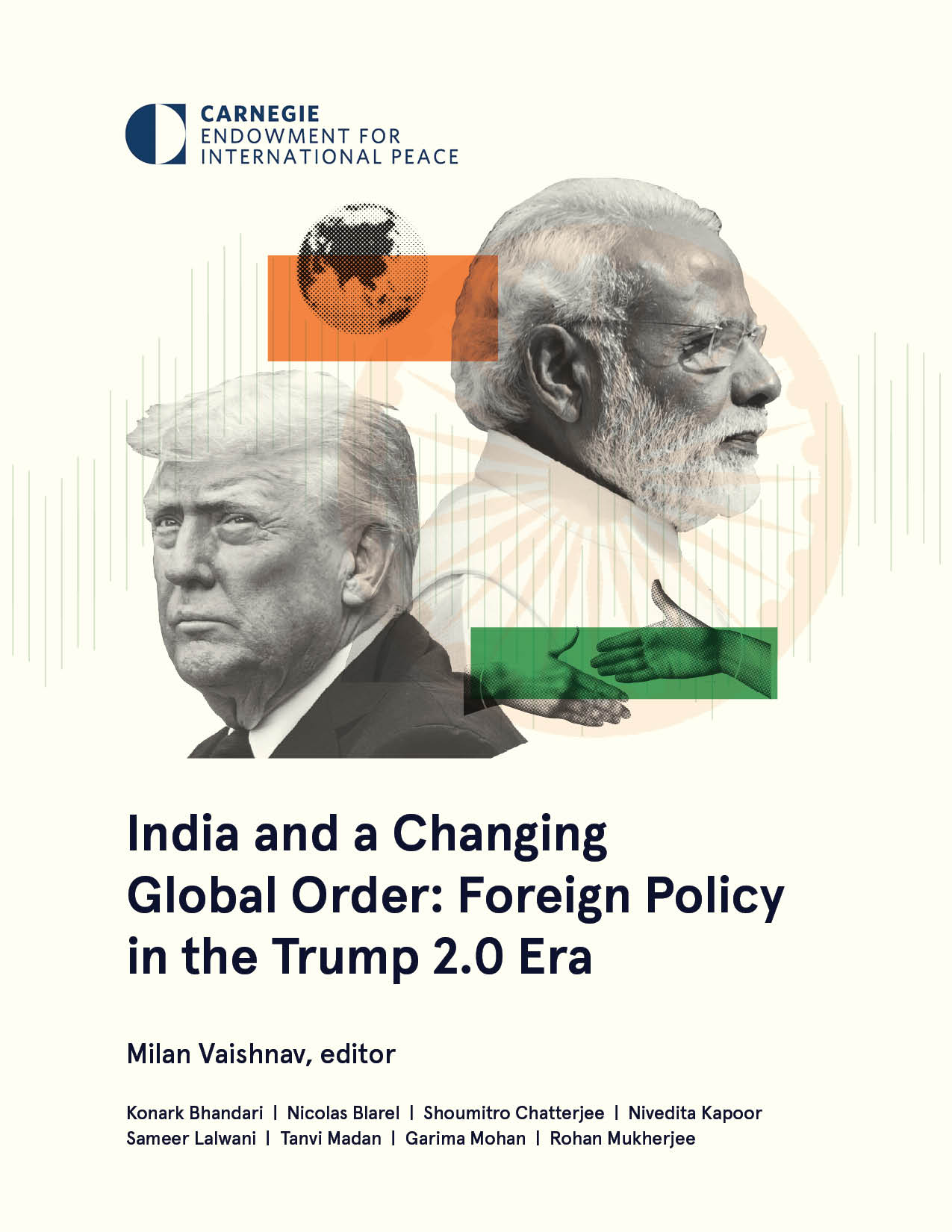
A new compilation published by the Carnegie Endowment, “India and a Changing Global Order: Foreign Policy in the Trump 2.0 Era” examines how the early phase of the second Trump administration has shaped India’s foreign policy across key regions and issue areas.
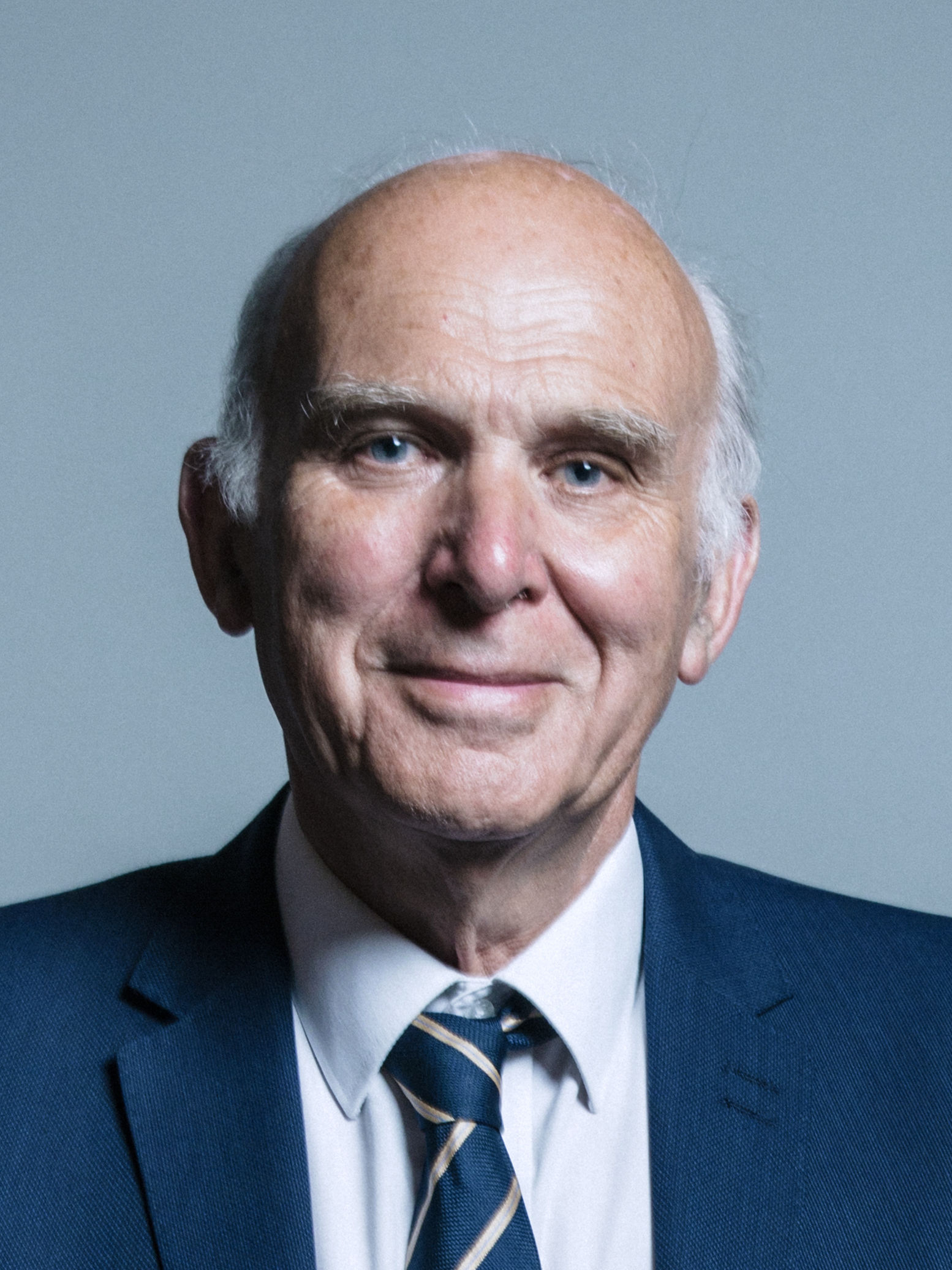
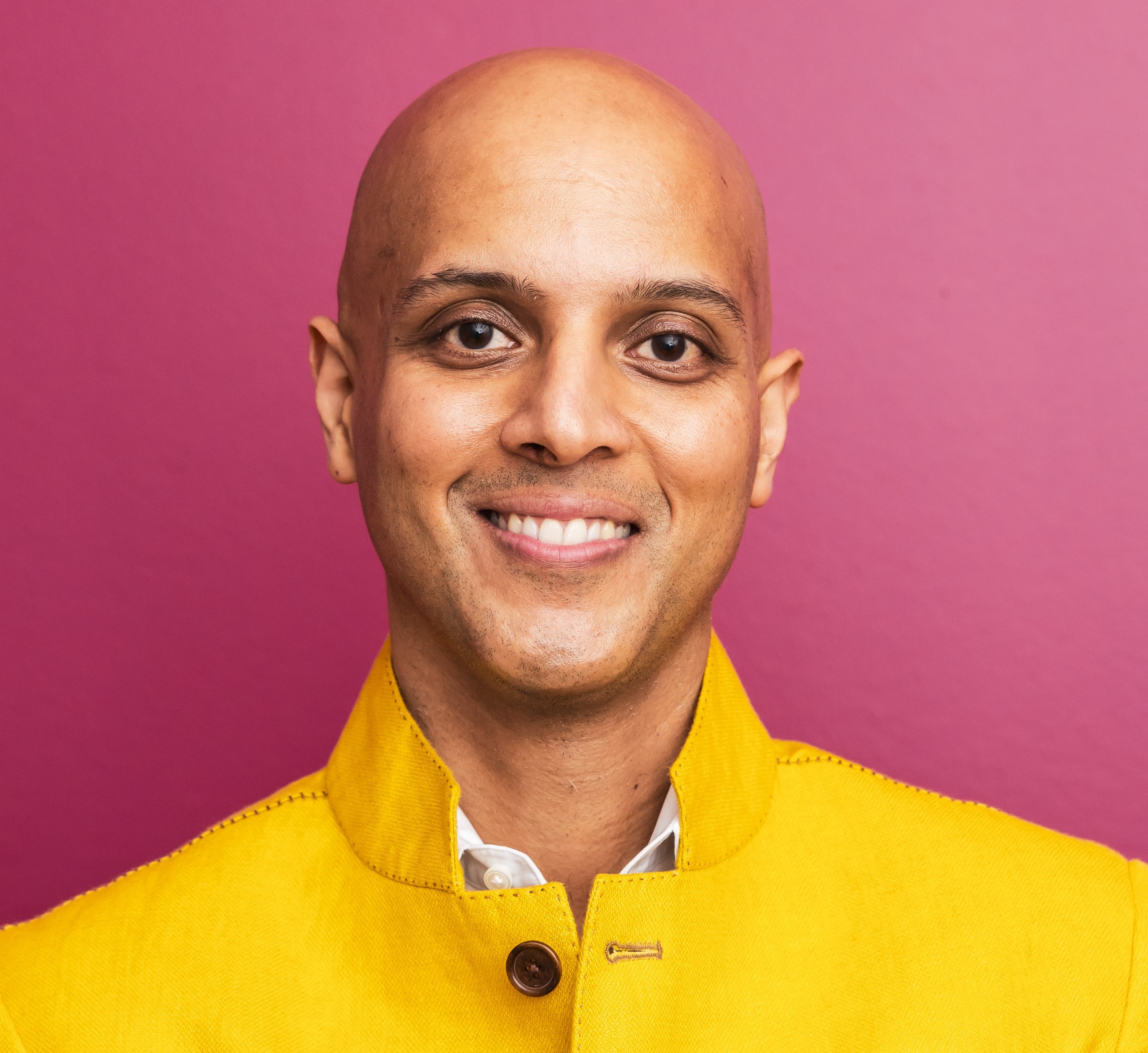
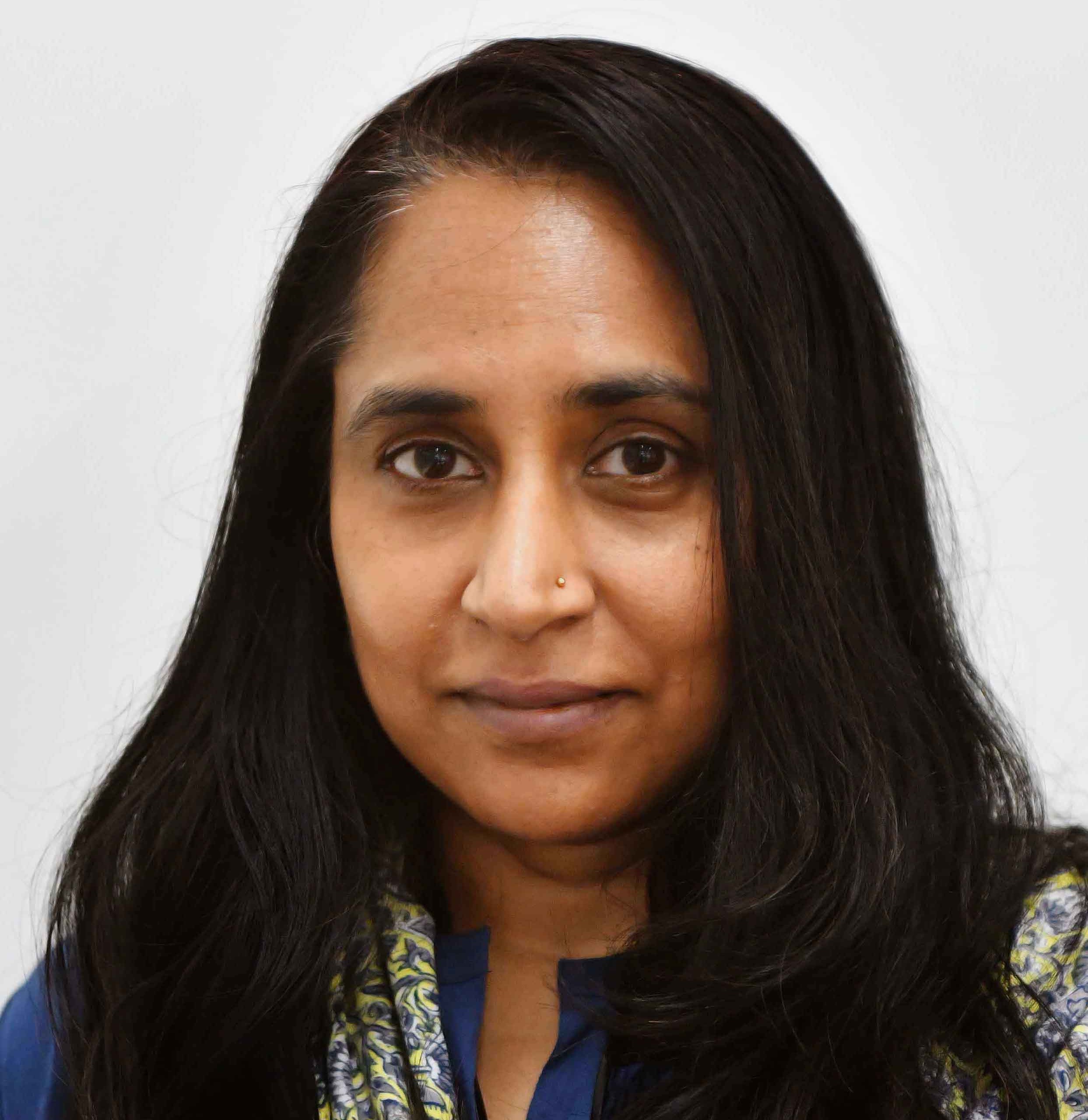
This week on the podcast, Milan sits down with three of the contributors to this compilation—Shoumitro Chatterjee, Sameer Lalwani, and Tanvi Madan—to discuss the uncertain trajectory of Indian foreign policy.
Shoumitro Chatterjee is a nonresident scholar in the Carnegie South Asia Program and an assistant professor of international economics at the School of Advanced International Studies, Johns Hopkins University. Sameer Lalwani is a non-resident senior fellow with the German Marshall Fund Indo-Pacific Program and a research affiliate with the MIT Security Studies Program. And Tanvi Madan is a senior fellow in the Center for Asia Policy Studies in the Foreign Policy program at the Brookings Institution in Washington, D.C.
Milan and his trio of guests discuss Trump’s volatile China policy, India’s recent decisions to partially roll back restrictions on Chinese trade and investment, the country’s sudden openness to new trade deals, and India’s need to invest more in relations with the U.S. Congress.
Episode notes:
- “Inside Washington: Ami Bera on Shifting U.S.–India Ties,” Grand Tamasha, March 25, 2026.
- “Europe’s Discovery of India (with Garima Mohan),” Grand Tamasha, February 25, 2026.
- “India’s Return to the Trade Game (with Mark Linscott),” Grand Tamasha, February 18, 2026.
- Tanvi Madan, “Testimony before the U.S.-China Economic and Security Review Commission,” Hearing on India, China, and the Balance of Power in the Indo-Pacific, February 17, 2026.
- Shoumitro Chatterjee, “Signing of FTAs is a start. Their success will be judged by gains in global market,”Indian Express, January 31, 2026.
- “The Quiet Resilience of U.S.–India Defense Cooperation (with Sameer Lalwani),” Grand Tamasha, December 10, 2025.
- Sameer Lalwani, “U.S.-India Divergence and Convergence on Defense Operationalization Concepts,” Council on Foreign Relations, June 5, 2025.
- Shoumitro Chatterjee and Arvind Subramanian, “India’s inward (re)turn: is it warranted? Will it work?” Indian Economic Review 58 (2023): 35-59.
Transcript
Note: this is an AI-generated transcript and may contain errors
Milan Vaishnav Welcome to Grand Tamasha, a co-production of the Carnegie Endowment for International Peace and the Hindustan Times. I'm your host, Milan Vaishnav. Donald Trump's return to the White House has once again altered the contours of international politics. The second Trump administration has adopted a more assertive and unpredictable approach to U.S. foreign policy, deploying tariffs and other economic tools against both rivals and partners, expressing open hostility towards multilateral institutions, and pursuing a highly transactional, personal style of diplomacy. These developments have unfolded amid intensifying geopolitical competition and the weakening of the post-Cold War international system, contributing to a more fluid and uncertain global order. For India, this evolving context raises several important questions about the viability of its foreign policy approach. To what extent is Trump 2.0 disrupting the foundations of India's approach to the world? And where is it instead reinforcing longer-term trends that were already underway? A new compilation published by the Carnegie Endowment, “India and a Change in Global Order: Foreign Policy in the Trump 2.0 Era,” examines how the early phase of the second Trump administration has shaped Indian foreign policy across key regions and issue areas. Today on the podcast, I am joined by three of our contributors to this special compilation. Shoumitro Chatterjee is a non-resident scholar with the Carnegie South Asia program. He's also an assistant professor of international economics at Johns Hopkins SAIS. Sameer Lalwani is a non-resident senior fellow with the German Marshall Fund Indo-Pacific Program and a research affiliate with the MIT Security Studies Program. Tanvi Madan is a senior fellow in the Center for Asia Policy Studies and the Foreign Policy Program at the Brookings Institution. I'm pleased to welcome all three of them back to Grand Tamasha. So, Sameer, I want to start with you and this piece that you did on US-India relations in the Trump 2.0 era. And one of the things you say as a framing piece is that, you know, Trump 2.0 has unsettled some of the assumptions about how Washington would prioritize the China challenge. And so, I'm wondering, if you take a step back one year in, you know, is there a way to put a description around Trump's China policy?
Sameer Lalwani Yeah, I think there's probably a couple of words I would use. I mean, I think ‘inconsistent’ is perhaps part of it. I do think the Trump administration came in with some fire and brimstone on China, and we're probably stymied and surprised by the leverage that China had with critical minerals. And so, there's I'd say in the last like several months, there's been some backpedaling on the threat assessment of China. You see that in terms of what they say and don't say in things like the National Security Strategy or the National Defense Strategy. China's given a pass on Russian oil, even though India was kind of punished for it. There's been some reversals on export controls that's also been sort of an inconsistency considering the Trump administration in 1.0 was ones that initiated communications technology restrictions with Huawei and ZTE. And then I think the other sort of critique you can make of the administration, which I am sure is sort of weighing on people in Delhi is it's been unfocused, right? So even if we sort of return to the language of the national security strategy or national defense strategy, the actions don't necessarily correspond with it. And we're seeing that with regime change operations that require considerable military assets, both in the Caribbean and Venezuela, and now currently with Iran.
Milan Vaishnav I mean, Tanvi, maybe you want to weigh in on this as well, which is like, I wrote a piece I think last summer talking about the incoherence of China policy and its impacts on India, right? And the way that I described it then, and I want to see if you guys agree, which is there's sort of three camps, okay? There's one camp that essentially are people who believe that what Biden did with respect to putting restrictions on Chinese trade, tech investment, you know, that saying, ‘small yard, high fence’ was pretty good. Maybe the fence should have been smaller, the yard should have smaller and the fence should have higher, but you know these are marginal quibbles. Then there's a second camp, which I would put someone like JD Vance in, which is of the America firsters, who are worried about us like sleepwalking into a kind of Cold War 2.0 with China. And then there's a third camp where I think probably the president is himself, which was like if Xi Jinping comes to Mar-a-Lago for five days, the two of them can negotiate away 80% of our difficulties. Like, is that how you see it? Is there a camp I'm missing? Are those the right camps? I mean, I'd just be curious.
Tanvi Madan I mean, I think the other camp that is there, and I would actually put the president separate from this, that, you know, he is very much kind of the decider and, you know, Sameer has uses of the term, which others have as well, about that this is ‘court politics.’ And so, he is really kind of the main decider. And then you have what some have called tribes or camps. The one other set of people I'd mention is the business community. Because in this administration, they actually do have, especially some of the tech folks who do have a say, and they are divided. So, you have some companies saying, you know, actually we need to compete more. And then others saying, nope, we want to, and you see sometimes commerce will jump in on this as well, that actually we want, for example, to sell advanced chips to China, because if we don't sell them, they won't be using them. So, I think there is that other faction. And maybe it's not like business hasn't shaped the China debate before, but I think in this administration, their influence on the president. And so I think essentially what you have, like you would in any court or other bar, is that the president himself has strong views that come from different aspects, but essentially that, you know, he had this instinct before in the first term too, hence that Mar-a-Lago summit in spring 2017. It just went awry and there's no guarantee it won't go awry again. And then he went back to it in about 2020 before, around the time or before COVID really hit us, where he wanted that trade deal with China. So, his instinct is actually to do this and then things kind of get derailed. But I think you see these different camps trying to shape his views but his instinct seems to be towards this let's make a deal approach.
Milan Vaishnav Sameer, one of the things you say in the piece is that, you know, there is an assumption which has held true, which is that, getting back to the court politics, personal access to the president does matter more than the, quote, unquote, formal process, right? And in a way, I think India felt pretty good about how it was positioned, right, because of this kind of Trump-Modi camaraderie from the first term. Has it been able to leverage the personal politics this time around?
Sameer Lalwani I think it has, maybe circuitously. So, I think their first round was actually leading into that relationship, the Trump-Modi relationship. Mr. Modi shows up within a few weeks of the Trump administration starting out. Not only meets with the president, meets with Elon Musk and his four kids and looking for access points. And at the time, Musk seemed like sort of a critical doorway to the administration. But that doesn't seem to bear fruit. They hire a bunch of lobbyists who are close to the president, but also you know, former Trump officials and that doesn't seem to pan out over the summer and into the fall. And so, they're handed actually this opportunity, this gift, which is that the president nominates Sergio Gor, head of White House personnel to the ambassadorship for India. And I don't think India realized sort of the opportunity that was there initially. I think there was sort of questions being raised about his experience and sort of his of India as if that is sort of the actual, sort of, measure of influence on the White House. But it turned out that the Ambassador Gor had all the right credentials. He had sort of open-door policy into the Oval Office. He's deeply trusted and loyal to the President. And I think he demonstrated his bona fides within like a matter of weeks of getting to Delhi.
Milan Vaishnav Because they were able to kind of get some kind of notional trade deal in place. Is that the kind of major outcome?
Sameer Lalwani I think even before that, I mean, his first speech in Delhi, he announces that India is being invited to join Pax silica, right? And it's unclear to me whether the Indians didn't want to join that initially, or there was sort of, you know, spilled milk about that. But it sounds like that once he announced that was kind of a breakthrough, or at least seen as like, this is what you can deliver. And then the trade deal within a matter of weeks, at least announced, even though the details are still, you know, to be found. And then I think the steady stream of U.S. officials, right? Because at some point, personnel is policy. And so senior U. S. officials coming through to Delhi to engage with their counterparts within the interagency, I think shapes and moves policy a great deal. Certainly, I see it on defense, the Army secretary, two combatant commanders, senior officials from the House Armed Services Committee, and maybe some, you know, a handful of undersecretaries over the last couple of months. So, I think that there's real both policy shift as well as bureaucratic engagement that will move the needle on us.
Shoumitro Chatterjee On this access, having personal access to the president thing, there was a period when the tariffs on India were like 50%. And at that time, everybody who had access, including Mukesh Ambani and so on, tried a lot to make a breakthrough. But just in that time period, it didn't seem as if we could get the doors open, so to say. And so how do you distinguish that piece from Ambassador Gor's personal agenda rather than India having access?
Sameer Lalwani So, a hypothesis, I'm not sort of on the inside on this, but my hypothesis would be that you hear something from an external party who, you know, maybe you do business with, maybe, you know, versus hearing it from a trusted source who's been a confidant and a person who's stood by you in the most difficult of your times of your political career. I think that you trust the source. And so, my guess is that there are 20 other people who could say the same thing. I'm not sure if it was the message. It was the medium that really probably helped to move the president.
Milan Vaishnav I mean, I wouldn't be surprised if some of this was pre-cooked in the sense that like, I'm pretty sure Ambassador Gor would have had a conversation with the president, like, I'm going to go out there, but like, I don't want to go preside over a failing relationship. I need to put some wins on the board, right? Which seems like a reasonable ask of him.
Sameer Lalwani Sure, sure. But even that, not everyone can negotiate with the president that way.
Tanvi Madan I think, you know, I mean, for one, there's a reason India has always preferred or prized, prioritized having an U.S. Ambassador in India who has access to the White House rather than, or at least of senior principals, rather than necessarily having India expertise. So in some ways, Ambassador Gor is consistent with that preference, part of it because you have access. But I think it's kind of a necessary or not sufficient condition. And I think what it was is partly, it's a confluence of conditions that go into place, including something both of you write about in your pieces, which is, you know, how much of a catalyst for eventually getting the President of the U.S. was the fact that the Europeans got a trade deal, right? So there’s that FOMO, that fear of missing out. And you know, them getting, it's not just a trade deal, potentially that European companies start to get. And so, I mean, I don't know this, but are you starting to then get some signals from American companies saying, they're going to eat our lunch, so we need to get this over? I think you also saw some other things perhaps happening that eased the India-Pakistan issue was fading a little way from the president's mind maybe. So, I think part of it is very hard. I think it'll take some distance for us to figure what exactly happened in that moment. But I think is probably a confluence of conditions where enough work had been done. You'd also seen some phone calls between the president and the prime minister. You'd seen India be helpful in some ways, not be confrontational in others. I think you know it all comes together, but then you need that person which is has been true of the US-India relationship right as a whole. Structural factors have been the essential condition, but they've not been a set you know enough in their own right And so you've always needed those champions of the relationship to push these things over. You know, you’ve got to give credit at the end of the day to the negotiators on both sides who probably were at a point that they could both then sell this to each side saying you can both sell it as a win.
Milan Vaishnav Well, so, Shoumitro, maybe I can bring you in here because, you know, it is kind of interesting that if you look out into the world, India is basically one of the most active countries on the trade dealmaking front, right? And that was not the case for much of the Modi administration prior to just a couple of years ago, right? So, before we get into the why and the how, you have written about the inward turn in a paper with Arvind Subramanian, we'll link to that, which you date the inward turns around 2017. So, for people who don't remember that period, like just take us back a little bit. What were the elements of the inward turn and what was the motivating logic?
Shoumitro Chatterjee So, I think circa 2015, 2017, that's, I mean, if you just remember the global context, I think that is when the world is just emerging from realizing how big China shock one was on the West. Even in the academic space, there is debate on whether that shock cost declined in manufacturing, but it is for sure true that it displaced communities, it was kind of spatially concentrated, concentrated on industries, and the proof is kind of in the pudding in lives of people and so on. And so, the world in general was turning more protectionist. The U.S. was turning protectionist, Europe was turning most protectionist and so, I think Indian policymakers read off that as well. That if the whole architects of the liberal order, so to say, are turning protectionist, maybe that is what should happen in India as well. But along with that, I think the policy thinking that gained momentum in India was also the fact that, well, we tried to do industrial policy back in late 1980s, 1991, but at that time, India was a small economy, and so it didn't work. This time is different. India is much bigger.
Milan Vaishnav And we have a much bigger domestic market for consumption.
Speaker 2 The population is very big and so this time if we did do industrial policy, we will. And so this idea of self-reliance or Atmanirbhar started to gain momentum. The first evidence of this you see is in the tariffs. So, just between 2017-2018, Indian average, simple average tariffs went from something like 13% to 18% overnight. And then it started to wane off a little bit and so you thought that maybe no, this was an aberration, they're self-correcting and so on. But very quickly came all these non-tariff barriers, which at that time were not very visible because they were these quality control orders that were passed. Which at that time, even I thought were basically orders to maintain standards. So, you had like cheap imports coming in from China. And so maybe it was a form of sort of…you had these stories about cell phones exploding in people's pockets and so on, right? But no, like between, I mean, now we know between 2018 and 2024, there were something like 800 quality control orders that were passed. Later on, these quality control orders were also used to sabotage other free trade agreements, for example, the ASEAN. And the third piece which also happened concurrently was this idea of PLI schemes, the production linked incentive schemes, which were due. And the jury on that is also, I mean, the only success story is the cell phone story. But it's anybody's guess as to whether diversification out of China would have any ways come to India and how much of that has been helped by the schemes per se. On any other sector, we don't have that muchpositive evidence. In fact, what was paradoxical was India's comparative advantage is low-skill manufacturing, which would absorb a lot of labor. All of the initial thrust in the PLIs were on high-tech, high-skill industries. That's why we dated to 2017 and between 2017 and up until very recently, we were kind of increasing protection using one lever or the other.
Milan Vaishnav So, but then tell us about the recent events, right? Because it's like, it is a bit jarring that all of a sudden you open up a newspaper like The Economist and they're hailing Modi as this reformer, right? And they were saying a very different thing just a few years ago, pointing to a number of changes that the government has undertaken in, I don't know, I'd say the last one year or so. Tell us about what are some of the steps that have been taken to kind of maybe reverse the inward trend?
Shoumitro Chatterjee I think both on kind of the domestic front and the external front. So, I think what happened in the interim is that there has been a realization within the policymakers and the government that not enough formal jobs or well-paying stable jobs had been created by the policy stance that had been taken. The manufacturing share was stable at around 16% and did not budge much. And after that, when the liberation day tariffs happened and subsequently when they were raised to 50%, I think alarm bells went off everywhere in the country. Everybody from shrimp processors to textile manufacturers in Tirupur were kind of raising the alarm that not only will we lose business, but we will have to lay off workers. And so, at that time, it became critical. And so, within a span of I think, two or three months, I have not seen the amount of reforms take place as quickly. Ever since ‘91, I would say. So, you had the GST rates rationalization, you had the privatization sort of commission being set up, a lot of impetus has been put on energy, especially solar power. And so, India is now kind of leading in how many solar panels are being put up and so on. And on external front, I mean the most concrete has been the trade deal with the UK, where we know the details. I mean we are awaiting the details of the deal with European Union. The US one is more of an announcement.
Milan Vaishnav And there's a question mark given the Supreme Court. Right.
Shoumitro Chatterjee What will happen? But what is remarkable, whatever details are out, and the UK one, you can go tariff line by tariff line and see what is happening. What is remarkable in each of them is that in many critical sectors where India had not reduced tariffs ever in its history. So, take automobiles, for example; take many, many machines. They either have been slashed to zero almost immediately or will be slashed to zero in there. So overnight from being one of the largest protectionist economies in the world, trade weighted India, once these trade agreements conclude in the next five to six years, we would turn into being one of the most open economies in world. I think it's realization of two things, that exports are necessary for growth and jobs, and imports are necessary for exports. You cannot get exports without imports. And I think that I feel like that realization has sunk in.
Tanvi Madan I mean, in some ways, this is the, you know, the 1991 shows that a government shouldn't let a good crisis go to waste. But I do think you saw, I think that 2019, 2020 period, you started to see the conversation change. I think this last year has been the crisis, but I think some of the reason the government has been in a place to do these things is it has been thinking about this because I think two things for India. One was COVID that changed not just India's sense of needing to increase domestic manufacturing, but also reduce dependence on China. But also then wanting to take advantage of other countries diversifying. And then eventually a recognition. So initially there was this, okay, people will just come, and then recognizing that if you don't let people import, they're not going to let you export. And if you want to be part of supply chains, nobody's going to move their entire supply chain to India, it has to mean a different look at trade as well. And then I think the other thing in 2020 was, which kind of reinforced these trends, was that border crisis with China. And so then, who your partners were going to be were going to be like-minded in two ways. One, if you look at who India assigned, because there's also—because remember the Australia economic agreement, which was done before, precedes all this. Australia and New Zealand are also on that list, UAE. But the two things that these things have in common is most are kind of like-mined on China. And second, these are places where India has large markets. And so not walking out of RCEP, the Regional Comprehensive Economic Partnership, which in fact, Home Minister Amit Shah had written an op-ed about saying this is essentially a free trade agreement with China. Walking out of that in 2019, not talking about rejoining that. But the nature of the partnerships, I think, also started. So, I think the geopolitics reinforces this. And so, you see the strain. But I have a question for you. How much do you think, especially in terms of the jobs issue, does the 2024 election result then also as a push towards this?
Milan Vaishnav It's a great question. I mean, I think it was a wake-up call, right? I mean I think like, you know, we all know, I mean this was like a party that had defied the laws of political gravity, right? I mean, I remember some of our conversations back in 2013 like, you know many of them, we sort of concluded that we were just like in this permanent era of coalition politics, right? I mean, it was hard to imagine a single party majority in 2014. And then five years later, given everything that we talk about anti-incumbency, to have a party come back and increase its tally is kind of remarkable, right? So, I definitely think that was a huge sort of pain point for them to say, like, okay, we have to kind of take stock of where we are. There's another…I wanted to maybe ask about the China bit, because we've also seems to be very interesting developments, rolling back restrictions on China. But maybe before we get there, if you could just say, kind of set the stage. Because I thought, I mean, one of the takeaways for me of your piece, Tanvi, was Delhi's efforts to stabilize relations with Beijing really predate Trump coming back to power. And there were many steps that were taken in that interim period. Trump has been an accelerator, but he wasn't like the originator of some of these things. So, could you just remind us, because it now seems like ancient history. What were the things that India did to kind of recalibrate before Trump shows up?
Tanvi Madan I mean, it does seem like ancient history because every day seems like a year now, but I think so, you know, you had, it was actually evident in about summer 2024 that India and China were both working towards some sort of stabilization or as the term was being used by in the US those days, setting the floor to their relationship. And some of the signs had been, you know, on the Indian side, some of the signs have been as Prime Minister Modi that spring had said China is an important country for India to engage with. Defense Minister Rajnath Singh had said India wants good ties with or stable ties with all of its neighbors. And then you'd seen, you know, picking up of some civil society exchanges, which had stopped, you know, think tank exchanges. The Chinese after 18 months finally sent an ambassador who's been, at least in terms of public diplomacy, very forward leaning in terms of trying to kind of shape the public debate in India about the relationship and much more measured as well. And not in the Wolf Warrior School, but then, you know, Beijing has maybe moved past that at least in India or in South Asia for now. And so you've seen, and I think the reason you started to see that, and that eventually culminates in October 2024 when Xi Jinping and Narendra Modi meet and agreed to what had been discussed for like years, which was the final set of disengagement from the friction points that had been involved in the 2020 crisis. And I think what you saw is it's not that the US election didn't play any role, but it wasn't the primary driver. I think both for India and China at that time in 2024, neither side wanted to see an escalation at the border. For India you want to focus on job creating growth. You want to actually have a peaceful periphery. For China, it had been both on the economic side and on the strategic side, they were facing pressure, including from not just the US, but European partners who were upset with China for the partnership with Russia. And I think you did see…now the way I think the US election did played a role is both sides are uncertain at that point on who's going to win? And whoever won, what their China approach is going to be. So, if you're India, you're saying, you know, right now, we've got it good, we got a competitive administration so from a negotiating perspective, it strengthens our hand. And China is going want to right now do a deal with us. China thinks we better get a deal done, because who knows what the next administration is going to do. But broadly, I would say part of the reason I think this is a, the India-China process is something that's affected by the U.S. But at least from an Indian perspective, that China relationship follows a logic of its own. I do think China often sees India from a U.S. prism, but India tends to see this in bilateral with kind of a U.S. overhang. So, it's not totally independent, but it's not the main driver. And I think what you've seen is a very step-by-step approach. So another reason you've see this continue is that it works, that you haven't seen, you know, at least an India-China crisis. I think where Trump has made a difference is, had you seen in another time the kind of assistance China gave to Pakistan in the India-Pakistan crisis, they have imposed additional restrictions on certain exports of technical expertise and industrial inputs to India. You might have not seen India stick to the stabilization effort. So, I think it kind of adds impetus, but it's not the originator. I mean, for a change, everything is not about Trump.
[…]
Milan Vaishnav It does seem that there have been some notable developments in recent weeks with India pulling back somewhat on the previous restrictions placed on Chinese trade tech investment. There are very polarized views on this. Some people, including the press, have made this out to be like a really huge deal. Other people who have read this press note three, I guess, have said, this is really, there's not much there, there. There's still quite a lot of government discretion to determine, you know, what comes in. How, where are you on the spectrum of like, this was really big to actually, there is not a ton to see?
Tanvi Madan We'll have to wait and see how this actually plays out in practice, but I do think it indicates a certain selective re-engagement effort. So, I do not like the term reset because it's overused and it doesn't quite reflect. But you are seeing, I think, and I'd love to hear Shoumitro’s view on this in terms of especially the kind of trade side and fits in, but one way you've seen this is as the, you know, as the U.S. market. Which I think, Shoumitro, you point out the largest market for Indian merchandise exports, and the Europeans is the second collectively. But as that becomes, you've heard External Affairs Minister Jaishankar saying, well, we don't now just have to be concerned about becoming over-dependent on one source of supply, indicating China, but also one source for demand, meaning the US. So, you've seen on the China front an effort to it gets some market access. Now, that's always been tough for India, for India to get market access in China. Having said that, you have seen, I think I've seen figures anywhere from 30 to 35% increase in Indian exports to China since April. And so that's one thing, that you actually are looking at China as one of those additional alternate markets. I think the second area, there's been a recognition that if India wants to build its manufacturing capability at home, and if it wants to actually attract even multinational companies, Western companies, that some of those industrial inputs, not to mention technical expertise, needs to come from China. So, for example, some of this easing didn't come with this revision of press note 3. You started to see India saying, okay, we're going to ease up on business visas.
Speaker 3 Visa, yeah.
Speaker 5 Right? For technical experts. Now again like this the amendment to press note three this is not a blanket “we're setting it aside.” It's an easing. So, it means there's that even with the business visas from the last thing I saw, it said okay we are going to allow a person to stay for six months but it's still it's not a process that's going to take a week to process. It's going take about you know…
Speaker 3 I mean, to be fair, nothing in India only takes a week to process.
Speaker 5 Visas are actually pretty quick. And so, I think, you know, to actually ease versus drop as a whole. And I think the third area is the sense of, which is where I think press note three amendment does play a role, as there seem to be two aspects of it. One, as India, just even on a secular sense, wants more investment in capital from abroad. Just on a broad basis. But I think the other aspect was, when you are having trouble with the US, maybe companies, investors are waiting to see, we need more certainty before we decide where money is going or investors saying we're going to invest in the US. But you also then see this pressure from the Gulf crisis because the Gulfies were some of the sources of capital that India was replacing that. So, you start to see okay, you need more investment. And part of what press note three restrictions have done is there are some global funds that happen to have a Chinese investor and that had become constrained. So, what this press note 3 does is, again, not removing, it's saying it's up to 10%. Then you don't have to, it through the order. And then the second set of amendments is that seems to be easing where there are opportunities for joint ventures with Indian companies, certain areas where the Chinese have a lead and that are not kind of going to be what would be considered strategic and sensitive, there you would actually see some joint venture. Now, for me, there are two questions about that, which is why I said wait and see. One, do the Chinese actually have an interest in tech transfer and helping build an Indian competitor, right? We don't know the answer to that. And then the second question is, what is strategic? Some would argue, as people have heard the debate here, that electric vehicles--it's not an economic decision, it's national security. They would say that's strategic. That solar panels at the end of the day are strategic. So, to me, that's the other question is, how will that be defined?
Shoumitro Chatterjee So just to kind of add to that on the trade side. So, first, in terms of, so I don't really see this as a reset, like with the trade policy, to me it's always said within government of India, there are different voices that always exist. And on this, if you remember the current chief economic advisor had kind of made a speech or written somewhere that we do need both Chinese investment and inputs if we are to build. So that kind of always existed.
Milan Vaishnav I mean, it wasn't well received when he first said it. I think it was in one of the earlier surveys.
Shoumitro Chatterjee But, and the most recent survey, I think the last chapter is a much fuller articulation of how they see India position in global supply chain and kind of engagement with China and so on. So that's I think point number one. The second like fully agree with sort of Tanvi on getting inputs. I mean, imagine like the prime minister's kind of flagship, this household solar scheme. All the panels are coming from China and so you need some Chinese engagement on that. I think the bigger issue is where does the question that you raised that does China even want tech transfer? I think we know the answer to that question and the answer is no. They are mercantilist. So, I have sort of recent work with Arvind. The paper will come out like in a month or so. The work that we are doing is about China's impact on developing countries, and the world has kind of focused on China's impacts on rich countries.
Milan Vaishnav I mean, the original China shock paper everyone cites was...
Shoumitro Chatterjee On rich countries. And what we are arguing is that if you look at—so Chinese manufacturing surplus, not overall surplus, just manufacturing surplus is about $2 trillion dollars. $1.4 trillion of those $2 trillions is in low-skilled goods. And those low- skilled goods are essentially those sectors that create jobs in other developing countries. And why is this happening? So, one stance one could take is that China is very productive, right? So, they're using robots and all these things. And so, this is all fair game. Now we have a lot of evidence to show that it's not Chinese map. The key difference between China Shock 1 and now is that during China Shock 1, Chinese productivity was actually rising. In most recent times, Chinese manufacturing productivity is actually falling. So, you are getting a larger surplus at times with and global market share at the times with falling productivity and you know, and then Brad Setzer I think has like the most... this thing on how undervalued the exchange rate is, and they are kind of using it as a tool. So that part is clear, and that is going to be a bigger challenge for India.
Milan Vaishnav So saying on the theme of tech transfer, it wasn't a specific emphasis of your piece, Sameer, but you have done a lot of thinking about the U.S.-India tech relationship. I think if you were to consider the first couple of months of Trump 2.0 and that White House visit, I think in February, and you read that long-joined statement, I mean, one of the takeaways that everyone highlighted was this iCET framework that the Biden administration had developed with India, the Initiative for Critical and Emerging Technology, basically stayed intact. It now has a different acronym called TRUST, but despite whatever might fall by the wayside, that is going to continue to provide the ballast in this relationship, right? My perception, it's only my perception, but this is what I wanted to ask you, and Tanvi, you might also have something to say about this, is that... It seems like things have been very quiet on that front. And that maybe one of the downsides of the kind of personalist politics we're seeing and having a personalist kind of ambassador is that this doesn't seem like such a big priority. Is that a hyperbole or do you think there's something true to that sentiment?
Sameer Lalwani It's a really good question. I think there are parts of the US government, including with political leadership and, you know, cabinet secretaries that sort of still believe in that agenda and that mission. But you're right that there's a narrow funnel for announcements and deliverables that has to go through the White House and particularly the Oval Office. And so, it just might limit the scope of what you can put out there. I mean, if I was to look at the actual events of things that have happened over the last 16 months, I mean, you know, Ambassador Gor announced the opening of Micron's semiconductor packaging plant the same week as the Iran outbreak of the war. And so, it got drowned out, but that was a pretty big thing. Obviously, it started in the previous administration, but the rollout of it was a significant milestone in terms of concrete deliverables on semiconductor cooperation. There was a string of hyperscaler investments in data centers in India last fall. The total figure was something like 67 billion worth of investment, Amazon, Google, Microsoft, and it never got packaged into a story that the administration could grab a hold of and maybe claim credit for it in the way that you saw in the previous administration. This is independent private sector actors doing it, but I think because of the downturn in the relationship, there was a missed opportunity to capitalize on what was essentially major US partnership investment. But I think it's starting to pick up now again with the help of an ambassador and a voice that sort of is connected to the Oval Office, being able to like tout these achievements. There was a recent US commercial space delegation that went out to India in February organized by Commerce Department. I got to sort of sit in the sidelines of one of their conferences and you saw a lot of business development happening on that sort the conference floor between US and Indian companies. In an area that's really consequential for this technology partnership and we have the government-to-government process with the ISRO, NASA, the NISAR synthetic aperture radar that was launched last July, but the private sector is really where the game is at both for the U.S. and India. That's starting to happen and hopefully that will start to sort of make it through that funnel that really trumpets the achievements of the technology partnership.
Milan Vaishnav When I was reading your piece, one of the big kind of conclusions, in terms of if you want to look ahead instead of look back, has to do with outreach from the Indian government, excuse me, to Capitol Hill. I think one of things you pointed out is that India really should invest more in Congress to sustain long-term cooperation. And I guess my question to you is... For people who are out there listening or watching, why does Capitol Hill matter if we're in such an era of executive dominance, right? I mean, like, how would you make that pitch if you were here with the MEA that this is really something they should prioritize more?
Sameer Lalwani So first, I would say, I think Congress has managed to claw back influence in ways that we wouldn't have expected even last year, right? In the first Trump administration, it was cat's a legislation that really threw the Indian government for a loop.
Milan Vaishnav And these are the secondary sanctions.
Sameer Lalwani Secondary sanctions that made a reprise in this last year when there was a bill to impose 500% tariffs on countries that were still importing Russian oil. And it happened to only get directed at the Indians in terms of like the executive applying it to India rather than China, but the origin story was still in Capitol Hill. And so, whether better engagement could have postponed that or diverted it, it's an open question. But it's not clear to me that there was a lot of effort to do that. I think on the positive side of things, I mean, India... The refrains I hear, and again, in the technology and defense cooperation space, are we want to see more effort and resources put into these collaborations, and we want to see greater reductions of export controls. Really what we mean by that is approvals of licenses faster in a larger number with a lower sill to entry. And those are things that Congress controls. The Export Control Act is controlled by Congress; amendments to that will have to go through Congress. The Australians, and not just Australia, but US legislators, put through AUKUS legislation to not just enable the nuclear part, the nuclear submarine part of AUKUS, but...
Milan Vaishnav And this is this triangular cooperation between Australia, UK, US.
Sameer Lalwani Yeah, exactly. So, there was a nuclear submarine component to it, but Pillar 2 was about emerging technology cooperation. But to do that requires, again, reducing the barriers that are inherent in the US system when it comes to technology—not even sharing—but like discussions, right? Like data conversations. And so, you really need to clear a path for that, which required congressional legislation. I have not seen any effort by Indians or advocates of this to push legislation to Congress. I get questions from congressional staff about this all the time, like what can we do to ease this process forward, but requires, you know, some concerted planning. You have to pick certain areas. You want to identify critical domains. Where you want to maybe sort of have sort of pre-authorization or sort of like just again, a lower barrier or presumption of licensing, you want dissemination of that to industry. So, industry knows to move in these sectors and to coordinate. And so, I just think there's a lot of room for India to be working with Capitol Hill on this in congruence with their efforts with the executive branch, but those are that sort of money left on the table.
Tanvi Madan I think more broadly though, I think it's not just kind of the issue specific, which I agree with, but also we need to get back to a time, and perhaps more so, more comprehensively, where you have a regular set of consultations and engagements and interactions between members of Congress and Indian parliamentarians. It's kind of fallen off. It suddenly happened again. It cannot just be, we're sending a delegation as they did after Operation Sindhoor to explain India's point of view. This should be something—and I know they've set up these kind of committees within or kind of friends of or caucuses now for different regions. But I think whether it's that or just have kind of revived some of those consultations, maybe even have some interactions between the Parliamentary Committee for External Affairs and the House and Senate Foreign Relations Committees, something that's more consistent. And I hope this is a moment of consideration at a time when the executive is so strong and particularly the president is so strong, it is also a time of a reminder that there are other constituencies that are worth nurturing and thinking about, both ways. And you know, I genuinely believe, and I think this has fallen off track, but if you have a situation where the CCP's international department is doing a trip to India and is meeting every party, but Western countries, especially the US, you know, when people go, they don't tend to meet people from other parties anymore. I do think just this, there was a reason there was some sustainability to this relationship. And frankly, it is still what makes it resilient here. More resilient than people might have expected or it might have been 15 years ago, that bipartisan or non-partisan nature, I think that needs to be nurtured even though both societies have become more polarized.
Milan Vaishnav So I want to maybe bring this conversation to a close by asking each of you about the Iran situation. This was not something that was explored in depth in this compilation, although our friend Nicolas Blarel has a piece on the Middle East in which he engages with Iran. But I think events are too fast moving to adequately incorporate what's happening in real time into something of this nature. But I just wonder if you have any concluding reflections in terms of even just questions, like what are the things that you're thinking about, watching, concerned about with respect to how this war, which seems to have no clear end in sight, could affect India's equities, Indian foreign policy, create new allies or, you know, new differences vis-a-vis the United States or anyone else, and I don't know if anyone has anything they'd like to say.
Shoumitro Chatterjee I don't know. It's a tough one. I mean, from the economic standpoint, it's unprecedented because if you think of it, it is a supply shock and a demand shock at the same time.
Milan Vaishnav Could you just sort of, what do you mean?
Shoumitro Chatterjee So it's a demand shock because if the crisis continues and price of fuel goes up, then that creates inflation, erodes purchasing power, reduces demand, and that's going to hurt exports. It's a supply shock because it is one of the key transportation channels in the world. And so that's going to… and because fuel is an input to every production and transportation process, it's also going to hurt supply. So, if this sort of, if it does not stop, we are looking at an unprecedented crisis. What is even more damaging is that it's uncertain. We cannot predict with any certainty how long this will last.
Milan Vaishnav I mean, really from one hour to the next, right? I mean it's, yeah.
Shoumitro Chatterjee And sort of going back to the 50% tariffs on India, it was because of Russian oil and now we are back to buying Russian oil. And if you think who is emerging kind of quote-unquote victorious from all the crisis, it's basically Russia because their oil supplies will be... So, it's very confusing to me. I don't know what to make of it.
Milan Vaishnav And we're also, the United States is also unsanctioning Iranian oil, right? I mean, so there's that wrinkle. Sameer, any thoughts?
Sameer Lalwani Yeah, so a couple of dimensions I think are relevant to the India story. So, one is there's an opportunity cloaked within a mess of a war, which is that I think it has certainly raised the salience of maritime security in India's maritime approaches, right? And it is something that India quietly has leaned into in the last year. There are a lot of initiatives with the United States that India was working with the US on. And so, the combined maritime force in India became a full partner to, and actually just in February this year took on a leadership role of the head of Combined Task Force 154, which is on maritime security training. So, I think the demand for India to play a larger role in this space is going to grow and it's participating in these international organizations, these international sort of entities, I should say multilateral entities, but it's also just like hard capabilities, naval assets and counter-naval assets That India is going to have to invest in. But the flip side here is that the challenge, I think, which is that I think the United States has spent a lot of time trying to get India to think past the Western Indian Ocean and to maybe the Eastern Indian Ocean, South China Sea and beyond to sort of widen the scope of its maritime and naval attention. But it's going to be really hard to do that when the U.S. Itself is sort of sucked into this part of the world.
Milan Vaishnav Yeah. Tanvi?
Tanvi Madan I mean, I wrote something which was titled, this is going to be a consequential crisis for India. And I think we don't even know the second and third order effects for now. And I mean, I think this is kind of a crisis that makes governments fall in South Asia down the line. And I actually think, you know, India probably has more fiscal space, but the other South Asian countries, so all of India's neighbors, many of whom also dependent, not just kind on the energy side, but on remittances from there. So, I think you do have just in the neighborhood itself which at the end of the day is always kind of the primary and first concentric circle that India has to think about when it's thinking about the world.
Milan Vaishnav Just on that, there's a terrific chart which someone shared on Twitter from, I guess, the latest issue of The Economist, which looks at vulnerability to this war. And many South Asian countries are in that quadrant of high exposure and very few buffers.
Tanvi Madan And I think for India, there are other more strategic potentially consequences. One, it's going to reinforce what we've been talking about in terms of its desire to keep the China relationship stable. For one strategic reason, which is there's this question about whether the pivot to Asia between, you know, the Trump administration's focus on the Western hemisphere, now the Middle East, maybe again the Western Hemisphere after. This is having not just the mind space, but Sameer could talk about this more in a whole different podcast, which is what is it going to do to just capabilities? And so, this question about both the Trump administration's willingness and ability to play that balancing role that India has sought for it to play in Asia. But I think there's another aspect. And the other thing for India, munitions, et cetera, again, this is one of their suppliers. Israel and the U.S. involved in another crisis. But I think there's another aspect, right? You have had an India that has seen partnerships, particularly the U.S. as a source of stability. But you have now had since 2022, three of India's partners. I mean, there are adversaries, the China and Pakistan, that have complicated. That's India's, you know, it's a given. And those have intensified both those rivalries. But in parallel, you had three of India's partners, Russia, Israel, and the US, take military actions that have complicated India's hand in significant ways. So, I think some of what this is going to mean for India is just at this point kind of stemming the bleeding. And that will take its own resources and attention, et cetera. And then we will be spending the next year or so thinking about how this is going to affect these borders. There are two things, I think, in the future, though. I think one is in terms of capacities within India, which is I think there needs to be a real investment, whether it is in the policy planning and research department within the government or at think tanks in scenario planning and thinking about contingencies, what do they mean for India? Because this idea that, and we heard people say this, when Russia invaded Ukraine, this is not our problem, this is elsewhere. It was very obvious there's going to have second and third order effects. Is thinking through these, whether it's contingencies, whether including, one of the ones that's going to make a second point, and thinking through, how will this affect India? What are the potential ways that India might need to deal with it? Because almost every crisis in the world now is going to affect India. And then second, I do hope there's some thinking—this war has already spilled over from the Arabian Gulf to the Indian Ocean, south of Sri Lanka. There needs to be a recognition—and people were up in arms about it. How is this war coming here? No war, whether it's going to be over the Taiwan Strait, the East China Sea or South China Sea, is going to stay there. And so real thinking about, there are no out of area contingencies when it comes to the Indo-Pacific or even Eurasia. These are going to be contingencies India has to be thinking about now.
Milan Vaishnav Shoumitro, Tanvi, Sameer, thank you so much. The compilation is called “India and a Changing Global Order, Foreign Policy in the Trump 2.0 Era.” It has pieces on the US, on China, Russia, the EU, the Middle East, trade, tech, global governance. We hope you check it out. Thank you so for coming.\
Tanvi Madan Thank you, Milan.
Sameer Lalwani Thanks.
Shoumitro Chatterjee Thanks a lot.