** NOTE TO LISTENERS: This week, we are releasing a special “flash episode” of Grand Tamasha to recap India’s recently concluded 2026 state assembly elections. As usual, we will still be publishing a new Grand Tamasha episode next Tuesday, May 12 at 9 pm ET, Wednesday 6:30 am IST.
It’s safe to say that India’s 2026 state assembly elections have scrambled many of the assumptions that have long shaped our understanding of Indian politics.
The BJP has finally captured West Bengal after decades of trying, secured a third consecutive victory in Assam, and made modest, but important gains in Kerala. With its allies, it also retained the union territory of Puducherry. In Tamil Nadu, meanwhile, the upstart TVK—led by the enigmatic actor Vijay—has disrupted a political duopoly that has defined the state for decades.
At a deeper level, across these elections, familiar assumptions about welfare, identity, institutions, and opposition politics have suddenly been called into question.
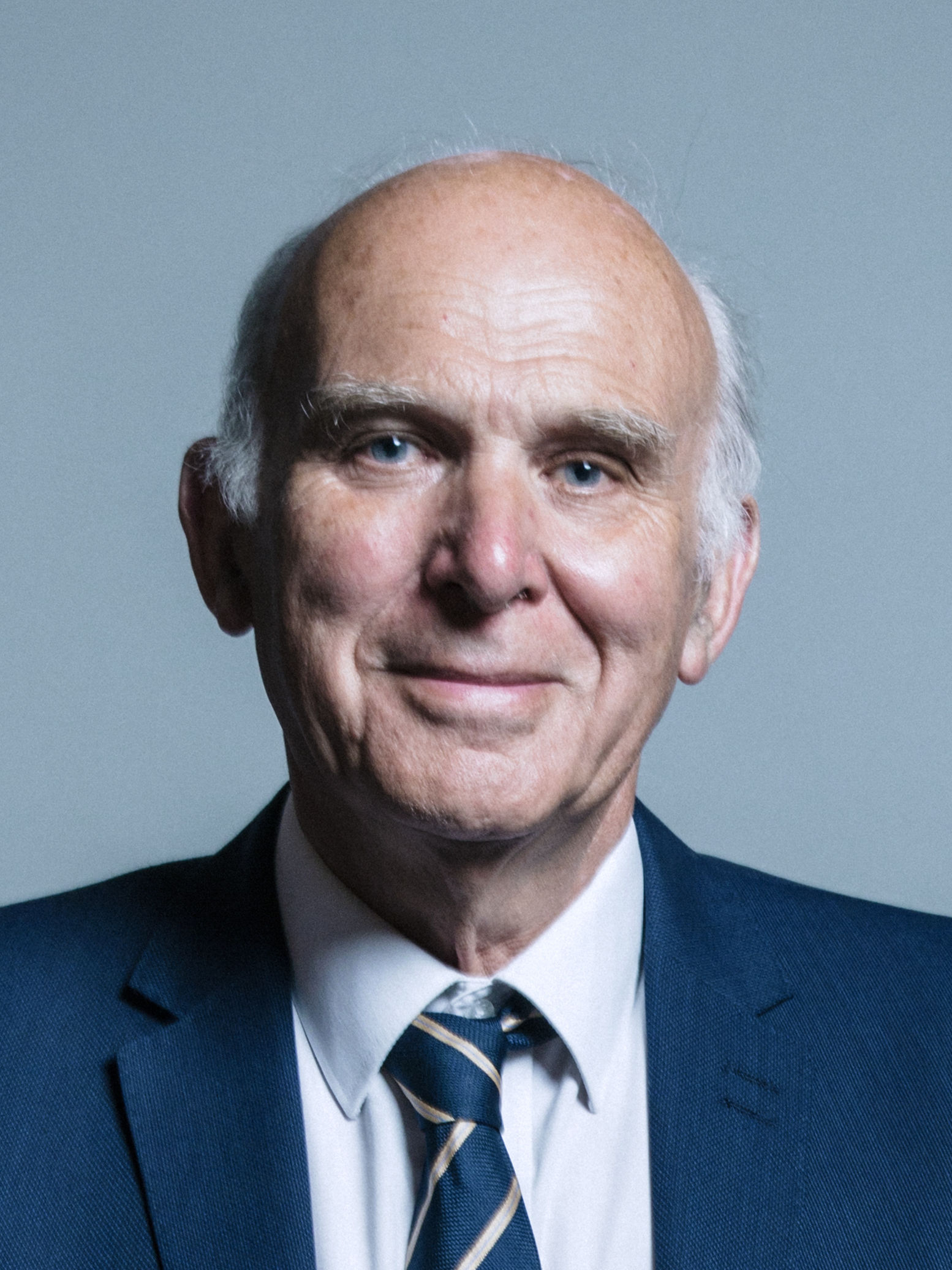
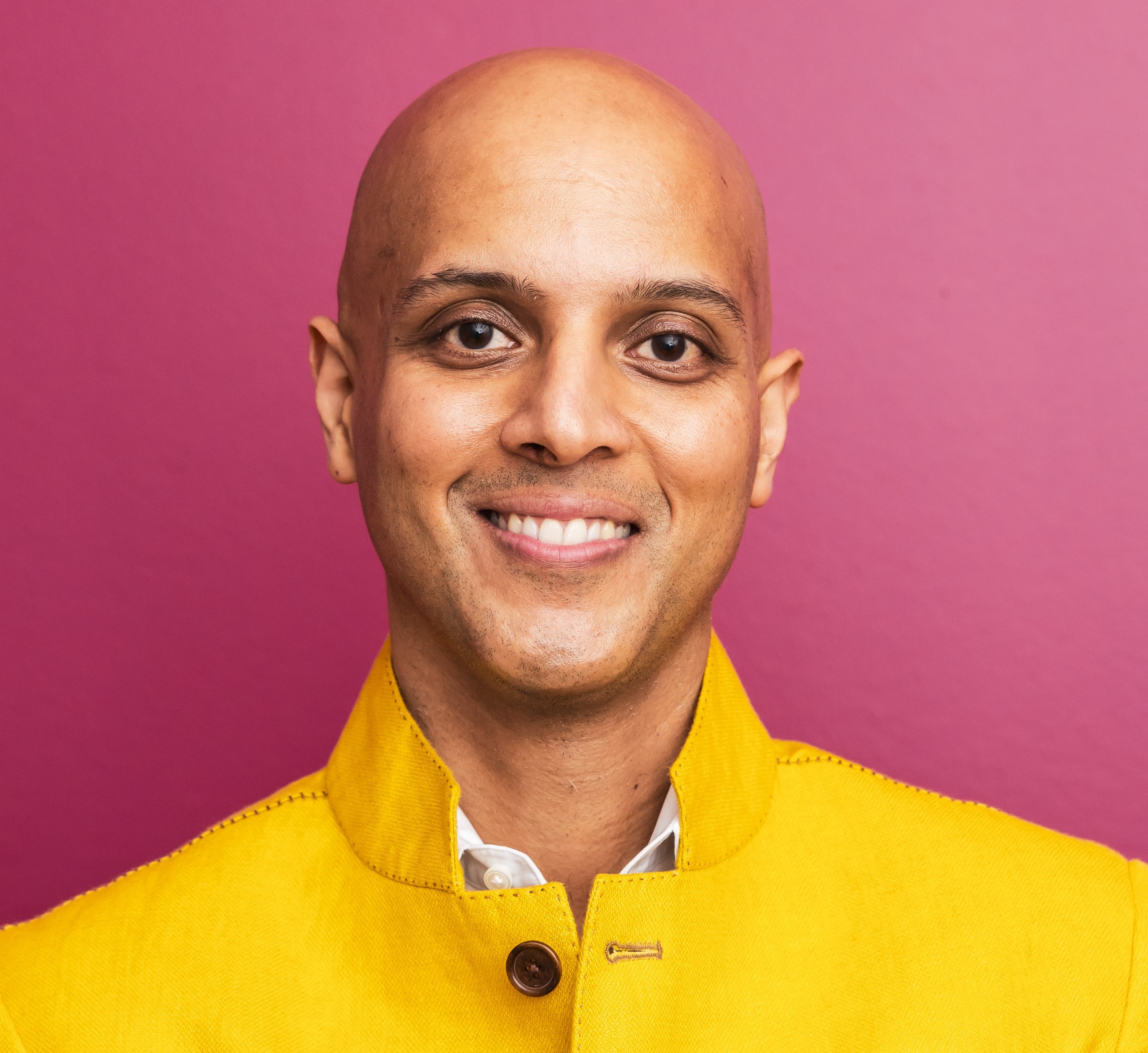
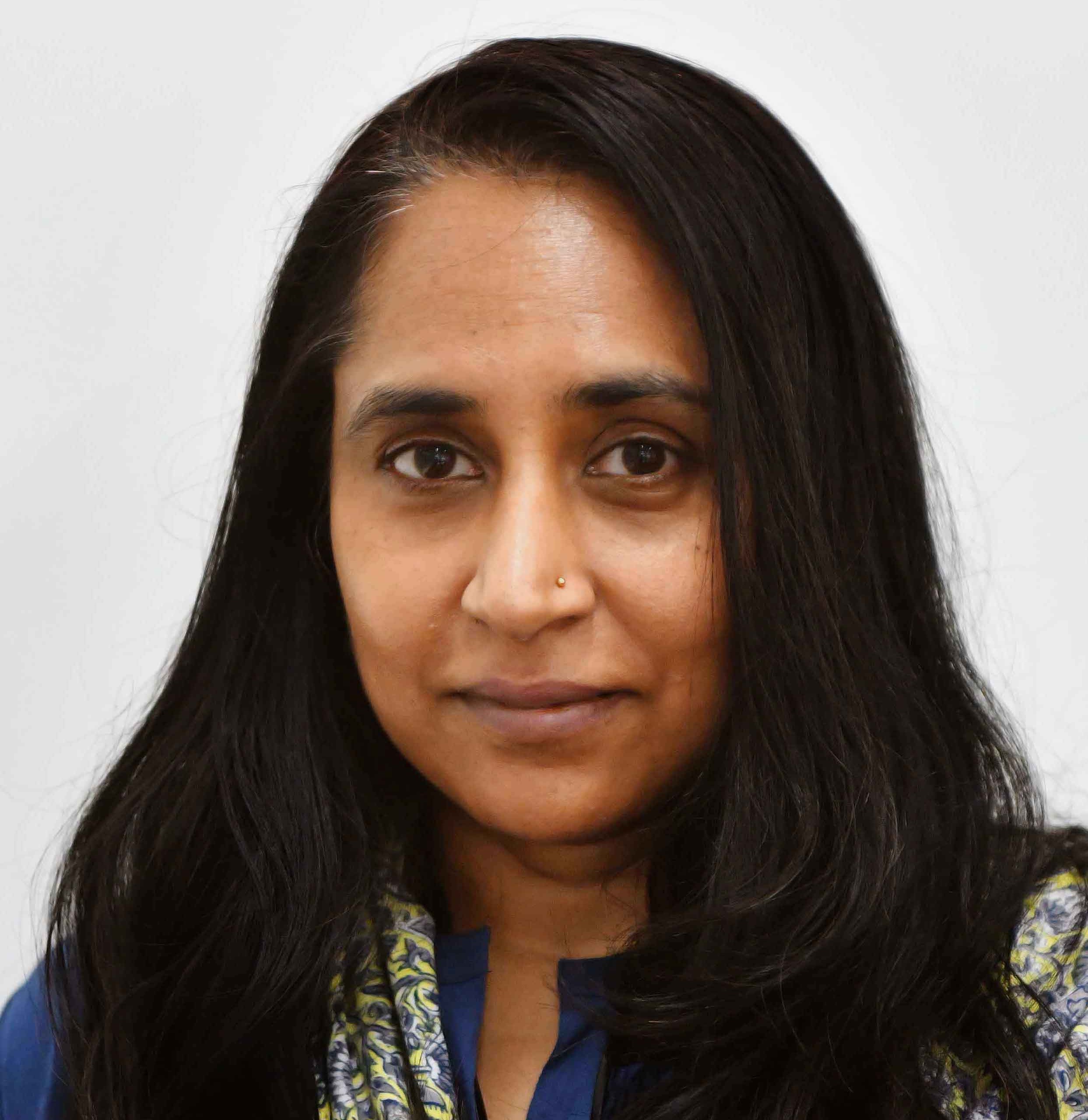
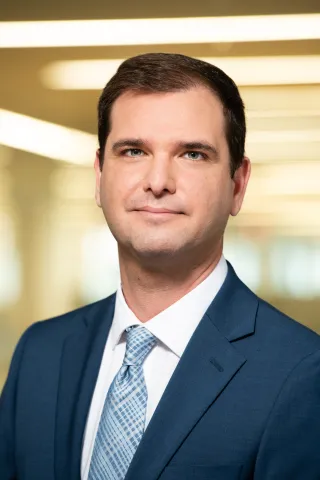
To make sense of these results—and what they might tell us about the road to 2029—Milan is joined today by two of the sharpest observers of Indian politics and political economy.
Neelanjan Sircar is an associate professor at Ahmedabad University and one of the country’s leading scholars of Indian politics. He has spent years studying party organizations, welfare politics, and electoral change across states—including West Bengal and Assam.
Yamini Aiyar is a Senior Visiting Fellow at the Saxena Center for Contemporary South Asia and the Watson Institute at Brown University. She was previously president and CEO of the Centre for Policy Research, and is a leading expert on the Indian state, welfare delivery, and democratic accountability.
Milan, Yamini, and Neelanjan discuss the BJP’s historic win in West Bengal, the demise of the Trinamool Congress of Mamata Banerjee, and the Election Commission of India’s controversial revision of the electoral rolls. Plus, the trio discuss the rupture in Tamil politics, the Congress’ lone victory in Kerala, and the BJP’s strategy for 2029.
Episode notes:
- Yamini Aiyar, “Ways of Seeing,” The Telegraph (Kolkata), May 8, 2026.
- Samanth Subramanian, “From Sea to Saffron Sea: Neelanjan Sircar,” Equator, May 6, 2026.
- Roshan Kishore, “Terms of Trade: And then there were none,” Hindustan Times, May 4, 2026.
- Neelanjan Sircar and Bhanu Joshi, “Party has left the building: The rise of parallel politics in Bengal,” Hindustan Times, May 4, 2026.
- Neelanjan Sircar, “Verdict Bengal: Decisive win in a divided state,” Hindustan Times, May 4, 2026.
- Bhanu Joshi, “DMK’s defeat proves it: Welfare is the floor, elections have moved to the ceiling,” Indian Express, May 4, 2026.
- Neelanjan Sircar and Bhanu Joshi, “Beyond numbers, how West Bengal's voter roll revision is redrawing citizenship lines,” Hindustan Times, April 29, 2026.
- Bhanu Joshi and Neelanjan Sircar, “In Bengal hinterland, poll victory might hinge on ground visibility,” Hindustan Times, April 23, 2026.
Transcript
Note: this is an AI-generated transcript and may contain errors
Milan Vaishnav Welcome to a special elections episode of Grand Tamasha, a co-production of the Carnegie Endowment for International Peace and the Hindustan Times. I'm your host, Milan Vaishnav. It's safe to say that India's 2026 State Assembly elections have scrambled many of the assumptions that have long shaped our understanding of Indian politics. The BJP has finally captured West Bengal after decades of trying, secured a third consecutive victory in Assam, and made modest but important gains in Kerala. With its allies, it also retained the Union territory of Puducherry. In Tamil Nadu, meanwhile, the upstart TVK, led by the enigmatic actor Vijay, has disrupted a political duopoly that has defined the state for decades. At a deeper level, across these elections, familiar assumptions about welfare, identity, institutions, and opposition politics have suddenly been called into question. To make sense of these results and what they might tell us about the road to 2029, I'm joined today by two good friends who just so happen to be two of the sharpest observers of Indian politics and Indian political economy. Neelan Sircar is an associate professor at Ahmedabad University and one of the country's leading scholars of Indian politics. He spent years studying party organizations, welfare politics, and electoral change across states, including in West Bengal and Assam. Yamini Aiyar is a senior visiting fellow at the Saxena Center for Contemporary South Asia and the Watson Institute at Brown University. She was previously president and CEO of the Center for Policy Research and is a leading expert on the Indian state, welfare delivery, and democratic accountability. To talk more about the elections. I am delighted to welcome both of them back to the show. Yamini, Neelan, thank you so much for taking the time.
Neelanjan Sircar Thank you for having us.
Yamini Aiyar Thank you for having us, looking forward to the chat.
Milan Vaishnav So I want to start with West Bengal, where, as most of our listeners will know, the BJP captured power for the first time in post-independence Indian history. The BJP won about 45% of the vote that translated into 207 seats in an assembly of 294. The incumbent Trinamool Congress of Mamata Banerjee, earned about 40% of the vote, but saw its seat tally tumble to just 80 seats in the state assembly. Neelan, let me start with you, and I want to start by asking you about a piece that you published in the Hindustan Times, which we will link to. It was a piece you co-authored with your longtime collaborator Bhanu Joshi. The two of you were traveling in North Bengal, and you arrived at a village, and before you could even open your mouth, a woman kind of came up to you and asked you, are you from IPAC, referring to the campaign consulting firm that has been hired by TMC obviously well known throughout India. In the piece, you wrote that this woman's question was kind of unhesitating. It was also the most precise diagnosis of West Bengal's contemporary politics. And it's really the last bit I want you to unpack. Why was this interaction so impactful and what did it tell you about the state of politics in West Bengal?
Neelanjan Sircar So I think, you know, just to sort of very quickly, you know IPAC, I think most of your listeners will know is this sort of uber political consultancy that's been associated with many successful political campaigns in India. But one of the defining features of what IPAC has done is that it's been associating with a particular kind of politics in which political attribution has been centered in the Chief Minister, a leader at the top, or when IPAC was, you know, helping out with Prime Minister Modi, with Prime Mr. Modi at the bottom. And it has been linked to a set of programs and strategies and welfare technologies that reach the citizen. Now what is important about that is that from the very beginning, the design was how would the leader at that top, the Chief Minister or people around the Chief Minister be able to reach this citizen on the ground? If we think about the traditional problem that a party organization has faced in India, not just in West Bengal, the challenge is that you have a party cadre, right? You have party workers on the ground. And you need to make sure that they stay on message, they deliver benefits to the people that you want, and they broadly do what you would want them to do in, to benefit the party and to benefit a leader at the top. It's very, very hard to wrangle and manage all of these political actors who are political entrepreneurs of their own, might defect to the other side, might take cut money. And so what a lot of these political actors have started doing, these entrepreneurs have started to doing, they've been using political consultancies to build a parallel route to reach the citizen, right? So what IPAC was doing, was that they became the eyes and ears for the political leadership at the top. So enter the Trinamool Congress, Mamata Banerjee, charismatic leader, her nephew who has taken the reins of Sheik Banerji of sort of much of the campaigning, and they used IPAC to sort of reach the ground, to interact with the citizen, and to keep tabs on what was happening with the party organization. Now what ended up happening is that if as a chief minister, I'm going to reach the citizen. And the citizen has an accountability link with the chief minister. What is the party or worker doing? What is a local party organization doing? So overnight, that accountability link that you should have had with your organization is broken. You only associate the party organization with corruption, with cut money, with violence. You no longer associate that with somebody who can do something for you because that's actually happening through an alternate route. We are actually not the only people who face this, but we were talking to other reporters on the ground, other academics. It was amazing how often people thought we were IPAC, right? It has a lot to do with social class, what clothes you wear, right, so we kind of looked like people who could be from IPAC. But also, it says something about moving away from traditional structures. What was once seen as a trump card, you no longer have to deal with the problems of local politics. Became the very weakness of this model, right? This time we saw three chief ministers who used very, very similar welfarist populist measures lose their own seats, right. And perhaps this is saying something about what happens when you delink local political negotiation and coordination with the citizen. From the kind of politics and welfare delivery that, you know, has sort of has traditionally been required in sort of interacting between citizens and states.
Yamini Aiyar I just want to jump in here and link it to something that's been talked a lot about in the context of the election, which is welfare and cash transfers. And you know, the sort of all the three chief ministers that have lost the election to whom lost their own personal elections to Mamata and Stalin and the LDF are all well-known as these as welfarist chief ministers. Mamata's 2021 election story had everything to do with her cash transfer schemes and Neelanjan and I have been studying these cash transfer schemes precisely to try and understand how the centralization of welfare wire cash into the personality of the leader is shaping welfare itself. We framed this as, coined the term, techno-patrimonialism to explain what this means. In some, it's using the technology of cash transfers to craft welfare via cash transfers as a gift, a gift from the personal leader is heavily branded as that. We saw in a lot of our data how that allowed for direct credit attribution into the party leader. Now, one of the consequences of this kind of centralization of welfare is exactly what Neelan just described, in that it builds this direct connection between the leader and the voter, but it leaves the party walker with relatively little to do. In some senses, this is more rule-based than the old kind of welfare, where there was a lot more negotiation, identification of poor, acting as the intermediaries. It may or may not have been as efficient as the cash transfers is, but the party worker at the ground level, the carders was structured around this process of delivery. Once it got centralized, it's both what Neelan described that the party worker now has relatively less to do, but also the direct feedback mechanisms that the leadership gets through these local party workers breaks down. In a sense, we are seeing all political parties in India, are extremely centralized in their forms and modes of functioning in a party democracy is non-existent no matter where we look. But the structure of welfare, good, bad, ugly is a separate conversation, the structure of welfare created a direct link between the worker on the ground that provided constant feedback and interaction between people and the party leadership. Cash transfers, techno-patrimonial welfare breaks that. And I think that's very much part and parcel of the story of why, you know, we see the kind of reorientation of the nature of parties and that it's changing the way in which voters and parties are interacting with each other.
Milan Vaishnav We've gone very deep into this welfare conversation. Let me bring us out for a second because this helps explain one of the weaknesses of the Trinamool. But I want to also focus on other aspects, including the BJP's own campaign. Neelan, the BJPs 46% of the vote share suggests, just mathematically, extraordinarily high levels of Hindu vote consolidation, possibly up to two-thirds of the Hindu electorate. I think people are trying to figure out the number. Now we have seen, and in fact you have documented, that there has been this kind of polarization in a state like Assam. We've seen it in Gujarat. These are places that have become BJP bastions and Bengal has not been until perhaps now. Is this, like, how do you think about this? Is this the culmination of a kind of decade-long project of social engineering, social realignment? Or is this kind of contingent or conditional on a uniquely weakened Trinamool, for all of the reasons you and Yamini mentioned, you know, plus kind of 15 years of just kind of pent-up anti-incumbency, right? So how do think about the communal element as it actually played out on the ground in these elections?
Neelanjan Sircar So I want to sort of shift this question initially to a broader mode, and then we talk a little bit about West Bengal. So one of the frustrations that we're seeing all across India is a frustration in urban and peri-urban areas, especially, let's say, if we were thinking about welfare. Actually, what did coastal Andhra do with Jagan Reddy? There was a frustration, no jobs, so on and so forth. What happened in Tamil Nadu and Chennai? With Vijay and TVK winning. So similarly, when we look at the data initially, and the data can be qualitative, our field experiences, the survey data, the thing that emerges is just a huge spike in support for the BJP and abstract notions of Hindu nationalism in urban areas in West Bengal. And so it is on one level, a more general phenomenon of anxieties that we're seeing in very urban and urban areas in India that the BJP has been able to capitalize on. It's true the TMC had been in power for a long time. They were associated with a party that was not perhaps doing as well our industrialization that was catering to poor more vulnerable populations but maybe not to the aspirational job seeking class. And so if that's the sort of initial stage, then there is something there for Hindu nationalism to latch onto, right? And so what we end up seeing is this intersection between a certain kind of Hindu Muslim polarization and these urban rural anxieties, right? And that's sort of, I think, empirically what you see. Now, what I would say in the case of West Bengal, and to some extent, even in Assam, you wouldn't see this kind of polarization unless state institutions were directly involved in manufacturing that polarization. So I think unlike the North and the West of the country, where shall we say the language of Hindu nationalism that has been associated with the BJP is much more natural. I think a new language has had to be invented in the East, which has been effective, because now when we look at the east, Bihar, Orissa, West Bengal, Assam are all now under BJP governments. But it has also meant very strategically using state institutions to generate polarization. So we can talk a little bit more about it, but certainly the introduction of paramilitary. The introduction of the special intensive review of the electoral roles generated a huge amount of Hindu-Muslim polarization on the ground. So in that sense, it wasn't, you know, part of a more general RSS project. It was looking for an opportunity, knowing that empirically, the BJP needed to get those numbers of 60%, 65% plus Hindu population floating for them. And using state institutions to take that opportunity to generate that kind of Hindu-Muslim polarization. So that's sort of my read as to what happened in West Bengal.
Milan Vaishnav I mean, Yamini, let me just ask you about this, because you've thought about these questions for a long time. I mean you know, what Neelan is saying, and I think it's also what he's written, is that you know we talked a little bit about the Trinamools organizational issues to cover for perhaps its lack of organizational depth, the BJP. Given that it controls central government, has kind of substituted federal institutions for the depth that it's lacked, right? And clearly one way in which they did this was through the election commission's controversial clean-up of the voter rolls, right. This has really dominated much of the campaign conversations, dominated much of the post-election coverage. I want to ask you, Yamini, how do you think about the role that the SIR played in the Bengal election. Because I have to say, I'm finding a little bit of the discourse right now very unsatisfying. So you have some of these data pieces which are just saying, OK, well, if the number of deletions in a constituency was greater than the margin of victory, then that means it was stolen. While some people saying, this was kind of routine exercise, it wouldn't have changed the balance of power. How do you make sense of this?
Yamini Aiyar So, I think before we talk about the institutions, let's talk about the ideological project itself. Hindu nationalism mobilized largely in North India since the early 1980s on the back of three key things. Ram Mandir, so the Ayodhya dispute, Article 370, Kashmir, and uniform civil code. Since coming to dominance in 2014 and more pronounced 2019, they have with the exception of the UCC, which they're flirting with, they had achieved two of the most crucial things that they mobilized on. And Neelan, you'll recall when we were roaming around Uttar Pradesh in the 2024 election, you'd hear, it was almost like you had to make the Mandir. Mandir toh banana hi tha, everybody's okay with it, but now what next? And then the economic coalition started. Right. And in a way, the question was, so the core of the mobilization and the core issues have been kind of achieved. How do you now mobilize and keep the polarization going? The Citizenship Amendment Act of 2019 was a starting point. The NRC, if you recall, the NRC predated the Amendment Act, but already what was beginning to be done in Assam, an issue which had, of course, a significant question of Bangladesh and immigrants, the quote-unquote, the infiltrator had already entered into the grammar. The NRC's history, of course, is very different, but it was never a Hindu Muslim issue. It was about people are moving from Bangladesh into Assam and there were very many different layers of identities in Assam that were navigating this issue. Cut to 2026, it's a Hindu-Muslim issue. So in a sense, the way I've been going to think about it is kind of the 2.0 of Hindutva. Is the experiment of Citizenship Amendment Assam? It's very core to shifting fundamentally the constitutional contract, which was equality. The reason why Citizenship amendment act is something to be opposed is because you're introducing a test of religion into a country that rejected the idea of the two-nation theory that created partition in the first place. So this is very much the heart of the second part of Hindutva mobilization. Assam was one place where it was experimented with. And then you see a version of this being experimented with in West Bengal and as we can see with the election results to some degree of success and that's where the state institutions matter. So the BJP has not stopped shy, quite the opposite, of using all the coercive powers it has available to it when it is in power and dominant in the center in all kinds of ways to maintain and control its grip on power, right? Before whatever happened in the last year in the run up to the West Bengal election, we know how the ED, the IT, the CBI, the infamous washing machine of the BJP, et cetera, has been used in all kinds of ways to consolidate political power. We are now seeing how these institutions can be brought together very, very easily. And fold it into the ideological project, and that's exactly how I think about the SIR. For me, the SIR is not about how many people, who was cut and what impact that is having on the electoral outcome. For me that Neelan has written about it, I've written about it as well. The most important thing that we felt palpably, when you just walk in anywhere in West Bengal, a place where you're talking largely to Muslim households, they were talking about deletions with a great degree of anxiety. Their deletions from the electoral roles and indeed even their presence on the electoral roles, thanks to the SIR, was so crucial to their legitimacy and acceptance within the eyes of the state and society as rightful citizens. It mattered to their very existence to be on the roles and to have to change the entire system to get those who were deleted back on the rolls. Walk into the next lane where there are largely Hindu households, you will of course encounter many people whose names were deleted. But for them, it's not existential. It's a hassle. It's harassment that all poor citizens of India are used to because the state harasses you consistently to prove identity. Evidentiary proof for identity is always on the citizen. Aadhaar notwithstanding. In fact, you could argue that Aadhar has made it almost even more palpable, but it wasn't existential. And because the Indian state has always cast doubt on its own documents. I mean, that's the beauty of the NRC too, that I will come as a state, hand over documents to you, which you are supposed to use to access benefits of the state, but then whenever it's convenient for me, I'll cast suspicion on those documents.
Milan Vaishnav Right, those documents aren't good enough.
Yamini Aiyar I'm going to verify why, because there is corruption. The state is admitting to its own co-option and sometimes collusion with citizens and uses that to cast a suspicious glance. What it does in this project of polarization is because it is so easy to make all documents suspicious, it becomes an opening to bring in the grammar of Gospetia, of infiltrator, of the outsider. So the very harangued Hindu is talking about the harassment from the point of perhaps a necessary cost because we need to identify all the quote unquote outsiders who have come in. So it's really creating a very palpable form of differentiated citizenship in how people are experiencing the SIR. It is also bringing in the grammar and normalizing the grammar of the outsider. People were talking about it with absolutely no hesitation. We have pictures of some of the BJP posters that were up in some parts where we were So, that language is now very, very much... Crept in and that is exactly how you polarize. The institutional capture is about democratic backsliding, but it's institutional capture of democratic backslide into the service of a deeply polarizing project. That's what the SIR is and that's how the ECI and the paramilitary forces were all used. Crucially what it did is it took the bite out of the opposition campaigns as well. In that, how does the, or in West Bengal, the incumbents campaign, how does the Trinamool talk about the SIR without getting locked into the boxes that the BJP was trying to box it into of being a quote-unquote Muslim party? And all opposition parties today at the national level as well are extremely prickly about being seen to be a Muslim party. One of the interesting things that is coming out in the public domain today about Assam for instance, it's mostly Muslims from the Congress who have won the election. So Congress is, quote unquote, a Muslim party, where you use the ECI to gerrymander, to redraw the boundaries in such a way that you completely polarize the electorate. In some senses, this consequence was inevitable. And we talk about it like it's the fact that it has been normalized in our discourse. There is an article today by Swapan Das Gupta describing his own campaign and towards him.
Milan Vaishnav Who is now, who is a noted conservative journalist, now an MLA in the state of West Bengal, who won on a BJP ticket.
Yamini Aiyar And just to make the point, towards the end of his piece, he's talking about Hindu consolidation. It's perfectly okay to be talking about the Hindu consolidation, this is exactly what we were fighting against in our freedom movement and here we are 76, 77 odd years later.
Milan Vaishnav So, Neelan, I mean, both of you at different times in this conversation when referring to state institutions have also talked about the central armed police forces and their overwhelming presence in Bengal. Now, if you read some of the comments online, particularly those who were more sympathetic to the BJP or the central government saying, look, Bengal has overtaken Bihar and UP and others as having some of the most violent, kind of violence-wracked campaigns. Many people will remember the scenes from the last Panchayat elections where there were all kinds of credible allegations of rigging and so on and so forth, ballot boxes going down rivers and all kinds crazy stuff. And the argument they would make is this time you saw less of that kind of gundaraj-type behavior. So is there something to that? I mean, what is the other side of the paramilitary forces and what they were doing that maybe people aren't picking up when they make that argument?
Neelanjan Sircar So I think the introduction of paramilitary Forces did two major things for the campaign. So the first is that for a party like the BJP, which genuinely did not have the same level of ground presence with party workers, with party contracts, it gave the BJPs a presence. Whatever the formal role might be, On the ground, the association with the paramilitary forces was with the BJP. The association for the average citizen in Bengal was that they're doing the work of the BJP. So I'm personally not taking a stand on by those ideas. I'm just simply saying that's sort of with the patient.
Milan Vaishnav That was a kind of common perception.
Neelanjan Sircar That was a very, very common perception. Now it helped the BJP because it gave the BJPs a certain kind of visibility, including the entire SIR process did in many ways, right? The other thing that the paramilitary and many other things that were done, an administrative shuffle, some of the other things that the election commission did, which you sort of spoke about, it gave the paramilitary and the entire state machinery a certain capacity to structure what local political mobilization would look like. So one side of it, and is absolutely true, that politics in Bengal has been violent. There have been threats. There's a lot of illegal activity. But if you go and you engage in a lot of preventative detention of party workers, which is what happened for the TMC, You are also handicapping legitimate mobilization capacities for the political party. What would have been great if the argument was that paramilitary forces are there to make sure that things are done in a fair and nonviolent way is that after the election was completed and after the BJP had won, we would see the paramilitary forces stepping in and making sure that no violence took place. But what we have seen actually in many ways is a level of violence, a manner of violence. I think levels, people quibble, there are more deaths, less deaths, more injuries, but a manner violence that probably West Bengal hasn't seen for a while.
Milan Vaishnav You're talking about post-accounting.
Neelanjan Sircar Post accounting, right. And what I mean by the manner of violence is that the images of having the first day after the counting, bulldozers going in and bulldozing buildings, and having people who have won the election taking a ride on a bulldozer. The bulldozers, you know, is seen as a bit of a dog whistle in India, right, bulldozing the homes of Muslims, but also just simply the capacity to destroy. And the fact that you have a bunch of paramilitary forces that are sitting there, watching it happen, watching the violence happen, watching buildings being set on fire. Whether or not, and I understand there's a political view that this is legitimate almost taking revenge for what the TMC did, but if the logic was that these are neutral forces preventing any side from gaining an upper hand, I think that illusion has been broken, right? And the legitimacy that one would want to afford to state institutions in a setting like in addition to the conduct of the Election Commission has been broken. Now if the paramilitary force are called into any other state, what should an opposition party think? And what does that do to the sanctity of even the security process in any kind of election henceforth? And that's something that I think we need to think a little bit about when we think about what the paramilitary was used for in this one.
Yamini Aiyar Milan, just to add, there's a third piece to this institutional story that should also really, really worry us, which is the judiciary. Judicial capture and for the large part over these last 10, 12 years, the judiciary, including at the Supreme Court level, has very often behaved in a manner that opens up questions about their objectivity, you know, vis-à-vis the central government, Article 370, multiple political prisoners who are not getting bail, et cetera. But now, I think we're in an even more worrying place. When the electoral rolls revision, this special intensive review was first experimented with Bihar in 2025. The judiciary actually played a somewhat positive role and at least in short, that some aspects of basic institutional propriety, transparency, taking into account certain kinds of documents, et cetera, was handled and managed adjudication done in a manner that by the end, um, at least it didn't seem to be any big questions to be asked. Although of course, no one still answered why this process was necessary in the first place and why it was so haphazard. Once we get to Bengal. The judiciary has been more or less, you know, complicit. I'm sorry to say this, but there's no other way at one point just before the election, one of the justices on the on the bench actually said you know almost like well too bad you may not be able to vote this time but by next time it'll be okay voting is my most fundamental right as a citizen so what the judiciary has done and the it's the big questions it raises about its own complicity in this whole process links to what Neelan has been saying too so once you violence gets unleashed as well, you have absolutely no clarity about whether there will be recourse in law. And that also opens up from a political party point of view, the prospect and possibility of opposition parties doing things and trying to legitimize, which are unconstitutional, but legitimizing their actions by saying, well, we don't have any faith in the judiciary actually taking an objective view. So currently, Mamata Banerjee has not yet officially resigned. That's frankly unconstitutional. But one of the arguments being given is, well, we have to build up our case because the judiciary is not going to be supportive of us without serious groundwork that we've done. And the judiciary has been, you know, building towards this for some time now. So we really have to worry when the last bastion of accountability is also very much, seem to be, complicit.
[…]
Milan Vaishnav I mean, it reminded me, you know, in a very different context, I mean of the famous case of Maharashtra and the breakup of the then ruling alliance of the Shiv Sena NCP in Congress, when of course a part of the Shiva Sena led by Ekna Chinde broke off and pronounced itself the real Shiv Senna and then of course went to form a government with the BJP. And in all of that, Uddhav Thackeray resigned. The court finally did pronounce and basically said every constitutional actor has behaved dishonorably, but we can't restore the status quo because the former chief minister has resigned. There's nothing we can do about that. And something strikes me as similar here, where in the adjudication process, a justice did say, well, you know, it might be troubling if the number of deletions is bigger than the margin of victory, but you know I don't think anybody thinks that they're going to somehow rerun elections, right? There'll be a alighting of that fact. We could spend a lot of time in West Bengal, but just to make sure we cover some of the other highlights, let's just quickly move on to Tamil Nadu, where I think this is probably a bit of a mystery to everybody. But certainly, the results, Yamini, suggests a structural break, right? I mean, the TVK... Has broken what's this kind of decades long equilibrium of having these two Dravidian parties, the DMK and the ADMK, which have kind of alternated in power. Without trying to predict what happens next because TVK does not have a majority and so it remains to be seen whether or not they can actually gain the confidence of the house. How do you just make sense of this party's rise? I mean, do you think there's something real and durable or is this just kind of like lightning in a bottle and he's captured this disillusionment with a system that had already been kind of hollowed out?
Yamini Aiyar I mean, TVK's rise is going to go down in history as one of the most phenomenal moments in Indian politics. I think it will be studied for a long time to come. One of the big mistakes I think a lot of the commentary art is making is to kind of try and draw parallels between MGR and Karuna Nidhi, but particularly MGR, who was an actor. In the sense that...
Milan Vaishnav These two legends who kind of led the DMK and the ADMK through their cult of personality, which one way or another both came from the movie business.
Yamini Aiyar India is crazy about his movies, but the Tamilians have a whole other relationship with him at another level. I recall as a kid when we'd go on family holidays to my father's home, Rajnikanth bussing, there would be these busloads of Rajnikant fans, like in totally wild with excitement. And at some point, Rajnikanth actively flirted with becoming a politician. So actually, Tamil Nadu, it is not unusual in Tamil Nad, for any wannabe politician to begin in the movies. And Stalin's son, who has just been kind of anointed as the heir after Stalin, is also a film actor and I believe directed a movie with Vijay at some point. So the movies are kind of a way of making yourself visible. However, MGR was very deeply embedded in the Dravidian movement. And the movies were a mechanism for what, you know, social media, Instagram reels, etc. Do in for Vijay in today's world, which was a means of kind of building a social movement and popularizing some of the ideas. And Vijay is different. His movies are anti-system movies, but they weren't deeply embedded in a core social movement. One interpretation is that Vijay, in fact, speaks the language of the Dravidian party. So there's a Dravidian ethos that he embodies, and in that sense is more kind of legible to the Tamilian voter because he's kind of using the same language that both the ADMK, and DMK have drawn on. And arguably, therefore, the voter is not looking for a core ideological framework because he is speaking that same language of social justice, Tamilian subnationalism, secularism, et cetera. But the honest truth is that he doesn't have a core governance agenda, so you don't actually know what is differentiated. So if you take that argument that he is very much embedded in the core Dravidian ethos, then why is the voter shifting away from ADMK, DMK, particularly DMK because ADMK has a different history, to Vijay, what is it that he's offering? To the extent that I can make out what he is offering, it's largely cash transfers, welfare benefits on steroids, six LPG gasses over two cylinders, more money, etc. But that's not a differentiator enough for the kind of wave that he has had. So what's going on here? It's hard to say. But I think it goes back to where we began in this conversation, that there is the evolution, especially over the last 10 years, of our political parties around the personality cult of the leader. And our Tamilian politics is not unfamiliar with this, you know, Jaya Lalita with her huge lifestyle, life-size posters back in the day. But the difference is that you can now generate that cult of personality by shifting the role of the intermediaries of the party structure. So the disillusionment that people are experiencing is a disillusionment of the interaction with the party's structure, which doesn't feed back in to the party leader on the top because those party structures are going through a transition. So whatever disillusionment the average voter in Tamil Nadu had was not feeding back into the DMK that went into this election thinking we are a government that has delivered good governance, growth, social justice. Last act of Stalin was a kind of early morning 5 a.m. Cash transfer into women's bank accounts. The ADMK is as weak today as it was five years ago. It's not recovered after the split post-Jayalalitha. Its alignment with the BJP is not going to go down well with the Tamilian population. The federalism question was, you know, when Modi did the delimitation special session in parliament for the women's reservation bill, which was really delimitation using women's reservation as a ruse, it gave a Philip to the DMK because they were able to use this to talk very strongly in their campaign about Tamilian identity and rights and so on. And yet none of this counted, because I think there was disillusionment that had already set in. And here is this new guy. Let's give him a chance. He's popular. He had a very different way of building a campaign. He barely gave many rallies. He didn't speak very much. Even now, once he has won this surprise victory, he's not given many big speeches. We really don't know what he is about. But I think that it just caught that dissatisfaction that the DMK wasn't able to up and therefore couldn't adjust its campaign to address some of these issues. Lastly, I want to pick up on something that Neelan said here where he talked about the urban disillusionment. I recall, maybe this was 10 years ago or a little bit earlier, there was a very strange youth mobilization in Tamil Nadu over Jallikattu, over a local festival custom, and young urban girls and boys around Tamil Nadus just came together. There was no political mobilization. It didn't seem to be any organizational force, it was just people coming together to protest. It kind of gave one a sense that there's something going on here, there's some disillusionment, something that people are not able to articulate and the system is not, the structures that we have, our party structures are not to respond to that. And I think Vijay just came up as a breath of fresh air, as an opportunity and that's kind of what it is. How he will govern will shape a lot of things about the future of Tamil Nadu. Already, Tamil Nadus politics is looking different. The alignments with the DMK are changing. So it's going to be a very interesting place to watch. It serves a lot of us right as election watchers and political thinkers and commentators that many said no need to figure out Tamil Nadu. We already know, boy, it's in some ways an even more interesting election because whatever happened in West Bengal is in some sad way predictable. What happened in Tamil Nadus is exciting in some way, but also very confounding and needs to be better understood.
Milan Vaishnav Could I just link this to Kerala in a way? I mean, it's obviously a very different party system. But you know, if you just step back for a second, right? I mean, if there was one kind of bright spot for the Congress from this day, it was Kerala. It is the one state that has seen nearly constant alternation in power every five years, with the notable exception of 2021 when the communist left front managed to get reelected. Obviously, the Congress led UDF is back in power now, which is not an insignificant win for the party. But in 2026, in these elections, the BJP and actually the NDA more broadly won about 15% of the popular vote. They got three seats in the assembly. Yamini, maybe let me just start with you. I mean, do you think the Congress, and I guess the left, need to worry about the BJP kind of disrupting this duopoly in the state and becoming a kind of third force in what has been a two front system?
Yamini Aiyar Short answer, yes. Any complacency given how things have unfolded would be a misreading. I think it's a lot harder both in Tamil Nadu and Kerala given that sub-national identity is deep, the relationship between religion, language is different to North India. Kerala is an extremely diverse, you know, Christians, Muslims, Hindus living together. It has its own culture of tolerance. Its histories are very different. The Muslim in Tamil Nadu, the Muslim in Kerala is not a quote unquote other like it has been othered in North India. And the BJP has always struggled with this question, but there's a lot of social shifts that are taking place. And the BJP is an extremely agile party when it needs to be in its capacity to find roots. There are, there is some presence of the RSS and the Shakhas in Kerala too. It will have to change the nature of its conversation and discourse, but it is finding ways. Shabrimala is one example of that. But I think it's going to take some time. And in the meanwhile, it is for both the LDF and the UDF to recognize that there is also a dissatisfaction, a churning, that they also need to shift and re-articulate what their core ideological promises in ways that respond to the reality, by which I don't mean give up on core values. To become BJP-lite at all. In fact, I mean the opposite, anchor down on what you stand for and push harder and work with your carders. I think one really important thing to say on Kerala and the LDF is, again, Pinnary Vijayan did something that is very unusual for a carder-based party, which was to centralize into his person and also to sort of slowly but surely start the process of anointing his family members. His son-in-law was seen to be potentially the next kind of dynast that he was building, which is the antithesis of what the left's carder-based parties are. It also resulted in a lot of fragmentation. There were many people, dissidents who moved from the left and joined the UDF coalition and won the election, which took away some of the Good. So, you know, again, it's an interesting moment where the Indian voter is getting exhausted with a certain kind of personality politics, but it's trading it for a different kind of personality. So, maybe it's that this is all that is being offered and so we'll keep trying out different things to see where we land. But I think it's a wakeup call for political parties that they need to pay attention to.
Neelanjan Sircar I just quickly jump in and pick up on just one small phrase that Yamini brought up when she was talking about Vijay. Antisystem. So there is this literature on antisystem parties. It's a very old literature. We associate with Giovanni Sartorio. And during the Cold War, we used to think about antisystems parties. And those are parties which come up and fundamentally challenge the existing political order. Their state of being is to challenge the existing, political order as being sort of a threat to democracy and so on. So I think that maybe we don't need to go down that road, but we can see a certain kind of anti-system politics gaining hold, particularly in urban India. Don't forget that Kerala is also a very urbanized state, right? Um, and you know, the BJP in many ways has been able to position its Hindu nationalism in many of these contexts as being different than the kind of appeasement and regional politics that we've associated with many of the other contexts. So. In many ways, to tap into a frustration and anti-system frustration, it's something that we are seeing in these very urban urban pockets. And it manifests itself in different ways across states. But it's Something that we're seeing is the fundamental characteristic of what's happening in in a lot of politics.
Milan Vaishnav I mean, I want to maybe kind of bring this conversation to an end by asking you guys to kind of cast your gaze forward to 2029. Of course, we're going to have any number of state elections before then. But you know, if we step back for a moment, the BJP now governs Bengal, it clearly dominates Assam. We didn't even talk about Assam because, you know it was such a kind of decisive win and there wasn't really anyone who predicted that the BJP would be upset. It’s making incremental games, uh, even in Kerala, which has kind of long resisted its advances as Yamini pointed out. You know, as you think ahead to the BJP strategy for 2029, I mean, is this about consolidation or does this moment kind of open the door to a much more ambitious push into the South perhaps, and then if you could kind of flip it for a second and think about the opposition India Alliance. Do you think that that alliance, which is, you know, basically an opportunistic play to keep the BJP out of power, do you think it can survive these results or do you think we're likely to see a resort to kind of every man, every woman, every party for themselves? I mean, Neelan, maybe I'll start with you and then turn it over to Yamini.
Neelanjan Sircar So I think one of the characteristics of a post-2024 polity, and it became very clear when we were in West Bengal, there was one word that was fundamentally missing from the BJP's campaign, and that was Modi. And I think it is sort of a fascinating thing. Of course, there's a connection to Prime Minister Modi. Of course he is still popular. Of course is still the head of the party, and people have positive opinions about him. But the centrality that Prime Minister Modi once played in campaigns, that is diminishing post-2024, and we've seen it directly, I think, in a number of states.
Milan Vaishnav I mean, we saw it in the state elections that were just after the general election, right? We had Maharastra, Haryana, Jharkhand. I mean Modi was not on the ballot, quote unquote, in the same way he had been, say, prior.
Neelanjan Sircar So the question is what has taken its place? The BJP is winning a lot of elections. And what I would say is what is taking its place is state institutions, actually, right? And I think it's something that we have to think about, right, when we say that, you know, these elections don't look like previous elections, but those of us who've been studying elections for the better part of a decade or longer, we know that these elections don't feel like the other. There is a role for state institutions in these elections and I always tell people that the part of the Gujarat model that people forget, right, Prime Minister Modi and Amit Shah has come from in Gujarat is that a large part of what Amit Shah created in Gujrat. Was about how to manage with state institutions, how to manage existing institutions within Gujarat, how to manage protest, how to manage cooperatives, how to manage the police, how to manage security forces. I think you see now that imagination of how you should win elections and how you should govern space is becoming dominant. I do think, obviously, I think even before these elections that BJP was in a good position for the 2020 election. I think one thing that is noticeable is that with the role that state institutions are playing in elections, it is likely that come 2029, you will also have an emboldened role for state institutions in the conduct of how the election will run. And if the BJP is to do well, that will be a structural difference from what we saw in 2024, 2019, and 2014 in terms of previous elections. So what I would say for the BJPs, obviously things are looking good for the BGP at the moment. Things are looking bad for the opposition, particularly as it falls under the pressure of various state institutions, investigative agencies, and so on and so forth. But the character of how the BJP is winning has also changed very, very significantly. And it's noticeable, you know, I was telling you that one of the saddest things about doing electoral when many sad things about doing electoral field work this time in West Bengal, but one of the saddest things that Mamata had also lost her shine, Modi had also loss his shine. And so it was this election where people were talking about organizations and would it be the paramilitary or would it be the party worker or would be the part... And, you know, these are all actors that people don't feel any strong connection to. They don't feel any link of democratic accountability to. So there's a real fear that as we get to a model in which elections are being managed by institutions, and I don't mean just by the BJP, I think it's something that in various ways the opposition may try as well. You are also breaking a certain fundamental democratic accountability link between citizen and state and party. And that's actually the kind of shift that I'm looking to try to understand as 2029 approaches.
Yamini Aiyar Neelan was being very polite. He's absolutely right about the state institutions, but I think I'll push one step further and say it's co-option of state institutions into the service of this larger ideological project. That's a big shift and it has been slow and coming, but now of course the BJP is a lot more emboldened to pursue in this path. There are big legislative changes that have been on the anvil for some time. And after the 2024 election, particularly the sense that there are checks and balances in Parliament now compared to the 2019 to 2024 Parliament, which will at least ensure that institutional processes of some modicum of debate and dialog can take place over big changes. Now an emboldened BJP is likely to seek to bulldoze into Parliament much more so and the big legislative changes, the one nation, one election debate, the JPC is coming to an end. This will come into parliament during the monsoon session, most likely. Census will be completed in 2027, what that does to reopen the delimitation debate. Some of these things are in the natural course and in ordinary circumstances would require deep, serious, mature political debate and discourse. But given how things are operating, it is likely that there will be a lot more effort by the BJP to continue to follow through with its old habits of bulldozing big legislative and big serious changes. And that brings us to the second issue, what happens to the capacity of the opposition as a kind of united opposition to hold back as, and I think the special session of parliament that was just before the elections where the Women's Reservation Bill and delimitation were discussed was a good example of how collective united opposition can both infuse debate and push back against some things. This is a very big question. On the one hand, you could argue that it is now so deeply existential for all the regional parties that they will find a way to work together and consolidate an agenda for 2029. On the other hand, all the regional parties are now significantly weaker with the BJP being much stronger in their states and the BJB also has control over many things in the center. All the regional parties are a) vulnerable for various forms of improprieties, but also going through generational transitions which are extremely dynastic in their own ways, which makes them even more vulnerable than they would be had they not been going through moment of generational transition. Which makes it harder to figure out how they're going to navigate the space because they actually don't have control over many levers of their own in states that they used to dominate. Tamil Nadu is throwing this up in a really interesting way. The DMK was a core and very important part of what was agenda setting for the INDIA alliance with the Congress as a kind of national glue. The DMK and Congress are now splitting, there's this new player of TVK who doesn't necessarily have a role to play right now in national politics, but given his dominance, the party's dominance at the state level will be an important player potentially in the 2029 election. So how will these equations work out is really a big challenge for what this collective opposition can do um and last but not the least the BJP's own centralizing governance style uh had in had in many whether you know on big questions Milan, Neelan that all of us talk about a lot around fiscal federalism around institutional functioning um the presence of voices that the DMC and the DMK had in a lot of these issues, was important for the national dialog, but given that they have lost quite significantly in their regional bastions, their ability to raise their voice and serve as bulwarks, although their parliamentary presence is still very much there. Is going to be weakened. How all this plays out is anybody's guess. But I think as of today, the INDIA alliance looks much more complicated and significantly weaker than it did even last week. And given how much more emboldened the BJP is. It's pension for using its tools in all the ways that are foul and occasionally fair, but primarily foul, to keep the vulnerability of these regional parties alive such that the collective coming together is going to be harder. It's going to add to the challenge that we confront.
Milan Vaishnav Well, we will leave it there. Yamini Aiyar, Neelanjan Sircar, thank you guys so much for joining. You know, the nice thing, I guess, some people don't like it about India, is that every few months, there's another election around the corner. So we will.
Yamini Aiyar And the whole thing can change.
Milan Vaishnav We will have you back after the next ones to recount what has happened, but this truly did feel and I think it felt to both of you as a kind of set of historic results. And I really appreciate both of you taking the time to kind of walk us through your reflections and observations. Thanks again.
Neelanjan Sircar Thank you for having me.
Yamini Aiyar Thank you. Thanks for having us.