Just weeks ago, India hosted the 2026 AI Impact Summit, the latest chapter in a global process that began in 2023 in the UK. For India, the stakes could not be higher: it’s a country with immense technical talent and a data-rich digital ecosystem, but also a services-led growth model that AI could either boost or seriously disrupt.
For the Modi government, the summit was part diplomatic showcase, part investment pitch, and part declaration of ambition. To talk more about the summit and its key takeaways, Milan is joined on the show this week by Anirudh Suri.
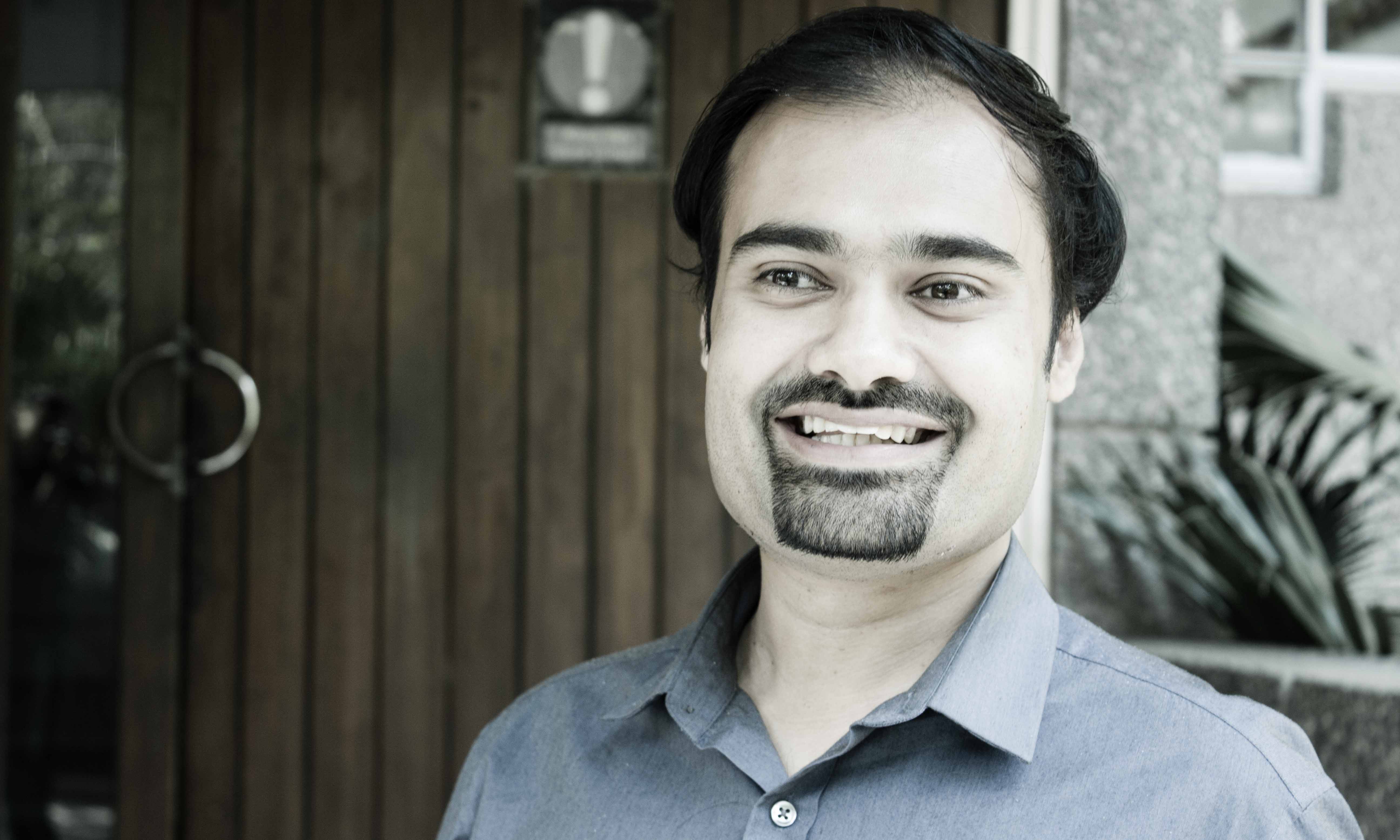
Anirudh is a nonresident scholar with Carnegie India. His interests lie at the intersection of technology and geopolitics, climate, and strategic affairs. He is also a managing partner at India Internet Fund, a technology-focused venture capital fund based in India and the United States. He’s the author of The Great Tech Game: Shaping Geopolitics and the Destinies of Nations, published in 2022. And he’s also the host of a podcast by the same name, “The Great Tech Game,” which focuses on technology, business and geopolitics.
Milan and Anirudh discuss the evolution of global AI summitry, the debate over India’s elusive “DeepSeek moment,” and the country’s indigenous large language models (LLMs). Plus, the two discuss the effects of AI on India’s services industry and India’s quest to marshal its domestic scientific talent.
Episode notes:
- Anirudh Suri, “Learning from DeepSeek, honing India’s AI strategy,” Hindustan Times, March 2, 2025.
- Anirudh Suri, “The Missing Pieces in India’s AI Puzzle: Talent, Data, and R&D,” Carnegie India, February 24, 2025.
- Anirudh Suri, “Winning the AI race with research talent,” Hindustan Times, November 3, 2024.
- “Governing India's Digital Revolution (with Rahul Matthan),” Grand Tamasha, January 23, 2024.
Transcript
Note: this is an AI-generated transcript and may contain errors
Milan Vaishnav Welcome to Grand Tamasha, a co-production of the Carnegie Endowment for International Peace and the Hindustan Times. I'm your host, Milan Vaishnav. Just weeks ago, India hosted the 2026 AI Impact Summit, the latest chapter in a global process that began in 2023 in the UK. For India, the stakes could not be higher. It's a country with immense technical talent and a data-rich digital ecosystem, but also a services-led growth model that AI could either boost or seriously disrupt. For the Modi government, the summit was part diplomatic showcase, part investment pitch, and part declaration of ambition. To talk more about the summit and its key takeaways, I'm joined on the show this week by Anirudh Suri. Anirudh is a non-resident scholar with Carnegie India. His interests lie at the intersection of technology, geopolitics, climate, strategic affairs. He's also managing partner at India Internet Fund, a technology focused venture capital fund based in India and the United States. He's the author of The Great Tech Game: Shaping Geopolitics and the Destinies of Nation, which was published in 2022. And he's also the host of a podcast by the very same name, The Great Tech Game, which focuses on tech, business and geopolitics. I am pleased to welcome Anirudh to the show for the very first time. Anirudh, so good to see you.
Anirudh Suri Pleasure to be on, Milan. Thank you for having me.
Milan Vaishnav So I want to start by taking us back a couple of years to try and put this particular AI summit in context. As I said in the setup, India has just finished hosting this impact summit. It's the fourth in a series that began at Bletchley Park in what was called the AI safety summit. That was followed by subsequent summits in Seoul, South Korea, then in Paris. And I'm wondering, Anirudh, maybe just as a way of grounding this conversation, where does this summit fit into that broader evolution? And why was there so much hype? I mean, people were talking about this in India for a very, very long time, but not just in India. There was also a buzz abroad. Can you kind of help us put the pieces together?
Anirudh Suri Yeah, no, I think Milan is very important to set the context for where this summit stands in that, I think, historical context also. The short historical context, but important, nevertheless. I think the Bletchley Park summit, right, so Rishi Sunak, I think was then the PM, was also in India this time around. And so, he was talking about the historical context as well. I think that time, the safety piece was very important because I think people didn't know what to expect at the time with AI. I think the first instinct was to, let's say, talk about the safety piece, the guardrails, et cetera. And that's what the Bletchley Park Summit was really about. The Seoul Summit then turns out—and that's where the AI safety institutes and the idea of these safety institutes also came up in the first summit at Bletchley Park. It was also largely a smaller group of nations that attended, right? I think one of the key things there was China was also there, but it was still a very small group of nations that had maybe started thinking about AI, right? Seoul, I think, emphasized how important AI was going to be. And it was really the France Summit, that was a precursor to the India Summit, that started talking about, the French one was called the Action Summit. And I think that was France's way of saying that the action should move beyond just the US. Prime Minister Modi was there to launch that summit along with President Macron. But really it was a series of summits that were held in the West and in a small select group of nations, right? And I mentioned that because India tried to turn that entire concept on its head, right? I think Prime Minister Modi said in his vision, and over the last few years, the India vision for AI has been AI for all, AI for public good. And that's what this summit, in a way, ended up being a manifestation of, right? That vision and that kind of thinking that was already building up in India. And so therefore this summit was called the AI Impact Summit. The idea being that instead of talking only about the safety or the governance or the action, let's talk about the impact on the broader public. And for sectors like agriculture, education, healthcare, the sectors that are in India called the social sectors, that for any government in India are the more important ones because that's where the majority of the population gets impacted or touched. And therefore, you found that this summit ended up being, unlike the earlier summits, which were smaller, more maybe closed door, this ended up open to the public. It was, if I may, a grand tamasha.
Milan Vaishnav I had a feeling you were going to go there.
Anirudh Suri And so it was, it was a grand tamasha also in the sense that, you know, in the spirit of Indian mailers and the spirit of like book fairs that are held at that particular venue, Bharat Mandapam, it was in line with that. It was open to the public, no tickets, right? No charges, no closed door really at the venue. There were other closed-door events happening in parallel in Delhi around, but it ended up being a massive, massive event. And in line with the vision that is supposed to be F-all and not closed-door, not limited to policy wonks, not just limited to the big tech firms, but really open to all, right? So many halls of the expo which had everyone from startups to large tech firms showcasing what they had to offer, so very different in its flavor.
Milan Vaishnav So I just, I just want to pause on that for a second and ask you to elaborate a bit on the vibe. Because as you said, you know, India’s, kind of, USP in a sense was to open this summit up beyond just say elite policymakers and technologists. It wanted to welcome the kind of proverbial amadmi, right? But if you were following this from abroad as I was, there were these reports all over Twitter and Instagram about this logistical chaos. There were confusing procedures, there was uneven execution. Now, it's hard to sort this stuff out when you're just doing it through the prism of social media. But since you were actually in Delhi, what did it feel like, you know, when you were in the hall? I mean, were those kinds of reports too critical, do you think? How do you see that?
Anirudh Suri Yeah, no, I mean, I can safely tell you I was there the day before. I was doing, I think as, as I mentioned to you also earlier, I was doing the podcast for the summit as well. So I was at the day, before the summit opened up, right? That day, you could tell that the scale was going to be crazy, but I think when the first day opened up and bunch of us landed up there, I think no one expected, including the organizers, that this kind of sort of, you know, mass attendance was going to happen on the first day. So, I think that the reports that came out that it was a bit chaotic, entries were unclear, which gates, this is also a massive venue, right? I don't know if you've been to this venue.
Milan Vaishnav I've actually never stepped foot in, but only from the outside and even from the outside, it's incredibly intimidating.
Anirudh Suri Yeah, so it used to be called the Pragati Maidan and it was like this massive thing, right, where now it's called the Bharat Mandapam, has multiple gates and entries from different roads, right? And so, it was chaotic on the first day, right. So, I think to that extent, yes, I think the organizers probably, and there were multiple organizers here, the expo was being organized, the events were being organized. Then there were the, you know, all the different delegations of different countries that were being hosted by different parts of the Indian government, right? So, there were a lot of organizers in that sense, not just the IT industry. So, the first day was a little bit, I think, overwhelming for anyone who came there. But I think after the second day, it started to get much better. The first day was the spike in interest from the, you know, there were students and exhibitors and policymakers, everyone was there, media, everyone, right. But the second day one was much better. So to your question, I thing that the reports were maybe too critical for an event the size that this was, right? This wasn't an exclusive Davos-like event. I think everyone was there, who could be there. But I think what I would say, I think the piece that has gotten missed on those three, four days of coverage was the substance. You know, and I think from, you know, the standpoint that you and I come from, right, where you want to look at what was actually discussed, what were the ideas and the themes that came out, that bubbled up. I think there wasn't enough coverage of that, unfortunately. And the coverage ended up focusing only on the logistical piece, right? Which I think doesn't do justice to the fact that there were, in my mind, an incredible mix of people that showed up, right, from startups, entrepreneurs, policymakers, academics, of course, multiple heads of states, massive delegations from each country. So many people were organizing events, side events at the venue. From think tanks like Carnegie did, many various think tanks, various nonprofits, governments. So, there was so much going on that unfortunately, I think the substance got missed out maybe a little.
Milan Vaishnav So let me, let's turn to the substance now and, and, you know, maybe one thing just to start with is this question of, you know, new investment, right? Which obviously in a country like India is, is always something that's top of mind in the advanced period or run up to the summit, there was a lot of speculation, rumors doing the rounds about, you know, major multinationals investing in kind of AI infrastructure, data centers, compute capacity, semiconductor partnerships. Was there anything that stood out to you from an investment lens that was given rise, given birth at the summit?
Anirudh Suri You know, Milan, from my perspective, I think this was a little bit of a, if I could draw an analogy to like a major bilateral summit or a multilateral summit, there was a lot of pre-work that had happened here. A lot. I think as you were also suggesting when you started off the episode, months leading up to the summit, that was a lot of work. There were a lot of delegations that had come in, large big tech firms had come in, they were very engaged, there were lots of working groups. And so, a lot of the investment-related work had also happened in the run-up already. So, I think the summit served as a way to announce some of these things. It served as a way to solidify some of these discussions that are already happening. But you can classify the investments that happened maybe in two or three large buckets, right? I think that biggest bucket, let's say it was the big tech firms. So, Microsoft, Alphabet and others announced major, major multi-billion dollar investments and everything from subsea cables. Google had already announced in Vizag in South India, a major subsea cable landing there working on that. One of the biggest data centers that Meta is setting up again in Vizag. All of this investment was upwards of 15 billion. This had gotten announced earlier already but got solidified at the summit. I think Microsoft had also started making some announcements, but they also solidified their investments in both training, infrastructure, et cetera. You saw G42 based out of Abu Dhabi announce a massive supercomputing investment, right? I think an eight exaflop supercomputer collaboration with India. So, you saw a lot of these, I would say the big tech firm investments. That was one. The second piece I think… the second bucket of investments was from venture capital firms, right? And I think this was maybe not as high a scale as I would have hopefully anticipated or expected as the Big Tech firm. I think Big Tech firm one probably exceeded many expectations. On the venture capital and private equity side, there were some announcements by firms like Peak 15, General Catalyst, and others, Celesta, et cetera, who were sort of doubling down on AI. But again, not massive, massive investment. So, I would say some amount of investments there. And third, I would see is some amount of private equity firm investment in infrastructure again, right? Neysa is an Indian AI cloud startup. I think Blackstone announced an investment in them right at the time of the summit, a couple of other AI infrastructure projects through investments, through PE firms. So, I will say that's really what we heard during the summit as far as investments are concerned.
Milan Vaishnav So, you know, one of the other themes that came up, Anirudh, in the commentary was this whole question about, you know, whether India has really fully taken advantage of this unique moment when the eyes of the world are on it. And there was a Bloomberg columnist, Catherine Thorbeck, who published a piece that sort of went viral in which she argued, and I just want to from it that “In India's case, optimism doesn't substitute for an ecosystem,” and she asked why “India, despite its large talent pool,” and we're going to talk about that in a moment, has never had a quote-unquote “deep-seek moment,” right, referring to kind of the low-cost, kind of, Chinese LLM. What's your reaction to that critique about India not having or not being able to capitalize on a deep seek-like moment?
Anirudh Suri Yeah, but I think first up, I think, Milan, it's a fair critique. I think optimism cannot substitute for an ecosystem. I think that both have to go together. Optimism from a entrepreneur standpoint, I think is very important. I think the optimism that was generated, the kind of interest that was generated through the AI summit, I think has massively created a sense of optimism, inspiration, all of those pieces for the Indian entrepreneur, for the Indian healthcare, education, ecosystems, to say we must engage with this wave called AI and implement it. Right? I think optimism serves a purpose from that perspective. But I think when it comes to hard power in the AI world, you cannot have just optimism. You need to have the ecosystem. And I think that's where the critique is maybe fair, that India needs its deep seek moment, India needs a vibrant multi-pronged ecosystem. I think on some parts of that ecosystem, India has done well over the last two, three years, but we must remember that for a country like China, the deep seek moment comes after 10, 15, 20 years of massive investments in R&D, massive investments in talent, both domestic and bringing its foreign talent back to China, massive amount of investment in their university ecosystem, where now I think eight or nine of the top 10 AI research ecosystems are in China, Chinese universities, right? But you can see all of that, but as many an entrepreneur will tell you, everyone sees that successful moment, but people don't see the decades, often years of hard work that's gone in. I think China had already done that, to get its deep seek moment in a way. I think India started maybe five, 10 years after that. India's, I mean, if I was to put a timeline to it, I think, India really seriously started working on AI in ‘21, ‘22, right? So, it's been four years. And my sense is personally that I think whether it's from a startup's perspective, whether it is from a talent perspective, whether it from an R&D perspective, we're looking at another two, three years before we might see a massive deep seek moment.
Milan Vaishnav So, this is maybe a good time to kind of talk about this ecosystem, because you have written extensively about this. In February of last year, you wrote a paper for Carnegie India called “The Missing Pieces in India's AI puzzle: Talent, Data and R&D. And we'll link to that paper in the show notes. And I think it's a very important assessment of where India actually is, and I think this is a great opportunity to try to revisit some of those core arguments and really talk to you and draw you out on the progress India has made since. And let's start maybe with the talent piece, right? I mean, it's become pretty trite or hackneyed to make this observation that so much of the world's AI talent is Indian origin. That doesn't necessarily mean that they're residing in India, they could be in Silicon Valley, they could in the Middle East, they could be in Europe and elsewhere. But many of those people have their roots in India, and that India's play in this entire game should be to really try to double down and figure out ways not just to generate more talent, but maybe to recruit some of the talent back home and to really make that their selling point. So just tell us a little bit about what the talent question is for India and where you think the government is in terms of trying to really capitalize on it.
Anirudh Suri I think you've set the context perfectly, Milan. I think that people often confuse Indian origin talent as talent in India, right? So that design is extremely important. I made that in my paper. I think India cannot pat itself on the back for having, I think it's something like 16% of the top tier talent in AI as being of Indian origin. I think its great, but of course you want to make sure that a large chunk of it is either in India or working towards development of AI in India, even if they're sitting outside, right? I think where we must be clear is that talent in AI is also different from talent in the Indian IT services context. India is known as a software nation, IT services nation. The talent sitting in IT services firms like the Infosys’s and Wipro’s, TCS’s of the world, very different than the kind of tech talent that you need in the world of AI, right? That's a very important distinction to make also. So, one is the distinction between talent of Indian origin sitting outside versus talent sitting in India. The second very important distinction is what kind of talent you have. And this is what some of what I had laid out in my paper that if you were to categorize the kind of talent needed in the word of AI, you have the top tier research talent that's doing the cutting edge research on making models more efficient, more productive, more accurate, et cetera. Then you have the kind of, let's say the middle tier talent, which is saying, let's take these models and figure out how we can apply it to different sectors, different use cases, et cetera. And then the third, I would say the lowest tier here, would be a wider, broader segment of tech talent that could be software engineers, coders, et cetera, who are maybe sitting within enterprises and doing the final last leg of implementation, right? I think India has a lot of the bottom piece, right? And that's its strength. India also has, to some extent, the middle piece, right, sitting in Indian IT services firms, sitting in India's startup ecosystem, sitting in the GCCs, the global capability centers that have mushroomed in India over the last few years, set up by large global corporations in India, right. But India doesn't have that big presence of the top tier AI research talent, right? So, India needs to work on that. And that was the argument I put out in the paper. Now, India has made some progress on that, I have to say. Over the last couple of years, a few people have come back. I think some of the talent that's sitting in Indian education institutions, the IITs of the world, the ISEs of world, have gotten the kind of attention and resources that they were maybe not getting earlier, right? For my own podcast for the summit, I had three or four people from IIT Madras, IIT Bombay, IIT Delhi come on the podcast and they were all working on, I would say cutting edge research in AI now and getting the resources that I think they deserved earlier but maybe were not getting. So, some progress, but again, a lot of work to do.
Milan Vaishnav Let me let me just ask you about the second piece of this, which is India's unique data advantage, right? Which, I mean, natural, given a country of its size. In the paper, you argued that, look, India needs to have a clearer strategy to try to harness its uniquely data rich DPI or digital public infrastructure and try to leverage that in this moment. You know, are we seeing movement towards that or do you think that data in an Indian context is still highly under-leveraged?
Anirudh Suri I think of all the pieces, Milan, I think that piece that I think Indian thinking has been maybe the slowest, right? The realization is there. Let me say that thinking and the action has been the slowest. I think India has done a lot in terms of getting the chips and the infrastructure needed, right, because globally, that has been a conversation, India has also worked on it. If you have, you know, more and more GPUs being provided as a shared resource to India's researchers, startups, et cetera. The talent piece, that's clear recognition that you need to both harness the Indian talent, highlight it, give it resources, plus try and get more back from wherever they might be working in the West. Capital also, I think there's been a lot of work and, you know capital flows very quickly to where there's action, but I think the piece that if I was to say needs the most amount of work over the next year for India is data. There's a lot of work that has happened on data privacy. You know, the DPDP Act finally came in. All of that, I think that kind of work has happened on the privacy piece, et cetera. Now you can debate whether the DPTP Act is good, not good, strong, not.
Milan Vaishnav And this is the act on protecting people's personal information.
Anirudh Suri That's right, right. But I think leveraging data as a resource, the thinking on that has not happened enough. Unlocking of India's data sets has not happened enough. The India AI mission has come up with something called the AI course, where data sets are being compiled and different ministries and different organizations are uploading the data sets that they might be able to put out, but I think again very, very early days. You need the kind of data machine today in India that, for example, exists at Google, right? Where day in, day out, YouTube, Gmail, Google search, blah, blah blah. A bunch of this sort of like second by second data is being generated in different languages and being trained and their models are being trained upon that, right? India doesn't have that kind of a data machine yet and India needs that. If it wants its domestic models to do well, if it wants its entrepreneurs to do something unique, India needs its data machine to become like the kind of data machines that an OpenAI, an Anthropic, a Microsoft, a Google, a Meta are sitting on, which are just these day in, day out, across the world, data being generated, being fed into the models, training the models and then back to the consumers, those models are serving. Something bases that data and then more and more training happening again, right? So I think that kind of machine is not there in India yet. And I think, that's where India really needs Indian government, Indian entrepreneurs, Indian research institutions, Indian private sector that's sitting on a lot of private sector data. A lot of this has to be brought together somehow, and that, that I think is a missing piece still.
[…]
Milan Vaishnav Let me just take a bit of a detour here because it's kind of a related point. You know, there was this famous interaction back, I think it was in 2023 in Delhi, when the chief of OpenAI, Sam Altman, he was asked by somebody in the audience about whether a small team sitting in India with 10 million bucks could build something comparable to OpenAI. And he had this some would say flippant response where he said it would be totally hopeless, right? There's no point even trying to compete with the likes of OpenAI. Now, if you fast forward to this summit, 2026, there were several Indian AI models that were unveiled, including this new LLM from Sarvam AI. Do you think India has proven skeptics like Altman wrong?
Anirudh Suri Not yet, Milan. I think, not yet. But I think that, let me lay out, I think what's happening in the AI world for a second, and then I'll tell you where India is now, I think, positioning itself. I think what’s happened is in the world of AI, there are two large schools of thought or two prominent schools of thought that have emerged as far as foundational models or LLMs are concerned. There's a school of thought that's saying bigger is better. We need to build more and more data centers, bigger and bigger models, more and more parameters, and that's the race that in a way OpenAI is the best example of, right? They're saying I'm going to build more and more datacenters, I want to raise not one or two or three or five billion, I want to rise 500 billion, trillions, et cetera. infrastructure projects in the Middle East, in the U.S., in Southeast Asia, and blah. Right, the bigger, better model approach. That's one school of thought. The other school of thought that's emerging and you know in conversations I've had now with both academics like Professor Stuart Russell and others in the US, entrepreneurs in this space, you know, Ren Ito I'll mention from a Japanese startup, Indian startups like Sarvam. The second school of thought says we are making a big mistake if you go only with this bigger is better approach in our foundational models. We need to have an approach that says, yes, for certain things, certain kinds of work, certain kinds or tasks, yes you might need massive generalist models like the OpenAI model and others, Gemini, Anthropic, and so on and so forth. But really where AI, the rubber will hit the road, will be smaller context-specific energy-efficient models. Because the bigger ones are also coming with this massive risk of energy consumption, which is just off the roof, right, off the charts. So, there's this school of thought that's saying, think of it like a switchboard, maybe you have massive grids. So, think of as like a highway system, yes, you might have national highways, but then you need the state highways and then you need city roads, right? So. in a way, what's happening is there'll be some players that will build the national highways, the cross-country highways from the East Coast to the West Coast. But then countries like India, Japan, the Middle East, France, the UK, and others, the middle powers, let's say for a second, they are now focusing on building, I would say, the state highways and the city roads and the, you know, the expressways within small regions, right? And that's where I think India is starting to play a role. Sarvam, coming back to now your question, which unveiled a model that got a lot of praise this time around, unlike their models that got released maybe a year ago that got a lot of criticism as not being efficient or, you know, ranking highly in the different metrics that researchers use to rank models. This time around, they got much better praise because I think now they've said, let's not play that race. But let's not say that we are out of the race either. Let's build contextual, energy-efficient models. And that's why I think Sarvam maybe will have a shot at really building a niche for itself and similar models elsewhere in the world will have a shot. My answer in the beginning was not yet. With the caveat that I think if these two schools of thought do end up being the way the world goes, the second kind of model also will have a place in our world. And that's where India, Japan, and others might succeed. Better than they might succeed in the big sort of game that OpenAI and others are playing.
Milan Vaishnav I mean, I think that's really interesting context anyway, because I think, again, for people who are not AI experts like myself, but who just are reading stuff, right, all of the discussion tends to be on the former and much less on the second category, right? And so, it kind of skews the prism through which we are interpreting this entire debate.
Anirudh Suri Yeah. Yeah. And I think inevitably now what's happened is if you talk to people, even Silicon Valley, right, Milan, which I think is very important to keep in mind because this development, this is happening not in Delhi and DC, but really in Silicon Valley and Bangalore and the tech centers of our world, you talk people there, as I've been doing over the last, you know, couple of years, it's going to be a combination of those two, right? It's not going to either or. It's going to be for certain things, the bigger models. And for many things, right, it's going to be the context-specific, domain-specific, energy-efficient models. It could be in healthcare, in education, blah, blah blah. And I think once it's a combination, you realize that they'll become an interdependent ecosystem. So, for countries like India and others, that's really the end game, I think, here. That you want to be in a place where you are in that ecosystem, integral to that ecosystem, so that there's a little bit of a strategic interdependence between you and the companies and countries that are building the bigger models.
Milan Vaishnav So, that was extremely useful Anirudh, and I want to just make sure we don't disregard or omit the third piece of your paper because I think in some ways that's, from a long-term perspective, one of the most important ones, which is R&D, research and development, right? So, you have the talent piece, you have taking advantage of India's data-rich environment piece, and then you have R&D piece, right? And one of things you say in that paper is that India's AI R&D ecosystem really needs a kind of big push, right? And I'm wondering, you know, are we seeing any incipient or nascent signs that, you know, we're starting to get serious investments in that kind of foundational research? You mentioned that some of this may be happening because a talent is coming, but how are we in terms of investment dollars?
Anirudh Suri Yeah, so I think it's time to happen. I think I've been very pleasantly surprised when my book came out three, four years ago. One of the key things I mentioned in that book from a broad tech perspective, not only AI specifically but broadly, was that if India wants to transition from a talent nation as it's seen to a tech nation, where it's a product nation and not a services nation alone, the R&D piece has to be fixed, both in terms of spending, focus areas the right kind of talent doing the R&D, et cetera, and the right kinds of industry, academia, and startup linkages to be built. I have been very pleasantly surprised over the last two years, Milan, and this is not my doing, let me be clear, but I think the realization and the amount of conversations when I hear this now being talked about, from the highest levels of government to the private sector to the think tank and the policy world, it has become a given that India must do more on the R&D. And I think that realization acknowledgement is step one. Step two has been the Indian government does seem to have put forth some initiatives, right? We can talk about how effective or how large they are and whether that's sufficient, and I'm I think giving away the fact that I think they're not maybe as big as they need to be in terms of both the number of dollars and all of that. But the Anusundhara National Research Foundation has been set up along the lines of the NSF in the US. There's a massive new fund, 100,000 crores, which is big from Indian standards, maybe not big from a global standard, which is the research and development RDI, which has given out funds to both researchers, research organizations, but also it will give out money to venture capital funds to invest in more deep tech startups that are driven by R&D. So, I think these are some of the signs that this has become top priority in the policymaker agenda. I think it is the private sector. The private sector has still not, I think, upped its R&D spending, I think, to the satisfaction of, let's say, even their government counterparts. And therefore, I think overall, it still remains a gap in India's arsenal, I think, as I'd argued in my paper. So, still a lot more to be done. The number right now, 0.65% of India's GDP being spent on R&D, needs to go up by any metric to 2.5% at least. So, I think there's still a long way to go. I think we'll be at a 1-1.2% benchmark maybe in the next couple of years, but still a lot more to be done.
Milan Vaishnav Anirudh, there's two other issues on my mind that I wanted to talk to you about. And one of them is this broader issue that so many countries are asking, as we policymakers are asking which is about the AI shock as we're starting to call it, right? I mean we've seen in recent weeks this AI driven market volatility and that has hit a lot of Indian IT stock particularly hard. And I think it's a good reminder of how exposed India's kind of services first economic model is. Now, if AI substitutes for entry level coding, back office work, really take hold before India generates newer opportunities higher up on the value chain, the consequences for the economy could be massive, right? It's not an India specific problem, but India has certain characteristics that make it more vulnerable. As somebody who's investing in the AI space, who interacts with a lot of startups, a lot MNCs, a lot foreign investors, how do you assess the kind of risk from an Indian standpoint?
Anirudh Suri India is, I think, in a sentence, very vulnerable, Milan. I think that for both, I think the reasons you outlined. One, that for India, the Indian IT services sector has been a massive, massive employer over the last two, three decades. We have some of India's biggest firms on the Indian Stock Exchange. As you rightly mentioned, Anthropic, Claude's most recent, I think, releases, I want to say maybe a month ago, a few weeks ago, led to this massive decline in the market caps for some of these firms. Very vulnerable from an economic value capture standpoint. And I think very, very importantly, maybe even more importantly from India's policymaker standpoint, from our employment standpoint. India has a massive amount of engineers that come out every year. India's middle classes are going largely into the IT sector in one way or the other. The Indian IT sector, of course, has seen massive wealth generation. So, there's a lot of people servicing that sector as well, right? Sort of the trickle-down effect in any economy. Today, if there's people creating massive amounts of wealth in these services firms, Indian IT services firms in Bangalore, there's a massive amount of, sort of, ecosystem that's supporting them. Real estate, services, healthcare, education, right? There's employment within and there's indirect employment dependent on the success of these firms. So, I think India is massively vulnerable, right? Both from an economic and a social political standpoint. So now that begs the question, what should India do and what should they do? And I think the jury is out, right. I have to say, before the summit, Milan, before I spent some more time one-on-one with some of the Indian IT services firms, which I had the opportunity to do during the summit and post. I was actually a little bit more pessimistic than I am now. I was actually very worried that this wave was passing them by. I think that now that I've had the opportunity to talk to people in Bangalore and these IT services firms a lot more in depth and sort of push them deeper, I'm of the opinion that I think it's top of the agenda, top of broad agenda for these firms. They are positioning themselves, I think, starting to position themselves well. It's early days, but I'll tell you the two questions that are going to be important. The first question to track will be over the coming, I would say months, will be will global enterprises, both US, European and others, who have been clients of these Indian IT services firms, the question is going to be: will these enterprises, large firms from across various sectors, oil and gas and financial services, blah, blah blah, big banks and others: will they require a services element to help them adopt AI? Or will they not, right? The effort from the Silicon Valley standpoint is that let's make it so simple that they do not need a whole layer of...
Milan Vaishnav You don't need any interlocutor intermediary.
Anirudh Suri Right. And that's what, you know, the Indian IT Services firms, that's where they could get disrupted, right? Now, the early signs seem to be, if you look at the summit, one of the few partnerships that got announced, Anthropic, OpenAI and others came and did massive implementation partnerships with Indian IT services firms, where it's almost seeming like that they are saying that we need help. Now, why do they need help? Because I think they've done massive investments. They need to show massive revenue upticks to justify the investment they are making, and eventually their stock prices when they go public, and so on and so forth, and they're realizing that instead of going alone, let's use these massive Indian IT services firms and others to actually go deeper into enterprise. Because I think they're also not happy with the kind of level of enterprise adoption that they have seen so far. So, it seems to me that that's actually a good question to track, to see, okay, will these IT services firms become critical in the adoption of enterprise AI? Right, question number one. And the second question then, and that as I was telling you, the signs are that these guys might actually retain their value, their place in the ecosystem. Now the second, I think more important question from an economic standpoint will be, OK, let's say they do remain relevant. Will the ticket sizes of their deals with their enterprise clients be as big as they were earlier? And will it require as many people to…, right? And I think that's where I think the worry, I think, still stands. I think the sizes of those projects might not be as big as they were earlier. The number of people required to help enterprises with their option might not as big as they used to be. So, I think we will see some plateauing of hiring numbers at these IT services firms in the short term and probably smaller deal sizes, which is what I think the public markets, the stock markets are saying. That, listen, they might be relevant, but we don't expect them to be as, you know, big economic deals, big deals as they were getting earlier, right? So, I think those two questions, I would say, are the ones to be tried.
Milan Vaishnav Anirudh, let me just maybe end by asking you about something that you mentioned at the very start of the conversation, which we haven't really talked about, which maybe tells you something about the environment, which is this question of safety, right? I mean, at that first AI summit at Bletchley, the dominant frame was existential risk and safety guardrails. And now if you fast forward a couple years to the 2026 summit in India, by the time we've gotten here, the emphasis, you know, has seen much more on innovation, on investment, economic opportunity. Also thinking about the trade-offs you just mentioned between risk and opportunity. A, has the global conversation quietly moved away from safety? And B, what do you think, if that's true, what are the repercussions?
Anirudh Suri I think the balance has shifted maybe, but I don't think that the safety conversation has come to an end.
Milan Vaishnav That its disappeared?
Anirudh Suri Correct. It has not, right? So and that's where I think if we come back to the first question you asked me about the vibe at the summit. I think that's why you know when you start talking only about the logistics, you start talking about the big names that are attending, you know that okay Sam Altman's there…
Milan Vaishnav Right, is Bill Gates going to get a keynote or is he not going to get a keynote and so on?
Anirudh Suri If you start talking about just that, I think the substance of what happened at the summit actually gets missed. And if you look at what was happening at the Summit, and the kind of people that were there at the Summit, I would say that actually there was a much better balance than one would think if you were just looking at the media coverage, right? So, the likes of some of the names I was mentioning, right, so Yoshua Benjio, who released the group led by him, including some people from Carnegie, were part of this international AI safety report that got launched right at the beginning of the summit or during the summit, which talks a lot about the safety risks that have emerged in the last year, right? Because this tech is moving very quickly, AI agents, this agentic AI piece is moving so fast. Now, people like Yoshua, Stuart Russell, many others who are from the safety camp, for a second, if I was to categorize them as that, they were front and center in so many conversations. I remember meeting Professor Stuart Russell, who I hosted for one of my podcasts at the summit. And he was like, listen, I am on three panels at the same time, right? And he was on 27 panels through the summit, right. So, now all of that to say that I think those voices were there. Those voices were actually very vocal about the fact that the safety risks are actually going higher and higher as the tech is evolving rapidly. And the fact that these AI agents might go out of our control, for example, the control risk or the alignment risk, as they call it in academia, is going up and up, right? So, I think a lot of the conversation was happening there, but unfortunately, I think did not get covered in the mainstream. Now, if the mainstream is still an indicator of, you know, where things are headed, then I think you're absolutely right. Then we had risk and there are certain implications of it, but I would argue that actually the safety conversation is not ignored, right. I think it was there. On the ground, it was very much there. The private sector and the big tech firm maybe got disproportionate media coverage. But I think on the ground, there was a lot of conversation, I think, and it was one of the key chakras also for the summit, right, one of the two pillars of the summit. Now the implications of this, however, are very important to think about, right? I think the big-tech firms and the commercial actors, of course, would want, and I think it's happening in the U.S. For sure, they want as unfettered a movement towards AI innovation as they could. But I think that the developing world is also, to some extent, tending towards it on the edges. But ultimately, if you look at the core of how this is getting implemented in enterprises and in startups and the ministries, I think one can rely this much that governments are not going to let any kind of massive risk go unchecked. Because at the end of the day, democratic governments, at least, are very, very worried of any kind of major sociopolitical risk that might emerge, right? So, I think the bureaucracies and the ministries, line ministries in this, ultimately at the edge of implementation are very much, I think, making sure that they seek some kind of control and some kind of guardrails for whatever models are getting implemented. So, my sense is that it's more of a balance than what the mainstream media might make you think.
Milan Vaishnav My guest on the show this week is Anirudh Suri. He's a non-resident scholar with Carnegie India. He's also a managing partner at India Internet Fund, the author of The Great Tech Game, a host of the podcast, The Great Tech Game. Anirudh, this was great. You kind of, I think, helped us understand with so much detail and richness what actually went down at the summit and what didn't go down at this summit. I think both are equally important. Thank you so much for taking the time.
Anirudh Suri No, no, it's a pleasure. Thank you so much, buddy.