The U.S.-India relationship today sits at a crossroads. Over the past two decades, Washington and New Delhi have drawn steadily closer—driven by shared concerns about China, expanding economic ties, and a growing Indian diaspora in the United States.
But the partnership is also facing new uncertainties: geopolitical turbulence in the Middle East, shifting trade dynamics, and questions about the future direction of U.S. foreign policy.
At the same time, domestic politics in the United States are changing. While Indian Americans still vote overwhelmingly for the Democratic Party, a sizeable number of them changed sides and voted for Donald Trump and the Republican Party in 2024.
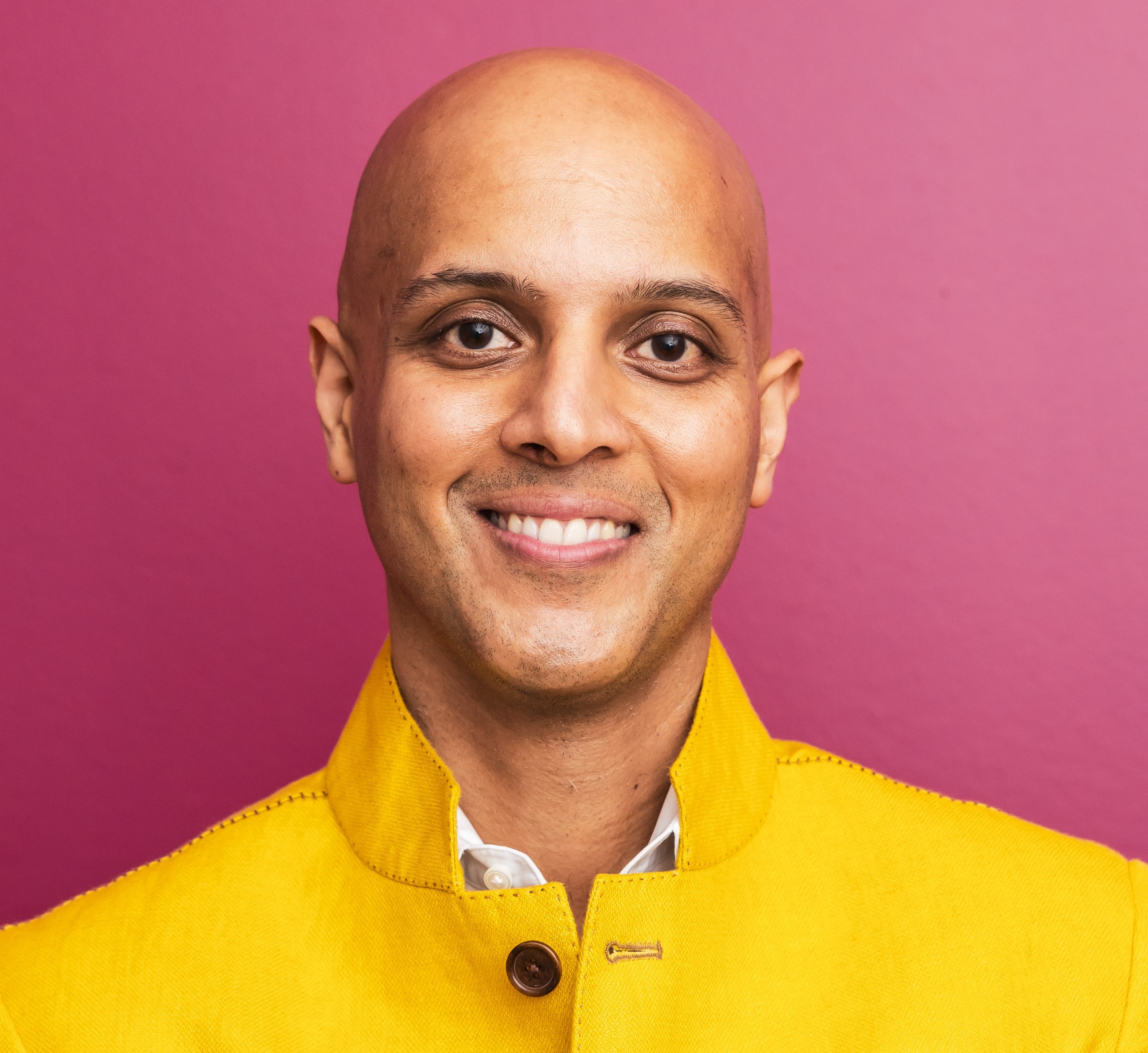
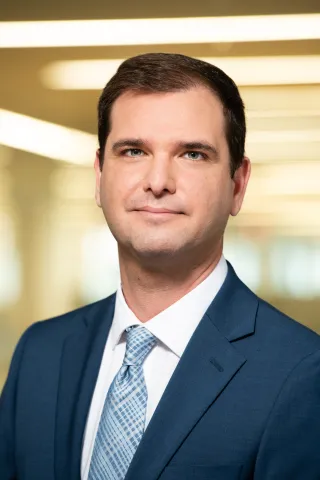
To help us unpack all of this, this week Milan spoke with Congressman Ami Bera in his office on Capitol Hill. Bera represents California's 6th congressional district and has been a member of the U.S. House of Representatives since 2013.
He is a longtime member of the House Foreign Affairs Committee, one of the most prominent voices on U.S.-India relations in Congress, and a founding member of the so-called Samosa Caucus—a group of congressional representatives of Indian origin.
Milan and Rep. Bera talked about Trump’s war on Iran, the turbulence in the U.S.-India relationship, and the trade and immigration moves that have unsettled the Indian American community.
Episode notes:
- Ami Bera, “Why I Voted for the Iran War Powers Resolution,” Ami’s Substack, March 5, 2026.
- Ami Bera, “Reps. Bera, Wilson Lead Bipartisan Resolution Recognizing U.S.-India Strategic Partnership,” November 17, 2025.
- “Can the U.S. Salvage Its Relationship with India? (with Lisa Curtis),” Grand Tamasha, February 4, 2026.
- “The Quiet Resilience of U.S.–India Defense Cooperation (with Sameer Lalwani),” Grand Tamasha, December 9, 2025.
Transcript
Note: this is an AI-generated transcript and may contain errors
Milan Vaishnav Welcome to Grand Tamasha, a co-production of the Carnegie Endowment for International Peace and the Hindustan Times. I'm your host, Milan Vaishnav. The U.S.-India relationship today sits at a crossroads. Over the past two decades, Washington and New Delhi have drawn steadily closer, driven by shared concerns about China, expanding economic ties, and a growing Indian diaspora in the United States. But the partnership is also facing new uncertainties. Geopolitical turbulence in the Middle East, shifting trade dynamics, and questions about the future direction of U.S. foreign policy. At the same time, domestic politics in the United States are changing. While Indian Americans still vote overwhelmingly for the Democratic Party, a sizable number of them changed sides and voted for Donald Trump and the Republicans in 2024. To help us all unpack this, this week I sat down with Congressman Ami Bera. Bera represents California's 6th Congressional District and has been a member of the U.S. House of Representatives since 2013. He's a longtime member of the House Foreign Affairs Committee, one of the most prominent voices on U.S.-India relations in Congress, and a founding member of the so-called Samosa Caucus, a group of congressional representatives of Indian origin. We talked about Trump's war on Iran, the turbulence in the U.S.-Indian relationship, and the trade and immigration moves that have unsettled the Indian American community. I spoke with Ami Bera in his office on Capitol Hill. Here's our conversation.
Milan Vaishnav Congressman, thanks so much for having me to your office.
Rep. Ami Bera Yeah, of course, glad to be on.
Milan Vaishnav I want to talk mainly about India and the US-India relationship, but let me start by asking about the Middle East because I think that's on a lot of people's minds. You have been very outspoken in terms of this president taking us to war in Iran without due constitutional authority, without consultation with Congress. I want to ask you a little bit about how you see things unfolding. It seems like the conflict is getting wider, deeper. We're seeing negative reactions in the markets, oil prices skyrocketing. How do things, how do you see things from where you sit here in Congress?
Rep. Ami Bera So, this was an elective choice by President Trump. He, Secretary Rubio, Secretary Hegseth have failed to explain what the imminent threat was. The threat from Iran has been there for four decades. Nothing changed. The threat--they've got 60% enriched uranium--that's been known for quite a while as well. They've not come to Congress and said, you know, Iran was planning to have dirty bombs go off in New York, or there was an imminent threat to invade Israel. So, on the question of: was there an imminent threat? They haven't explained that to Congress. Outside of that, an imminent threat to the United States or assets around the world, the president is obligated to come to Congress with that authorization to use force. The War Powers Act does give him authorities if there's an imminent threat to the United States. Again, I think that's our biggest objection. Now, the more complicated objection is anyone who's a student of foreign policy, going back to your basic grad students, is going to understand the complexity of war. They're going to understand the straits of Hormuz and how easy it is to do a blockade there, how easy it is to mine that. Those are war planning scenarios that have been around for years. So, for a president to get caught off guard, none of us are surprised at what Iran is doing. The aggressiveness of decapitating their leadership, okay, what was the plan that comes after? Was this about regime change? Was this about nuclear deterrence? Again, he's not explained to the American people what instigated this. He's not explained to Congress and made his case. And the complexity of what we're mired in now is not a surprise to most of us who do foreign policy. The lack of support from the American public, his own voters elected him not to get us re-entangled in the Middle East. And now the big worry is, what is he going to do? I mean, I think there's a real big worry that the Colin Powell mantra of ‘you break it, you bought it…’
Milan Vaishnav The Pottery Barn rule, right?
Rep. Ami Bera Exactly. Well, they broke it. And this is a president who has not shown any strategic coherence when it comes to Iran, to, again, what are our metrics, what are our goals, what are our objectives? So, there's very much a real concern on Capitol Hill. And I'd say in my private conversations with Republicans, they share this concern that he may just have his mission accomplished motion moment and pull out. And that would be a dangerous precedent.
Milan Vaishnav Do you get a sense from your Republican colleagues that there is a greater desire or willingness to try and hold the executive accountable as the days go by and the repercussions of this conflict really start to compound?
Rep. Ami Bera I mean, from Thomas Massie and Warren Davidson. And I certainly appreciate their vote. Now, what folks say in private and what they're willing to do on the Republican side and standing up to the president. Now, that may change. Gas prices clearly are having an impact on public opinion. I think you'll see that play out in polling. And certainly, a lot of the Republican members are very worried how this plays out in November elections that are coming up.
Milan Vaishnav So let me ask you now about the kind of main subject I wanted to talk to you about, which is India and US-India partnership. You know, you've been around for a while. You have been intimately involved in this relationship. You've been a leading voice for Indian Americans on Capitol Hill. And I think for many of us in the foreign policy world, the logic of the US and India developing this partnership was often seen through the prism of China, that we have a shared strategic interest in essentially keeping China in check. And that's an interest that New Delhi and Washington have across multiple Democratic or Republican administrations and changes over there. We are seeing a lot of mixed signals come out of this White House on China. Do you think that that strategic rationale, that strategic underpinning that have brought these two countries together is still present in 2026?
Rep. Ami Bera Certainly, it's in our mutual interest to support one another in the strategic competition with China. But I think the roots of a strong U.S.-India relationship go further back than that. To the 90s under President Clinton, through President Bush. Our posture towards Beijing was very different in the ‘90's, early 2000's. It really just started to change in the last decade when Xi Jinping came to power and started to really articulate where Beijing was going and then obviously accelerated with the pandemic and the post-pandemic era. So, I go back to those roots in the Clinton administration. I think we've recognized India's growing economy, educated population, a diaspora here in the United States that now is the most affluent diaspora, most educated diaspora. So, I think that's, and then the world's oldest democracy and the world largest democracy. So, you've seen going from Biden to Bush to Obama to Trump 1.0 to. So over, I think I said Biden, I meant to say Clinton. I don't think that's changed. And you've seen it in a bipartisan way in Congress. You know, the U.S.-India Caucus is one of the largest caucuses. India policy has generally not been a partisan policy.
Milan Vaishnav You introduced a House resolution last November with your Republican colleague, Joe Wilson. It was a bipartisan resolution where you wanted to put on record the strategic value of the US-India partnership. Tell us a little bit about what motivated that effort. And, you know, I mean, obviously this is a non-binding resolution. What impact do you hope something like that would have?
Rep. Ami Bera Yeah, so the president has made a number of statements that kind of move the relationship in the wrong direction; certainly after the terror attacks that took place last spring. I think the Indians were offended when the president said he was the one who negotiated the ceasefire. So that was a sticking point. Having Pakistani generals in the Oval Office became a sticking point. And then really what prompted us here was, I was in India last September, we got on a plane on Friday, and we landed, and there was this $100,000 H1B issue that we weren't expecting as we landed in India. And talking to the press, talking to government, talking to a lot of folks, there was a real concern: had the U.S.'s policy towards India changed? And that's why, again, I said earlier. Congress's policy has not changed, and I don't actually think the administration's policy has changed. I think the folks that are around the president who might be advising him on U.S.-India policy have changed. And I would point directly to Stephen Miller and Peter Navarro, as two folks that I don't think have the long-term U.S.-Indian strategic relationship in mind. And we thought it was important as a separate branch of government, Democrats and Republicans to go back through the history of this relationship, but talk about, in a very distinct way, why this relationship matters, why nothing has changed from Congress's perspective. And we were really happy to have a strong bipartisan resolution that we could push out to, again, objectively state how Congress feels about the relationship. But then also Indians read newspapers, right? They're very in tune with the news, and I think it was important to signal, ‘Here's what Congress thinks.’
Milan Vaishnav I mean, you know, as you mentioned, this has been a bipartisan issue of agreement. I mean even during Trump 1.0, despite all the volatility in the world, the India relationship was largely untouched. You know, I mean we could point to a few issues here and there, but largely in the main it was untouched, it's been a very different scene the first 12 months. How do you explain to your Indian interlocutors, whether they're members of parliament, part of the government, how to interpret the value of India to this administration? I think that's what I get when I go to Delhi. A lot of people are saying, you know, in their heart of hearts, what do they think about us?
Rep. Ami Bera Yeah, so, I don't think that's where Trump 2.0 started though, right? I mean, I think there was probably a cheering within the Modi administration, thinking that, you know, after “Howdy Modi” and “Namaste Trump,” these two leaders seem to have a very strong relationship. That Trump 2.0 could be very prosperous for the U.S.-India relationship. Again, I think there were a few strategic missteps. We talked about, you know, statements made after the spring terror attacks. Oval Office visits with high-level Pakistani generals, H-1B issues, 50% tariffs. I forgot to mention that one. That's a sticking point as well. Again, I think there are folks around the president advising him, whereas I think he had a very seasoned team in Trump 1.0. I think that set the relationship to the side. But I would say, again, in my visit, you know, we went to Western Naval Command when we were in India. You know, my conversations with Indian defense officials and Indian government officials in the business community, I think they get the importance of this long-term trajectory, the importance of U.S. markets, and I think the United States gets the importance of Indian markets. I would say the one aha that I saw when I was [there] in September is Indian domestic markets are growing pretty rapidly. So, we went and visited with Reliance and a lot of their growth is not coming from selling to the U.S. markets, it's coming from selling to an Indian domestic market. That is something that's changed. That's not necessarily a bad thing for India, and for us as well. The more prosperous India is, U.S. companies have the ability to sell into those markets as well, but other aha pieces, as we were talking to young entrepreneurs in India, a lot of them still want to come to the United States or getting their education, but what they're doing is, they're actually starting their companies in India. Cheaper labor, educated workforce, fewer barriers in regulatory environment, and in an India that's welcoming them. And that's where I think the H1B issue really backfires on the U.S. economy. They can do proof of concept in India, right? Because there's areas of India that are very wired, very tech-centric, and if they can prove concept there, well, it's probably cheaper to do it there and then bring it back. That's also something that really has changed. I don't think a lot of people have talked about that. But it is in our mutual interest to have a strong relationship, but where it may have been more one-sided towards the US. Again, I think India is starting to flex its muscle as well, let's say.
Milan Vaishnav Let me just ask you about immigration because I think this comes up a lot. You know, I meet a lot of prospective students who want to come to the United States either for their undergrad or their post-grad and they have a lot reservations now and we've seen that in some of the early numbers in terms of decline in international students coming from India in particular. And I'm just wondering, you know, if you were to encounter a young person who's about coming to the state of California to do, say, their masters. Can you still make the case that it's worth it given the barriers that they're now facing?
[…]
Rep. Ami Bera That's where the Trump immigration policy has really muddled the waters. We're California, so we're very welcoming to immigrants in the University of California system, I still think is the top university system in the world. So, I'd still say, yeah, you ought to come, you'll get a world-class education. But there's a very reality of a Trump immigration system that may make it hard for you to go back and forth. So, one of the conversations we also had in India is, we should take, again, I'll just stick with my home institution, the University of California system, great brand, let's take it to India, right? Because in general, you're only teaching a segment of the population that has the means and ability to come here. We ought to take our education there. We ought to be sending our students to India. We should also then be taking our academics with Indian academics. To solve really big issues like AI or quantum, where it's in both our interests to do these together, to jointly develop products. That brings us closer together. Again, I think the people-to-people relationship is still very strong. Sometimes the government-to government stuff gets in the way.
Milan Vaishnav Yeah, I mean, just on that, I mean, you know, when you read media reporting about you and your role, you're often talked about as the kind of godfather of Indian Americans on Capitol Hill. I don’t know if that's a title you embrace or not, but…
Rep. Ami Bera That just means I’m an old guy.
Milan Vaishnav Haha. We've seen a pretty startling rise, at least in the online world, in terms of hate and discrimination targeting people of Indian origin. At this point in time, how concerned are you that that online hate will spill into offline, real-world harm?
Rep. Ami Bera I mean, we've seen it in Texas, right, with decapitation, and you've seen incidents of violence against Sikh Americans and others. They've been relatively isolated, but it is really interesting when we celebrated what we amusingly call the Samosa Caucus, six of us, now as six Indian American members of Congress, we took a picture and we posted that online and the rapidity of the hate, it was pretty evident. You know, I'm watching Vivek Ramaswamy, you know, run for governor in Ohio. And yes, certainly he's commented on the hate and yeah, I would hope you're right.
Milan Vaishnav You wrote a whole column in the New York Times?
Rep. Ami Bera Yeah, exactly. And I would, you've seen it against JD Vance's wife, the vice president, second lady of the USA Usha Vance, some of the hate that's come out against her as well as her kids. We should stand up to that because that isn't the majority of Americans and that isn't what makes this country such a special place. And again, it's easy to do that in an online forum and so forth. But, yeah, I think it's important for us as Americans, not just Indian Americans, but all Americans to stand up and push against that hateful rhetoric.
Milan Vaishnav Yeah, I mean, there's a there's an interesting crosscurrent here. So, one of the things that we do at Carnegie is the past six years we've been doing surveys of the Indian American diaspora, getting a sense of how they think about domestic politics here, changes in India. And if you go back to 2020, 70% of Indian Americans, by and large, were voting for the Democratic Party in that year's presidential, but 20% for Donald Trump. If you fast forward to 2024, 70-20 became 60-30. So, there's a 10-percentage point swing away, something we saw actually with a lot of ethnic minority groups across this country. Indian Americans very clearly, according to our data, we have a new survey which came out, disapprove of this president's first term performance, but they still have some doubts about the future of the Democratic party. How would you make the case that the Democratic Party is the right choice for Indians living in this country who are eligible to vote, the right for them to be making?
Rep. Ami Bera Yeah, so we're not a monolithic community, right? We're this incredibly diverse community. So, there's an older generation that is kind of an immigrant generation, much more tied to old world politics, right. And in that community, [there is] a pretty pro-Modi stance. Their sentiment towards President Trump has changed because they're seeing some of these tensions with Indian politics and with Prime Minister Modi. I think their unhappiness with, kind of, the far left, the progressive, is there was a hostility towards policies that the Modi administration was putting forth. So, I think in that generation, which tends to swing a little bit more conservative, a lot of small business owners, I'm Gujurati-American so a lot of hotel and lodging Gujaratis that are very pro-Modi. I think that swung them a little bit away from the Democratic Party. Now, you look at the younger generation, our kids, our daughter's 28, but in that generation and below, they're very progressive. You saw it in Vice President Harris's sister, in some of the anti-Modi sentiment. So, those tensions are playing out a little bit because I do think, and it may play out in our politics because you're definitely seeing a lot of Indian Americans or folks with Indian ancestry. Again, look at Mayor Mamdani, right? So, we've got a Senate primary in Illinois today with Raja Krishnamoorthi. So, I think this is a good thing for the diaspora because I think the younger generation are going to see folks playing out. But the politics are not monolithic.
Milan Vaishnav I mean, just to push back a little bit. I mean I think, I think a lot of people would agree with your assessment, but they would say if you look across the American population in 2024, it was a lot young people, particularly young men under the age of 40, including people from the Indian diaspora who did actually move closer to the Republican party. Now, we don't know if that was a one-off. There's been a lot of reportage and surveys that suggest actually they have swung back because they're pretty disappointed. Bit like again, the youth vote is also not monolithic, right? Many of them did find something appealing about Trump and what he was promising on the campaign trail.
Rep. Ami Bera It isn't monolithic, that youth vote, and it'd be interesting to drill down further because you saw the tech community, which had been voting Democratic, start to move towards, obviously, there's a disproportionate representation of Indian American young entrepreneurs, tech workers in that community. Yeah, I don't know the answer to this question, but I would imagine there's an Indian American diaspora segment of young people in crypto as well, which also kind of swung. in AI. And is that swinging back? I'm not sure. Because I think we're still trying to sort that out. At home in California, Ro Khanna, one of my colleagues…
Milan Vaishnav Who represents Silicon Valley.
Rep. Ami Bera He represents Silicon Valley, but he's getting some backlash because he supports the billionaires tax right in California and a lot of the Indian American community have come out against him, right? They've recruited an Indian American challenger to primary him. So again, not monolithic. There's tensions and I just think that's those are American politics, right? So, they're not voting because of their ethnicity. They're voting based on the policies each party is putting out there.
Milan Vaishnav I just want to come back to something that you talked about for a second, but I didn't get a chance to follow up, which is trade. I mean, we have seen this pretty unprecedented weaponization of tariff authority. A lot of Democrats have spoken out, frankly, a lot of Republicans have also been unhappy with this. You know, way back in what seems like the ancient times, you know, you were on record as supporting, during the Obama administration, the Trans-Pacific Partnership, which really does seem like another lifetime ago. Do you see coming out of this a more pro-trade consensus emerging from your side of the aisle where people are saying, you know what, we may have over-corrected too far, and actually there were some elements of that prior free trade, pro-Trade consensus that we need to reorient towards?
Rep. Ami Bera Yeah, I think that's a broader recasting of politics in America, right? Democratic politics versus Republican politics. I was only one of 28 Democrats that came out in support of the Trans-Pacific Partnership, which was more than just a trade deal. That was a deal of foreign policy. Those are long gone years. But fast forward to Trump 1.0, where you had close to 400 House members vote on USMCA. More Democrats than Republicans. Now look at the makeup of each party. The core base of the Republican Party now, the Trump Republican Party, blue collar workers. You talked about some of these young, disaffected men that voted for Trump. And the core base of the Democratic Party, higher educated voters, more affluent voters that used to make up the base of the Republican. So, there's been this switch. Donald Trump won more union votes than Kamala Harris did. So, I just think there's kind of a recasting and we become more segregated, right? So, the cities and coasts are increasingly very blue, whereas the rural parts of America, large swaths of America are increasingly red. The swing vote could be, you know, the immigrant communities, right? Because they did swing towards Trump in 2024. It does seem like they're swinging back to us in 2026. And 2028 is going to be really interesting because I don't think we can just run against Donald Trump. I think to hold those voters, we're going to have to tell them, here's what we stand for, here's our policy, whether it's about trade, whether it is about immigration, whether it about foreign policy and national security.
Milan Vaishnav You know, another issue that you highlighted earlier was Pakistan. And this is one that I think has a lot of people scratching their heads, right? Because, as you know, during the Obama administration, there was a big joint legislative executive branch push to try and change some of Pakistan's ways. There was the Kerry Lugar-Burman bill, provided a lot civilian and security assistance, $7.5 billion, if I remember correctly. I think the consensus was, no amount of money that we throw at this problem is going to get a strong civilian government and a military that is not associating with terrorist or proxy organizations. And I think that really was a consensus in this town for at least the past decade. It doesn't seem to be anymore, at least if you look at the actions coming out of this White House. How do you interpret or understand why we're seeing this pivot back towards a kind of U.S.-India, excuse me, US-Pakistan strategic partnership? I mean, is there, is this just the whims of one president or is there a logic there?
Rep. Ami Bera I can't see the logic of it, and I've said this publicly, so is this the whims of a president who likes uniforms? I don’t know.
Milan Vaishnav Meaning he is someone has some envy towards the strong man, basically.
Rep. Ami Bera I mean, he certainly likes the strongman. Again, there's no shift as far as I can tell in Congress, Democrat or Republican, again. Hence why we did the resolution. I don't think even in the undersecretary and below level, there is a change. Certainly, in the business community, there isn't a change. You don't see US companies making multi-billion-dollar investments in Pakistan. You do continue to see a big investment going into India on the defense-to-defense side. We're not doing joint military exercise with Pakistan. We continue to do joint naval exercises, we continue the engage the Indians on maritime security in the Indian Ocean region. I wish AUKUS was much more front and center, but …I'm sorry, I wish Quad, Quad, senior moment there.
Milan Vaishnav If you want to say that again, I wish...
Rep. Ami Bera No, I mean, we can podcast the senior moment. I'm 61 now. No, the Quad, right? I mean clearly the Quad is strategic to our long-term Indo-Pacific security, but also then branching into the business relations. I certainly hope when the Quad is held in India, that the President is there, that it's been moved a couple times.
Milan Vaishnav I mean, the Indians are waiting for the president to come.
Rep. Ami Bera I'm waiting for the president to go to India, because I think if he doesn't, that unfortunately is just one more thing. Back to Pakistan, over the decades, our relationship has been more transactional than anything else, right? If during the Cold War, India and Russia were somewhat aligned, so we aligned with Pakistan during two decades of war in Afghanistan, we needed overhead airspace and the ability to move goods and supplies. It's been a transactional relationship. The relationship with India is strategic and economic. And I think that we have to keep making sure that's very clear. At this moment in time, I'm not sure what the transaction with Pakistan is. The president hasn't explained it. So, I can only go back to this is the whims of one man.
Milan Vaishnav Let me just maybe bring this conversation to an end by asking you, kind of flipping it a little bit, right? I mean, there are a lot of people in the analyst class, which I'm a part who say, you know, the issue with the president is that he often identifies real genuine problems. Like, he has this uncanny ability actually to have his finger on the pulse, whether it's trade, immigration, foreign policy. But the solutions he proposes are maybe not the right ones. And I'm wondering if you were to just take a step back, are there things that you think Trump has correctly diagnosed, at least in terms of problems with our country, our economy, our democracy, our foreign policy, irrespective of whether or not you agree with the solutions? Are those things where you say, you know what, he does have a germ of an idea here, it's just maybe he didn’t go about it the right way?
Rep. Ami Bera Yeah, I always say it. I don't always disagree with the questions that he raises. I disagree with the rhetoric he uses and his policy solutions. So, I think he's got a pretty good sense of where the American public is at times. So, I do think, you know, writ large, America First is a lot of Americans saying, “hey, my life's not getting any better. I can't buy a house. I'm having trouble putting food on the table.” I think he did in 2024 on the campaign trail tap into that acts. And I don't think frankly, we did a good enough job talking about those issues. I think that's partly why he got elected. He talked about secure borders. I don’t think what he's done in the last 12 months, I think, he's moved away from that in the Iran war. And gas prices is clearly I think why this is going to come back to not Republicans as well as the president. I wish that he would treat Congress with a little bit more respect. And I wish the congressional Republicans, who now hold the majority in both houses, would push back a little more. We did see that with Paul Ryan and Mitch McConnell. They recognized we were a separate branch of government. And there's a lot that we could actually do and codify, you know, if he wants to bring down drug prices. Great. He's talking about reference pricing and most favored nation. That's stuff that we've talked about as Democrats for years. Great, let's do a bill on that. The Republicans are talking about Medicare advantage and the health plans. Great, let’s do that. That's the stuff we've talked about for a long time. So, there's a lot we could be working on that he talks about. But again, I think he likes doing combat more than he likes looking for long-term bipartisan solutions. And I think that's where the Republican leadership in the House and Senate has to say, okay, let's find the Democrats to work with.
Milan Vaishnav I mean, just very quickly, I mean I could ask you a similar question about the progressive left. I mean a lot of people are looking at Mamdani's election in New York and saying he has tapped into something very real that goes beyond the progressive left. It's bread and butter issues like affordability, like universal pre-K. So, I guess just to kind of…final, final question. Do you think there's something, you're considered a pretty mainstream, centrist, middle-of-the-road Democrat, you think that there's something that your segment can learn from the people who are closer on the left end of the spectrum?
Rep. Ami Bera Yeah, so much as candidate Donald Trump talked about a lot of those issues, candidate Zohran Mamdani talked about those affordable issues. So, you get elected when you talk to folks about the things that they're worried about. It's interesting to see Mayor Mamdani and the policy step that he's putting forth. It's very different than Senator Mamdani, right? So, he's not defunding the police. Yeah. I thought it was great that he kept the police commissioner in check. His policies are not what Senator Mamdani may have gone for. They're somewhat pragmatic.
Milan Vaishnav He’s cut a lot of red tape for local businesses and so on and so forth. It's not, you know, something that a lot people associated with him.
Rep. Ami Bera Yeah, so the jury's still out on that. And again, I think the mistake Donald Trump is making is he ran and got elected on a number of issues. So, he has secured the border. But I don't think the American public voted for folks in unmarked vans with their faces covered picking up US citizens because of the color of their skin or the language that they're speaking, or watching white American citizens in Minneapolis got murdered. I think there's a real backlash. I don't think they wanted to go to another war in the Middle East unless there was an imminent threat. Again, I think how he's executing is almost as one person making their own decisions. And this is where I'd ask my Republican colleagues, say, come on, let's stand [up to] that and let's be the first branch of government.
Milan Vaishnav Congressman Ami Bera, thanks very much.
Rep. Ami Bera Thank you.