We tend to think of populist leaders around the world as disruptive—skeptical of international institutions, impatient for change, and prone to upending foreign policy norms.
But a new book by scholars Sandra Destradi and Johannes Plagemann argues that—while populists can have dramatic impacts on foreign policy—the extent of change depends on two key factors: the personalization of foreign policy and leaders’ ability to use foreign policy as a tool of domestic political mobilization.
The book is called Populism and Foreign Policy, and it looks at transitions from non-populist to populist governments in Bolivia, the Philippines, Turkey, and India.
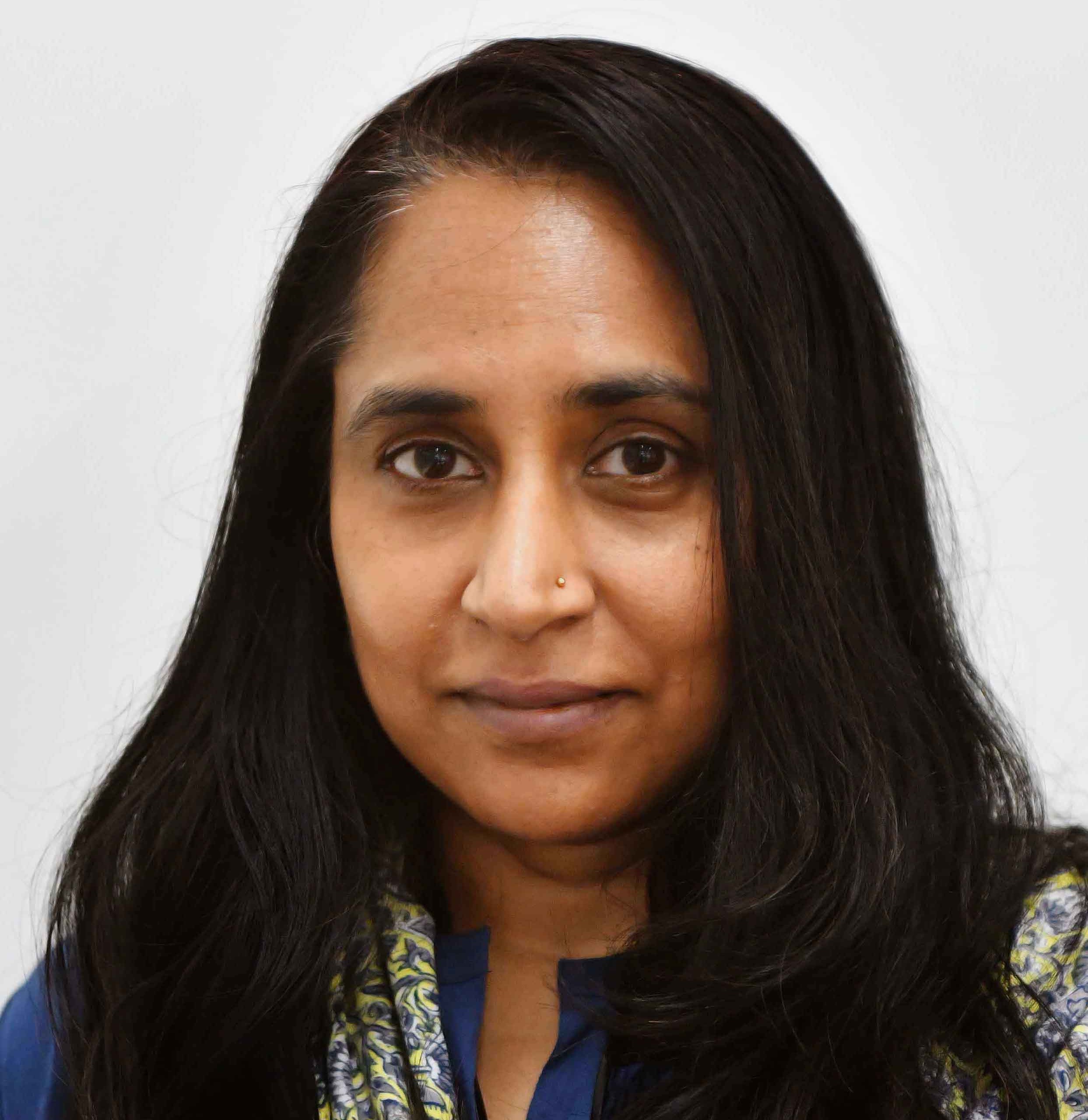
To talk more about the book’s findings—especially as they relate to Indian foreign policy—Sandra Destradi joins Milan on the show this week. Sandra holds the Chair of International Relations at the University of Freiburg, Germany, and she is currently serving as a DAAD long- term Guest Professor at Reichman University in Herzliya, Israel. She is the author of several articles and books on India, including the 2012 book, Indian Foreign and Security Policy in South Asia: Regional Power Strategies.
Milan and Sandra discuss the definitional debates around populism, the conditional effects of populism on foreign policy, and the reasons for the Modi government’s differential approach to Pakistan and China. Plus, the two discuss why populists might express an enhanced willingness to contribute to global public goods, the limited opportunities for mobilization against multilateral institutions, and the differences between populists in the Global North versus the Global South.
Episode notes:
- “Populism, South Asian Style (with Adnan Naseemullah and Pradeep Chhibber),” Grand Tamasha, December 18, 2024.
- Johannes Plagemann and Sandra Destradi, “Populism and Foreign Policy: The Case of India,” Foreign Policy Analysis 15, no. 2 (April 2019): 283–301.
- Sandra Destradi, “Domestic Politics and Regional Hegemony: India’s Approach to Sri Lanka,” E-International Relations, January 14, 2014.
Transcript
Note: this is an AI-generated transcript and may contain errors
Milan Vaishnav Welcome to Grand Tamasha, a co-production of the Carnegie Endowment for International Peace and the Hindustan Times. I'm your host, Milan Vaishnav. We tend to think of populist leaders around the world as disruptive, skeptical of international institutions, impatient for change, and prone to upending foreign policy norms. But a new book by scholars Sandra Destradi and Johannes Plagemann argues that while populists can have dramatic impacts on foreign policy, the extent of change depends on two key factors: the personalization of foreign policy, and leaders' own ability to use foreign policy as a tool of domestic political mobilization. The book is called Populism and Foreign Policy, and it looks at transitions from non-populist to populist governments in four countries, Bolivia, the Philippines, Türkiye, and India. To talk more about the book's findings, especially as they relate to Indian foreign policy, Sandra joins me on the show today. She holds the Chair of International Relations at the University of Freiburg, Germany, and she is currently serving as a DAAD long-term guest professor at Reichmann University in Herzliya, Israel. She's the author of several articles and books on India, including the 2012 book, Indian Foreign and Security Policy in South Asia: Regional Power Strategies. Tt talk more about her work, I'm pleased to welcome Sandra to the show for the very first time. Sandra, congratulations. So nice to see you and thanks for coming on the show.
Sandra Destradi Thank you very much for having me. Hi, Milan.
Milan Vaishnav So your new book with Johannes Plagemann, and we'll link to the book and hope that our listeners will grab a copy, is motivated by a key core question, which is how and why does the formation of populist governments lead to changes in foreign policy? And we're going to spend most of the show talking about answers to that question. But before we get there, you know, take a step back and tell us a little bit about how you and your co-author became interested in this question. And as you looked at this, you know, increasingly voluminous literature on populism, what did you feel was kind of missing from the debate and from the discourse?
Sandra Destradi Yeah, so we started working on this a while ago, back in 2017. So if you think back of that time, it was the beginning of the first Trump administration, the Brexit referendum had taken place shortly before. So, you were starting to notice, to feel very, you know, in a very tangible way that populism was having an impact on foreign policy issues and on international politics more broadly speaking. And Johannes and I had been working on Indian foreign policy for several years, also together, and we were working at an institute, the Giga in Hamburg, which has very regional institutes. We have many colleagues working on Latin America, for example, where there's a very long tradition of studies on populism, on the domestic causes and consequences of populism. So, in discussions with these colleagues, we realized, well, maybe it would be interesting to look at populism as a factor? To try to see whether it has influenced Indian foreign policy, and this is how we got to the topic. And then, you know, I remember, I literally remember going to Google Scholar and entering populism and foreign policy and not finding almost anything back then. So, it really felt it was some sort of gold rush atmosphere for an academic. It was an entirely understudied field. There was one chapter by Aguilos Crisogueros who's one of the other very active scholars in the field right now. Some other works on the foreign policy preferences of European parties, populist parties, but nothing systematic and no theorizing at all on what the impact of populism is on foreign policy. So, what we did is we started developing hypotheses based on the literature on populism and we did a very first plausibility probe for the case of India. [That] is where we started our theorizing, from India. Later, we got the grant from the German Research Foundation to do this comparative project, adding more cases in an abductive theory building process, which means we, you know, in a very in-depth qualitative way, we in an iterative way, we looked at empirical data testing. You know, applying those hypotheses we had developed and then refining them again and again. So, we tried to do theory building from Global South cases, which is also something that doesn't happen so frequently, right? In political science, you mostly start from the US or European cases and then at some point you maybe apply those theories to India as well, etc. I think that's a nice side effect of this project and we later also applied, like in one of the chapters of the book, we try to apply our theory as well to European cases to Hungary, the UK and Italy, and find that it works for those cases as well. But this is where we came from. So, a phenomenon that had been studied extensively concerning the domestic implications. We've known a lot on the domestic causes and consequences of populism, but at that time it was an entirely understudied field. Now the field has grown tremendously over the past years, as you can imagine. An area of its own almost now.
Milan Vaishnav Sandra, I want to just pause before we go too far and just ask you a little bit about definitions. You know, I think this word populism, populist gets thrown around a lot. I think most of us kind of have a sense of what it means, but it's kind of a slippery slope about when it gets used. You and your book conceptualize populism as a, “thin-centered ideology.” That is typically combined with the “thick ideology.” And so, for listeners who are maybe not academics who are less familiar with the terminology, what do thin and thick ideologies mean? And how does that distinction help us better understand what populism is and what it is not?
Sandra Destradi Yes, you're perfectly right. Populism is a term that is being used far too much and in a very loose way in many cases. And like all social science concepts, there are so many different conceptualizations of it. So, we took over this definition of populism from comparative politics. So, Cas Mudde coined it. We find this understanding of populism as a set of ideas very useful and very helpful if we want to understand this phenomenon at very different levels, from the individual level up until the question of how it influences international issues. So, a set of ideas. So what Mudde tells us is populism is an ideology, a set of ideas that tells us something about what society should look like. But there are other ideologies, like full-fledged ideologies: socialism, liberalism, that tell you a very detailed story about many aspects of life and of, you know, what society should look like, what the economy should look, etc. Populism doesn't go that far. Populism just entails a very basic notion. And this notion is that society is divided into two groups, which are, you know, clearly separate and opposed to each other. And these two groups are the people, the good, the true people and the bad, the corrupt elite, right? As populism builds this opposition of the people versus the elite, and it claims that politics should be an expression of the popular will, of the Volonté Générale, of the will of this pure, good people as opposed to the elites. Of course, this is a, you know…it's not much. It's a thin ideology because it doesn't tell you very much about all the other things that happen in society. Now, usually populism is combined, as you said, with a thick ideology, a more full-fledged ideology or a richer ideology in a way. So, an ideology that will help populism define more clearly who the people and who the elites are. For example, if you're a left-wing populist, the people would be the dispossessed masses, the hard-working working classes, etc., or the victims of global capitalism, and the elite would be, the capitalist, imperialist powers, the US as a foreign elite, for example, and their capitalist representatives within the country. Now, if you're a right-wing populist, the true people [will] usually be defined in ethno-nationalist terms. And in India, if you look at our case study here, you have, with Hindu nationalism, with Hindutva, of course, a very well-established, thick ideology to borrow from. So in order to define the true people in a specific way, as maybe the Hindu majority in India while the elite, the corrupt establishment, is usually identified with the Indian National Congress, which suffered all the corruption scandals before Modi came to power, and all these aspects of the dynastic politics in the Congress. All these elements are used to fill the notion of the elite with meaning, for example, in the specific Indian case. But what we were interested in in the book and in this project is whether populism, despite being so thin as an ideology, despite entailing, it doesn't tell us anything about what the foreign relations of the country should look like, right? It's just about the society and the people versus the elite. But whether this very thin ideology can have an impact on foreign policy across cases, you know, both right- and left-wing populism, is there anything that populists have in common when it comes to foreign policy?
Milan Vaishnav I mean, just to reiterate something that you said, you know, if I were to summarize. Populists can vary enormously in terms of their policies, in terms of their style, whether they’re left wing, right wing, and so on. But there are two core elements of this thin definition of populism, right? One is anti-elitism, and the second is people-centrism. So, if we were to kind of take this idea to the Indian case and apply it to Modi, the idea would be number one, he sort of campaigned to office and continues to campaign on the basis of representing the true masses against the corrupt dynastic Congress and the ancient regime. And it's people-centric in the sense that he directly speaks to/for the masses, right? Often mediating the media, speaking directly to them on their television show or on Twitter, on social media. Is that essentially right? Is that why in your definition, Modi qualifies as a populist?
Sandra Destradi Yes, exactly. Right? So, according to this understanding and to those notions of anti-elitism and people-centrism, we see all these components very clearly in the Indian case. And there are studies in the populism literature, from political theory, for example, the work by Nadia Urbinati, that emphasizes how the leader really becomes an embodiment of the popular will, that, you know, there's this direct connection between the leader and the people. This is a very peculiar understanding of democratic representation really as embodiment of the popular will. And you have it very clearly in the case of India, you know, when Modi gives these speeches. Like on Independence Day, I think in 2017, when, you know standing at the Red Fort, he said, I am the voice of 1.2 billion countrymen or something like that. Right? Not just claiming to belong to the people, to be one of the people. The son of a tea seller and all that and rhetorically always emphasizing the differences. I'm not educated at the best universities, etc. I am one of you, but also claiming to give voice to the people. Anti-elitism and people-centrism, in a way, are two sides of the same coin, right? But they are annalistically distinct and it's really interesting to trace these elements in this course, in the case of India.
Milan Vaishnav So we've talked a little bit about what populism is, what it's not, used Modi as a bit of an example to understand what this thin definition tells us. I want to turn now to foreign policy, because your book really is not just about what these people are doing domestically, but how it's linked to the foreign relations of the countries they represent. And, you know, one of the main interventions of your book is that, look, the argument or the impact of populism, is not mechanical. If you simply elect a populist, that does not mean you are going to generate or produce foreign policy disruption. The degree and intensity of the change depends on two factors in your book. One is personalization and the second is mobilization. I wonder if you could just tell us a little bit conceptually, what role do these two variables play and how do they interact with one another?
Sandra Destradi Yes, so exactly, you summarized it really nicely actually. The entire point is with populists and power in so many different countries of the world, and of course we see they don't all do the same. It's not that you see the same, exactly the same kind of foreign policy outcomes, nor the same foreign policy preferences. The main claim in the book is that despite being so thin as an ideology, nevertheless, populism has an impact on how foreign policy is made, but more on the procedural side, right? On the way in which foreign policy is made happens, and that this in turn will help us explain when foreign policy change will be pronounced and when not. OK, and we need—and those two mechanisms of personalization and mobilization are key to explain these differences. So, personalization is about the leader playing a key role in doing foreign policy. I already said something about the leaders being so central in populist governments. This idea of the leaders speaking in the name of the people. Well, you might say you have personalization in all sorts of governments. You have, you know, those leader level summits, the G7, the G20, is this really a populist phenomenon? And of course, it's a broader trend of our times, but in populism, its particularly pronounced the centrality of the leader precisely because of this connection, this different understanding of democratic representation. So now what happens if you have a leader who claims to literally be the people, a leader that basically always is right because he does what the good people wants and prefers? This leader will centralize and personalize decision-making. So personalized means, of course, that the leader will play personally a key role in making those decisions. But this will also lead to institutional changes, to reforms, right? We will see across the board, not just in India, leaders, populist leaders, concentrating decision-making within, you know, a small circle of advisers, of, you know, sometimes personal friends or, you know, close partners of the individual leader there. And in parallel to that, you see in many cases a marginalization of foreign ministries, so of the bureaucracies that are normally tasked with foreign policymaking, that are in charge of foreign policy. Why? Also, because of anti-elitism, this is why those dimensions are so important. Diplomats are, of course, an elite, like by definition. These are highly trained people selected in very competitive procedures, cosmopolitan, moving in our imagination at cocktail parties in small circles in the world's capitals, right? Who could be more distant from the true people in a populist discourse than diplomats? So, what happens is populists marginalize precisely those actors, diplomats, who are in charge of keeping foreign policy going, of keeping good relations with other countries on a working level, on a day-to-day level. They also tend to be very skeptical in some cases of, you know, of experts of the strategic community, which, you know, the swamp, maybe the swamp in Trump's language. So, all these people who have done foreign policy before, traditionally, who embody the usual way of doing things. Now what happens, if there's this personalization and centralization of decision-making? You end up, as I said, marginalizing the actors that stand for continuity, for cooperation. Populist leaders will also rely more on fringe figures, maybe on hardliners, so they will not hear the broader spectrum of positions of views on foreign policy decisions. You will have groupthink, which in the literature in foreign policy analysis has been shown as something that can be dangerous, [and] lead to bad decisions in foreign policies. So foreign policy personalization is something that can lead, or we would expect it to lead to more extreme foreign policy change from the populists. The other mechanism is mobilization. So, mobilization is about, you know, trying to, all the time, generate support among your constituencies by mobilizing them, right? So, what happens with populists is that when they come to power, when they win elections, they form a government, they face a very peculiar dilemma. They become themselves the establishment, right, the populist leader who gets voted into office. Suddenly, you know, governance becomes the elite in a way. So, this is why the literature from comparative politics, political theory, tells us that when populists are always on the campaign trail, even when they govern, they voted into office and they continue campaigning basically. And this continuous mobilization resorts also in a very important way to foreign policy issues. So foreign policy themes are very useful to mobilize power, especially if you can. Point at some enemy of the people out there, you know, create those or emphasize those cleavages. So, mobilization becomes something like, you know, a tool to also connect the foreign and the domestic to criticize your domestic opponents by resorting to foreign policy themes. So yeah, the politicization of foreign policy—my colleague David Cadier calls it like a continuation of domestic politics by other means in foreign policy. So, if you have high mobilization, this can be expected to also prompt foreign policy change, mainly because by criticizing what the establishment has done before you, your political predecessors have done, you need to differentiate yourself from them. But also, you create audience costs. So you basically, to maintain your credibility as a populist leader, you need to live up to the expectations you produce. If you mobilize support all the time, if you keep bashing your enemies, you need then to follow up on those expectations. And this is why if both mobilization and personalization are strong, we expect foreign policy change to be particularly pronounced. That's the core theoretical argument in our book. But if one of the two dimensions, either mobilization or personalization, is not that strong, simply because, for example, leaders don't engage in the same way to the same degree and on all issues, they don't care equally about every topic, right? So, in some fields, personalization might be low or some themes might just not interest the public. So, you cannot use them for mobilization, right, so you can have variation here. And this explains why in many cases, foreign policy change is not that strong under populist governments despite these mechanisms. So, you can have also instances of continuity if we have very low levels of both personalization and mobilization. That's our theory in a nutshell.
Milan Vaishnav So we're going to come back to how these things work in the real world with some examples. But before I get there, let me just ask you one or two other things on just the kind of theory, right? Which is one of the things that you said just now is that the personalization of foreign policy often goes hand in hand with the centralization of power in the leader's hand. So, let's bring foreign policy into the prime minister's office and maybe marginalize or sideline the traditional bureaucracies, and that's a pretty common pattern. But of course, centralization is not unique to populists. Many people have made the argument in the United States, pre-Trump, that foreign policy, for instance, had become too centralized in the White House and that the traditional line ministries have been kind of disempowered. So, what makes populist personalization distinctive in your view?
Sandra Destradi So maybe one distinction first. When we talk about centralization in the book, we refer more to the institutional dimensions of that, right? And I totally agree with you that these are broader trends. We believe, well, we think that the difference is a matter of degree in the first place. So, with populists, we see this is just more pronounced, it's more extreme, right? You see more of this personalization and centralization than with non-populist governments. The second element is of course this centrality of the leader that gets a different quality precisely by this notion of the leader embodying the popular will and representing the people in just such a different way as compared to a non-populist leader. So, I don't know, Angela Merkel traveling to a G8 or G7 summit was of course a representative of the people but not in the sense of embodying the will as a quintessential non-populist leader, right? So, this and the visibility of the leaders, the emphasis on personal connections among/between populist leaders, these are qualitative differences. But they're more nuances, I agree with you. It's not kind of an exclusively populist phenomenon. And by the way, we're seeing many trends that come from populism spreading also to conventional mainstream non-populist parties all over the world.
[…]
Milan Vaishnav Just another question on the mobilization side, which is, you know, one of the assumptions you make in the book is that, look, foreign policy issues can be used for domestic political mobilization, and they're often prone to being deployed or utilized in that way. And one of the things that, [one] question that arose during the book was, you what is it about foreign policy specifically that makes it such a potent, perhaps even uniquely flexible tool from mobilizing the kind of masses?
Sandra Destradi Yeah, so, I mean, one aspect is there's this big literature on things like the rally around the flag effect, right? So, we know that this is not just typical of populists, right? That you can, by pointing to an external enemy, or if you're in a conflict with an external enemy, internal divisions will be set aside at least for a while so you can consolidate your power, in a way. That you know, conflict situations for example can be used very well to mobilize the point. Now with populists specifically, this has to be in a way or it works best when it is connected to this division of the people versus the elite and the understanding of who the people…what constitutes the people and who the others are, right? So, if you can identify an external other fundamentally opposed to the good, the true people in this very, you know, black and white, moralistic, Manichaean understanding of the world that populists have, this is an extremely powerful tool for mobilization. At the same time, of course, there might be issues in foreign policy that just don't resonate that much with a thin ideology of populism, or maybe with a thick ideology. This is why we don't see populists using every foreign policy issue for domestic mobilization. We have very paradox examples, like in the Philippines, Duterte tried to move the Philippines closer to China [and] away from the US, but he couldn't successfully use this to mobilize support because most of the people in the Philippines have very favorable views of the US and are very critical of China, right? So, it really depends to what extent you can use this us versus them.
Milan Vaishnav Let's maybe now pivot to the India example, which is the one obviously we're going to focus on as an India podcast. When it comes to foreign policy, you have this contrast between how India responded to what it saw as provocations from Pakistan versus how it has responded to other provocations from China. And you argue that India-Pakistan relations under Narendra Modi post-2014 are a case where you see strong personalization and strong domestic mobilization, and that leads to a kind of heightened response. On the other hand, if you think about India's response to China, particularly after the border crisis, we don't necessarily see the same kind of robust, vociferous, aggressive, if want to call it that, response. Tell us a little bit about why the dynamic looks different to you.
Sandra Destradi Yes, so I mean, the case of India-Pakistan relations is a very good illustration as well of this mechanism I mentioned. And it has a lot to do, of course, with the understanding of the people in this populist discourse in India in connection with the thick ideology of Hindu nationalism. So, if the true people exclude Muslims, religious minorities, broadly speaking, from who belongs to true people and then you have a connection there between this excluded group of the population and your archenemy, Pakistan, then you can very easily make a discursive connection between this external other that is threatening, that is your enemy, and that is also linked to, you know, a group that is not part of the people domestically. So, what we saw in the case of India-Pakistan relations, we compared reactions of, you know the previous, the Manmohan Singh governments, UPA 1 and 2, to Pakistan sponsored terrorist attacks. I mean, mostly the Mumbai attack of 2008, where the Indian government, okay, suspended the composite dialog, but overall was very restrained in its response, right? There was no military retaliation. And in the case of Narendra Modi's governments, we saw after the 2016 Pathankot and Uri attacks, you had those highly publicized special forces operations in disputed territory controlled by Pakistan against terrorist infrastructure. In 2019, you had the Pulwama attack, and again, India retaliated, escalating more by carrying out air strikes on suspected terror facilities within Pakistan proper and not in disputed territory.
Milan Vaishnav Right. I mean, this went beyond disputed territories to kind of quote unquote sovereign Pakistan in 2019.
Sandra Destradi Exactly, exactly. So, it was definitely kind of a higher level of escalation, of retaliation. And of course, that's not in the book, but a more recent development in 2025, after the Paragam attack, you had the launch of Operation Sindhoor. So, this major escalation between India and Pakistan again, as a response to Pakistan's sponsored attack, right? So, this was a case in which you clearly have the shift away from a more restrained approach of the non-populist government before to a more offensive escalatory approach on the part of the populist government, clearly driven by personalization on the one hand, which is very high in the case of India-Pakistan relations, but also by mobilization. So really in the case of India, I mean, many, many listeners who know the case very well will remember, for example, the 2019 election campaign with Modi really focusing a lot on security issues, portraying himself as the watchman protecting the nation from, you know, external threats. But of course, you have all this discourse about, you know, the excluded part of society being described as a fifth column of Pakistan, basically everyone not supporting the government's policies being branded as anti-national. You had in 2024 this reference to India's Muslim minority as a jihadi vote bank of the Indian National Congress. So, these are major discursive connections aimed at mobilizing support against Pakistan and all of this. And here we are talking about the audience costs again. So, this technical term basically for the expectations that you generate among the public, Modi was ultimately forced in 2025 to respond in a much more aggressive way simply because discursively with all this mobilization, he generated the expectation that his government would react in a very strong manner if another attack would happen in the future. Now, in the case of China, it's amazing to observe the difference, right? Because you had, of course, the border disputes, and you had also a series of episodes of direct military confrontation. You had Chinese infrastructure being expanded in disputed territories. You had in 2017 the standoff at Doklam, which is this area claimed by both China and Bhutan, where India played a role. You had, in 2020, a major clash in the Galwan Valley in Eastern Ladakh, where at least 20 Indian soldiers were killed. We don't know how many Chinese. In 2022, skirmishes in Tawang. So, you had a series of episodes in which the Indian government of course reacted, did not retreat or something, but at the same time Modi I think very consciously, very explicitly chose not to escalate. There's even evidence that India ultimately tolerated the resumption of this infrastructure constructions in some of these disputed areas. So, what we see here is still high personalization. Modi is personally involved in decision-making on China, of course. But we saw surprisingly low levels of mobilization. So, I remember there was a phase when protests started erupting in India against China. I remember images of people in India throwing their TVs, their China-made TV sets from the balconies to protest against China. But the Indian government chose consciously not to use this opportunity, you know, to generate more anti-China sentiment. It was very silent on this issue. And in the book, we argue, and I'm convinced that this was, you know, a very rational choice, you know, simply related to the threat by China, so the sense of vulnerability on the part of India. Which I think also underscores the fact that, you know, we might end up, we might think of populists as irrational, you know, crazy, emotional decisionmakers in some cases. I don't think this is the case necessarily. You know, these are rational decision makers who use very strategically the tools of populism. Moving a bit in the strategic, they believe the ideas, right? I'm still following the ideational approach, but they're very conscious in their choices, you know, [and] how far they can go in which cases.
Milan Vaishnav I want to talk about another case, which was also very interesting and unexpected, I guess, in terms of what the theory might predict, which is, you know, the theory suggests that in places where you have, again, strong mobilization, strong personalization, that we might expect a reduced willingness of a populist leader to have his or her country contribute more to global public goods, things like climate change mitigation, right? And what's interesting in the Indian case is you don't observe that at all. And that's actually true for many of your cases. What explains, do you think, this divergence between what we might except in theory and what we see in practice, which is that many populists who rely on strong mobilization and personalization, in fact, appear to be taking their countries towards providing more global public goods rather than less?
Sandra Destradi Yes. So, what we did in the book was we looked at three fears, climate change mitigation, the promotion of peace—so specifically looking at contributions to peacekeeping operations and offers to mediate in conflicts—and we looked at development aid. And we had started with the idea that populists would be very skeptical about, you know, investing in the provision of these global public goods, which by definition, they're non-rivalrous, which means one actor's consumption doesn't reduce the availability to others, but they're also non-excludable. So, no one can be excluded from these goods; everyone benefits from them. So, the problem is free riding. And this is something that, for example, the Trump administration keeps emphasizing. They're very skeptical about paying basically for global public goods that everyone will benefit from. So, with this kind of this idea in mind about populists focusing on the people, narrowly defined on their own people, we expected populists to be much more skeptical about global public goods provision as compared to non-populists. Now what we found was the opposite in some cases and in India in particular on climate change mitigation and also Türkiye we saw that under Erdogan in the populist phase, Türkiye was much more engaged in providing development aid and trying to provide for peace, for example. Why? I think the main reason, for the case of India specifically, is about status seeking. It's about India agreeing to pay and contribute for global public goods in order to be seen as a great power. This striving for great power status has always been the main goal of India's foreign policy since independence, since Nehruvian times, which is something no one wants to quote nowadays, right, but this idea of India's rightful place in the world to be attained. This is something all Indian governments have pursued and it's a key element, of course, also of the current government's policy. So, providing global public goods is something that is inherently seen as what great powers do. It's part of the foreign policy of the great. So, I think in the case of climate change mitigation, this was very visible for the case of India. So maybe remember in 2015 at the UN Climate Change Conference in Paris, you had Modi giving a very engaged speech launching the International Solar Alliance, being much less obstructionist as compared to previous governments. And everyone was very surprised at the time that India was so willing to engage here. Now, we all know that India de facto when it comes to its domestic policies, it has very mixed records on climate issues, the relying on coal, et cetera. But this emphasis on contributing, especially on the international stage, was something new. There was a much bigger engagement on the part of India. And it's interesting because it was very much, and it still is very much, a personal project of Prime Minister Modi, [who] has been interested, apparently, in this issue for many years, personally. And it has also been used, and this is interesting, for mobilization to some extent. So, if you look at Modi's speeches, and also there are studies that look at publications of the BJP, for example, there's a lot of reference to environmentalism, for example, framed in Hindu nationalist terms in the sense of striving for a purified nation, for example, or this notion that India will teach the world how to better deal with nature in line with its traditions and so on. So basically, the vocabulary of the thick ideology was used here to justify greater engagement in the provision of global public goods. And you really also can trace how this greatness of India was used as a justification for this engagement. So, you have in one of these monthly radio speeches of Modi, this monkey bug, right, that tries to reach the people who don't have internet access and so on. He, for example, emphasizes that India was awarded an environment award, champion of the earth, right. And he mentioned this as something that brought a place of pride and glory. Was a quote to India. So, you see the great power ambition expressed in a way of this recognition framed in terms of India's great power ambitions. So, the idea of: we contribute to these global public goods and we get recognition for that because we are a great power. So, we think that status seeking in this case can mitigate the more negative impacts of populism. So not all populists are climate denialists and not all of them always behave like bad international citizens.
Milan Vaishnav But I mean, here's kind of a paradox, right? Which you point out in your book towards the end, I think it's in the penultimate chapter, which is you compare populists from the Global South and those from the Global North. And what's interesting is that populists in the Global North often retreat from multilateralism, right? They are often actually spurning international organizations like the UN. I mean Donald Trump is a great case, but he's not the only one. While those in the Global South, at least the ones that you look at, are doubling down on them, right? So, what do you think accounts for the difference between how populists in the North and the South behave? Does it have to do with what you just ended on, which is the centrality of this rising power status and ambition?
Sandra Destradi So on the one hand, yes. For rising powers, of course, this idea of using multilateral institutions to again show also to a domestic audience the, you know, the strength, the importance of the leader and the greatness of the people. And I think in India, we had this super interesting example of this with the G20, which India had the presidency back in in 2023. I was in India at the time and I remember really seeing this G20 logo everywhere, right? It was on every train.
Milan Vaishnav Right. It was remarkable. I mean, I remember being there and getting a text message on my cell phone to say, like, today is a proud day for all Indians because it is the beginning of our presidency, the G20, right? I mean just a blast to every mobile phone subscriber in the country.
Sandra Destradi Yes, yes. And this logo was like on the rickshaws in Chandni Chowk. It was on every train. It was everywhere, like also in smaller cities, out of Delhi, etc. So that was really… what was it about? It was about bringing to the people this notion that India is being recognized as a great power, that the 20 most important people of the world are coming to visit Prime Minister Modi in the country, right? So, this notion of, you know, great power achievement via participation in an international setting in a way, right? Now with the United Nations, it's a bit more complicated. India has, of course, a long history of engagement in the UN. There's also been, however, some disillusionment under Modi, which might contribute, to explain this emphasis on the G20, also as an alternative forum. But in the period we analyzed, Indian contributions to the UN grew at least until 2022. India continued to call for reforms of the United Nations. Of course, it's very skeptical of, you know, just five countries having permanent seats on the UN Security Council and so on. But at the same time, the UN remains this important forum where Global South countries have a voice, right? So going back to your question on the Global South beyond India, beyond just India. The UN still remains with a formal commitment to sovereignty, to equality, to non-interference. This is a body that is important, in a way, to many Global South governments, much more than to countries in the Global North. And maybe one more point, thinking of the mobilization part, it's of course very easy in Europe, think of Europe, for populists to mobilize against the European Union. So European countries have given away huge amounts of sovereignty to the EU. You can portray Brussels as this distant, technocratic, obscure body that is impinging on people's lives with lots of strange regulations. You cannot do this, of course, in many other parts of the world where you don't have regional organizations that go that far, right? Where you have intergovernmental cooperation, but you don't have countries ceding so much sovereignty. So, the salience of these institutions is just really low to the people. People don't care. This is nothing you gain votes with by blaming an international organization. So, this, we observe this in many parts of the world, that many regions of the Global South, and in some places, like in South America, you even have populists building actively new regional institutions as alternatives or to convey their message. So, there's this belief in the inherent utility of multilateralism. And I think that's an important difference and also something that helps us maybe reflect on the fact that not all populists follow this Trumpian playbook that is so prominent that we see so much or they don't all conform to what happens in Europe. It's a global phenomenon with very different aspects.
Milan Vaishnav Well, this is where I wanted to end this conversation and maybe this is a good place to wrap up, which is, you know, one of the things you see in the final chapter is that I liked how you said it: not all populists automatically like each other, right? It's not like they're not all friends. There is a narrative I think many of us have or are guilty of falling into that look, you have these ideologically aligned populists who are forming a kind of, you know, transnational access of populist regimes. And in fact, that has not consistently materialized in practice, right? And I just wonder if you could just say a final word on, you know, what do you think some of the, the cleavages are or impediments to actually creating that sort of collaboration cooperation?
Sandra Destradi Yeah, I think the main cleavage, the main impediment is populist ideology per se, which is on the one hand very thin, so it's not something that brings all of these very different actors together. So, in fact, we are seeing forms of cooperation among right-wing populists and networks emerging, especially in the Western world, but not only, right? So, you also had, you know, the BJP or the Hindu organizations sending representatives to the National Conservatism Conference in Washington, D.C. in 2024, it's Budapest Summit, etc. But if you think of populism as a broader phenomenon, these are actors who have very little in common in many cases, right? So, and by definition, their ideology is about putting the people first, their own people first. So, this is, I would say, the first, probably the main impediment. But at the same time, I would also say personalization and this highly personalized foreign policy comes with risks, in a way. It sometimes helps in the sense that you have, you know, personal affinity between populist leaders that leads to improved relations between countries. So, we had, of course, Modi and Trump in the past being very close and this really marking a substantial, you know, advancement in US-India relations, but if decision-making is so personalized, if, you know, the bodies that keep continuity are marginalized, things can change quickly, as we're seeing right now, of course, with India-US relations position, right? Plus, another thing, the thick ideologies might also not fit with each other. So, if you have a Hindu nationalist leader and a Muslim nationalist leader like Erdogan, those thick ideologies, despite both of them being, you know, right-wing strongmen, populist leaders, they stand in the way of deeper cooperation. So, I don't see this populist international axis emerging in a consistent way. There are many factors in there that make this difficult.
Milan Vaishnav My guest on the show this week is the scholar Sandra Destradi. She is a co-author with Johannes Plagemann of a new book, Populism and Foreign Policy. It looks at populist governments in Bolivia, Philippines, Türkiye, and India, and the ways in which populism does and does not impact foreign policy. She's also the author of a forthcoming essay, which will be out hopefully in a couple of weeks from the Carnegie Endowment as part of a series on looking at right-wing populism and their impacts on foreign policy. Sandra, congrats on the book. It was fun to read and thanks so much for taking the time.
Sandra Destradi Thank you very much.