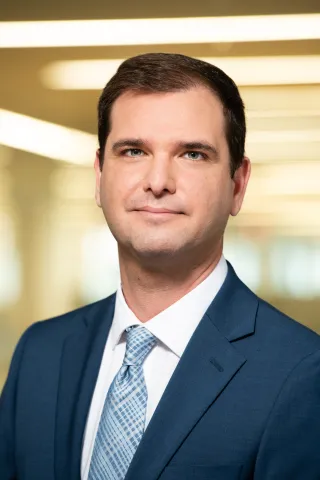
Milan Vaishnav and Tanul Thakur discuss Tanul's new book "Wild Wild East: Exiled Americans, Enslaved Indians and the Systemic Abuse of the H-1B Visa Programme."
Milan Vaishnav, Tanul Thakur
Journalist Yudhijit Bhattacharjee joins Milan this week to discuss the rise and fall of Indian education technology company Byju and the larger cautionary tale surrounding technology start-ups.
India’s celebrated education technology company Byju’s went from being one of the world’s most hyped start-ups to being sued for fraud in a Delaware court and accused of engaging in unethical, if not illegal, behavior.
The episode serves as a cautionary tale about the world of start-ups, venture capital, and the crushing social pressures Indian children and parents face to climb up the social ladder.
The story of the rise—and sudden fall—of Byju’s and its founder Byju Raveendran is detailed by the journalist Yudhijit Bhattacharjee in a new piece for the online magazine Rest of World titled, “The math tutor and the missing $533 million.”
Bhattacharjee is a contributing writer at The New York Times Magazine whose writing has also appeared in The New Yorker, National Geographic, Wired, and other U.S. magazines.
He is also the author of the New York Times-bestselling nonfiction thriller, The Spy Who Couldn’t Spell, and host of the podcast “Scam Likely.”
To talk more about his recent reporting, Yudhijit joins Milan on the show this week. They discuss the rags-to-riches backstory of Byju Raveendran, the anxiety Indian families experience around education and career success, and Byju’s miraculous rise—and sudden downfall. Plus, the two discuss the larger lessons of this episode for start-ups, investors, and India’s future as a consumer market.
Episode notes:
1. Pradip K. Saha, The Learning Trap: How Byju’s Took Indian Edtech For A Ride (New Delhi: Juggernaut, 2024).
2. Chloe Cornish, Jyotsna Singh, and Mercedes Ruehl, “How a teaching app feted by Silicon Valley was left chasing the Indian dream,” Financial Times, October 3, 2022.
3. “When venture capitalism goes wrong,” Financial Times, October 23, 2024.
4. “Understanding the Delhi Education Experiment (with Yamini Aiyar),” Grand Tamasha, January 22, 2025.

Carnegie does not take institutional positions on public policy issues; the views represented herein are those of the author(s) and do not necessarily reflect the views of Carnegie, its staff, or its trustees.
Milan Vaishnav and Tanul Thakur discuss Tanul's new book "Wild Wild East: Exiled Americans, Enslaved Indians and the Systemic Abuse of the H-1B Visa Programme."
Milan Vaishnav, Tanul Thakur
Discussing their new short book, Indian Public Opinion toward the Major Powers, Paul Staniland, and Aidan Milliff join Milan Vaishnav to discuss the treasure trove of data on Indian public opinion they stumbled upon, the characteristics of India’s “foreign policy public,” and the variation in Indian attitudes toward the United States, China, and Russia/the Soviet Union. Plus, the discuss why a respondent’s region emerges as a strong predictor of one’s foreign policy views.
Milan Vaishnav, Paul Staniland, Aidan Milliff
Host Milan Vaishnav and Ambassador May-Elin Stener discuss the outcomes of the India-Nordic summit, the Trade and Economic Partnership Agreement (TEPA), and the green technology partnership Norway envisions with India.
Milan Vaishnav, May-Elin Stener
Milan Vaishnav, Sadanand Dhume, and Tanvi Madan discuss whether India is becoming a “one-party state,” the current state of the opposition, and the headwinds facing the Indian economy. Plus, the three discuss Pakistan’s diplomatic moment, Trump’s recent China trip, and Marco Rubio’s visit to India.
Milan Vaishnav, Tanvi Madan, Sadanand Dhume
This week, Milan Vaishnav and Abhishek Anand discuss the controversy over India’s GDP estimates, important reforms within India’s statistics ministry, and the debate over the Reserve Bank of India’s policies to defend the rupee. Plus, the two discuss Abhishek’s work on power sector reform and the embrace of non-tariff barriers that stymie the spirit of India’s new bilateral trade agreements.
Milan Vaishnav, Abhishek Anand