For more than sixty years, Cuba’s revolutionary government has survived economic crises and sustained pressure from the United States. But today, the island may be facing its most severe test yet. Daily life is grinding to a halt, under intense economic pressure from the Trump administration. Some U.S. officials are even predicting the imminent collapse of its longstanding communist regime.
But what does the United States actually want from Cuba? What do past U.S. policies toward Cuba tell us about America's options for getting the change it seeks?
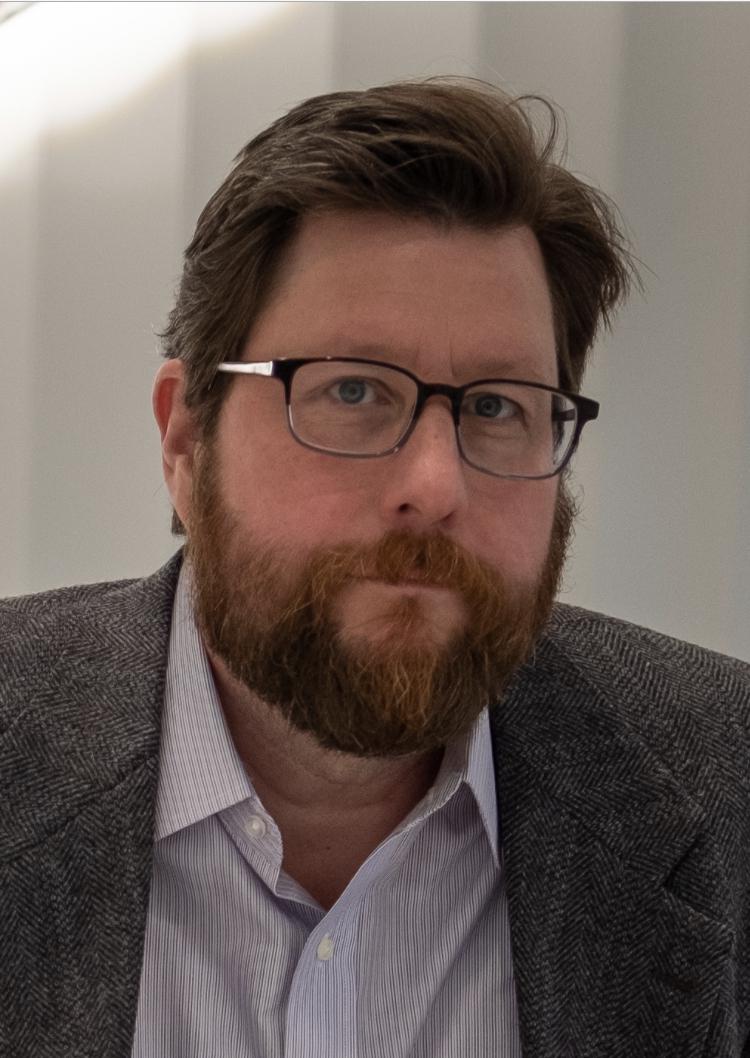
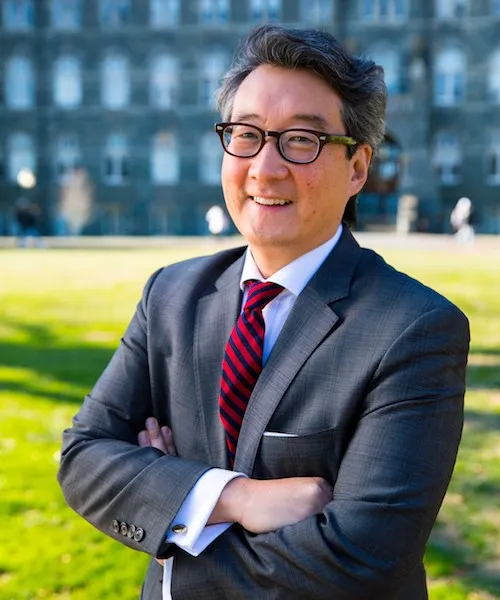
In this episode of Pivotal States, Christopher Chivvis speaks with Michael J. Bustamante, Associate Professor of History and the Emilio Bacardí Moreau Chair in Cuban and Cuban-American Studies at the University of Miami. They discuss U.S. strategic interests in Cuba, the Trump administration’s approach toward the Island, and scenarios for the future.
Transcript
Note: this is a rush transcript and may contain errors.
Chris Chivvis
I think, at a minimum, you are reminding me that it's easy to exaggerate the amount of agency that the United States actually has, even in a country like Cuba, where we have this long relationship. It's right off our coast. It's much smaller, but, nevertheless, is a nation unto itself. And our capacity to determine or even significantly affect the course of its politics in the ways that we would like to affect it is probably exaggerated what people talk about Cuba here in Washington D.C.
Michael J. Bustamante
And a political change, even if it happens, birth with an external influence or external action is going to have long-term questions over its legitimacy.
Chris Chivvis
I'm Chris Chivvis. Welcome to Pivotal States, where we examine the strategic challenges and opportunities facing the future of American foreign policy. At the beginning of this year, the Trump administration captured the leader of Venezuela. Then it turned its sights on Iran. As it ramps up pressure on Havana, many analysts are wondering: could Cuba be next? Cuba's communist government has survived decades of economic crisis and pressure from the United States. But today the government is facing its most severe test. The Trump administration has tightened the reins of the U.S. embargo, and Cuba is now suffering nationwide energy shortages, with daily life grinding to a halt. What are the prospects that the regime will collapse? What are major strategic options for Washington? And what are realistic scenarios for the future? With me to answer these questions is Michael Bustamante, associate professor of Cuban and Cuban-American Studies at the University of Miami. Michael's a historian who has published a fascinating book on how the memory of the Cuban Revolution affects the politics of Cubans, both in Cuba and in the United States. He's also the author of a great Foreign Affairs article on Cuba's desperate economic situation. Michael, I'm delighted to have you here. I'm really looking forward to this. Cuba is a topic that interests me, but that I don't know a ton about, so this should be fantastic.
Michael J. Bustamante
Thanks for the invitation. I'm happy to be here.
Chris Chivvis
I want to start by asking you to sort of ground us in the current moment before we go into the history and the policy options. And to do that, I'm going to read a quotation by Lindsey Graham from just a few days ago. Senator Graham said, quote: “we're marching through the world. We're cleaning out the bad guys. Donald Trump is resetting the world, Iran is going down, and Cuba is next.” So, stepping back, can you describe the state of affairs where we are right now when it comes to US-Cuba relations? How would you characterize the Trump administration's current approach up to this moment, and why it's leading people like Senator Graham to speculate that Cuba is next on Trump's list of interventions?
Michael J. Bustamante
Sure. So, since January, the Trump administration has implemented a kind of intensified version of what in the first Trump administration they called a maximum pressure strategy on Cuba. They sense an opportunity. They sense that the Cuban government is at its weakest point in 30 plus years. And so, by virtue of taking out Maduro, they have gained control over a crucial part of Cuba's energy matrix, largely imports of Venezuelan oil, they've cut those off, or at least the United States is in the position to turn on and off the spigot. They have threatened tariffs, though the Supreme Court has sort of taken that off the table. But the threat still persists of some kind of retaliation against countries that any other country that would export oil to Cuba. And so, they are using energy in particular as a way to squeeze the Cuban economy, to ostensibly put the Cuban government in a situation where it has to concede. Concede to do what is a little bit unclear. Right, we're definitely gonna talk about that. And so that's kind of where we are in broad terms.
Chris Chivvis
Great, that's an excellent summary and we're obviously gonna come back to discuss that in more detail. But I wanna talk also a little bit about what's the situation in Cuba right now as we're sitting here in Washington D.C. You wrote a great piece in Foreign Affairs in January called “Cuba on the Brink,” in which you described the state of the plight of the Cuban economy right now, under President Diaz-Canel, and you wrote that Cuba is enduring its worst economic crisis since the collapse of the Soviet Union. You describe blackouts and write that today the island seems to be sinking. So, what's it like to be living in Havana right now?
Michael J. Bustamante
Well, if you're living in Havana, you're a little bit better off than other parts of the country because the capital is always somewhat insulated from the depths of issues. But life in Havanna is still really hard. People in recent days and weeks have been dealing with 14, 15 hour a day blackouts. Actually, last week there was a, not quite a nationwide power outage, but the entire western half of the island was without power for several days. So, just imagine having to sort of structure your daily life around that, right? You go to the grocery store, there isn't a lot of food to be had to begin with what you, you know, the chicken you stick in your freezer, the power goes out, you suddenly got to cook it. Oh, wait, there's no natural gas either. You know, so people are living day to day, hour to hour, just thinking about how to get by. People in some cases are literally tearing apart wooden furniture in their homes and building fires in the streets to cook. That's the level, and that's in Havana, right? So, this is a very, very deep economic crisis. It's also not an economic crisis, as I hope to show in that piece, that begins in January. In fact, it's worth noting that my piece came out, I think, two days before the Maduro raid, and in retrospect, I might have liked to hold it a couple days to update it, but this is crisis that has been a slow-moving situation for a number of years now, and it's only intensified since January.
Chris Chivvis
So, when you say that it's slow moving, I mean, how much worse is it now than in the past? I mean has Cuba experienced this kind of economic hardship before or is this really a new level?
Michael J. Bustamante
Most Cubans I talk to say that it's a new level, but it's an important question. If you look in sort of raw GDP terms and compare it to say that other seismic crisis that Cuba experienced when the Soviet Union fell, the decline might not look as bad. In the early 1990s, Cuba's GDP declined something like one third in three to four years. Um, the estimates today are that Cuba's GDP since the pandemic roughly has declined, um, somewhere between 10 and 15%. So as a percentage decrease, you know, not as bad ostensibly. Right. But I think from people's experience, it's important to note that the Cuban economy after the 1990s never recovered entirely to where it was in 1989. And so, the starting point for this crisis is lower in a sense. And so, people I think are feeling that decline that much more. Another big difference is the level of inequality in Cuban society today. I think one thing that I hear from Cubans is that in the 1990s, it felt like more people were in the same boat. There were some inequalities for sure as the government expanded with dollarization, experimented with dollarization and openings to tourism and other things to get out of that crisis. But today there are stores run by a Cuban private sector which is a major new actor. Where things can be had, they are just at prices that are out of reach for the vast majority of Cuban citizens. And so that also represents a real difference currently.
Chris Chivvis
That sounds like a pretty volatile situation.
Michael J. Bustamante
Yeah, I think so. And I think, you know, the other thing about the 1990s is, don't get me wrong, the 1990's was a sort of cataclysmic kind of experience for many Cubans who had believed in the promise of a socialist future; and to suddenly see that world disappear and sort of be left on your own, it was incredibly isolating, incredibly trying. And, you remember, back to 1994, 45,000 people left on rafts, right? It was dire then, absolutely. But you're dealing with a population that's still had a kind of a memory of this promise of the revolution at its high point and when it seemed to quote unquote “work” with Soviet support in the 70s and 80s in particular. All that's gone. I mean, the Cuba today is a Cuba of at least two generations of folks who have known nothing but crisis to one degree or another since the 1990s. And so, I think the reserves of support and legitimacy for the state and the political project that it represents are just vastly depleted compared to the 1990's.
Chris Chivvis
So how does this situation then in Cuba, if we're trying to put it in a Caribbean context, compare for example to the situation in other troubled Caribbean economies?
Michael J. Bustamante
Well, I think one comparison that I hear Cubans themselves often making a little bit glibly to my mind is a comparison with Haiti. It's become quite common as a kind of a political argument in the Cuban diaspora and among some parts of the Cuban population to say that, you know, we're on a path to the so-called Haitianization of Cuba.
Chris Chivvis
Complete state breakdown right economic collapse
Michael J. Bustamante
Right. The sort of the argument that Cuba is a failed state, Cuba doesn't meet the textbook definition of a failed State. The government remains in power. They control a monopoly of force. And that's very clear. So, there are some key distinctions, right? There is still a state apparatus that is there it has withered its ability to provide a basic kind of security blanket for the population through things like public education and health care, you know. To say it's a shadow of its former self is an understatement, right. But we are not in a scenario of state collapse. There is not, there are not even obvious fissures in sort of different branches of the state that one can point to and so that I think You know, begs the question when you hear the political commentary that the state is sort of bound to fall or about to fall. I think that risks really misreading how easy quote unquote that might be or how likely that might be. The state remains at least at this point in time, cohesive if much weakened in the eyes of a population.
Chris Chivvis
And I wanna get into the question of how that could change. But before we go there, let's talk a little bit about the history of US-Cuba relations. I mean, to my rudimentary understanding of how US policy towards Cuba has evolved, it's always seemed to me that the big inflection point was the Obama administration, which made a significant effort to try to open up to Cuba, and that that policy was followed by a harsh reversal during Trump's first administration and then something kind of in between during the Biden administration. Do I have that right? Can you talk about at a conceptual level, you know, the differences between these, the traditional American approach, if you will, Obama's, and then what follows?
Michael J. Bustamante
Sure, I mean, the traditional American approach dating back to the 1960s has been to implement a comprehensive sanctions program that in its origins is a response to things like the nationalization of American owned properties and businesses, but clearly has a kind of a strategic impetus, which is to try to make the Cuban economy struggle and to create conditions therefore that would lead to political weakness in the Cuban government and potentially even some kind of domestic unrest that could bring about the Cuban revolution's fall in concert with all the stuff that we've been reading about for years of covert action plans and all of that stuff, right?
Chris Chivvis
And this approach dates back to the 1960s, of course.
Michael J. Bustamante
Exactly. And there were ups and downs over the decades, you know, as a very excellent book by Bill Leogrande and Peter Kornbluh argued a few years ago, every administration, Republican or Democrat, since, you now, JFK engaged in some kind of back-channel negotiations with the Cuban government. During the 1970s, there were attempts to really kind of create a roadmap for normalization. The Carter administration got further along there. But you're right, the Obama administration definitely represented, I think, the most dramatic inflection point. And what Obama did was sort of flip the script of what people thought was possible. For the longest time, when other administrations had tried behind the scenes to think about a roadmap, the idea of normalizing diplomatic relations, that would be sort of the culmination of a process of resolving all of these other deeper issues that affect the relationship: the status of property claims, the status of the political future, trade openings, etc. Obama did the opposite. He said we're gonna we're going to open diplomatic relations, we're gonna normalize diplomatic relations, and we're trying to poke as many holes as we can in the sanctions regime which by the way has been largely codified since the 1990s. So the executive branch doesn't have a ton of, doesn't have unlimited flexibility in terms of what it can do and the thesis of the Obama administration was at a moment when all of Latin America pretty much at the sort of peak of the quote-unquote “pink tide” of sort of left-leaning governments was telling the United States, the way to repair your relationship with the region is to get your Cuba policy on a more rational footing. At a time when now Raul Castro, Fidel’s brother, had come in and begun to implement some moderate economic reforms. The thought was, let's take the United States out of the equation as sort of the eternal boogeyman in Cuba's internal politics. Let's put a friendly face forward. Let's support the expansion of entrepreneurship. Let's report contact and engagement, and that can hopefully help facilitate a kind of a process of gradual evolution, a kind of a soft landing to a more open political economic future.
Chris Chivvis
So, the logic here was primarily, if I understand you correctly, that the longstanding embargo had helped to justify policies of the Cuban government, legitimize the government, and actually strengthen it. In other words, it was having, according to this theory, the opposite effect of what was intended and, of course, at cost for the people of Cuba. So, did that theory turn out to be right? I mean, did the Obama opening to Cuba actually lead to any positive results that we can point to?
Michael J. Bustamante
I would argue it did. I mean, I was in Cuba a lot in that period, and certainly hindsight is 2020 and no policy approach is ever perfect. But it was the one time in the years that I've been traveling to Cuba that I knew many people who had hope. There was a sense that the ball was moving, yes, on economic issues, first and foremost, before political ones, but also there was a kind of a growing tacitly approved or tolerated political space for more wide-ranging conversations about the nature of sort of the social and political contract between state and society. There was an emergence of kind of you know, different from sort of a polarized vision of you have government supporters and dissidents, there was this kind of gray space that emerged. So, I think it was a time of great expectation and and great hope US openness also helped spur a real initial boom in private sector expansion. Admittedly, at a very small scale, we're talking about people running restaurants or renting out a room through Airbnb, which at one point, Havana was the fastest growing market on the entire Airbnb platform. So, there was a great deal of hope. It's very easy in retrospect to say, well, it didn't work because the Cuban government didn't make more fundamental reforms. This is also a policy approach that really had two years to do its work.
Chris Chivvis
Because it wasn't fully implemented until mid-second term Obama? Exactly.
Michael J. Bustamante
Exactly. And in fairness, the Obama administration had done some things in the first term to liberalize, say, the rules that govern how and when Americans can go visit. So, there was some aspects of a change in Obama policy before. But in terms of a full court press, so to speak, to normalize diplomatic relations, do government-to-government collaboration on issues of mutual concern, create greater holes in the embargo framework, it really happened in 2015 and 2016.
Chris Chivvis
So maybe with more time, we would have seen more positive results from the Obama opening. But of course, that time didn't happen. Donald Trump was elected president and pursued a different approach.
Michael J. Bustamante
Yeah, I think the other thing that I would say too is that from the Cuban government side, they thought the United States had really turned a page definitively. They thought that's it. They sort of put the-
Chris Chivvis
They didn't expect Trump.
Michael J. Bustamante
I think few people did. And so, I think they thought they had a longer timeline. And in fact, one of the things you saw Cuban officials do, as US investors went down to Havana in droves, even when the rules didn't necessarily authorize them to do that much yet. Um, and there's all this talk of get to Cuba, you know, see it before it changes as if it's this, you know, time capsule for our own enjoyment. The Cubans were turning to their European investors or other investors around the world or partners and saying, well, you better get in before these other folks do. So, I think the Cubans thought they had time to kind of play off different stakeholders against one another to get better deals. And suddenly after the election in the fall of 2016, you saw both the Cuban authorities and the Obama administration try to rush as many parts of the sort of pending bilateral agenda to the finish line as they could to try to lock this down. But in retrospect, and again, hindsight's 20-20, it's also clear that the Cuban authorities missed an opportunity. Rather than double down on economic openness and rather than taking some more significant steps internally to continue to open their economy, they sort of, they were playing it safe. And that came to bite them.
Chris Chivvis
They could have made more of the Obama opening than they did, despite the fact that it was really only available for two years. But then Trump comes in. So, what's Trump's approach in his first term?
Michael J. Bustamante
Trump's approach is in June of 2017, he comes to Miami and declares an end to Obama's, quote, “bad Cuba deal.” In reality, it took a little while for a full reversal to sort of take shape. And, you know, oddly, though the rhetoric had changed 180 degrees, cruise ships continued to go to Havana for a couple of years. It's really in 2019 when the United States announces a maximum pressure campaign on both Cuba and Venezuela that you saw the Trump administration not only unwind many of the the openings in travel and trade and things like that that Obama had created but also do some things that no US administration had ever done before. One of the most significant was they waived, or they they — this will sound redundant but — they waived the waiver for something called title three of the Helms-Burton Act from 1996. The Helms-Burton Act was the one of the two laws passed in the 1990s that codified sanctions, but Title III in particular it created the ability of US companies or nationals and also Cuban-American individuals to sue in US court any economic actor, any company from outside the United States or even in the United states deemed to be, quote unquote, “trafficking in property confiscated by the Cuban government.”
Chris Chivvis
So, if you're a Spanish company and you buy property which is claimed by Cuban exiles in the United States, they can bring you to trial in court in New York City.
Michael J. Bustamante
Exactly. Or if some of these cases are working their way through the courts now, or if you're a cruise ship company and you are docking at a dock in the port of Havana that someone says they used to own. Are you trafficking in that property? And so that had never been implemented before. Administrations, Republican and Democrat, had waived the implementation of Title III. There's a waiver authority in the legislation because it opens up a kind of a can of worms also in terms of kind of extra territorial applications of US law. And so, it was thought that this would create too much of an issue with important allies.
Chris Chivvis
That was not a big issue for the Trump administration. No, they went for it. I think this in many different areas. And so OK, so they start around 2019 to really tighten down the economic pressure on Havana. And then, you know, they've only got, again, sort of a year or two to see how that works out and what are the results of that approach?
Michael J. Bustamante
Not much, from my point of view, in that period. It made life in Cuba more difficult. The crisis that Cuba is living today, in some ways, dates to that period—
Chris Chivvis
Which is also the COVID period.
Michael J. Bustamante
Yeah, it soon becomes the COVID period, and the COVID period is kind of its own beast because it forces Cuba to then shut down its borders and close to tourism, period, which is a mainstay of the of the economy, right. So, the Trump administration, they also were sanctioning Venezuelan oil shipments. And so that in conjunction with Venezuela's own own broader economic difficulties in the period, which I would argue are in part in response to US sanctions, but certainly not reducible to it either. The support that Venezuela's offering Cuba begins to decline in this period. And so, you start to see, belt tightening would be sort of a mild way to put it, the beginnings of real economic pressure on the Cuban economy again. But you don't see cracks in the state. You don't see, you know, any sort of pivot point in terms of political change. So, there is a new leader, Miguel Diaz-Canel. There's a kind of now we are in a post Castro era of leadership, ostensibly. Even though Raul Castro is still around, Fidel has died by that point.
Chris Chivvis
This is 60 years of Castro family rule in Cuba that comes to, ostensibly comes to an end.
Michael J. Bustamante
Yeah, and so there is a fair amount of commentary and kind of attempts to speculate about, who is this new guy? He's relatively younger. Could he have more reformist inclinations? There are perhaps some early things he says and does that maybe lead people to think that. But I think it was also really clear, two things I would say, kind of disabused people of the sense that you had a kind of a Mikhail Gorbachev on your hands. One was his chief slogan. So, when he comes in, he has the slogan that is, we are continuity. And that is a very–a message very clearly targeted at sort of the inside of the Cuban Communist Party, but also to the international community to say, we're not, this is not a rupture, right? We are gonna continue with the tradition that we come out of. And that was the main sort of emphasis. And so, it kind of, I think, disabused people entirely of the notion that this is going to be someone who's in a position to implement dramatic change. And then the other thing I would say is that, you know, one of Diaz-Canel's kind of early actions he didn't start it, but he certainly doesn't help it. There had been already a kind of a pivot back to greater private sector limitations on the private sector. So there's this sort of yo-yo of economic liberalization in Cuba and then closing. And so, he's not positioning himself as somebody who suddenly is a new actor, dramatically in favor of greater liberalization. And so it doesn't give people a lot of hope that the internal ball is gonna move in a positive direction, regardless of what is happening in Washington.
Chris Chivvis
So effectively, at the end of the Trump administration, the United States had put in place a much more, was putting much more pressure on Havana. There was a new leader of Cuba, and we had the COVID pandemic, which was obviously intensifying economic pressure on the country. Trump is voted out of office, President Biden comes in. There was an expectation that Biden would likely put in place many of the same policies of President Obama, and this was true across all foreign policy issues, Iran, other issues. But he did not do that, and he did not do that with regard to Cuba. So how would you characterize the Biden administration's approach?
Michael J. Bustamante
The Biden administration's approach to me with respect to folks I know who worked in the administration was it felt like they were often sort of playing catch-up on Cuba. And part of me understands why. They come in, it's the middle of the pandemic, there's a long priority list of things they need to work through to try to unwind many of the things that the Trump administration had done. On domestic issues and foreign policy issues with which they strongly disagreed. And so it's not surprising that Cuba was not exactly at the top of the list. But what ends up happening is that, by the summer of 2021, Cuba's economic now full-on crisis is reaching a kind of at least a first sort of peak, we might say. The health care part of the pandemic also was at its worst. And so suddenly, you've got images going viral on social media of bodies piling up in hospitals. And it was quite severe. And in the summer of 2021, in July, some folks decided to go protest outside of their local government in their municipality outside of the city of Havana. It was live streamed. And by the end of the day, there were protests in something like 50 towns and cities across the island. Cuba had never seen mass protests to this scale. The Cuban government repressed the protests. Ultimately, something like a thousand individuals, many young people were thrown in jail. And suddenly the Biden administration is forced to respond. So this is not exactly, even if you're in the administration and you're not a believer in the Trump administration's kind of hard line, maximum pressure approach.
Chris Chivvis
Suddenly you're getting nudged in the direction of taking punitive measures on the regime.
Michael J. Bustamante
Well, it's also, if nothing else, the optics are horrible for trying to move to a different policy position when the Cuban government is throwing protesters in jail. So President Biden himself, famously in a press conference in the wake of the protests called Cuba failed state, certainly didn't win him any friends in the government in Havana. And so over time, the Biden administration did begin to move, but it was responding to another key feature of this crisis, which was a surge in migration. So once Cuba ended its own border kind of lockdown from the pandemic in the fall of 2021. The rush was on. Cubans started leaving the country in droves. Long story short, Cuba began what's been its biggest exodus in history. And so suddenly the Biden administration is thinking, okay, can we unwind some of the restrictions from the Trump era, things like restrictions on remittances going into Cuba, restrictions on flights going in, which are primarily used by members of the Cuban diaspora going to visit their families. Can we create some flexibility around these issues to, if nothing else, inject a kind of a modicum of cash into the economy to try to stem the flow of migration? And so that's why I say that we're kind of often playing catch up. And that was sort of the feeling that I think one had throughout the Biden administration in many respects.
Chris Chivvis
So one of the things that I think is really interesting in listening to you help us understand the history of the last couple of decades in America's relations with Cuba is that it sounds like not that much has changed in terms of Cuba's own domestic politics. Certainly the economic situation has gotten worse, especially over the course of the last six or seven years for the various reasons that you described. U.S. pressure, also COVID, also economic mismanagement, which you mentioned. So if we're trying to think about how this regime might change, should we be thinking in terms of revolution? Is this a situation where the way that the regime is going to change is going to be because people rise up in the countryside and the streets and overthrow it? Or is this a situation where we should be thinking more in terms of gradual reforms by perhaps a new generation of political leaders or youth who are demanding it, but not in a revolutionary way. We envision change for the future of Cuba. Help me think that through.
Michael J. Bustamante
It's really hard, because it's hard for me to envision at this point either of the pathways that you just outlined. So let's take the reform pathway first. The Cuban government has continued to experiment off and on with economic liberalization. One of the things they did coming out of the pandemic was they realized they had their backs up against the wall. So in addition to opening the doors to migration, they do decide to do something that Cuba's best economists at the University of Havana have been telling them to do for a long time, which was to actually legalize small and medium-sized enterprises. It's important to note that, to the extent that private business existed in Cuba to this point, it was framed as self-employment, which was kind of laughable. Because starting in about 2010, 2012, thereabouts, Cubans who are running those Airbnbs or running restaurants, they sometimes had employees. But they are running a business out of their own personal bank account. There's no legal entity. There's no LLC kind of status. So, the Cuban government, in the wake of the pandemic, did do that. They also push through a currency reform, which a lot of folks have long felt was necessary because Cuba has had a very complicated dual currency system, which I can get into if you want, that introduces all kinds of distortions into the economy. They botched the implementation. And so why I say reform is difficult to envision, because they've had a decade or more in which they've been talking about the need for, these are Raul Castro's words, structural reform, albeit within a framework of socialism or whatever you want to call it. And instead of a kind of a steady glide path, we've gotten openings and closings, openings and closing, openings and then closings. And so, the people in the private sector that are trying to make a go of it, young people who are making a decision to stay, to say, let me try to work something out for a better future, they're dealing with a regulatory environment that's constantly changing. And so, they have missed many opportunities to continue on a gradual path to reform. And had they done that, they would not be as vulnerable to the kind of external pressure they're facing now. So, whether the situation they're in now can really change that dynamic fundamentally, that is a big question. But there is not a clear leader that has stuck his or her neck out to say: “enough with this back-and-forth thing.” We need a deeper commitment to liberalization.
Chris Chivvis
So, is that because of entrenched political economic interests? I mean, to what extent does the stop and go kind of pattern that you just described result from the fact that as soon as there's some liberalization, you know, entrenched interests of the regime are threatened?
Michael J. Bustamante
It's both about where dollars and cents are moving in the Cuban economy but also sort of perceptions. And it gets to this, I think, deeply entrenched kind of siege mentality on the part of the Cuban government that I would argue is one of the long-term consequences of some U.S. sanctions over the years. I mean, when the Obama administration, just to rewind for a minute, was also talking about entrepreneurship, and Obama goes to Cuba in the spring of 2016 and attends an entrepreneurship summit, the reaction from Cuban officialdom was immediate. It was, this is more of the same, this still sort of counter-revolution through private sector engagement, and that's a Trojan horse. And so then, suddenly, they're freezing the issuance of new licenses for private businesses for, you know, a year. So, there is this kind of entrenched siege mentality. But I think the other part of it, which is a more recent story, is that when they legalize now small and medium-sized enterprises starting under the Biden administration, and when those small and medium sized enterprises were also allowed to do something that private businesses in Cuba had never been allowed to, which was to actually import and export directly, albeit through a state intermediary, so the state would get a cut, the private sector started to challenge one key sector of the state's economic interests. The Cuban military is a really important economic actor in Cuba. They have interests in tourism, but they also have interests in a whole series of kind of retail outlets that traditionally have imported goods from abroad and sold them to the Cuban population in either US dollars or sort of US dollar equivalent currencies. And now the private sector is handling that business.
Chris Chivvis
So, I'm taking just rents away from military.
Michael J. Bustamante
Yeah, it's both about a lack of sort of consistent vision, but also about this jockeying for power and control of rents between certain actors in the state and emerging private sector.
Chris Chivvis
So, the political economic explanation for this is appealing to me, in other words, for why reform and change is so difficult under the current regime. But there's another dimension also, which is ideology. I mean, certainly during the Cold War, we thought of Cuba as the Soviet Union's little brother sitting right in our backyard, as deeply intertwined with global communism. It's been decades since the end of the Cold war. To what extent does ideology still animate the regime and make reform difficult? Or in what ways does it play a role in making reform harder?
Michael J. Bustamante
I think it plays a role, unmistakably. You still hear when they, even when authorities recognize the need for a private sector, and even when they're hearing it from Chinese allies, Vietnamese allies, that, hey, look, here we are, communist states, one party government, we are able to liberalize our economy. They would insist on the notion that the private sector is always, always needs to play a complementary role in the economy rather than being a driving force that you could then tax and then could fund the social welfare of the state and everything else. And so, part of that has to do with the geopolitical calculus and an argument that, well, that's all fine and well for China and Vietnam that are halfway around the world, but we've got our greatest, you know, geopolitical and ideological enemy 90 miles from our shores. And so, they see, again, private sector liberalization as a kind of a Trojan horse, and I think that's part of it. It's also worth noting that Raul Castro is still around. Of that kind of historic generation of revolutionary government leadership, he showed himself to be perhaps the most pragmatic on economic issues because he talked about the need after his brother stepped down for structural reform. But there are others that are still there who I think even if they're not the head of state anymore or not in that kind a position, act as a kind of a check on potentially more reformers in the government being willing to stick out their necks.
Chris Chivvis
So, let's stop there. So, we've talked about reform as a difficult path, and talking about the obstacles to reform. Well, given those obstacles, why isn't revolution more likely? I mean, you've described a situation right now, today, in Cuba that, to me, sounds pretty volatile. I mean blackouts, very dire circumstances in the countryside, pretty bad circumstances in Havana. Most people would say, this sounds revolutionary. Why is that not a likely outcome?
Michael J. Bustamante
Yeah, it's a good question. Part of it has to do with the role that migration has played over the long sweep of this history. And I would also argue, particularly in the last five to six years. And, and admittedly, as a Cuban American myself, it's difficult to talk about this because I'm also a product of that migration, I wouldn't exist had it not existed. But I think more and more in the Cuban American community are talking openly and saying things that were difficult to say in the past, because they're saying, you know, if you're trying to apply a maximum pressure strategy, but you've also created a big doorway through which migrants can come to the United States. Are you are you sort of defeating the purpose of your strategy? And so, over the–from the fall of 2021 to early 2025, when the second Trump administration comes in and really closes the border, 850,000 Cubans came to the United States. And that's of on the low end of the estimates, a million plus that left the island, the largest exodus in history. And so, there's a kind of a way which migration serves to kind of export dissent and export some of that that discontent; on the other hand, it is I think also a cruel composition to say squeeze the economy and the people don't give them an option until the pressure cooker pops. I mean it involves using the Cuban people as kind of sort of guinea pigs for a social experiment. But I do think it says something that you know for Cubans, I think one of the options for a long time was, if all else fails, leave. And Cubans are continuing to do that, even though the door into the United States is largely closed. They're going to Spain, they're going to Mexico, they're going to lots of places.
Chris Chivvis
Okay, this is really important for thinking about US policy, because I think one of the underlying assumptions of US policy over the decades has been that pressure will lead to change in Cuba, and you are describing many reasons why that's not certainly hasn't been the case and is unlikely to be the case anytime soon. So, let's step back and think about the big the big picture of US strategy. And I want to start by talking about what America's core national interests are when it comes to Cuba. And then I want talk about, you know, what are the big policy options that are out there when we think about the future. But could you sort of talk a little bit about what do you think is important to the United States in terms of our relationship with Cuba?
Michael J. Bustamante
Well, you know, I think about this lately, especially in terms of some of the foils that are out there in terms of what's been happening in Venezuela, in particular, where clearly there is a strong interest in the part of the current administration in terms of access to energy resources. And there's a kind of a natural resource sort of focus in terms of thinking about why Venezuela is important to American interests. That doesn't really apply in Cuba, right? Cuba has some mineral wealth in cobalt and nickel, which certainly could be useful. It's largely being mined by a Canadian company. In collaboration with the Cubans. So yes, could there be some sort of natural resource play as a piece of an equation? Sure. But I think Cuba, it's really about geographic proximity. It's about migration. It's also about the degree of Cuba's ties geopolitically or through security ties or what have you to US rivals like Russia and China. Um, in the future, certainly there's potential for the United States to have a robust trade relationship with Cuba, but that's also, that can also be a, um, uh, something that comes with some risk. I mean, one of the reasons you get the Cuban revolution is because of a lopsided dependent trade relationship history, historically that Cubans eventually rebelled against, right? So there's not a lot on the table that screams out as sort of demanding a ton of attention from a narrow U.S. Interest point of view, but it's about, I think, at where we stand now, the risk of greater instability, the greater decline in this humanitarian situation, and the sort of the blowback that could have on the United States being a country that's just 90 miles away from U. S. territory.
Chris Chivvis
Okay, that's a very useful starting point for analyzing the strategic options that the United States faces. So, I'm going to try to sort of simplify them and then we can talk about, I mean, on one end of the spectrum, you have, you know, the Obama option, or maybe even the Obama plus option, which would be a radical effort to open up to Cuba. So, establishing diplomatic relations. You know lifting as much of the embargo as possible, although obviously it's not easily done as you pointed out by the White House itself so it requires some kind of consensus with Congress that this was the right approach, but a much more radical opening that would try to normalize both diplomatic and economic relations with with Cuba. So that's sort of option one. At the other end of the spectrum, you have something that perhaps this is the Trump approach. We don't know exactly what the Trump The White House probably itself does not know what the Trump approach is yet, but it is certainly involves intensified pressure with the possibility of military action because there is a, we don't know that that's going to happen in Cuba, but certainly is implied that it's considered to be on the table by the Trump administration. So that's sort of, you know, option two. And then in between those options, you have sort of staying the course, something that resembles roughly the Biden administration's approach. Can you talk about, first of all, is that roughly the right way to think about it? Then if so, what are the pros and cons of each of these different approaches? Let's start, maybe start with the Obama approach.
Michael J. Bustamante
Yeah, I you know full disclosure, I was a supporter of the Obama approach and and continue to be in retrospect, but I also think the world has changed. I think a world in which the United States simply opens the door and doesn't expect more in return, you know, politically fair or unfair that that does not seem to be more in the offing.
Chris Chivvis
More in terms of internal political change.
Michael J. Bustamante
At the very least in terms of a deeper commitment to economic reform. I continue to think that in the long term, the best recipe for a kind of a gradual glide path to greater political and economic openness is one in which the United States cannot be pointed at as the, either the instigator or the party that's worsening dramatically Cuban affairs internally, right? Because there is a risk I think now as this humanitarian situation drags out and the maximum pressure kind of intensifies to levels we've never seen before. I think it's an open question to what extent can that sort of allow the Cuban government to circle the wagons to a bit and maintain a certain level of support. But I just don't think we’re in that world. I think we’re in a world where Cubans also don't have a ton of options. They don't the kind of international support in Latin America has pivoted to the right at the moment. And so, for any kind of lasting solution, I don't think you can relive history and sort of just go back to Obama 2.0. In terms of the Trump administration's approach currently, they have calculated right in a certain sense that the Cuban governments at a low point. Of economic stability, of political legitimacy in the eyes of its population, and they see a window of opportunity to squeeze them and get them to what? That's the question.
Chris Chivvis
To do something, but we don't know what.
Michael J. Bustamante
I don't think the idea that this is just going to fall on its own. I would bet against that. Never say never. But that doesn't seem in the offing. And there have been signals that the Trump administration may be recognizing that. All of this talk about doing a deal, whatever that might mean, and even a deal that might prioritize economic issues over some of those political things. I mean, to hear the Secretary of State, a Cuban-American, actually say, I think it was on the margins of the Munich conference a few weeks ago, that Cuba doesn't have to change overnight. It suggests to me some kind of recognition that a kind of a big bang, snap your fingers, poof, the state goes away, that they're starting to reckon with the fact that that is A, unlikely, and B, would bring a significant amount of risk in terms of that blowback on United States from a stability point of view or migration.
Chris Chivvis
Well, certainly if the Cuban government were to collapse because of the pressure that the United States puts on it. Although as you've described it's far from clear that that would be the outcome but say that it were I mean that could create a massive problem for the Trump administration; I mean, you know, there's no guarantee whatsoever right that you would have something stable that would follow
Michael J. Bustamante
Exactly. And if we, again, use the foil of Venezuela, if we have seen, put it this way, it is at the very least an open question what the future of the Venezuelan opposition is going to be in terms of political leadership in that country. The Cuban opposition is in a much weaker position. There are opposition activists and networks. Most of the most significant actors are either in jail or in exile. The exile community, where I live and work, I think most would agree, has a lot of competing interests and voices. There is nothing like, in the Cuban case, Maria Corina Machado that can extensively serve as the sort of the gravitational center around which a new coalition of political power articulates. And so, I think for the United States to try to provoke an actual regime change, a full democratic transition, it would require a degree of involvement that is, I have an open question as to whether the Trump administration is really willing to go there. Given sort of how clearly they are not in favor of boots on the ground generally, given the strategy, given that they keep citing Venezuela as sort of the model, right? Where you can change the top level of the state, but kind of do a sort of a remote operation.
Chris Chivvis
The challenge is not the same. I mean, Maduro was the sort of thorn in the side of the United States and particularly the Trump administration, you know, for many, many years. We don't have this. The Castros are not even in power anymore, even though it's the same regime. I mean I don't see what removing the leader of Cuba would get the Trump Administration.
Michael J. Bustamante
It gives them potentially an argument to say that we've accomplished something, right? If as part of some kind of negotiation, and there's been some speculation in recent days about this, that somehow Miguel Diez-Canel is ushered out of power, though I don't understand how that would happen because the Cubans are going to want to save face and have it look like it's following their own internal processes. Um, but I don't know. And then Castro comes back? No, that's exactly the question. I mean, so US diplomats have been going around saying that part of their vision here is pressure but then identifying a quote unquote Cuban Delci Rodriguez. And I think many of us have really scratching our heads to figure out who that would be. And so, it's not apparent. I think Delcy Rodrigues is somebody who, over a number of years, had clearly developed a reputation as more of an economic pragmatist. She had helped to kind of reopen the oil industry to some extent, right? And so, you could potentially, I think many were surprised, no doubt by the events in January, but in retrospect, it made sense. Not clear to me at this stage, at least, who that person is in Cuba and who has the ability to really vouch for being a kind of a reformist, if only on economic issues, right. That is not clear to me.
Chris Chivvis
So OK, so it occurs to me that there is an interesting way in which the Trump approach could end up at something that resembles the Obama approach. Let me play this out for you. I mean, you say we don't know what the Trump administration's objectives are. I agree it's not clear. They themselves probably are not entirely sure. But if the aim is to get some kind of an opening up of the Cuban economy so that you could have US investors go down and make money there. That would be a logical objective. The result of all of the pressure that they're putting on the government could be actually to open up US-Cuba economic relations, which is more or less the same thing that President Obama was attempting.
Michael J. Bustamante
In a way, the how you get there looks much different, obviously, and not, you know, you'll probably not surprised to hear that among a number of friends and colleagues, you know, we've been wondering, you know, is this is this shaping up to be sort of dark Obama, in a way? But again, it's it's, you know, there's been this story in the USA Today and other reports about supposed talks and that are happening between emissaries of the Cuban government that may or may not be Raul Castro's son or his grandson, about terms of a deal that might see Diaz-Canel shut out our power, but allows the Castros to kind of enroll, especially Raul, to sort of live out the rest of his days, you know, in Cuba, but and do deals around economic issues. I can imagine that from the Trump administration, from certain parts of the administration's point of view, seeing what's happening in Iran, in particular, that there might be an interest to like, let's get a win here. You know, let, let let's be able to say we've got a deal, and this is good for the American people. But if you have a story that, like this USA Today story, that suddenly is generating a lot of anxiety. That's right.
Chris Chivvis
That's right. What's the USA Today story?
Michael J. Bustamante
There was a USA Today story in which it was reported that unnamed sources were saying that Cuba and the United States were on the verge of a deal that basically would amount to Diaz-Canel being shuttled out of power, but openings to US commercial interests, but not much else — so nothing on human rights, nothing on political issues. And so, the reaction in South Florida, Marco Rubio's hometown, has been— the anxiety around that has been coming out more. Right? As the story started to leak that the secretary of state or his team might be in some kind of backchannel talks with folks in the Cuban government, it's been very interesting to watch how political actors in South Florida who are traditionally in favor of a kind of a: “to talk to the Cuban government is to legitimize them. And so, we don't do that. So, let's let's pressure them because we've got them against the wall.” They’ve been trying to say, well, Marco’s our guy and we have faith that if he's talking to them, it's not to negotiate anything, it's to dictate terms. But as this story has continued to come out, that they're sketching out terms of a deal that doesn't lead to dramatic political change, folks in South Florida are starting to speak out. Because if nothing else, US-Cuba policy is not just a foreign relations issue, it's also a domestic political issue in a place like Florida that obviously matters to the Secretary of State.
Chris Chivvis
So, okay, so if we're stepping back again from the broad approach of the Trump administration which is maximum pressure with the implicit threat of some kind of military action. I mean, you know, as you said, the pros of this approach are that they understand that the Cuban government is in a weak position right now. And in so far as you see that as a pro, it is certainly an accurate analysis of the situation in Havana. The drawbacks would then include the fact, obviously, that more pressure is bad for the Cuban people themselves that we're not making a lot of friends with this approach in Cuba. The risk that the state could collapse, although you've said you think that's pretty unlikely, but obviously, if it did and we had a lot of. People fleeing the country, that would be an even larger kind of a problem for the United States. And then finally, that there's no, there's certainly no guarantee that this pressure will lead to the kind of political change that many people would like to see in the country. Is that about right?
Michael J. Bustamante
I think that's an apt summary. The only thing I would add and emphasize is that the longer this drags out, the pace at which whatever talks are happening are proceeding is not moving as quickly as the humanitarian situation on the ground is deteriorating. And so, the biggest losers in that approach are the Cuban people. If maximum pressure, this kind of thing, leads to a breakthrough, of some significance on economic issues and political issues. I think it might have a lot of support among Cubans here and there. But as it drags out, it is more likely that Cuban citizens will conclude, I'm being made sort of, I am sort of cannon fodder here in this game of chicken between two governments and we're just stuck in an inertia. The other con is that if really you want to provoke change and it requires a kind a more aggressive U.S. posture, something like military action. There are all kinds of long-term implications there. Some Cubans might welcome that as at least a way to break the inertia. But a Cuba that emerges as newly dependent on the United States, there's something about a longer historical cycle here that, as a historian, I can't help but think about. This is how the Cuban Republic was born. The Cuban Republic was born after the Spanish-American War with four years of US military occupation that created a dependent republic that, with a lot of complexity and ups and downs. Part of the grievances that come up out of that or what leads to Fidel Castro in the first place. So, are we just, you know, recreating—restarting a historical cycle here? That would be a kind of a long-term con to his-
Chris Chivvis
It's a great question.
Michael J. Bustamante
And a political change, even if it happens, birth with an external influence or external action, is going to have long-term questions over its legitimacy, it is kind of the worst case scenario from the point of view of wanting to see a democratic transition that's, or any kind of transition that is defined by Cubans on their own terms. And if it's not, that will lead to long-term question marks about its stability over time.
Chris Chivvis
I think at a minimum you are reminding me that it's easy to exaggerate the amount of agency that the United States actually has, even in a country like Cuba, where we have this long relationship. It's right off our coast. It's much smaller. But nevertheless, is a nation unto itself, and our capacity to determine or even significantly affect the course of its politics in the ways that we would like to affect it is probably exaggerated what people talk about Cuba here in Washington, D.C.
Michael J. Bustamante
Yeah, and I would also say, yes, it's a relatively small country, but it's not tiny either. It has the same land area as England. So, it takes 15 hours, part that's the condition of the roadways, to get from Havana to the eastern side of the island. Like, this is a big place. I'm under no illusion that if the United States decided to act militarily, there's no question as to who wins that conflict.
Chris Chivvis
If the United States were going to invade and occupy the country, which would take a force of some hundred thousand, a couple hundred thousand troops, it's not something that the Trump administration, or really any U.S. Administration in the near future would, I think, seriously consider.
Michael J. Bustamante
And because of that, I think one also has to be mindful that the Cuban government, as weak as they are, as up against the wall as they are in this moment, they are experts at buying time. And so, they're also looking at our own political calendar. They're looking at the midterms. They're saying, perhaps they're saying if we can outlast through the mid-terms and the political equation the United States flips, does then the Trump administration have to pivot away from an aggressive stance on foreign policy because they've been punished at the polls for not paying enough to pocketbook issues, particularly if oil prices continue to spike and all of that? So, I think there's a number of variables here.
Chris Chivvis
So given that, let's talk about the scenarios for the future. A lot of what we've been discussing would seem to point to steady as she goes that the kind of trajectory that we've seen over the course of the last decade will be more or less the trajectory of US-Cuba relations and the internal politics and economics of Cuba itself as we look out over the next. Decade. Let's try to think about scenarios that might diverge a little bit from that. So maybe you could start by painting what a, you know, we've done this implicitly, but let's try to summarize what one of a more bleak scenario would look like. And then we can go and try to imagine what a more rosy scenario might be. Sure.
Michael J. Bustamante
Yeah, I think it's a bleak scenario would be that, you know, for the remainder of this presidential administration, we kind of stay where we are with severe economic pressure on the Cuban economy without any actor in a position to sort of bail out the Cuban economy. And with the situation continuing to deteriorate internally and creating real humanitarian issues and potentially unrest. I mean, it is already the case that some people are getting by with one meal a day, right? The intensification of that.
Chris Chivvis
Okay, so let's look at the rosy scenario. 10 years from now, how might things look better between the United States and Cuba and especially within Cuba itself?
Michael J. Bustamante
A rosy scenario is, it's 10 years in the future, the what's left of this sort of historic generation of the revolutionary leadership is gone for biological reasons, if nothing else. And that creates an environment in which a true reformer can emerge, a reformer that can articulate a real economic strategy to liberalize the economy but also be mindful of the losers in any process of economic liberalization, and can recognize the importance of providing Cubans greater space for political participation. Um, it is a rosy scenario. It is also a difficult scenario to envision as I've been saying. So, it's, it's very difficult for me to not be quite pessimistic in this moment and, and, and worried. Um, I also think a rosy scenario would involve the United States figuring out how to lend support and assistance and be, be, friendly and to, and to not just use coercion, to use enticement incentives to, um, to help Cuba forge a better path and to be a partner for Cuba that's built and defined by Cubans first and foremost and doesn't just become a kind of an appendage of U.S. Interests or U.S. Power. It doesn't create a repeat of that dependent republic from the early 20th century that was the origin, I think, of so many long-term problems.
Chris Chivvis
I think that's a great place to end it, Michael. I've really enjoyed this. I mean, I've learned a ton over the course of the last hour in talking to you. Appreciate you coming here on Pivotal States.
Michael J. Bustamante
Thanks for the invitation.
Chris Chivvis
If you've enjoyed this episode of Pivotal States or would like to take issue with any of our conclusions, please leave us a comment on YouTube or follow the Carnegie Endowment's American Statecraft program on LinkedIn or at CEIP Statecraft. On X. Thanks very much.