

In The Media
Michele Dunne, Robert Kagan
{
  "authors": [
    "Robert Kagan"
  ],
  "type": "legacyinthemedia",
  "centerAffiliationAll": "",
  "centers": [
    "Carnegie Endowment for International Peace"
  ],
  "collections": [],
  "englishNewsletterAll": "",
  "nonEnglishNewsletterAll": "",
  "primaryCenter": "Carnegie Endowment for International Peace",
  "programAffiliation": "",
  "programs": [],
  "projects": [],
  "regions": [
    "Eastern Europe"
  ],
  "topics": [
    "Foreign Policy"
  ]
}
REQUIRED IMAGE
Source: Carnegie
Reprinted from the Weekly Standard, February 1, 1999
THE SHAM DEAL ON KOSOVO that Richard Holbrooke struck with Yugoslav President Slobodan Milosevic last October has now definitively, and predictably, collapsed. Like so many other feats of Clintonian diplomacy over the past few years -- especially in Iraq -- the bargain with Milosevic was a magician's trick to make a policy of retreat appear as a victory born of firm American resolve.
Magic tricks can usually accomplish the Clinton administration's main foreign policy objective: getting through that day's news cycle and kicking the can down the road. But reality inevitably intrudes, and usually faster than the Clinton folks expect. The common wisdom last October was that Holbrooke's deal with Milosevic would keep things quiet in Kosovo at least until March. But the deal deal was so bad, so unworkable, that it collapsed in a matter of weeks.
Over the past two months Milosevic has violated the ceasefire agreement in almost every way imaginable. He has significantly augmented his military forces in Kosovo, breaking through the already too-generous ceiling which Holbrooke's agreement had placed on those forces. He has launched aggressive attacks on ethnic Albanians in Kosovo. He has either ordered or permitted his troops to massacre some 45 civilians, including women and children, in what U.S. ambassador William Walker, the head of the international verification mission in Kosovo, called a "crime against humanity." He has demanded the expulsion of Walker from Kosovo. He has prevented the chief prosecutor of the U.N. war crimes tribunal from entering Kosovo to investigate the atrocity. And he has told a parade of American envoys, including the U.S. commander of NATO forces, General Wesley Clark, to go jump in a lake.
Now presumably Milosevic must face the consequences. But what are the consequences? Well, that takes a little explaining, because as Saddam Hussein can tell you, in Bill Clinton's world the American response to flagrant international misbehavior is not exactly what you would call swift and sure.
The Clinton administration is once again hoping to use the "threat of force" -- as opposed to force itself -- to make Milosevic back down. One might think that the abject failure of this tactic over the past year, both in Kosovo and in Iraq, would by now have convinced the administration to give up on it.
Absolutely no one in the world is falling for this Clintonian bluff anymore, least of all Milosevic. But the administration persists in believing that the "threat of force" is actually a key tool of policy.
As it happens, however, even getting to the point where the "threat of force" can be made is going to be difficult. First, Clinton officials must get NATO allies to approve an "activation order" that would theoretically permit General Clark to begin military action. The key word here is "theoretically." For even if such an order is approved, it will be almost meaningless.
The "activation order" will be accompanied by an ultimatum to Milosevic, giving him a set period of time to meet whatever terms NATO decides on. And therein lies the problem. Getting all NATO allies to agree on what terms Milosevic would have to satisfy to avoid air strikes will not be simple. Some NATO allies, like France and Greece, will want to make the terms easy for Milosevic to comply with, and the Clinton administration will have to compromise on some of its own tougher conditions or risk losing allied support. Milosevic thus scores a victory without moving a muscle.
Next comes the question of compliance. As the deadline approaches, Milosevic will probably have fulfilled some of NATO's conditions -- late last week he was already hedging on the expulsion of Walker -- but not all of them. Who will decide whether or not he has failed to comply and military action should begin?
Not General Clark, and not the Clinton administration. The United States will have to go back to the allies and get agreement, again, that military action can go forward. Some allies, like France, may want to declare that Milosevic had complied sufficiently to avoid military action, or will argue that the deadline should be extended further to give him more time.
If this all sounds preposterous, it is. But this is precisely what happened last October, when NATO last went through this complex little dance. And the reason is the same now as it was then. Neither the allies nor the Clinton administration actually want to go ahead with military action against Milosevic.
What they want to do instead -- what they hope for, instead -- is to use the "threat of force" and pray that Milosevic will let them off the hook, even if that means accepting another bad deal like the one Holbrooke negotiated last October.
In fact, the situation is even more complicated than it was in October. Thanks to Holbrooke's dubious agreement with Milosevic, there are now about 800 unarmed international "verifiers" in Kosovo. This "civilian army," as Holbrooke made bold to call them, has of course been incapable of stopping the Serb offensive and atrocities. That would have required a real army, something which neither Clinton nor the NATO allies had the stomach to insist on. Now the verifiers have become what many critics of the Holbrooke agreement predicted they would become: hostages. In October, administration officials assured skeptics that if Milosevic violated the ceasefire and it became necessary to carry out military action, the verifiers on the ground in Kosovo would not pose a problem. "One can use military power even while . . . international monitors [are] on the ground," insisted State Department spokesman, Jamie Rubin. Or, if necessary, the verifiers could be quickly hustled out of Kosovo by an "extraction force" based in Macedonia.
Now that the moment of truth has arrived, however, it turns out that things are not so easy. For one thing, the famed "extraction force" is not yet capable of carrying out its mission. As one NATO official told the New York Times last week, "We'd have to get the monitors out before we could do anything. For that, we'd have to increase the size of our extraction force in Macedonia. All that takes time, as Milosevic well knows." Another problem is that the "extraction force" is made up entirely of French troops. Since France is skittish about carrying out military strikes in the first place, will it be willing to order its inadequate forces into action to clear the way for those strikes?
Milosevic knows all of this, of course. He knows all the hurdles the United States must jump through before it can even threaten to use force. He knows how long it will take NATO to complete its deliberations. If air strikes are ever actually approved, he can calculate almost to the hour when the attack will begin. But above all, he knows that the United States and its allies are extremely reluctant to attack. Jamie Rubin insisted last week that "no one should doubt NATO's resolve." But NATO doubts its own resolve. As NATO General Klaus Naumann more candidly acknowledged, "the democratic states are wrestling with one another over this." NATO is not "an intervention alliance," Naumann declared, "we are not global police."
Milosevic's actions over the coming weeks, therefore, are almost as predictable as NATO's. He will remain intransigent while the allies bicker. He will continue and perhaps even escalate his military offensive in Kosovo, in the hopes that he can do serious and lasting damage both to the Kosovo Liberation Army and to its civilian supporters. Then, if NATO does approve a new activation order, Milosevic will wait until the last moment, pull back his forces, and return to the negotiating table. This is precisely what he did last October.
And if the Clinton administration behaves true to form, it will also do what it did last October: Declare victory and hope that no one notices the magnitude of its defeat.
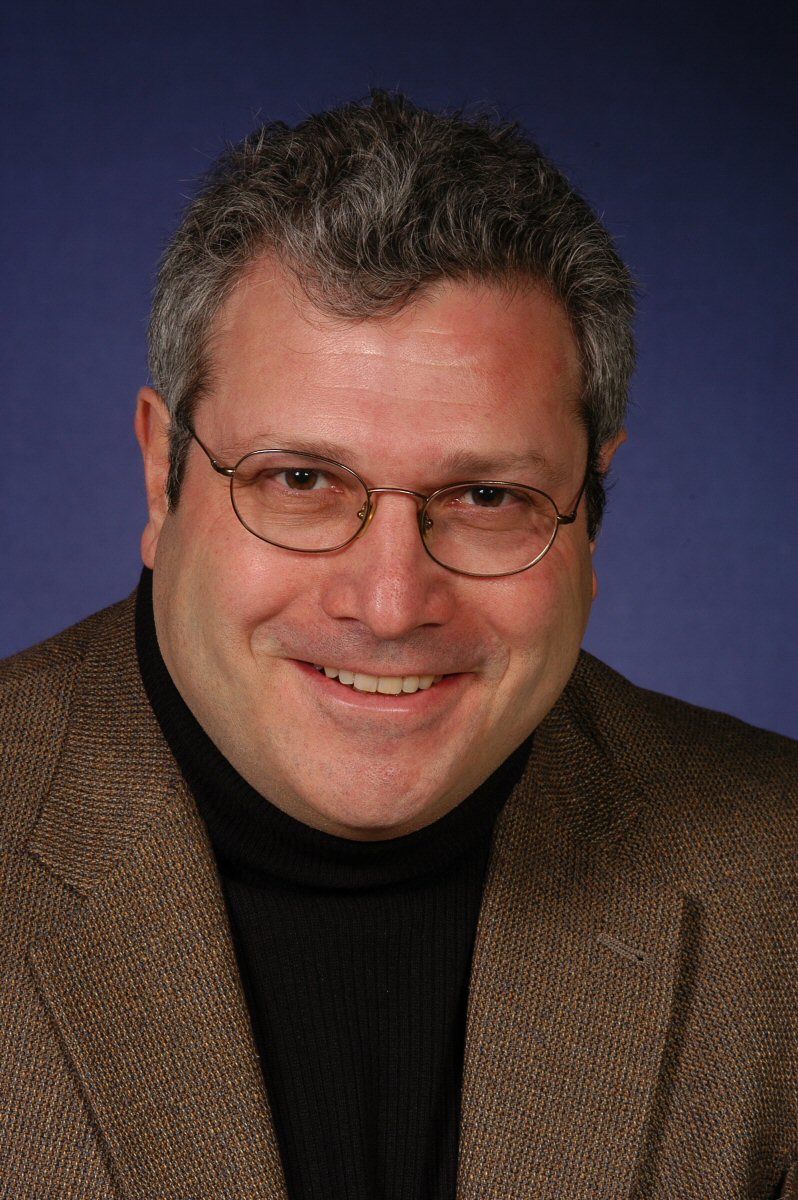
Former Senior Associate
Kagan, author of the recent book, The Return of History and the End of Dreams (Knopf 2008), writes a monthly column on world affairs for the Washington Post and is a contributing editor at both the Weekly Standard and the New Republic.
Recent Work

Michele Dunne, Robert Kagan
Robert Kagan, Michele Dunne
Carnegie does not take institutional positions on public policy issues; the views represented herein are those of the author(s) and do not necessarily reflect the views of Carnegie, its staff, or its trustees.
Lee’s tour shows how Seoul is reorganizing its diplomacy away from Pyongyang and toward industrial networks and the geography of the compute economy.

Darcie Draudt-Véjares
Most migrants may have left Ceuta, but the effects may linger.


Alejandro Martin Rodriguez, Sarah Yerkes
There is a transnational far-right populist movement that links middle powers in a global movement that extends well beyond Trump.

Christopher S. Chivvis, Rohan Mukherjee, Milan Vaishnav

When faced with fuel shortages in the past, Central Asian governments could always count on additional supplies from Moscow. That safety net no longer exists.

Galiya Ibragimova
Saied’s main accomplishment has been to destroy a decade’s worth of democratic progress.
Sarah Yerkes