

Commentary
Funding Ukraine remains a priority for European leaders. As Russia’s war of aggression heads into another winter, two feasible options to mobilize support for Kyiv should be fast-tracked.
Vladyslav Rashkovan, Gregory P. Wilson
{
  "authors": [
    "Robert Kagan",
    "William Kristol"
  ],
  "type": "legacyinthemedia",
  "centerAffiliationAll": "",
  "centers": [
    "Carnegie Endowment for International Peace"
  ],
  "collections": [],
  "englishNewsletterAll": "",
  "nonEnglishNewsletterAll": "",
  "primaryCenter": "Carnegie Endowment for International Peace",
  "programAffiliation": "",
  "programs": [],
  "projects": [],
  "regions": [
    "China"
  ],
  "topics": [
    "Foreign Policy"
  ]
}
REQUIRED IMAGE
Source: Carnegie
Reprinted from the Weekly Standard, May 24, 1999
The conventional wisdom these days is that China is going to be a big issue in the 2000 campaign. We wonder.
Sure, Republicans will kick up a fuss about nuclear espionage and Johnny Chung. And well they should. But will Republicans propose a fundamental reassessment of U.S. policy toward China? Will they advance a real alternative to Clinton's policy of "engagement"? Not likely. They'll call for some minor tinkering around the edges of Clinton's policy -- tightening security at Los Alamos, changing the administrative procedures for approving U.S. satellite launches on Chinese rockets, a few nice words about Taiwan. They'll talk about a more "mature" and "tough-minded" view of U.S.-China relations. But at the end of the day, the Republican policy toward China could well look a lot like Clinton's. And where's the big surprise in that? After all, Clinton's policy looks an awful lot like George Bush's.
The Republican party's inability to make an issue out of China is likely to be demonstrated in the coming months. Sometime between now and June 4, Clinton will notify Congress of his intention to extend China's most-favored-nation status another year. Congress will then have a chance to overturn the president's decision. And guess what? Many Republicans who are now screaming about Chinese spying and campaign finagling will vote once again to approve China's trade status -- the cornerstone of Clinton's engagement strategy.
That's not all. Later this year, the Clinton administration will probably strike a deal with Beijing on China's entry into the World Trade Organization. That will trigger a vote in Congress on granting China permanent most-favored-nation status, in compliance with WTO rules. And many Republicans are likely to support Clinton on that, too, despite the fact that China's entry into the WTO will be perceived, rightly, as a major victory for Clinton's policy of engaging China.
Republicans, you see, like big business at least as much as Clinton and Al Gore do. And this is the GOP's Achilles' heel when it comes to criticizing the Clinton-Gore administration's handling of China. For it turns out that not only is big business opposed to any effort to limit China's trading privileges in the United States. American corporations are also opposed to any effort to limit the transfer of military-related technologies. In fact, they're opposed to any American action that creates tensions in the U.S.-China relationship, because they know China will punish American businesses in retaliation for any American policies Beijing perceives as contrary to its interests -- whether they're related to human rights or non-proliferation or Taiwan. The big American corporations, which create jobs in Republican congressmen's districts and contribute to Republican campaign coffers, love Clinton's engagement policy. So can Republicans afford not to love it?
Never mind that few American businesses are actually making any money in China, that the dreams of huge profits in a potential market of 1.2 billion people seem never to materialize. The dreams alone are enough to keep this trade-happy administration on the path of appeasement. And to keep Republicans from proposing a serious alternative.
And never mind that the most popular argument of the China engagers -- that trade will make China more democratic and a more responsible international partner -- has by now been discredited. Since last year's vote to approve MFN for China, Beijing has carried out the most systematic crackdown against dissidents and democracy activists since Tiananmen Square. Since last year's MFN vote, the Chinese have been caught stealing nuclear secrets. They have deployed missiles across the straits from Taiwan. They have sponsored violent anti-American protests. Those who stood up in Congress last year -- and the year before that, -- to claim great benefits from renewing MFN should now be forced to explain exactly what those benefits have been. All we can see are burned American flags, imprisoned democrats, an intimidated Taiwan, and a vastly more dangerous Chinese nuclear arsenal aimed at the United States and our East Asian allies.
Republicans should have a political interest in mounting a broad critique of Clinton's appeasement of China. But they also have a national duty to mount it. The United States and China are on a course of confrontation, and no happy talk about the magic of trade and of a "strategic partnership" can change that. This pending confrontation need not be a cause for alarm. China is still weak enough to be contained, and the United States is still strong enough to lead its allies in a policy to hem in Chinese ambitions. A real and dangerous confrontation between the United States and China can in fact be avoided, but only if the United States begins now to take seriously the threat China poses to vital American interests and principles.
That will take more than putting better locks on the doors at Los Alamos. It will take an acknowledgment of what no one seems willing to acknowledge -- not the Clinton administration, not its Republican critics, and not the foreign policy establishment: that the failure to safeguard American nuclear secrets, the failure to keep missile-launch technologies from being transferred by American corporations, the failure to punish China for proliferating weapons of mass destruction, the failure of the U.S. government to express appropriate indignation when our ambassador is held hostage, the failure to stand up for Taiwan, the failure to do anything about increasing Chinese oppression at home -- all these failures are the inevitable consequence of an engagement policy which blindly seeks to treat as a friend a government that thinks and behaves like an adversary.
What Republicans need to do in 2000 is take on frontally the premises and practice of a failed policy of engagement that has heretofore had support, unfortunately, from the mainstream of both parties. Reagan defeated Carter in 1980 not by explaining that Henry Kissinger's version of detente was more skillful and mature than Cyrus Vance's. Reagan challenged the premises of U.S.-Soviet policy over the previous decade and offered a bold alternative that advanced American interests and principles. Within a few years, Reagan's policies led to better relations with the Soviet Union. And within a few more years, they led to the fall of Soviet communism. The Republican candidate in 2000 should make this his model.

Former Senior Associate
Kagan, author of the recent book, The Return of History and the End of Dreams (Knopf 2008), writes a monthly column on world affairs for the Washington Post and is a contributing editor at both the Weekly Standard and the New Republic.
William Kristol
Carnegie does not take institutional positions on public policy issues; the views represented herein are those of the author(s) and do not necessarily reflect the views of Carnegie, its staff, or its trustees.

Funding Ukraine remains a priority for European leaders. As Russia’s war of aggression heads into another winter, two feasible options to mobilize support for Kyiv should be fast-tracked.


Vladyslav Rashkovan, Gregory P. Wilson

While the EU and European governments are embracing the much-lauded middle-power moment, this entails three difficult conundrums.

Richard Youngs
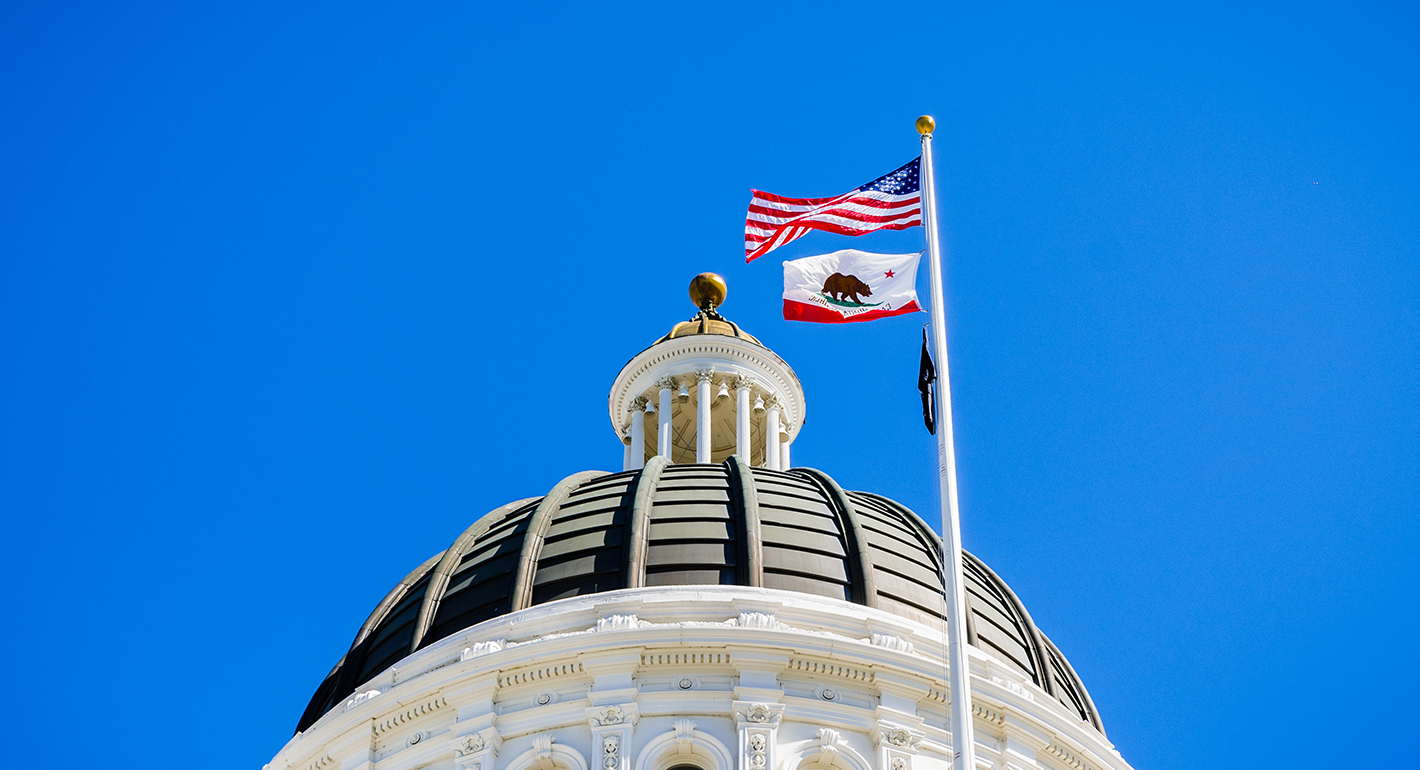
The middle power moment will not be defined by sovereign states alone, and California stands out for its potential contributions to international cooperation.


Ian Klaus, Stewart Patrick

Europe is facing rising populism internally as well as external pressures from Russia, China, Turkey, and the United States.

Dimitar Bechev

Much has been said of the changes Brussels is trying to make to the EU enlargement process. Here’s why gradual integration might—or might not—be the answer.
Dimitar Bechev