

Commentary
While the EU and European governments are embracing the much-lauded middle-power moment, this entails three difficult conundrums.
Richard Youngs
Source: Getty
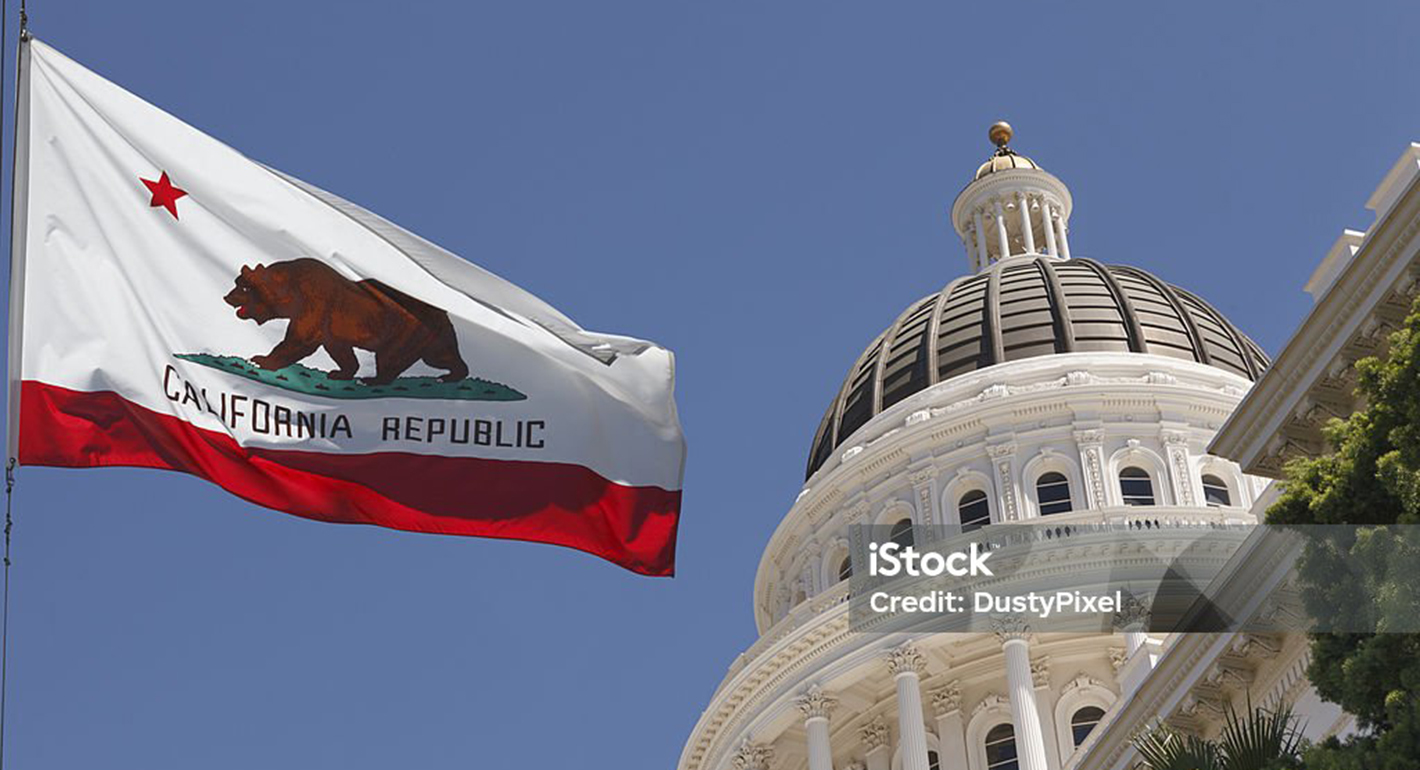
The middle power moment will not be defined by sovereign states alone, and California stands out for its potential contributions to international cooperation.
Middle powers have been the blockbuster foreign policy idea of 2026. Amid a profound reordering of global affairs, those who still see a need for diplomacy, alliances, and multilateral cooperation quickly put their hopes in the idea of a middle tier of countries using their agency to shape international affairs and improve international collaboration.
An unasked question in the avalanche of productive thinking that followed Canadian Prime Minister Mark Carney’s January 2026 Davos speech—which brought the middle powers idea to prominence—was whether it applied exclusively to nation states. And, as a corollary, what role subnational jurisdictions might play in a middle powers strategy. This paper starts that exploration on the West Coast of the United States—specifically, in California.
Why California? First, in terms of population, economic production, and global reach, it easily qualifies as a middle power, indeed placing near the top of the tables. Second, while most U.S. states and their governors practice restrained global engagement, California is by a margin the most internationally engaged, and the only one to participate regularly in multilateral settings and with international organizations. Third and finally, California has a history of diplomatic and policy entrepreneurship that suggests an openness to new approaches to global engagement.
To consider California’s potential role in the emerging middle powers framework, this piece
Understand the world with the latest from our scholars around the world.
The past year has seen spiking interest in the potential of middle powers to help stabilize a world order that often appears to be coming apart at the seams. The allure of this vision is obvious. Under the America First presidency of Donald J. Trump, the United States has abandoned eight decades of global leadership, renounced the so-called rules-based international order, and adopted a transactional, at times predatory, foreign policy. At the same time, few countries wish to replace U.S. hegemony with Chinese dominance.
For the world’s second-tier powers, this geopolitical rupture presents both peril and promise. The erosion of the multilateral order leaves its former beneficiaries exposed. If middle powers are not “at the table,” Carney warned, they risk being “on the menu.” Yet still, this more fluid moment offers established and emerging players spanning the Global North and South new opportunities to exercise agency, diversify their diplomatic portfolios, and form novel transnational partnerships. “We are moving into a new era of amplified middle power diplomacy,” Australian Foreign Minister Penny Wong asserted in October 2025.
One should manage expectations. Much of this excitement exaggerates the capabilities and idealizes the intentions of middle powers. World order is an amalgam of power and rules, meaning that the superpowers will continue to exert disproportionate influence over global institutions.
The term middle power remains frustratingly imprecise and subjective. There is no consensus definition, criterion, threshold, or list of countries that merit the designation. The concept itself first emerged in Renaissance Italy, to refer to powers that were neither the greatest (grandissime) nor the smallest (piccioli) but somewhere in the middle (menzano). The label resurged in the mid-twentieth century, championed by Australians and Canadians to describe their own countries’ (self-perceived) roles as model international citizens, capable of punching above their weight and advancing cooperation during the bipolar Cold War. Today, it is variously applied to a diverse cohort of forty-odd sovereign states spanning the Global North and South that are neither the dominant makers of the global order, nor its mere takers. The category includes some putatively great powers like Brazil, Japan, and the United Kingdom, as well as important regional players like Indonesia, Iran, Mexico, Saudi Arabia, South Africa, and Türkiye.
As this list suggests, today’s middle powers vary in their geopolitical preoccupations, economic circumstances, and political systems, to say nothing of their threat perceptions and preference hierarchies. This can complicate cooperation, not least on topics like global governance reform. More generally, one should not assume that middle powers are motivated by altruism or destined to behave well. All pursue their interests, and some have naked regional ambitions, making them not simply middle but also “meddle” powers.
Being a successful middle power implies a problem-solving orientation and a reputation for advancing the collective good, rather than operating on a narrowly transactional and purely self-interested basis.
That said, the most effective middle powers tend to combine not only capability but also a certain mindset. They enjoy greater diplomatic heft if they are perceived as committed to international law and multilateralism, regarded as capable of bridging international divides, and trusted to help address transnational problems and contribute to global public goods. Being a successful middle power implies a problem-solving orientation and a reputation for advancing the collective good, rather than operating on a narrowly transactional and purely self-interested basis. In short, some middle powers are simply better suited and positioned than others to help advance a cooperative, prosperous, and just international system. While the composition of their minilateral coalitions will naturally differ by issue area—resulting in variable geometry—the most valuable participants will be those that are prepared to commit to the joint objective, possess capabilities relevant to the specific challenge, and command trust and respect.
Historically, the middle power label has been applied exclusively to sovereign states. But a strong argument can be made for extending this already elastic and subjective category to California, the world’s most influential subnational jurisdiction. California fits the profile of a classic middle power on several dimensions, including its economic weight, its impressive record of niche diplomacy and coalition-building, and its normative and rule-setting power. To be sure, its claim to middle-power status is far shakier from a legal perspective, as the U.S. Constitution denies states critical attributes and prerogatives of sovereignty. Despite these constraints, the state has managed to carve out an impressive global role by exploiting the significant attributes it does possess.
Although power analysis is more art than science, political scientists typically distinguish among at least four categories: hard power, or the basic material capabilities (including economic, military, and demographic might) that countries can leverage to influence other actors or outcomes; structural power, or the ability to define the context and system of rules in which other actors must operate; soft power, or the attractive force of a country’s values, culture, and institutions; and state capacity, or the ability of political authorities to actually extract resources from the domestic political system. While analysts have conventionally applied these concepts to sovereign states, the same categories can also be applied—with caveats—to important subnational actors like California.
California’s hard power capabilities are massive, at least when it comes to economic and technological dominance. Despite having a population of only 39 million, the state boasts a GDP of roughly $4.4 trillion and a state budget of nearly $352 billion. Were it an independent country, it would tie for fourth among the world’s sovereign states on economic output, behind the United States, China, and Germany but on a par with Japan and ahead of India and the United Kingdom. The state is also home to some 30–34 percent of U.S. research and development spending, and through August 2026 it has attracted 55–60 percent of global (and 90 percent of U.S.) venture capital for the year, the vast majority deployed in the Silicon Valley technology ecosystem. When it comes to supply chains, the state dominates global intellectual property related to high technology.
Where California’s hard power falls short, of course, is in the military domain. The state is an epicenter of defense spending and installations—home to more U.S. service members than any other U.S. jurisdiction—but as a non-sovereign actor obviously lacks any independent military command or projection capability. This is no small point: The vast majority of middle powers—such as Australia, Poland, South Korea, Türkiye, and the United Kingdom—feature their military capacity, even if only deployed regionally, heavily in their foreign policy strategies. Multilateralism, however, as Tom Long has shown, is a complicated game, in which diplomatic might does not always rest on military capacity. California’s material strengths provide it with the global profile and resources to launch, shape, and fund international initiatives, supplementing the oft-gridlocked United Nations system. Among the most significant such scheme is the Under2 Coalition, a network of 270 city, subnational, and national jurisdictions created by California and the German state of Baden-Württemberg in 2015. Its members, which span six continents and encompass more than 50 percent of the world economy, have each pledged to try to limit the rise in average global temperatures well below 2 degrees Celsius and to achieve net-zero greenhouse gas emissions by 2050 or earlier. A similar effort is the Western Climate Initiative, through which California, Oregon, and the state of Washington developed carbon trading agreements with Canadian provinces such as British Columbia and Québec. Domestically, Sacramento spearheaded the Governors Public Health Alliance, a coalition of U.S. states, as an institutional alternative to some traditional public health roles formerly played by the federal government.
Power is often conceived in relational terms—classically, as the ability of A to get B to do what B would not otherwise do. But beyond overt displays of leverage, power can take a subtler, structural form, in the ability to shape or determine the very framework within which other actors operate. Structural power—often referred to as the “second dimension” of power—implies not just winning a specific game but determining the game itself and the rules by which others must play. In the case of California, the state’s massive consumer market means that its own regulations can easily become default national and international standards, as multinational corporations move to comply with California’s requirements and as both other U.S. states and foreign governments adopt rules modeled after California’s statutes. In effect, the state’s laws become the global baseline, giving it unmatched influence over rule-setting. Examples of this “California effect”—a precursor to the “Brussels effect” of European Union regulations—include global adoption of the state’s automobile emissions standards and, potentially in the future, AI guardrails.
A third dimension of influence is so-called soft power, or the power of attraction. Rather than coercing or inducing compliance, or leveraging its structural dominance, international actors can exert influence through the allure or appeal of their culture, ideology, norms, institutions, and lifestyles. Globally, few locations can compete with California’s unique brand. Through Hollywood and digital platforms, the state dominates much of the planet’s production and dissemination of media, entertainment, and digital content, helping shape international desires, narratives, and norms. Arts and culture production in the state alone are valued, according to the National Endowment for the Arts, at $289 billion. The state’s demographic diversity and diaspora communities reinforce its global influence. A whopping 27 percent of the state’s current population was born overseas, and these immigrants send an estimated $30–$50 billion in remittances back home annually. Finally, the state boasts a premier public university system as well top-tier research institutions like Caltech and Stanford University, helping sustain a constant pipeline for talent as well as shaping cutting-edge research and generating scientific and technical knowledge. To be sure, soft power can be difficult to leverage for specific foreign policy purposes, and the connection between cultural and political influence is not straightforward. Soft power is also easily tarnished, as the United States has discovered in the twenty-first century, not least during the Trump years.
Finally, scholars of power highlight the strength and effectiveness of state institutions, including the ability of political authorities to mobilize domestic resources and sustain public support for foreign policy priorities. This is challenging enough for sovereign governments, even a superpower like the United States, where any administration must secure legislative appropriations and (at least over the long term) some measure of public buy-in for its international ambitions, a tall order, as outlined later, for any subnational jurisdiction. Sustaining a global role is much harder for California, which lacks any significant diplomatic apparatus or budget and whose residents understandably expect, with no small amount of anxiety, that the federal government will take the lead in foreign affairs while state (and local) officials attend to more parochial interests.
“California has the ideas of Athens and the power of Sparta,” then governor Arnold Schwarzenegger exulted nearly two decades ago, in his 2007 State of the State address. Yet despite its impressive economic, technological, and cultural strengths, California faces legal hurdles in translating its capabilities into diplomatic leverage. This is partly by design. The U.S. Constitution (1789), which replaced the Articles of Confederation (1781), was negotiated and ratified to empower the federal government and curtail the prerogatives of individual U.S. states, in part so that the young republic might better defend itself from the dual threats of external aggression and internal dissolution.
“The Framers split the atom of sovereignty,” as then justice Anthony Kennedy explained in 1995, in order that U.S. citizens might exercise it at both the state and federal levels. While the fifty U.S. states retain residual rights under the Tenth Amendment (including in practice over local law enforcement, elections, education, and the regulation of businesses), they cannot, technically speaking, conduct independent diplomacy, negotiate and ratify treaties, enter alliances, regulate foreign commerce, issue their own currencies, impose sanctions, declare and wage war, control their borders and immigration, or maintain laws at odds with federal law. Unlike sovereign nations, they lack international legal standing as independent political entities, meaning that they cannot establish formal embassies abroad or host foreign embassies, much less shift geopolitical alignments or cast votes within the UN General Assembly and other international bodies.
Needless to say, the precise constitutional boundaries between federal and state authorities have been contested historically, most dramatically during the Civil War. Over the past century, conservatives have been the loudest champions of states’ rights, depicting this principle as an essential check on the vaulting ambitions and oppressive power of the federal government. This rallying cry has long focused on domestic matters, including hot-button social issues such as abortion, civil rights, and education. But as David Engstrom and Jeremy Weinstein observed, the Trump era “has flipped federalism’s political valence,” with blue states asserting their constitutional autonomy to chart a progressive course and resist federal initiatives advanced by conservative nationalists and right-wing culture warriors. California and other liberal states increasingly challenge federal leadership on issues that have global rather than purely domestic salience, like climate, immigration, and AI policy.
On paper, the Constitution poses high hurdles to an independent Californian foreign policy. To begin with, the state lacks sovereign authority to negotiate legally binding international agreements. The Constitution declares that “No state shall enter into any Treaty, Alliance, or Confederation” nor any “Agreement or Compact with another State, or with a foreign Power” without the explicit consent of Congress. Nor can California implement its own trade policy. The Constitution grants Congress exclusive authority “to regulate Commerce with foreign Nations” and forbids U.S. states from imposing duties on imports or exports. California cannot raise or lower tariffs or other barriers on trading partners, nor can it generate customs revenues by taxing goods and services entering or transiting the state from abroad.
Likewise, the state lacks the authority to pursue its own immigration policy. Article I of the Constitution grants Congress the power “to establish a uniform Rule of Naturalization,” and the Supreme Court has further determined that federal government has “plenary power” over immigration, including to control the admission, exclusion, and deportation of non-citizens.
More generally, the Constitution’s Supremacy Clause establishes that when federal and state law clash, including on foreign policy, the former takes precedence. Although in practice multiple domestic actors shape U.S. foreign policy, the Supreme Court has long held that the United States must be able to “speak with one voice” in international affairs. As the Court expressed in a 1942 decision, “No State can rewrite our foreign policy to conform to its own domestic politics. . . . Power over external affairs is not shared by the States; it is vested in the national government exclusively.” Accordingly, the judiciary has regularly struck down state laws that intrude upon the federal government’s foreign policy leadership, even if they do not directly violate federal statutes or if their interference remains hypothetical. Thus, for instance, California cannot unilaterally sanction foreign governments for their poor environmental or human rights records.
Finally, and most obviously, the Constitution denies California independent control over any military assets, declaring that no state shall “keep Troops, or Ships of War in time of Peace” or indeed “engage in War, unless actually invaded.” It cannot deploy or project military forces abroad, and the U.S. military installations, troops, and other assets that it does host ultimately fall under the authority of the federal government. Although governors command National Guard troops, the president can federalize these at any moment, rendering state authority subordinate from a defense perspective.
California has the economic capabilities, behavioral traits, and normative ambitions to function as a middle power but lacks the constitutional independence to act as a sovereign geopolitical actor in world politics.
In sum, California has the economic capabilities, behavioral traits, and normative ambitions to function as a middle power but lacks the constitutional independence to act as a sovereign geopolitical actor in world politics. Unlike middle powers like Australia and Canada, which have also been known to act as international bridge builders, it cannot pursue traditional economic statecraft, enter multilateral treaties, or join security alliances. Instead, its leverage stems in large part from its regulatory power over a massive consumer market in which international corporations seek to operate, and its leadership of informal networks of subnational actors, including in global domains like climate change where the U.S. federal government is paralyzed or inactive.
Despite these apparent constitutional constraints, California has in practice pioneered creative approaches to maneuver around some, albeit not all, of them. Rather than challenging federal supremacy head on, it has legally exploited constitutional loopholes, statutory flexibility, and market leverage to make its weight felt internationally. Pursuing subnational diplomacy and what some scholars call “paradiplomacy,” it has become a powerful global player.
Although prohibited from entering formal state-level compacts, for instance, California has successfully negotiated hundreds of nonbinding memorandums of understanding (MOUs) with subnational jurisdictions, regional bodies, and foreign governments, including forty with China alone. During the administration of Gavin Newsom, the state has entered into thirty-eight agreements with twenty-eight different foreign partners. These are not legally enforceable, lack dispute resolution mechanisms, and are carefully worded to acknowledge the sovereign authorities of the United States and other national governments. Nevertheless, they can and do advance cooperation, by establishing frameworks for concrete collaboration and fostering the harmonization and mutual recognition of local laws.
They also cover a lot of ground, including: MOUs with Canada to mitigate climate change and biodiversity loss; with Denmark to cooperate on developing agricultural technology; with France to collaborate on data protection and privacy; with Kenya to facilitate trade and environmental cooperation; with the Indian state of Rajasthan on electric grid modernization; and with the Mexican state of Baja California on renewable energy generation. This diversity of issue sets means California’s international engagement often touches on arenas traditionally thought of as pertaining to foreign policy, differentiating California from other U.S. states which are more likely to focus on trade and bilateral engagement.
Few such efforts have been challenged by Congress or invalidated or overturned in court, even when lacking implicit or explicit congressional authorization. A case in point is the California-Québec cap-and-trade carbon market, signed in 2013 to link California’s carbon emissions with that of the Canadian province. Although the first Trump administration sued the state in 2019 to dismantle it, federal courts in 2020 ruled in California’s favor, on the grounds that it was a voluntary arrangement that could be dissolved at any moment and thus did not infringe on the federal government’s sovereign powers.
California has also exploited statutory carve-outs in federal legislation to cement its position as a national and global standard-setter. The Clean Air Act (1970) is a case in point. Section 209 of that statute grants California the right to apply for a waiver from the Environmental Protection Agency, so that it can enforce vehicle emissions standards more stringent than what Congress itself establishes. Further, Section 177 allows other U.S. states to adopt California’s standard. To date, seventeen states and the District of Columbia have aligned their regulations with California’s, in a coalition that represents roughly forty percent of the U.S. auto market. Thanks to these provisions, California can act as a shadow federal regulator—and force automakers in the United States, Europe, and Asia to redesign the cars they produce.
The state has also leveraged its massive state procurement budget to incentivize private sector companies to adopt certain standards, including with respect to climate change and labor rights. While the Constitution’s Foreign Commerce Clause prohibits U.S. states from restricting or taxing foreign goods or restraining interstate trade, California can legally dictate the terms of eligibility for state procurement contracts under what is known as the “market participant exception.” To secure multimillion-dollar contracts to provide vehicles, construction materials, technology, and other goods and services, both foreign and domestic companies have agreed voluntarily to overhaul their global reporting procedures.
Finally, when confronting a federal policy directly opposed to its goals, California has in some cases elected to negotiate directly with multinational corporations. In response to moves by the first Trump administration to roll back national fuel economy standards, in 2019 Sacramento engaged directly with major global automakers, signing bilateral agreements with Ford, BMW, Volkswagen, Honda, and (in 2020) Volvo. The companies agreed to meet California’s stricter efficiency goals globally, in return for the promise of regulatory certainty and California’s subsidies for electric vehicle charging infrastructure—a demonstration of the state’s structural power in the world economy. Since these remained voluntary commercial contracts, the U.S. federal government had no solid grounds to sue the state.
Without confronting the U.S. federal government head on, the state of California has nevertheless been able to adopt economic and other policies that reverberate globally.
The second Trump administration, however, has taken more aggressive steps to try to rein in California’s foreign policy ambitions, and particularly to dismantle the state’s independent climate authority. This ongoing constitutional showdown poses a test of the state’s regulatory influence over global climate policy.
The administration’s controversial weapon of choice is retroactive application of the Congressional Review Act (CRA), which provides Congress a sixty-day window to overturn recent federal agency rules by majority vote. While state-level Clean Air Act waivers have historically been exempt from such a review, being treated as local permissions rather than federal regulations, Trump’s Environmental Protection Agency (EPA) has reclassified these long-established administrative provisions as “federal rules,” allowing Congress to repeal them retroactively. The EPA further argues that since previous administrations never transmitted these to Congress, the sixty-day CRA review clock never actually started, and that it is obliged to allow legislators to review rules that have “national effects.” Consistent with this position, the EPA has asked Congress to repeal multiple California climate waivers, some dating back to the Barack Obama administration, ranging from greenhouse gas standards for automobiles and trucks to emissions standards for ocean-going vessels in California ports.
California has responded. California Attorney General Rob Bonta has led a coalition of U.S. states in suing the federal government, arguing that the EPA’s belated effort to turn longstanding local waivers into federal rules constitutes an illegal reclassification, as well as a violation of the Administrative Procedures Act. An executive branch agency cannot simply wave a magic wand to federalize an established local waiver. It also underscores the potential economic fallout from these rollbacks, which jeopardize billions of dollars of private sector investment in clean technology.
The stakes in this federal-state showdown are large, with major implications for California’s structural power over global regulatory standards. If Congress successfully nullifies the state’s climate waivers using the CRA, the state will be prohibited under the Clean Air Act from ever issuing “substantially similar” regulations in the future. The same will be true for more than a dozen other states that have legally linked their own automotive and environmental standards to California’s. A federal victory in the courts would likely devastate the U.S. market for clean energy and electric vehicles, as well as strip California of its effective leverage to dictate global production standards to international car manufacturers and shipping conglomerates.
More generally, California’s continued ability to carve out an independent role in foreign affairs will depend heavily on how much room for maneuver the U.S. judiciary grants to the fifty U.S. states in the months and years ahead. What is clear, in today’s polarized political environment, is that the stage is set for growing federal-state confrontation over foreign policy, as California and other progressive states test the boundaries of their constitutional rights in foreign policy, and the Trump administration pushes back hard.
The stage is set for growing federal-state confrontation over foreign policy, as California and other progressive states test the boundaries of their constitutional rights in foreign policy.
Historically, the Supreme Court’s default position has been to uphold the “single voice” principle, preempting state laws that conflict, or might plausibly conflict, with the foreign policy leadership of the federal government. With the U.S. states on a “collision course” on international engagement, the court may be tempted to adopt a broad policy of preemption, to avoid chaos in U.S. foreign policy. And yet the court’s position on the foreign policy role of states has never been absolute. Notably, it has often tolerated state activism in domains that are central to state competencies and responsibilities to protect the interests and safety of their residents. This is already happening in the climate space and could in principle happen in areas like AI, human rights, security, and immigration.
While increased state involvement in international affairs can create frictions with the federal government, such tensions can at times be creative and productive. As the legal scholars Ashley Deeks and Kristen Eichesehr suggest, federal-state frictions can bring tangible benefits, including by allowing states to: fill gaps in federal law; bolster the security of residents; challenge groupthink at the federal level; expose unappreciated costs of federal action; force federal enforcement of existing statutes; spearhead initiatives that may inspire later federal action; reaffirm shaky U.S. commitments to international law; and generally provide a check on federal executive power.
States as well as cities seem destined to continue testing the boundaries of their power, and this will not end when Trump departs the scene.
The political constraints upon California’s global engagement do not originate solely from Washington, DC. In addition, California residents and voters have opinions on the value of diplomacy, including by the state’s elected officials. The Carnegie California Global Affairs Survey is an annual examination of Californians’ priorities with respect to transnational issues, and it is the broadest annual survey of any such subnational jurisdiction. Now in its fourth year, the survey has shown that despite the turmoil in geopolitics, including U.S. foreign policy, Californians hold a stable, and positive, view of global engagement. In 2025, roughly 80 percent of Californians, including majorities across both major political parties, believed that international affairs and domestic affairs are interconnected. Californians also support U.S. global leadership on a wide range of issues, from nuclear nonproliferation to climate change.
Californians are also increasingly worried that the Trump administration’s hyper-nationalist and transactional policies are to the detriment of the state’s interests. In 2025, nearly two-thirds of Californians reported concern over perceived disconnects between U.S. foreign policy and the priorities of Californians, with 60 percent believing that the administration’s imposition of new and wide-ranging tariffs would damage the state’s economy. Californians report similar concerns about the U.S. retreat from climate action and, more generally, with the anti-democratic practices and processes adopted by the federal government.
But does this mean that Californians believe their elected officials should develop robust global agendas? Well, the answer is complicated. Practitioners of subnational diplomacy across jurisdictions routinely note the limits that local politics place on their international activity. And while California has a robust history of global engagement, the public polling picture testifies to these constraints, at least in part. Last year, Carnegie California asked residents whether state officials should pursue global engagement, including MOUs, joint declarations, and policy exchanges with leaders from other nations (see figure 1). Forty-two percent responded yes, up from 34 percent in 2024 and 33 percent in 2023. At the same time, there was a significant partisan divide, with Democrats responding “yes” at 61 percent and Republicans at only 21 percent. Moreover, nearly one third of Californians (31 percent) responded “don’t know.” In other words, California officials considering a global engagement strategy can embark on one knowing they have the support of a plurality of residents, but they must also be aware that large numbers of Californians remain uncertain as to the value of such efforts.
The idea of middle powers is having a moment because it offers a potential framework for continued international cooperation in an age of geopolitical rivalry—and a refreshing alternative to the belligerence, jingoism, and transactionalism that seems to inform so much U.S. foreign policy under Trump 2.0. In the face of intensifying, generational, transnational challenges, including quickening climate change, deepening great power rivalry, and the destabilizing impacts of artificial intelligence, some predictability and collaboration will be needed. To be effective, such an order will also need to offer scale and reflect the priorities of powers seeking to align their efforts.
What would it mean for California to approach or frame its global engagement in middle power terms? As a start, it would mean redoubling the state’s international leadership on existing priorities, most notably climate action. California’s authority and influence on global climate policy, including through the development of the Under2 Coalition, is well established. The state’s traditional operating model, however, has been to use its initiative and heft to establish new platforms and then to allow their management to be assumed by other parties. Going forward, California’s climate leadership and coalition building will require a bit more diplomatic gardening, especially as the commitment of many nation-states to climate action is flagging. The sobering reality is that many UN members—as well as subnational actors and private companies—have fallen far behind their commitments to support the Paris Climate Agreement (2015), and in some cases have abandoned these targets altogether. Given its entrepreneurial diplomacy and regulatory influence, California is well-placed to play a classic middle power role in spearheading renewed multistakeholder climate cooperation. Former California governor Jerry Bown undertook just such a diplomatic effort in 2018, when he hosted the Global Climate Action Summit, which brought together national, subnational, and civil society leaders. And there is more than just precedent: The centrality of AI to energy policy discussions makes California an even more natural candidate for this role today.
Behaving as a middle power would also mean continuing engagement with the core institutions of international cooperation. The current California governor is unique among his peer group for his regular engagement with multilateral platforms such as the UN Framework Convention on Climate Change (UNFCCC) and the World Health Organization (WHO)—both of which the Trump administration has abandoned. Most other governors, including of major states like Texas and Georgia, prefer bilateralism as their diplomatic norm, prioritizing trade with foreign jurisdictions while eschewing international organizations. Newsom, meanwhile, met this year with WHO Director-General Tedros Adhanom Ghebreyesus in January 2026 to discuss international cooperation on global health, including coordination of rapid responses to public health emergencies. California subsequently became the first U.S. state to join the WHO’s Global Outbreak and Response Network. In short, it was acting as a subnational analogue to a middle power, lending its capabilities to—and inserting itself into—existing international architecture.
Acting like a middle power also implies embracing the role of policy entrepreneur, and even convener, around new challenges. Two notable policy areas stand out here: artificial intelligence and democratic resilience.
The majority of the world’s most valuable AI companies are headquartered in California, and Sacramento has been in the vanguard when it comes to relevant legislation and regulation in this domain.
California is the global hub for AI technology and policy. The majority of the world’s most valuable AI companies are headquartered in California, and—in the absence of congressional action—Sacramento has been in the vanguard when it comes to relevant legislation and regulation in this domain. A centerpiece of this legislation is the Transparency in Frontier Artificial Intelligence Act (also referred to as SB 53), which went into effect January 1, 2026. That legislation requires larger developers of AI models to publish a Frontier AI Framework explaining how they mitigate “catastrophic risks,” and it mandates that labs create internal whistleblower procedures and submit reports on critical safety incidents within fifteen days of their discovery. California’s approach to AI governance differs from the more heavy-handed regulatory stance of the European Union, whose AI Act (2024) prohibits specific use cases and imposes stringent reporting requirements. California’s lighter touch focuses primarily on bolstering corporate governance, but it also includes robust provisions for legal enforcement by the California attorney general. SB 53 has become a model for legislation in other states, including New York (RAISE Act) and Illinois (SB 315), but emerged from a transnational AI policy ecosystem. AI policy is not perfectly replicable across jurisdictions, but it does travel; and in SB 53, California has outlined an approach for placing guardrails at the frontier of the technology in a way that can be adopted and adapted not only by other U.S. states but also foreign nations, regional organizations, and subnational political units abroad.
Democracy is a famously fraught diplomatic subject, and the broad group of sovereign middle powers is hardly unified in their dedication to democratic ideals, much less governance. But in the face of widespread democratic backsliding and mistrust in government, both in the United States and abroad, the State of California has a powerful story to tell and a catalytic role to play. Informed by its own experiences and expertise from other global jurisdictions, California has also sought to innovate new processes of public engagement and participatory democracy. These efforts originate from the recognition that California’s own governance structure can be cumbersome and is even vulnerable to capture: New approaches are needed. In response, local jurisdictions from Los Angeles to Oakland have also experimented with new processes for public engagement. Some, such as Petaluma, take the form of robust citizen assemblies, while others, such as the state-wide initiative Engaged California, seek to harness new technologies to identify priorities and advance policy solutions. As subnational jurisdictions around the world explore new coalitions and collaborations to buttress democracy, such as those currently being built in the Spanish region of Catalonia, the technologies and mechanisms emanating from California are likely to gain greater global salience.
And, finally, embracing the mantle of a middle power would mean California taking more seriously, as a matter of politics and policy, the question of how global engagement advances domestic well-being. This is not a question unique to California, of course. Both the Cold War and the era of globalization which followed it were accompanied by well-developed and widely accepted narratives about the connection between domestic affairs and global engagement. During the former period, the vitality and resilience of the broader “free world” was understood to benefit Americans at home. During the heyday of globalization, it was taken for granted that U.S. interests were directly linked to the spreading wealth and stability of other nations and widely assumed that U.S. leadership on the global stage would help lift all boats. Today, many Americans—as well as the current U.S. administration—are more skeptical of these causal linkages. A series of crises, from the Great Recession to the COVID-19 pandemic, resurgence of great power war, regional instability, supply chain shocks, and climate change, have made interdependence seem scary and a source of vulnerability, reopening essential questions about how the domestic and the foreign are (and should be) linked.
California is well-positioned to challenge this defensive and insular narrative, by calling attention to Americans’ fundamental stakes in a well-functioning, cooperative international system. The interests and values of California residents are best advanced not through the pursuit of a narrow, backward-looking, and illusory independence, but in collaborative global efforts to manage the common risks and exploit the shared opportunities of interdependence. California’s global engagement strategy going forward should be premised on this reality, with state leaders adopting a Golden State version of the Makerfield Test enunciated by the new UK Prime Minister Andy Burnham: Namely, that every foreign policy decision should make life better for blue-collar communities and working people. California’s policy innovation and advocacy must similarly link any global engagement with local impact.
The question of California’s role in global affairs is not limited to Sacramento or Washington. As middle powers advance their respective interests but also seek to bring a degree of cooperation and predictability back to diplomacy, they would do well to bring California and other subnational jurisdictions into their dialogues, particularly at this early stage of strategy formation.
California today is home to more diplomatic consulates than any other U.S. state, underscoring its global importance. That diplomatic engagement favors bilateral exchange, but there are notable examples of broader collaboration among nations in the California arena. The San Francsico Consular Corps is informally represented by a dean who serves as a primary point of contact with state officials on various issues. Moving beyond protocol, the California-based diplomatic corps of various countries regularly convene on areas of shared interest. In 2022, Denmark and Australia launched a new network of cyber and technology ambassadors from twenty nations, with a focus on advancing secure, democratic, and responsible deployment of emerging technologies in the state. That network was created on the sidelines of the RSA Conference, the preeminent industry-led cyber conference held annually in San Francisco. Middle powers, working together, could replicate such a minilateral approach around multiple issues, collaborating with state officials and engaging in multistakeholder partnerships with California’s industry and civil society leaders.
Many foreign ministries have developed extensive experience engaging with subnational actors, though they tend to engage more frequently with metropolitan regions than states or provinces. Indeed, cities have been at the forefront of subnational diplomacy for more than two decades. Globally, there are now more than three hundred city networks, roughly half of them dedicated to addressing transnational issues. Some of these have become powerful platforms not only for policy exchange but also for policy advocacy, including within multilateral settings and international organizations. Prominent examples include C40 Cities, the Global Parliament of Mayors, and United Cities and Local Governments, all of which integrate city-based policy approaches into the work of the G20, G7, and other forums. Countries have taken notice of these trends, with Australia, China, France, Germany, and the United Kingdom in particular deepening their ability to influence and collaborate with subnational jurisdictions on topics ranging from climate action to development.
A number of lessons have emerged from these experiences that are relevant to foreign engagement with California and other subnational jurisdictions. First, subnational jurisdictions tend to have limited diplomatic capacity. They do not easily adopt new priorities or follow pre-determined agendas, and their global engagement is vulnerable to political backlash. Accordingly, it is essential to map where and how priorities align. To cite one example, Australia is increasing its sports diplomacy with Los Angeles over the next two years, not only because Los Angeles is hosting the 2028 Olympic Games, but also because Canberra recognizes sports as a source of national power. Inviting subnational actors like California into multilateral platforms, international organizations, and ad hoc middle power convenings is another way to bring California’s power to bear on collaborative issues. The UNFCCC, for example, now annually hosts Cities Day at COP. Finally, while the authority of subnational jurisdictions remains circumscribed by law, they are also a part of greater unions. Successful engagement with such jurisdictions always requires a diplomatic approach that is sensitive to those relationships of power and fidelity.
The middle power moment will not be defined by sovereign states alone. There is ample room for other actors to shape international cooperation in the fluid global system that is emerging in the wake of American hegemony. Among subnational jurisdictions, California stands out for its potential contributions to international cooperation, by virtue of its massive economic weight, vibrant cultural leadership, ecosystem of technological innovation, tradition of policy entrepreneurship, and global regulatory reach.
To fulfil its potential as a middle power, the next step is for California to think more clearly about the objectives it wishes to pursue internationally to advance the interests and values of its residents, and then formulate a more sophisticated but realistic global engagement strategy to advance these goals, within the legal constraints of the U.S. Constitution. To date, California’s global engagement has been primarily ad hoc and episodic, rather than strategic. Given its weight, this needs to change. The state government will also need to expand the modest bureaucratic structures and budget it possesses to conduct subnational diplomacy, which today consists primarily of the Governor’s Office of Business and Economic Development (GoBiz) and deputized senior officials who take the lead on specific issues.
Finally, California should seize this moment to consciously engage the diverse networks of middle powers that are emerging across North–South lines to help pursue specific niches in international cooperation. In the wake of World War II, the United States constructed a robust system of international collaboration to increase its ability to project power, win global support for its purposes, and address shared problems of interdependence. At this moment of turbulence, engagement with middle powers might be just the way for California to do the same.

Founding Director, Carnegie California
Ian Klaus is the founding director of Carnegie California. He is a leading scholar on the nexus of urbanization, geopolitics, and global challenges, with extensive experience as a practitioner of subnational diplomacy.

Senior Fellow and Director, Global Order and Institutions Program
Stewart Patrick is a senior fellow and director of the Global Order and Institutions Program at the Carnegie Endowment for International Peace. His primary areas of research focus are the shifting foundations of world order, the future of American internationalism, and the requirements for effective multilateral cooperation on transnational challenges.
Carnegie does not take institutional positions on public policy issues; the views represented herein are those of the author(s) and do not necessarily reflect the views of Carnegie, its staff, or its trustees.

While the EU and European governments are embracing the much-lauded middle-power moment, this entails three difficult conundrums.

Richard Youngs

Much has been said of the changes Brussels is trying to make to the EU enlargement process. Here’s why gradual integration might—or might not—be the answer.

Dimitar Bechev

Economic recovery has brought Sri Lanka a modicum of stability, but domestic strains and great-power rivalry could test how long it lasts.

Avinash Paliwal

Despite a new textbook, an influx of Russian teachers and managers, and an end to the teaching of Ukrainian, the Kremlin is unlikely to have “reprogrammed” locals.

Konstantin Skorkin

The acknowledgment has sparked fears of a new arms race with China and Russia.

Chris O’Meara