

Commentary
It should address the shortcomings of previous crisis communication efforts and adapt to the demands of frontier AI.
Lucy Luo
{
  "authors": [
    "Robert Kagan",
    "William Kristol"
  ],
  "type": "legacyinthemedia",
  "centerAffiliationAll": "",
  "centers": [
    "Carnegie Endowment for International Peace"
  ],
  "collections": [],
  "englishNewsletterAll": "",
  "nonEnglishNewsletterAll": "",
  "primaryCenter": "Carnegie Endowment for International Peace",
  "programAffiliation": "",
  "programs": [],
  "projects": [],
  "regions": [],
  "topics": [
    "Foreign Policy"
  ]
}
REQUIRED IMAGE
Source: Carnegie
Reprinted from the New York Times, October 25, 1999
The Clinton Administration has been trying to frame the foreign policy debate for the 2000 election in the simplest possible terms: It's Clintonian internationalism versus Republican isolationism. Samuel Berger, the national security adviser, offered the fullest version of this thesis last Thursday, arguing that the Senate's rejection of the Comprehensive Nuclear Test Ban Treaty means we have returned once again to the "old debate" of the 1930's.
It is true that some Republicans want the United States to pull back from its overseas commitments and stay out of messy conflicts in the Balkans, East Timor and elsewhere. But the leading Republican Presidential candidates -- George W. Bush and John McCain -- are both internationalists and free-traders. Both believe in American leadership and global responsibilities. Both supported intervention in the Persian Gulf at the beginning of this decade and in Kosovo at the end. No matter who wins next November, American foreign policy after 2001 is going to be characterized by some version of internationalism.
The real debate in the coming year will be: What brand of internationalism? This is the debate between the internationalism of Theodore Roosevelt and that of Woodrow Wilson, between the internationalism of Ronald Reagan and that of Jimmy Carter.
The Clinton Administration has placed itself squarely in the tradition of Presidents Wilson and Carter, and never more so than in Mr. Berger's speech, entitled "American Power: Hegemony, Isolationism or Engagement." Mr. Berger is opposed to American hegemony and decries Republican calls for increased defense spending. The true test of leadership, he argues, is not whether the United States remains militarily powerful, but whether it signs onto international conventions such as the Comprehensive Test Ban Treaty and the Climate Change Treaty, provides enough money to global poverty programs and supports the United Nations.
It is on these matters, Mr. Berger argues, "that our most fundamental interests are at stake." Mr. Berger derides those who worry about the threat posed by China or Russia as "nostalgic" for the cold war. In the Clinton Administration's world, there are no enemies or even potential enemies. There are only potential partners in the search for what Mr. Berger calls an international "common good."
This is the kind of utopian internationalism that the Democratic Party rejected under the hardheaded leadership of Harry Truman and Dean Acheson but embraced again after Vietnam. It is the internationalism of Jimmy Carter, squeamish and guilty about American power and content to base America's security, and the world's security, on arms control agreements rather than on American arms. This is the internationalism which in the late 1970's and early 1980's favored the SALT II agreement and the "nuclear freeze" and opposed the Reagan arms buildup and the Strategic Defense Initiative.
Republicans in the coming election will likely propose a very different kind of internationalism. In the tradition of Teddy Roosevelt and Ronald Reagan, they will argue that the United States can and should lead the world to a better future, one built around American principles of freedom and justice -- but only if it has the power and the will to use that power. Republicans will argue that American security cannot be safeguarded by international conventions. Instead, they will ask Americans to face this increasingly dangerous world without illusions. They will argue that American dominance can be sustained for many decades to come, not by arms control agreements, but by augmenting America's power and, therefore, its ability to lead.
President Clinton may enjoy calling Republicans isolationists, but a year from now, Democrats will be running against the party of Reagan. It looks as if they plan to run as the party of Jimmy Carter.

Former Senior Associate
Kagan, author of the recent book, The Return of History and the End of Dreams (Knopf 2008), writes a monthly column on world affairs for the Washington Post and is a contributing editor at both the Weekly Standard and the New Republic.
William Kristol
Carnegie does not take institutional positions on public policy issues; the views represented herein are those of the author(s) and do not necessarily reflect the views of Carnegie, its staff, or its trustees.
It should address the shortcomings of previous crisis communication efforts and adapt to the demands of frontier AI.

Lucy Luo
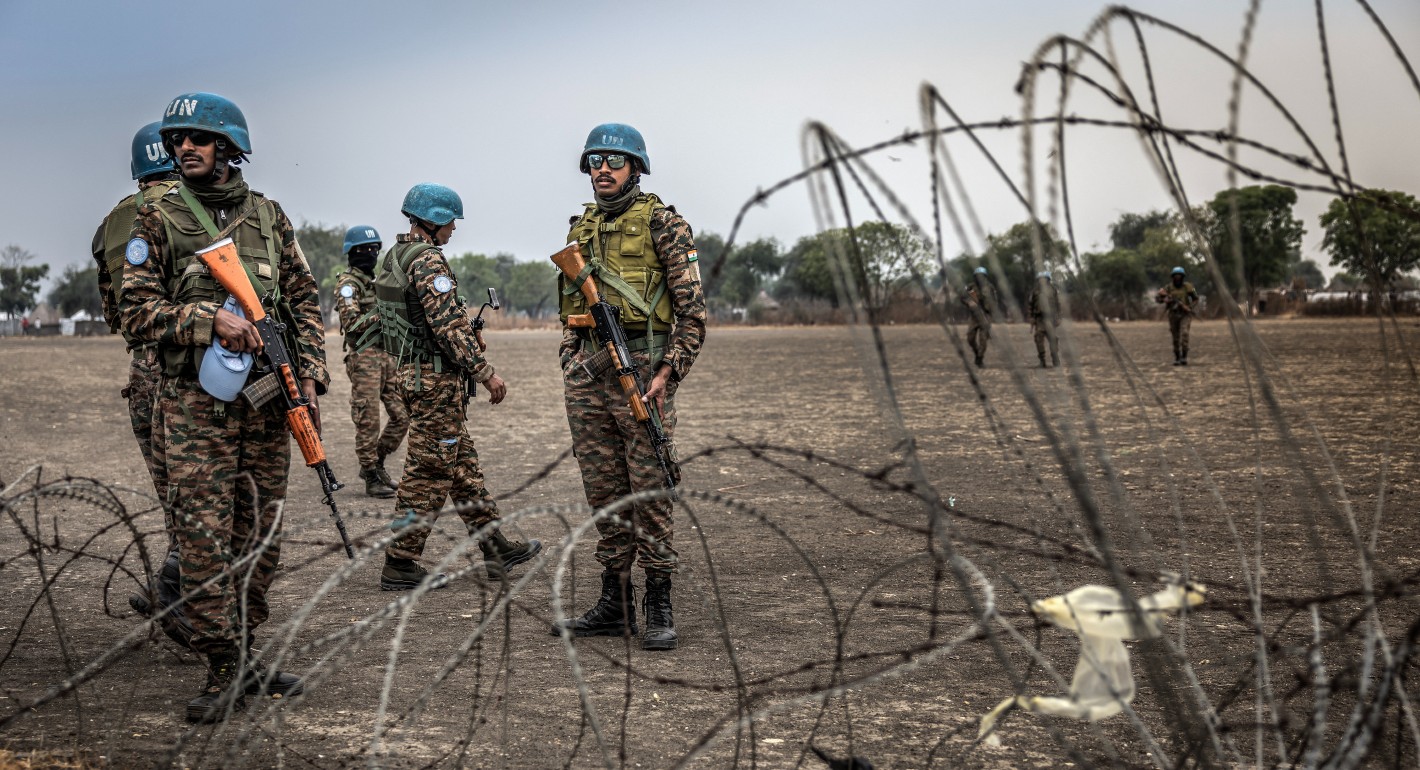
Washington’s decision to support some UN functions while letting others wither is pulling the organization apart at the seams.

Stewart Patrick, Theodore Zaritsky

Are Germany’s economic, industrial, and political struggles becoming a liability for the EU’s ability to rise to the geopolitical moment?

Rym Momtaz, ed.

China’s police training infrastructure construction projects provide benefits to recipient countries, promote China’s image as a major global security provider, and are likely to reinforce alignment between Beijing’s security priorities and those of countries in the Global South.


Cameron Waltz, Sheena Chestnut Greitens, Kim Nguyen, …

The Bureau of Industry and Security needs to adjust its focus and practices to maintain its position as the U.S. government’s primary champion of international technological competition.

Geoffrey Irving