

Other
Fiona Hill, Anatol Lieven, Thomas de Waal
{
  "authors": [
    "Anatol Lieven"
  ],
  "type": "legacyinthemedia",
  "centerAffiliationAll": "dc",
  "centers": [
    "Carnegie Endowment for International Peace"
  ],
  "collections": [],
  "englishNewsletterAll": "ctw",
  "nonEnglishNewsletterAll": "",
  "primaryCenter": "Carnegie Endowment for International Peace",
  "programAffiliation": "russia",
  "programs": [
    "Russia and Eurasia",
    "Nuclear Policy"
  ],
  "projects": [],
  "regions": [
    "South Asia"
  ],
  "topics": [
    "Security",
    "Military",
    "Foreign Policy"
  ]
}
REQUIRED IMAGE
Source: Carnegie
Reprinted with permission from The Times, October
20, 2001.
LAST week, as I watched Pakistani soldiers with machineguns guard against the
threat of Islamist rioting, I wondered what possible motive these uniformed
farm boys from Attock and Gujranwala had to protect me; and more importantly,
what motive they have to defend the interests of the West in the present war.
The discipline of the Pakistani Army is extremely strong, but no army can insulate
itself completely from the feelings of the population from which it springs.
It is a question that American and British policymakers should be asking themselves urgently. For not just in Pakistan, but in much of the Muslim world, we are asking Muslim soldiers to be prepared to fire into crowds of their countrymen in the name of a cause that most of them almost certainly despise, and on the orders of regimes that, in many cases, we ourselves have described as illegitimate.
It is especially important that we take account of the interests of the Pakistani armed forces, because at some point they are going to be asked by the US to end support for the struggle to oust India from Kashmir.
The United States is bound to demand this because the militants fighting in Kashmir are mixed up with the Taleban and the wider world of Muslim extremism and terrorism. But belief in a just struggle in Kashmir has been part of the core ideology of the Pakistan Army since its creation, and a government that demands its sacrifice will be taking a serious risk.
The soldiers therefore need to be compensated, not only with certain Indian concessions but also with concrete benefits to Pakistani society in general and the armed forces in particular.
In the short term, economic concessions are also of key importance. President Musharraf has justified his support for the allied campaign with two key arguments. The first is that Pakistan must avoid the mortal threat of an alliance of the US and India against Pakistan. The second has been that Pakistan will derive great economic benefits from aligning itself with America in this struggle.
Such benefits are, indeed, desperately needed. The Pakistan economy has been stagnant for years, its problems worsened by Western sanctions and protectionism. Since coming to power, General Musharraf has bowed to IMF demands to slash price subsidies to agriculture, promising long-term economic improvement but at the cost of a steep drop in the earnings of farmers, who comprise most of Pakistan’s population.
This is bound to increase the likelihood that economic discontent will fuel Islamist protests. The West therefore urgently needs to “front-load” economic aid to Pakistan, to show the Pakistani people that General Musharraf’s pro-Western stance is really helping them.
Britain and the EU have both made useful first steps: Britain by writing off ?20 million in Pakistan debt and providing ?105 million of new money over two years. The EU has announced an end to tariffs and relaxation of quotas on Pakistani textiles, which should increase their exports by $900 million (?608 million) over the next five years. But Islamabad estimates that it will suffer export losses of about $1.4 billion this year alone due to increased shipping costs and other factors.
There was, therefore, severe disappointment here that Colin Powell, the US Secretary of State, during his visit to Islamabad did not announce new economic benefits to Pakistan. There seems to be a widespread belief in US circles that easing sanctions and ending the “isolation” of General Musharraf’s regime is a major first step.
As far as the vast majority of Pakistanis are concerned, this belief is empty. Aitzaz Ahsan, a leader of the opposition Pakistan Peoples Party, said: “If people feel that Musharraf has made a satisfactory economic deal with the US, they will feel more comfortable with government support for the US. But if it looks otherwise, they will think he is an idiot who has allowed himself to be cheated.”
Copyright Anatol Lieven/The Times, October 20, 2001.
Former Senior Associate
Recent Work

Fiona Hill, Anatol Lieven, Thomas de Waal
Carnegie does not take institutional positions on public policy issues; the views represented herein are those of the author(s) and do not necessarily reflect the views of Carnegie, its staff, or its trustees.
Why governance of rapidly evolving technology will be distributed and complex.

Stewart Patrick, Scott Singer
It should address the shortcomings of previous crisis communication efforts and adapt to the demands of frontier AI.

Lucy Luo
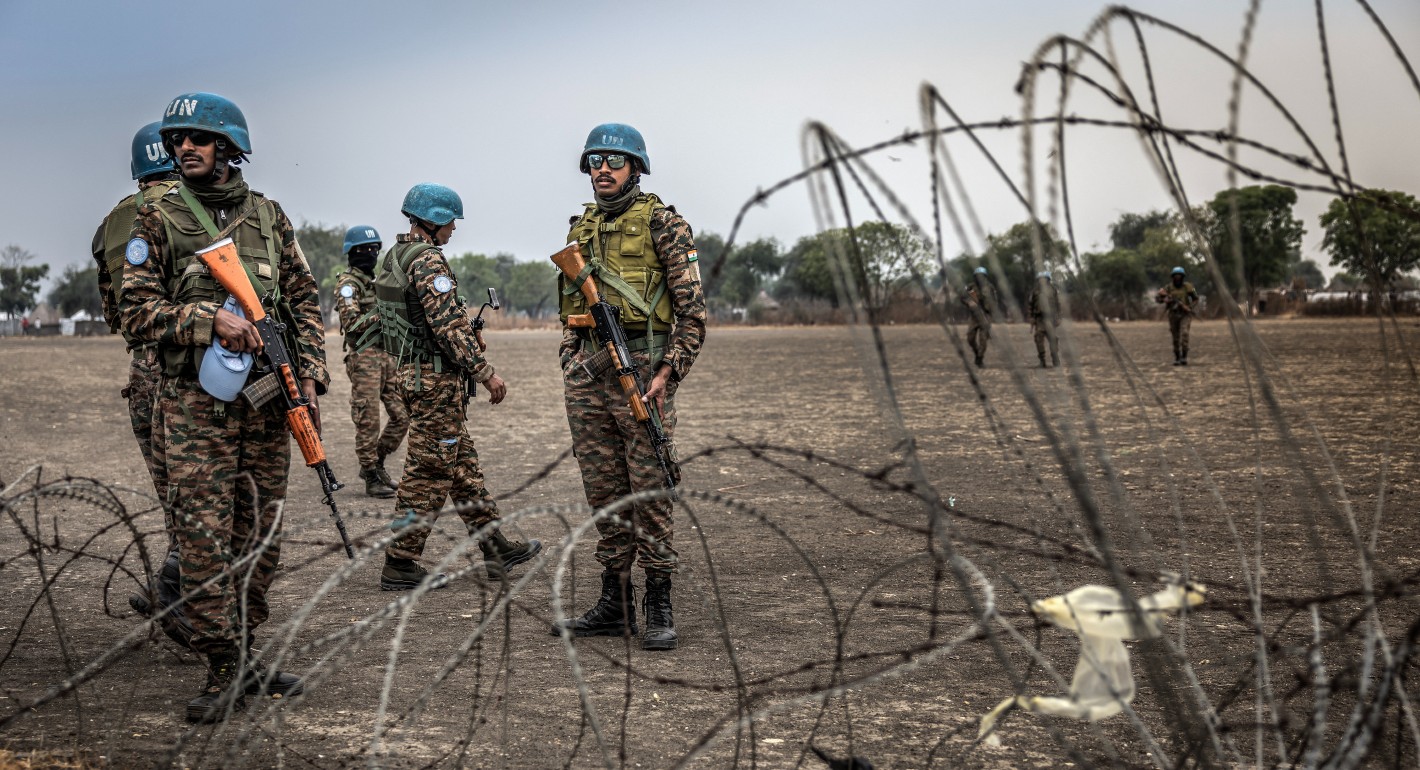
Washington’s decision to support some UN functions while letting others wither is pulling the organization apart at the seams.
Stewart Patrick, Theodore Zaritsky

Are Germany’s economic, industrial, and political struggles becoming a liability for the EU’s ability to rise to the geopolitical moment?

Rym Momtaz, ed.

China’s police training infrastructure construction projects provide benefits to recipient countries, promote China’s image as a major global security provider, and are likely to reinforce alignment between Beijing’s security priorities and those of countries in the Global South.


Cameron Waltz, Sheena Chestnut Greitens, Kim Nguyen, …