

Other
Fiona Hill, Anatol Lieven, Thomas de Waal
{
  "authors": [
    "Anatol Lieven"
  ],
  "type": "legacyinthemedia",
  "centerAffiliationAll": "dc",
  "centers": [
    "Carnegie Endowment for International Peace"
  ],
  "collections": [],
  "englishNewsletterAll": "ctw",
  "nonEnglishNewsletterAll": "",
  "primaryCenter": "Carnegie Endowment for International Peace",
  "programAffiliation": "russia",
  "programs": [
    "Russia and Eurasia"
  ],
  "projects": [],
  "regions": [
    "Afghanistan"
  ],
  "topics": [
    "Security"
  ]
}
REQUIRED IMAGE
Source: Carnegie
Bridging the Afghan Gap
Originally published in the Financial Times, February 25, 2002
The nature of central government in Afghanistan will be decided by a hidden wrestling match between guns and money - and the best hope of a stable future lies in a compromise between them.
The guns are in the hands of the former Northern Alliance, or rather of the part of the alliance that stems from the Panjshiri valley north of Kabul and was formerly led by Ahmedshah Masoud. The money, in the form of international aid, is being directed mainly towards the interim head of government, Hamid Karzai, and the ministers loyal to him.
The Tajiks of Panjshir form only a small part of the Tajik minority in Afghanistan, let alone the population as a whole. Despite this, they hold the key ministries of Defence, the Interior and Foreign Affairs in the interim government decided on at Bonn, as well as the Department of Security (the former secret police).
In the long run, the disproportionate power of the Panjshiris is simply un-acceptable to most other sections of the Afghan population, including many Tajiks. Their desire to remove at least some key positions from the Panjshiris, and Panjshiri resistance to this, risks wrecking the loya jirga, or national assembly, planned for June, and ushering in a new period of acute violence and instability.
The present interim government is a product not of an indigenous Afghan process but of the international negotiations in Bonn. Hamid Karzai is its chief by the will of the west and by far his most important source of strength is western backing - and, above all, the promise of western aid.
The loya jirga is meant to legitimise the transition from the existing interim government, created by the Bonn negotiations, to a supposedly more democratic and "Afghan" administration, which will conduct the further transition to national elections in 2004 and a fully democratic government.
As things stand, just getting through the first stage of this will take immense political skill on the part of both Afghan and inter-national officials and a great deal of western money.
A key task is to calibrate international assistance in such a way that it provides powerful financial incentives for the Panjshiris peacefully to surrender some of their existing power and to go on participating in the political process laid down in Bonn. Meanwhile, the international military presence must act as a strong disincentive to any military action against this process or in defence of their existing dominance.
Furthermore, a shift in the existing balance must be achieved before the June loya jirga. There is a semi-magical belief among many Afghans, and indeed some international observers, that the assembly, presided over by Zahir Shah, the former king, can decide great issues, resolve great disputes and create a new national consensus as the basis for future government.
In fact, these assemblies have generally functioned not to make great decisions themselves but to praise and legitimise decisions already reached. Such decisions have usually been made by one strong leader but they have also often involved intense prior negotiations among other leading figures.
If decision-making had been left to public discussions in the assembly, the result would have been disaster and conflict - as was indeed the case with Afghanistan's shambolic experiment with parliamentary constitutionalism before 1973. Everything about the selection and composition of the jirga remains to be settled and is bitterly controversial. As usual, this is especially true of the relative representation of different ethnic groups. In these circumstances, no defeated minority is likely to accept a majority vote.
The key decisions will have to be made in advance - and in private - and the murder of Abdur Rahman, aviation minister, allegedly on the orders of senior Panjshiri security officers, is an indication of just how dangerous this process is going to be. It is true that like most Afghans, most of the Panjshiri and other militias ringing Kabul are very weary of war. But they are also unpaid, with no jobs to look forward to at home, and looking with increasing hunger at a city that is growing fat on international assistance. If they are to go home, they must be paid to do so.
To manage this process successfully will require from the international community an unprecedented level of concentrated attention and co-ordination, over a period not of months but years. This will require the conscious, intelligent and even ruthless use of international aid as a political tool.
It will also require a determination to keep inter-national peacekeepers in Afghanistan for as long as we are prepared to keep them in the Balkans - in other words, not until some fairytale "free and fair" elections but as long as the country is still threatened by renewed civil war.
To ask this may seem completely unrealistic given Afghanistan's distance from the west and complicated and exotic nature. But if the attacks of September 11 have not demonstrated the capacity of failed Muslim states to generate appalling dangers for the west, nothing will. Both western diplomacy and the United Nations might as well shut up shop and leave such countries to the sophisticated diplomatic attentions of the US Air Force.
This is especially true of Britain, given the grandiose moral rhetoric of the present British government. It is therefore hardly encouraging that in April Britain is supposed to hand over leadership of the International Security Assistance Force (ISAF) in Kabul to a very hesitant Turkey and withdraw most of its troops, after only three months.
Three months after that there will be another changeover in ISAF - shortly after the loya jirga - and to whom, is not clear. Given the preparedness of most European and other countries to assume this responsibility, it is not impossible that at some stage the entire ISAF presence could collapse, despite its overwhelming support in the Afghan population.
If the west is to live up to its commitments in Afghanistan and elsewhere, it must begin to bridge the gap between the rhetoric of world messianism and the attention span (and courage) of a hen.
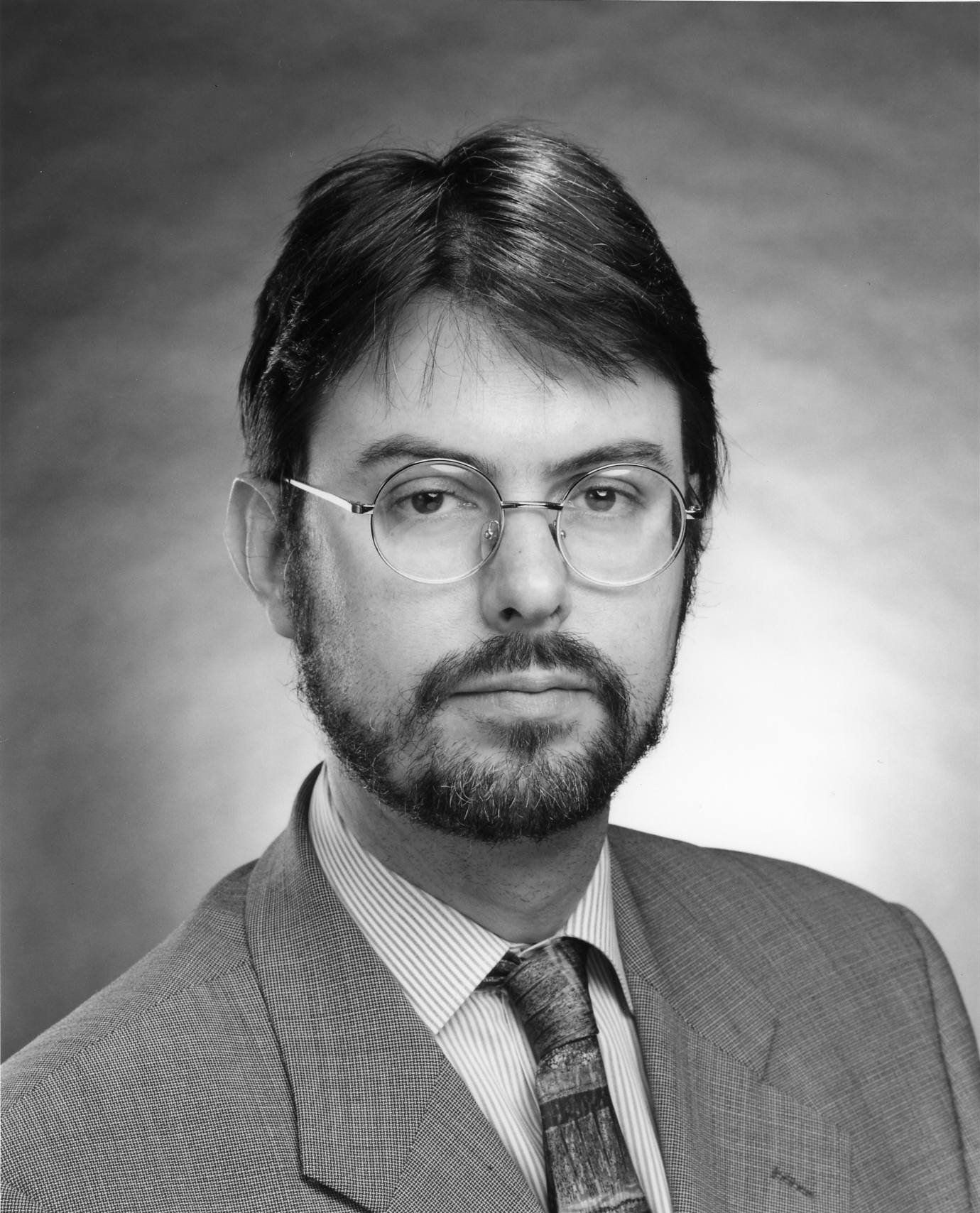
Former Senior Associate
Recent Work

Fiona Hill, Anatol Lieven, Thomas de Waal
Carnegie does not take institutional positions on public policy issues; the views represented herein are those of the author(s) and do not necessarily reflect the views of Carnegie, its staff, or its trustees.
Assessing U.S. compliance with the international laws of war is essential at a time when these frameworks are already fraying.
Federica D’Alessandra
Japan’s response to U.S. pressure over Hormuz highlights a broader dilemma: How to preserve the alliance while remaining bound by legal limits, public opinion, and an Asia-centered security agenda. Tokyo gained diplomatic space through an alliance-embracing strategy, but only under conditions that may not endure.
Ryo Sahashi
A conflict launched in the name of American security is producing the opposite effect.

Sarah Yerkes
Restoring competence and trust to the anemic, neglected disaster recovery agency is a matter of national security.


Sarah Labowitz, Debbra Goh
Going to war was the U.S. president’s decision, for which he alone is responsible.


Daniel C. Kurtzer, Aaron David Miller