

In The Media
Michele Dunne, Robert Kagan
{
  "authors": [
    "Robert Kagan"
  ],
  "type": "legacyinthemedia",
  "centerAffiliationAll": "",
  "centers": [
    "Carnegie Endowment for International Peace"
  ],
  "collections": [],
  "englishNewsletterAll": "",
  "nonEnglishNewsletterAll": "",
  "primaryCenter": "Carnegie Endowment for International Peace",
  "programAffiliation": "",
  "programs": [],
  "projects": [],
  "regions": [
    "United States"
  ],
  "topics": [
    "Security",
    "Foreign Policy"
  ]
}
REQUIRED IMAGE
There's a war in the Democratic Party, a struggle for its foreign policy soul. The latest round began when Sens. Daschle and Byrd started calling for an Afghanistan "exit strategy". On the other end, Sen. Lieberman criticizes the administration for doing too little, not too much. Lieberman’s brand of internationalist, hawkish liberalism is good for America - it will check bad Republican impulses.
Source: Carnegie
Fightin' Democrats
By Robert Kagan
Originally published in the Washington Post, Sunday, March 10, 2002
There's a war on in the Democratic Party, a struggle for its foreign policy soul. Inexplicably ignored by the press, this brewing intraparty fight could yet wind up reshaping American foreign policy and American politics.
The latest round began when Sens. Tom Daschle and Robert Byrd started calling for an Afghanistan "exit strategy" and seeking limits on the scope, duration and cost of the war on terrorism. Most everyone saw Daschle's move as purely political, but let's give Daschle a little credit: His brand of Democrat -- the George McGovern-Jimmy Carter-Michael Dukakis wing of the party -- has been opposing American military interventions and increased defense budgets for more than three decades. Daschle was just being consistent.
Then, in Thursday's Wall Street Journal, Sen. Joseph Lieberman -- a very different kind of Democrat -- fired back. "I disagree," he declared repeatedly. "I disagree with . . . Democrats, who are already pressing for withdrawal from Afghanistan." "I disagree" with Democrats who are "challenging the president's proposal to raise spending on our military by $48 billion next year." "I disagree with . . . Democrats who complain about what they view as expanding war goals," i.e., President Bush's determination to go after Iraq.
Not that Lieberman is against criticizing the Bush administration. The Pentagon's "unwillingness to provide American forces for international peacekeeping duty in Afghanistan," he insists, endangers the new government in Kabul and the long-term stability of Central Asia. Bush's proposed defense budget increases don't provide enough money for new weapons and force modernization. Lieberman wants more attention paid to promoting democracy in the Muslim world. "While our military drains the terrorist swamp, I would like to see the administration focus more on seeding the garden." In short, the administration is doing too little, not too much.
So who really speaks for the Democratic Party? It's too soon to tell. But at least in the wake of Sept. 11 we can say hello again to that hitherto endangered species of Democrat, the liberal internationalist hawk. Lieberman is the model: idealistic but not naive, ready and willing to use force and committed to a strong military, but also committed to using American power to spread democracy and do some good in the world. His kind of hawkish liberalism once dominated the party. But after Vietnam the hawks went silent or drifted into neoconservative Reaganism. The isolated Scoop Jackson soldiered on. But the post-Vietnam Democratic Party was dominated by a very different kind of liberal internationalism, Daschle's kind: the power-averse, Eleanor Roosevelt brand that viewed American military strength as dangerous and looked to the United Nations, not the United States, for the protection of international peace and human rights.
That Democratic Party made Carter, Walter Mondale and Dukakis its nominees in the 1980s. That Democratic Party voted 4 to 1 against going to war in the Persian Gulf. And that Democratic Party did not find its way back into the White House until 1992, when the American people decided the world was finally safe enough to risk a Democratic president.
But now the world is not safe, and whether Americans put another Democrat in the White House any time soon may depend on who wins the present struggle for the party's soul. Lieberman's hawkish liberalism rests on personal conviction and has for years. But Lieberman also knows that if Democrats follow Daschle, they're going to look weak when Americans want strength. Lopsided poll numbers already show Americans returning to their late-Cold War conviction that only Republicans can be entrusted with the nation's security.
Have other Democrats seen the light? Lately the camp of liberal internationalist hawks has been growing. Sen. Joseph Biden now flatly supports the ouster of Saddam Hussein and opposes Daschle's and Byrd's demands for an "exit strategy" in Afghanistan. Like Lieberman, he wants to expand the international peacekeeping force. Al Gore is generally hawkish on Iraq. And some Democratic insiders insist the young, unformed presidential candidate from North Carolina, John Edwards, will tilt in Lieberman's direction.
Let's hope a lot of Democrats do, because the reemergence of an influential hawkish wing in the Democratic Party after a destructive 35-year absence isn't just good for the party. It's good for the country. Bad Republican impulses need to be checked. Republican foreign policy doctrines that evolved during the dumb decade of the 1990s -- the hostility to "nation-building," the aversion to "international social work" and the narrow belief that "superpowers don't do windows" -- need to be discarded.
Lieberman and other Democrats are right about Afghanistan, for instance. If Afghanistan collapses into bloody chaos, it will damage the campaign against Saddam Hussein. Even close allies such as Turkey will be wary of supporting Saddam's removal without a credible U.S. commitment to create a stable successor regime in Iraq and to stay as long as necessary. That credibility is on the line now in Afghanistan. On this and other issues, Bush should understand that neither his party nor his advisers have a monopoly on wisdom.
In the 1990s the two parties gave voters a lousy choice: between a neo-isolationist Republican Party and a Democratic Party that was internationalist but still traumatized by memories of Vietnam. Today a healthy debate between a Republican Party newly inclined to overseas involvement and a Democratic Party more confident in the use and morality of power might just yield the right foreign policy synthesis: a muscular internationalism. Wouldn't it be nice if voters could someday choose between two parties committed to a strong, principled American foreign policy?

Former Senior Associate
Kagan, author of the recent book, The Return of History and the End of Dreams (Knopf 2008), writes a monthly column on world affairs for the Washington Post and is a contributing editor at both the Weekly Standard and the New Republic.
Recent Work

Michele Dunne, Robert Kagan
Robert Kagan, Michele Dunne
Carnegie does not take institutional positions on public policy issues; the views represented herein are those of the author(s) and do not necessarily reflect the views of Carnegie, its staff, or its trustees.

Congress needs to step up and make EXIM a low-carbon financing powerhouse.

Jesse Young

The ninety-three-year-old Biya’s absence and refusal to name a vice president threaten to upend domestic and regional stability.

Lesley Anne Warner

With the growth in points of friction between the great powers, organizations like the SCO will continue to play a role in the strategic adaptation of the smaller powers caught between them.

Temur Umarov
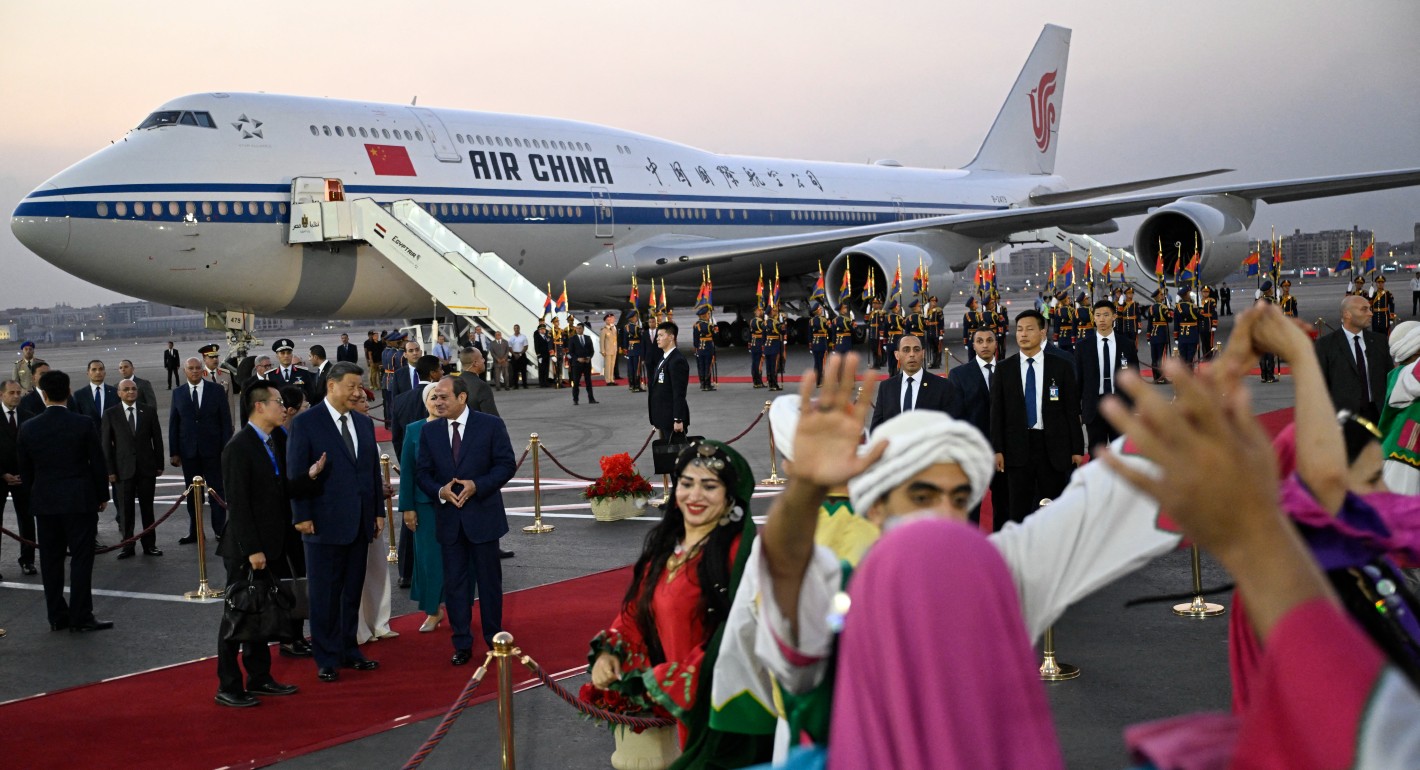
Amid celebrations of bilateral ties was a deeper focus on stability in the Middle East.

Amr Hamzawy

Canadian Prime Minister Mark Carney has twice inspired praise for standing up to U.S. President Donald Trump: at the 2026 World Economic Forum in Davos and on Canada-U.S. trade negotiations. Is Carney showing a third way better than the EU has in dealing with the Trump administration?

Rym Momtaz, ed.